
Italian Tuscan Rigatoni with Ragù | Rigatoni al Ragù Toscano
Italian Tuscan Rigatoni with Ragù | Rigatoni al Ragù Toscano
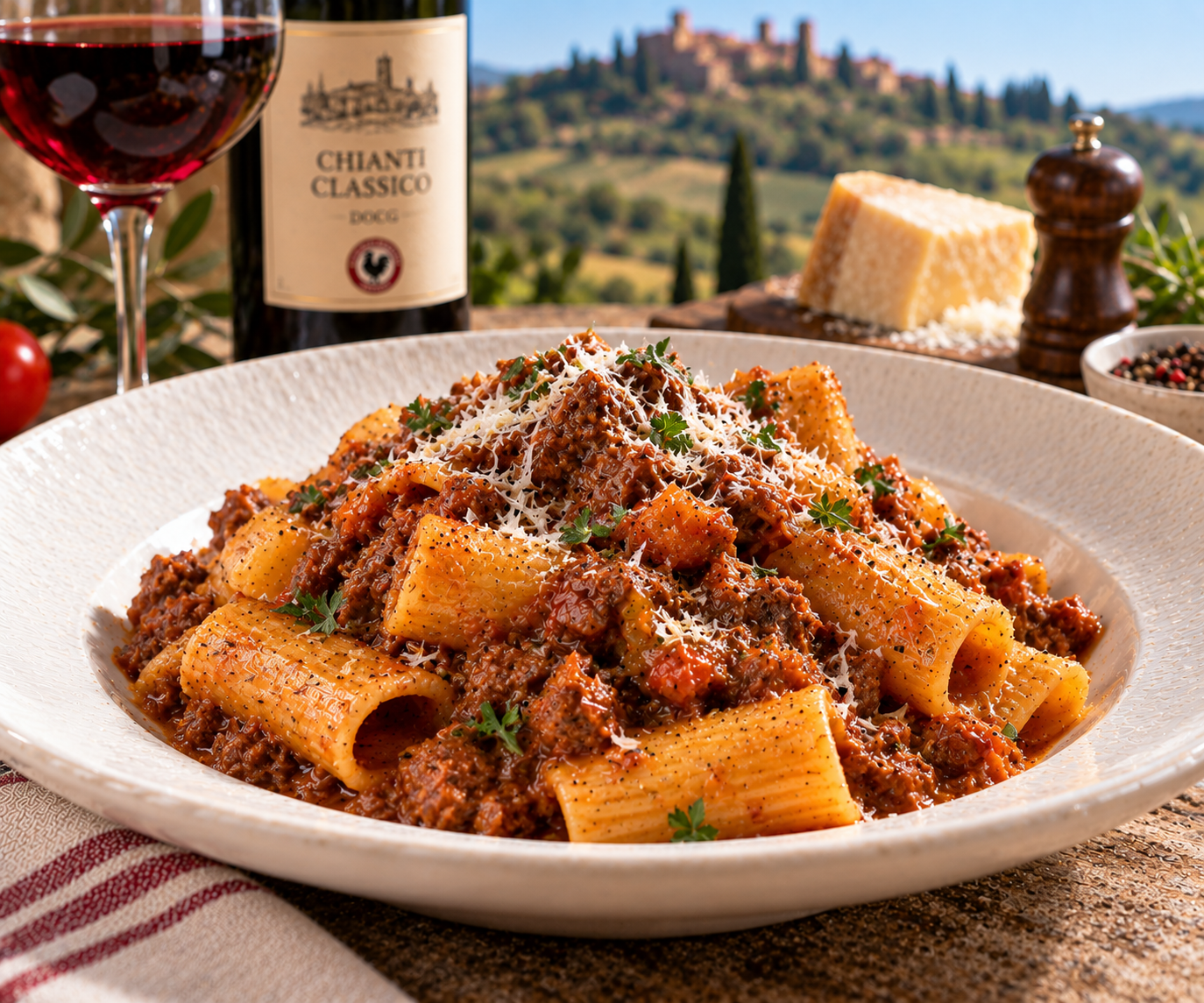
Italian Tuscan Rigatoni with Ragù | Rigatoni al Ragù Toscano is rigatoni finished in a Tuscan-style meat ragù with beef, pork, red wine, tomato and aromatic herbs. The recipe is built around disciplined heat control, careful seasoning and a final texture that remains clean rather than heavy. The objective is not simply to reproduce the ingredients, but to manage them so each component keeps its identity while contributing to a unified dish. This approach is especially important in Italian cooking, where apparently simple preparations expose every technical decision. For a strong result, organize the mise en place before cooking, taste repeatedly and avoid rushing reduction, emulsification or resting stages. The recipe below follows the Zafferano & Co. professional format, explaining not only what to do but why each step matters. Expect a dish with clear flavor, controlled moisture and a finish designed for immediate service.
The Story
Rigatoni al Ragù Toscano belongs to the broad tradition of Italian cooking in which technique and local ingredients matter more than unnecessary complexity. Its identity is connected to Tuscany, where cooks developed practical combinations around ingredients available locally and seasonally. Over time, restaurant kitchens refined these preparations by improving consistency, portion control and timing while keeping the essential flavor structure recognizable. The modern version presented here respects that principle. It does not rely on decorative additions to create interest; instead, the character comes from the quality of the primary ingredients, the sequence in which they are cooked and the way moisture is controlled. This is the reason traditional Italian recipes often look simple on paper but demand attention in practice. When each stage is executed correctly, the result tastes deeper and more balanced than the ingredient list alone would suggest.
Ingredients
Main Components
• Rigatoni — 400 g
• Ground beef — 350 g
• Ground pork — 200 g
• Pancetta — 80 g
• Passata — 500 g
• Dry Tuscan red wine — 180 ml
• Onion — 1
• Carrot — 1
• Celery stalk — 1
• Beef stock — 250 ml
Additional Ingredients
• Extra-virgin olive oil — 3 tbsp
• Rosemary — 1 small sprig
• Parmigiano Reggiano — 80 g
• Fine sea salt — to taste
• Black pepper — to taste
Preparation: Base Components
Cook a fine soffritto of onion, carrot and celery slowly in olive oil until soft. Add pancetta and allow it to render. Add beef and pork and brown thoroughly, working over enough heat that the meat caramelizes. Deglaze with red wine and reduce almost completely. Add passata, stock and rosemary and simmer slowly until the meat is tender and the sauce becomes dense. Remove rosemary before service. Taste and correct seasoning only after reduction so the final ragù is balanced rather than salty.
Preparation: Assembly
Boil rigatoni in salted water until very firm and reserve pasta water. Move the pasta directly into a wide pan with the Tuscan ragù and add a ladle of pasta water. Continue cooking while tossing so the tubes absorb flavor and release starch. The sauce should enter the rigatoni as well as coat the exterior. Keep enough liquid in the pan for the pasta to finish cooking without frying in fat.
Preparation: Finishing
Once the rigatoni are al dente and the sauce has tightened, reduce the heat and add Parmigiano. Toss until glossy, adding a little pasta water if necessary. Finish with black pepper and a few drops of Tuscan extra-virgin olive oil. Avoid adding too much cheese because it can mask the aromatic meat and wine character.
Final Plating and Presentation
Serve in warm bowls, distributing the ragù evenly through the rigatoni. Finish with Parmigiano and black pepper. The dish should arrive with a cohesive sauce and no excess liquid at the bottom of the plate.
Professional Technique
Brown the meats in batches if the pan is crowded. Tuscan ragù depends on savory concentration, and steaming the meat creates a weaker result. Reduce wine fully before tomato is added. For service, hold the ragù hot but below a hard boil and finish the pasta to order. The last two minutes in the sauté pan are what produce the restaurant-quality coating. Coordination matters as much as individual technique: have the sauce or base at the correct consistency before the final component reaches its finishing stage, and keep serving plates ready. Professional execution means minimizing waiting time after the dish is finished, because temperature and texture change immediately after cooking.
Texture and Moisture Control
The ragù should be dense but spoonable, and the rigatoni must remain firm. Add stock in stages during cooking rather than creating a watery sauce at the beginning. Pasta water controls the final consistency. If the ragù is too thick, loosen it before adding pasta; if too loose, reduce it first so the pasta does not overcook while waiting for the sauce to tighten. Judge consistency visually and by touch rather than by time alone. Ingredients, pan width, burner strength and humidity can all alter evaporation. The final standard is a controlled, intentional texture that remains stable from pan to plate.
Professional Mise en Place
Equipment and Tools — large pot, wide sauté pan or heavy saucepan as appropriate, chef’s knife, cutting board, fine grater, heatproof spatula, ladle, tongs or spider, digital scale and warm serving plates. Pre-preparation Steps — weigh all ingredients, wash and cut vegetables, portion proteins, grate cheese, prepare liquids and place garnishes within reach. Keep raw and cooked components separated and refrigerate perishable ingredients until required. Serving Setup — warm plates, reserve final garnish, keep clean towels and tasting spoons available, and plan the final two minutes so the finished dish goes directly to the table.
Chef Tips
• Taste at every major stage instead of correcting everything at the end. • Keep the final finishing pan wide enough for the food to move freely. • Reserve cooking liquid or stock because small additions are the safest way to correct consistency. • Finish delicate aromatics and cheese away from excessive heat.
Common Mistakes
Overcrowding the pan — trapped steam prevents proper browning and concentration. Work in batches if necessary. Adding too much liquid at once — the dish then requires excessive cooking to recover the right consistency. Add liquid progressively. Correcting salt too early — reduction intensifies seasoning. Make the final adjustment only after the sauce or base has reached its finished concentration. Holding the finished dish too long — pasta, pastry, vegetables and emulsified sauces all change quickly after cooking. Organize service so plating follows immediately.
Wine or Beverage Pairing
Chianti Classico, Morellino di Scansano or Rosso di Montalcino are natural Tuscan partners. Their acidity and savory structure match tomato and meat while keeping the dish lively. For a non-alcoholic option, sparkling water with rosemary and orange peel mirrors the Tuscan aromatics.
Storage and Make-Ahead Options
The ragù can be made 2 to 3 days ahead and refrigerated, or frozen up to 2 months. Reheat gently with a little stock. Cook rigatoni fresh for best texture. Mixed leftovers can be refrigerated up to 2 days and reheated in a pan with a splash of water.
Nutrition Information
Approximate per serving: 650–730 calories, 34–42 g protein, 72–80 g carbohydrates and 24–30 g fat. Major allergens: gluten and dairy.
About the Recipe
This Zafferano & Co. version is structured as a professional teaching recipe rather than a short ingredient-and-method note. The emphasis is on repeatable technique, practical mise en place and the sensory cues that tell a cook when to move from one stage to the next. The recipe is designed to be useful both for home cooks who want a reliable result and for professionals looking for a clear production sequence. Chef Gianluca Deiana Abis
Summary
Rigatoni al Ragù Toscano succeeds when the main ingredient remains recognizable and every supporting component is controlled. The recipe depends on careful preparation, correct reduction, disciplined moisture management and immediate finishing. None of those steps is complicated on its own, but together they determine whether the final plate feels precise or ordinary. Follow the sequence, use the visual cues instead of relying only on time, and make final adjustments in small increments. The reward is an Italian dish with clean flavor, proper texture and the balance expected from the Zafferano & Co. recipe standard.


Comments