
Wine Pairing: Salaparuta DOC
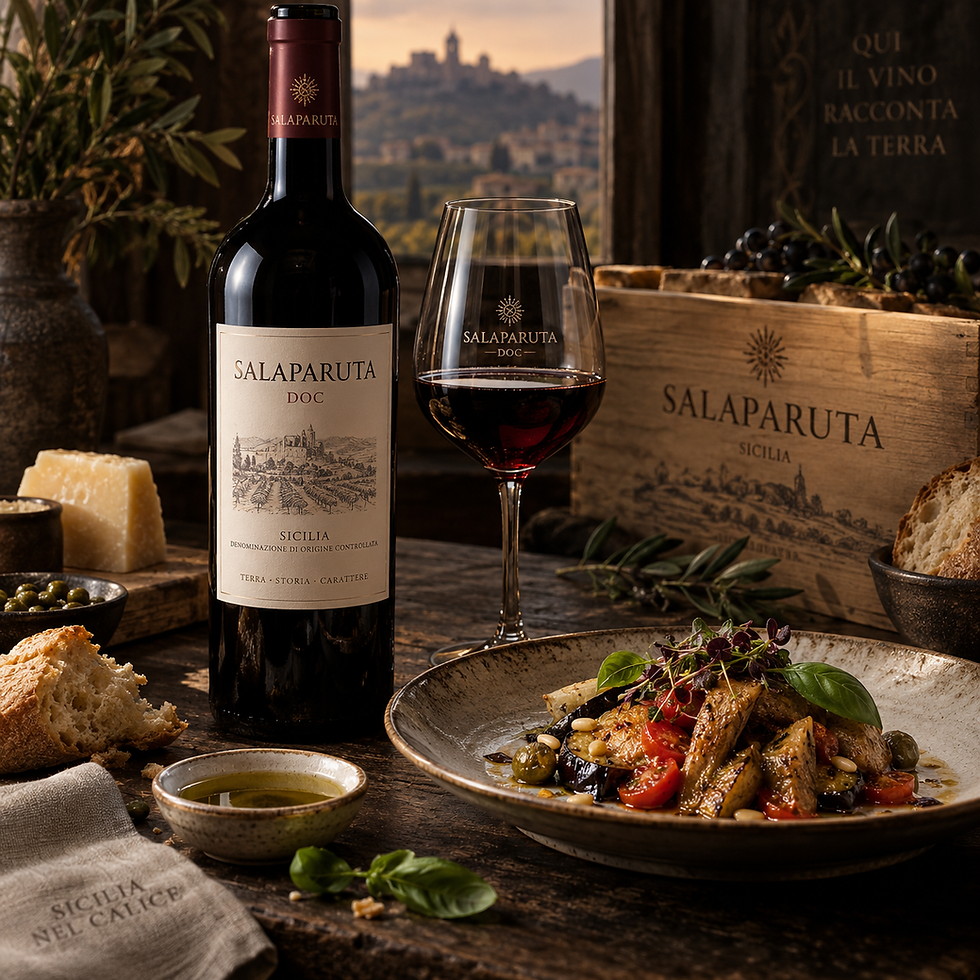
Salaparuta DOC is one of Sicily’s protected wine identities, shaped by western Sicily around Salaparuta in the Belice Valley. The denomination brings together local grape heritage, Mediterranean climate and a technical framework that defines where the wine is made and how its regional character is expressed.
What It Is
Salaparuta DOC is a protected Sicilian wine designation. Its styles can vary by color and grape composition, but the common thread is a strong link to western Sicily around Salaparuta in the Belice Valley. In a serious pairing context, the wine should be judged for balance, typicity, freshness, texture and its ability to stay clear alongside food.
At the table, Salaparuta DOC should be judged through balance rather than aroma alone. Acidity determines freshness, body determines the weight of food the wine can support, and alcohol influences warmth and persistence. The most convincing bottles keep these elements in proportion so the wine remains clear from the first sip to the end of the meal. Zafferano & Co. therefore evaluates the style as a complete gastronomic profile, not as a collection of isolated tasting notes.
Territory
Production is tied to western Sicily around Salaparuta in the Belice Valley. Sicily’s intense sunlight, dry growing season, sea influence, altitude differences and highly varied soils can create very different expressions even within the same designation. The best bottles preserve regional identity rather than relying only on ripeness.
Territory explains why wines from the same grape can behave differently. Exposure, altitude, soil, wind and proximity to the sea influence ripeness, acidity, aromatic detail and texture. In pairing, those territorial signals matter because Mediterranean ingredients often echo the wine’s own profile: herbs, citrus, olives, tomato, seafood, roasted vegetables and aged cheeses can reinforce regional character without making the combination repetitive.
Grapes / DOC Requirements
Principal grapes and authorized varieties associated with the designation include Nero d’Avola, Merlot, Cabernet Sauvignon, Syrah, Catarratto and other permitted varieties. The official disciplinare regulates the production area, permitted grape composition, yields, minimum analytical parameters and the use of specific style or aging terms. Individual bottlings should always be checked against the producer label and vintage because the denomination can permit more than one legal style.
The denomination establishes the legal framework, but producer choices determine the final expression. Harvest timing, fermentation, extraction, vessel and maturation can make one bottle fresher and more transparent and another broader and more structured. For food pairing, the label is therefore a starting point. The finished balance of acidity, body, tannin, sweetness and aroma is what decides whether the wine belongs with delicate preparations or richer dishes.
Blend
There is no single universal blend for every bottle under Salaparuta DOC. Producers work within the denomination rules, choosing varietal or blended interpretations according to the category. A strong example should make the principal grapes easy to recognize while preserving acidity, aromatic definition and a clear Sicilian sense of place.
Blend composition shapes structure as much as aroma. One variety may contribute freshness, another texture, another color, tannin or perfume. Even when one grape dominates, small supporting percentages can change the final balance. Zafferano & Co. looks for integration: the blend should feel coherent, with no structural element so aggressive that it narrows the wine’s usefulness at the table.
Tasting Profile
The exact profile depends on grape and style, but typical Sicilian signatures include ripe citrus or orchard fruit in whites, red and black fruit in reds, Mediterranean herbs, floral notes, spice and a savory or saline finish. The strongest examples avoid heaviness and show enough freshness to remain gastronomic.
A technical tasting profile must connect aroma to structure. Fruit, flowers, herbs, spice and mineral notes are useful only when considered together with acidity, tannin, alcohol, texture and finish. These structural elements govern pairing. Freshness can cut through fat, tannin can respond to protein, aromatic intensity can match herbs and spice, and persistence determines whether the wine still feels present after a flavorful bite.
Zafferano & Co. Technical Score
Regional Identity: 92/100 · Typicity: 91/100 · Food-Pairing Versatility: 90/100 · Complexity: 90/100 · Balance: 91/100. These are Zafferano & Co. editorial technical scores and are separate from third-party critic ratings.
The Zafferano & Co. Technical Score is an editorial evaluation of typicity, balance, regional identity, aromatic clarity, structural coherence and food-pairing versatility. It is not a producer-specific critic score. A strong technical result means the style is recognizable, proportionate and useful at the table. Individual bottles can still vary substantially by producer and vintage, so the score is a reference point rather than a guarantee.
Wine Spectator and Zafferano & Co. Rating
No generic Wine Spectator score is assigned to an entire denomination. A critic score is meaningful only when producer, bottling, vintage and review can be verified together. Zafferano & Co. Rating: 92/100.
Third-party scores should only be quoted when producer, bottling and vintage can be verified together. A denomination cannot responsibly be assigned one generic critic score. Zafferano & Co. keeps its own editorial rating separate for that reason. Readers should use the rating as a style-level guide, then evaluate individual releases according to producer, vintage, storage and condition.
Serving Temperature, Glassware, Opening
Serve most red expressions around 57–61°F (14–16°C) in a medium red-wine glass. Lighter reds can be served slightly cooler. Young structured bottles may benefit from 30–60 minutes of air. White, rosato or sparkling versions should be served cooler according to body and sweetness.
Serving conditions can change the apparent quality of a wine. Too cold, and aroma and texture disappear; too warm, and alcohol can dominate. Glass shape affects aromatic concentration and palate entry. Decanting is useful only when it improves expression: young structured wines may benefit from air, while delicate or mature bottles can lose perfume if over-aerated. Temperature should be adjusted gradually through service.
Producers
Producers to know: Duca di Salaparuta; Cantine Ermes; local Belice producers. These names are included as orientation for exploring the denomination. Producer quality, individual bottlings and vintages should be evaluated separately rather than treating the appellation as a single uniform wine.
Producer selection is included as orientation, not as a claim that every bottling performs identically. Vineyard source, yield, harvest timing, fermentation, aging and vintage conditions all influence the final wine. Comparing several producers is one of the best ways to understand a denomination. For pairing, the best bottle is the one whose structure matches the dish, not simply the most famous label.
Salaparuta DOC benefits from being considered across an entire meal rather than with a single bite. Salt, fat, acidity, sweetness, bitterness and cooking method can all change how the wine is perceived. Grilled or roasted foods emphasize savory notes; citrus and vinegar increase the importance of freshness; aged cheeses demand enough concentration; and delicate seafood requires restraint. The same bottle can therefore feel broader, leaner, softer or more aromatic depending on the dish. Zafferano & Co. uses this broader table perspective to judge versatility, because a successful pairing should preserve the wine’s regional identity while making the food taste more complete. Storage and service also matter: a sound bottle served in the correct glass and at the right temperature will show more clearly than the same wine served too warm, too cold or after excessive aeration.
Salaparuta DOC benefits from being considered across an entire meal rather than with a single bite. Salt, fat, acidity, sweetness, bitterness and cooking method can all change how the wine is perceived. Grilled or roasted foods emphasize savory notes; citrus and vinegar increase the importance of freshness; aged cheeses demand enough concentration; and delicate seafood requires restraint. The same bottle can therefore feel broader, leaner, softer or more aromatic depending on the dish. Zafferano & Co. uses this broader table perspective to judge versatility, because a successful pairing should preserve the wine’s regional identity while making the food taste more complete. Storage and service also matter: a sound bottle served in the correct glass and at the right temperature will show more clearly than the same wine served too warm, too cold or after excessive aeration.
Salaparuta DOC also needs to be understood in the context of vintage and bottle development. Warmer years may emphasize ripeness and body, while cooler or windier conditions can sharpen acidity and aromatic detail. With age, primary fruit can move toward dried fruit, herbs, earth, nuts or savory notes depending on the style. That evolution changes pairing choices: younger bottles often favor fresher preparations, while mature examples can work better with roasted, braised or aged flavors. For service, the goal is to preserve definition and regional character from the first glass to the last.


Comments