
Italian Dark Chocolate Affogato | Affogato al Cioccolato Fondente
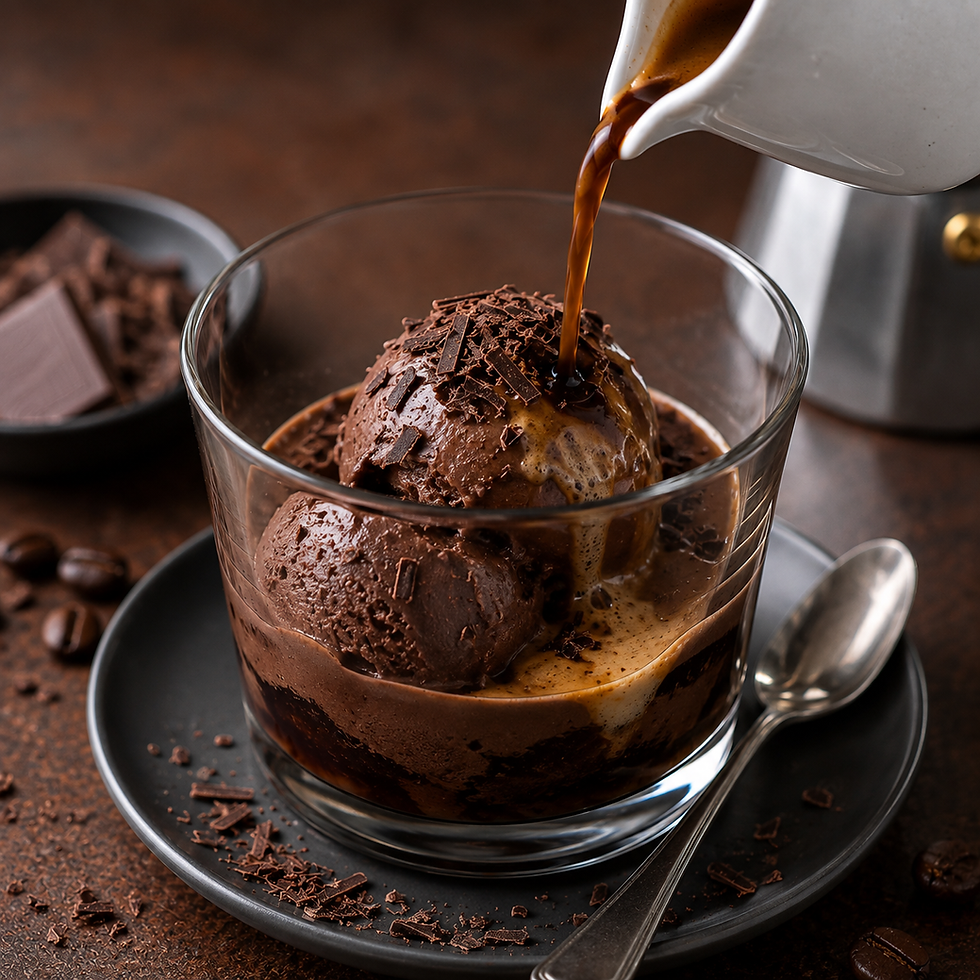
Two ingredients, and both of them bitter. That is the whole problem of a dark chocolate affogato, and the reason most of them taste dull. Espresso and cacao are both roasted products, so they speak the same language, and pouring one over the other does not build contrast, it builds volume. The dish works only when the coffee is chosen to argue with the chocolate.
Yield: 4 servings. Prep: 15 minutes. Gelato base, optional: 25 minutes plus 4 hours freezing. Assembly: 2 minutes. Difficulty: easy, with one decision that matters. Course: dessert. Region: Italy, between Piedmont and Modica.
The Story
Affogato means drowned, and the Italian dessert that carries the name is exactly that: a scoop of gelato with a shot of hot espresso poured over it, served at the end of a meal in the same breath as the coffee itself. It is not a pastry and it never pretended to be. It belongs to the family of Italian desserts that the bar can produce as fast as the kitchen, which is why it spread from Milan and Turin through every espresso bar on the peninsula in the years after the war, when the lever machine became ordinary equipment and a bar could pull a proper shot on demand.
The classic version is built on fiordilatte or vanilla, a sweet neutral base that gives the coffee nothing to fight. Chocolate came later, and it came from the north. Turin had been a chocolate city since the eighteenth century, home of gianduia and of the bicerin, the layered drink of espresso, chocolate and milk that has been sold in the same square since the seventeen hundreds. The idea that coffee and chocolate belong in one glass is Piedmontese long before it is anything else, and the chocolate affogato is the cold descendant of that drink.
From the south comes the other half of the tradition. Modica in Sicily makes chocolate by the cold worked Aztec method the Spanish brought to the island, without conching and without added cocoa butter, which leaves the sugar in visible crystals and the cacao tasting raw, bright and slightly fruity rather than smooth. Sicilian bars have poured coffee over chocolate gelato for generations, and the Modica style of chocolate is the reason those versions taste alive instead of heavy: that unsmoothed acidity is precisely what a roasted espresso needs beside it.
So a dark chocolate affogato is not a modern variation on a plain one. It sits between two real Italian chocolate cultures, the refined Piedmontese and the rustic Sicilian, and the version below borrows the seriousness of the first and the brightness of the second.
Ingredients
For the affogato
Dark chocolate gelato, 14 oz (400 g), about 4 generous scoops
Whole coffee beans, medium roast with clear acidity, 1 1/4 oz (36 g), for 4 espressi
Granulated sugar, 1 tsp (4 g), optional, for the coffee
Dark chocolate, 64 percent, for shaving, 1/2 oz (15 g)
Flaky sea salt, 1 very small pinch per glass, optional
For a homemade dark chocolate gelato, optional
Whole milk, 2 cups (480 ml)
Heavy cream, 1/2 cup (120 ml)
Granulated sugar, 2/3 cup (130 g)
Dextrose, 2 tbsp (25 g), optional but useful
Unsweetened cocoa powder, natural not alkalized, 1/3 cup (30 g)
Dark chocolate, 62 to 64 percent, chopped, 3 1/2 oz (100 g)
Egg yolks, 2
Fine sea salt, 1/4 tsp (1.5 g)
For finishing, optional
Candied orange peel, finely diced, 2 tsp (10 g)
Toasted hazelnuts from Piedmont, crushed, 1 tbsp (10 g)
Grappa or brandy, 1 tsp (5 ml) per glass
Preparation
Choose the coffee before anything else
This is the only real decision in the recipe and it settles the flavour of the glass. Buy a medium roast, a washed Central American or a high grown East African, and look in the roaster's notes for citrus, red fruit or plum. Avoid anything sold as Italian roast, French roast or continental: those are roasted past the point where the bean's own acidity survives, and what is left is roast flavour, which the chocolate already supplies.
Match the chocolate to the coffee
If your gelato is made with a 70 percent or higher chocolate, use the brightest coffee you have and expect to add the teaspoon of sugar. If the gelato sits around 60 to 64 percent you have more room, and a rounder medium roast will do without sugar. The decision runs in both directions: choose the coffee for the gelato you have, or the gelato for the coffee you like.
Make the chocolate gelato, if you are making it
Warm the milk and cream with half the sugar until steaming. Whisk the cocoa with the remaining sugar and the dextrose, pour on a ladle of the hot liquid and work it smooth before adding the rest, which prevents lumps. Return it to the pan, whisk in the yolks off the heat, then cook over low heat to 180F (82C), stirring constantly. Off the heat, add the chocolate and the salt and stir until glossy.
Rest the base and freeze it
Sieve the base, cool it quickly over ice, then refrigerate it at least 4 hours and preferably overnight, which lets the cocoa solids hydrate and the flavour deepen. Churn it, then firm it in the freezer for an hour. Taste it on its own: if it reads flat and dark rather than fruity and dark, correct the coffee choice, not the gelato.
Prepare the glasses and the garnishes
Use small heatproof glasses of about 5 fl oz (150 ml), clear so the layers show, at room temperature. Shave the finishing chocolate into thin curls with a peeler and hold them cool and dry. Dice the candied orange and crush the hazelnuts if you want them. Keep sugar, salt and any grappa within reach, because the assembly happens inside a minute.
Scoop, and let the gelato soften slightly
Take the gelato out 5 minutes before serving and scoop it once the surface gives to a spoon. Straight from a domestic freezer at 0F (minus 18C) it is too hard, and hard gelato reads as less sweet and less aromatic than the same gelato a few degrees warmer. One scoop per glass, broken with the spoon for the drinkable version or left whole to be eaten.
Pull the espresso short, and sweeten it if it needs it
Pull four single shots of about 1 fl oz (30 ml), aiming for a fast bright extraction, since the last part of a shot is where the harshest bitterness lives. Taste the coffee alone. If it reads sharp, that is right: the chocolate will absorb it. If it reads dark and roasted, stir the teaspoon of sugar between the four cups now.
Pour and serve at once
Pour each shot over its scoop in one steady stream from a low height, onto the gelato and not down the side of the glass. Scatter the chocolate curls, add the orange or hazelnuts and the smallest pinch of flaky salt, and send it out immediately with a long spoon. An affogato standing on the pass for two minutes is a worse dessert.
Plating
Serve it in glass, always. The point of the dish is visible: a dark scoop half submerged, the espresso crema sitting on top as a pale collar, the two colours meeting without merging. An opaque cup hides all of it and turns the dessert into a drink of indeterminate brown.
Set the glass on a small saucer with a long handled spoon beside it and, if the meal calls for it, a glass of cold water. Garnish with restraint: chocolate curls and nothing else is the honest version, orange or hazelnut when you want the Piedmontese reference. Never whipped cream, which coats the palate and cancels the contrast the whole dessert is built on.
Professional Technique
The technique here is not a manual skill, it is a choice of ingredients, and it rests on one fact: coffee and cacao are both roasted seeds, and roasting produces the same family of compounds in both. Pyrazines, furans and melanoidins give each of them the same toasted, dry, faintly burnt register. Put a dark roast espresso over a 75 percent chocolate gelato and you are not layering two flavours, you are doubling one. The result tastes ashy and cinereous, closed at the top, with a long dry finish and nothing bright in it anywhere. Guests call it strong, which in this dessert is a complaint.
The correction is to buy the acidity back. A medium roast keeps much of the bean's original chlorogenic and citric acid, and those acids carry the fruit that high grown coffee has and that dark roasting destroys. That fruit is what the chocolate cannot supply. A washed Ethiopian or a Costa Rican at medium roast arrives with lemon, bergamot or red berry notes sitting above the cacao instead of inside it, and the glass reads in two layers rather than one block.
The second lever is sugar, in a very small quantity and for a specific reason. Sugar does not simply sweeten, it suppresses the perception of bitterness: sweet and bitter compete at the same receptors, and one masks the other well below the level at which it becomes noticeably sweet. A quarter teaspoon per shot takes the edge off a roast darker than you wanted, and the glass tastes less bitter without tasting sugared. The third lever is to drop the chocolate: a 62 percent gelato carries more sugar and more milk fat than a 75 percent one, and both soften a roasted coffee.
Texture and Moisture Control
The espresso crema is the one fragile texture in the dish and it lasts about thirty seconds. It is a foam of coffee oils and gases held in suspension, and it collapses on contact with a cold sugary surface. You cannot preserve it, so you use it: pour at the table or immediately before, so the guest sees the pale collar before it thins into the melt. That is why an affogato is never assembled ahead.
The second texture is the melt, and here fat and sugar decide everything. A gelato with more milk fat and more sugar melts into a thicker, creamier liquid that clings to the spoon, while a leaner high percentage base melts thin and grainy and leaves a watery pool under the coffee. If your gelato is very dark, the dextrose is worth including: it lowers the freezing point and keeps both the scoop and the melt smoother without adding much sweetness.
Temperature governs aroma as much as texture. Espresso leaves the machine at about 200F (93C) and should be poured within seconds, while gelato serves best a few degrees above freezer temperature. Both are at their most aromatic when they meet, and both lose it fast: coffee standing in the cup goes flat and sour, gelato held out too long slumps.
Professional Mise en Place
Everything except the coffee is ready before service, and the coffee is the last thing that happens in the whole meal.
Equipment and tools
Espresso machine and a burr grinder, adjusted and purged before service
Small heatproof glasses, about 5 fl oz (150 ml), and long handled spoons
Ice cream maker, fine mesh sieve and an instant read thermometer, for the homemade base
Ice cream scoop kept in warm water, and a vegetable peeler for the chocolate curls
Prepared ahead
Gelato base cooked, sieved and refrigerated a day ahead, churned the same day
Chocolate curls shaved and held in a cool dry container, up to 6 hours
Candied orange diced and hazelnuts toasted and crushed, same day
Coffee weighed into four doses, whole beans, ground only on demand
Service setup
Glasses lined up at room temperature with spoons and saucers ready
Gelato moved from the freezer to the warmest part of it 5 minutes before
Sugar, salt and garnishes within arm's reach of the machine
One person scooping and one pulling shots when you are serving more than four
Chef Tips
Taste the espresso and the gelato separately, side by side, before you ever combine them. Thirty seconds of tasting tells you whether you need the sugar, and it is the only quality control this dessert has.
Buy the coffee from a roaster who prints a roast date and tasting notes, and use it one to three weeks after that date. Supermarket espresso in a vacuum brick is almost always roasted dark, because dark roasting hides the age of the beans, and dark is the one thing this glass does not need.
If you only have a dark roast in the house, pull it shorter than usual, around 3/4 fl oz (22 ml), and add the sugar. A short shot leaves behind the late, heavy, dry compounds and keeps the sweeter early part of the extraction.
Warm the scoop in water rather than pressing harder. A clean round scoop sits properly in the glass and holds its shape under the coffee, while a scraped flat one loses its surface at once and the layers stop being visible.
Common Mistakes
Using a dark Italian roast with a high percentage chocolate. The error that ruins most dark chocolate affogati. Two roasted bitters reinforce each other and the glass turns flat, ashy and closed. Choose a medium roast with real acidity, or drop the chocolate to 62 percent.
Pouring coffee that has been standing. Espresso is finished within a minute of leaving the machine: the crema falls, the aromatics go and the acidity turns sour rather than bright. Pull the shots with the glasses already scooped and waiting.
Sweetening the gelato instead of the coffee. A sweeter gelato makes the dessert cloying and leaves the coffee just as harsh. The sugar belongs in the espresso, where it suppresses bitterness at the source and disappears from the flavour.
Serving in an opaque cup. Half the pleasure is watching the scoop go under and the crema settle on top. In a ceramic cup there is nothing to see and the dessert eats like a lukewarm mocha.
Adding whipped cream on top. Cream coats the palate and flattens the contrast between the two bitters, which is the only structure this dessert has. Keep it to chocolate curls, or orange and hazelnut.
Wine Pairing
The glass already carries two bitter elements, so the wine has to bring sweetness and fruit rather than more tannin and more roast. Serve these cool, in a small glass, alongside rather than after.
Recioto della Valpolicella DOCG: The most reliable match for dark chocolate in Italy. Dried grapes give it sweet black cherry and fig concentration with fresh acidity still running underneath, and that acidity keeps it from sitting heavily on the espresso. Its tannin is ripe and round, so it meets the cacao without adding to the dryness of the finish.
Montefalco Sagrantino Passito DOCG: For anyone who wants a serious red here. Sagrantino is one of the most tannic grapes in Italy, and in the dried grape version that tannin arrives wrapped in sweetness, sour cherry and dried plum. It is the one wine on this list that can stand up to a 75 percent gelato, and the sweetness is essential: a dry Sagrantino would taste severe beside it.
Marsala DOC: The Sicilian answer and the closest thing to a flavour bridge. Oxidative ageing gives a sweet Marsala notes of walnut, dried apricot, caramel and coffee itself, so it echoes the roasted register instead of contrasting with it, while the sugar and the spirit warmth handle the cacao. Choose a Superiore Dolce and pour a very small glass.
Moscato di Scanzo DOCG: The lightest and most aromatic option, from a tiny hillside zone near Bergamo. Made from dried red Moscato, it is perfumed with rose, dried strawberry and sage, with modest tannin and a delicate sweetness. It works because it does not compete: the perfume lifts the espresso aromatics while the dessert keeps its own weight.
Storage & Reheating
An assembled affogato cannot be stored, held or reheated. It exists for about a minute and there is no way to recover it, so make only as many glasses as there are people at the table.
The gelato keeps in an airtight container in the coldest part of the freezer for up to 2 weeks, with parchment pressed onto the surface to stop ice crystals forming, and is at its best in the first 4 days. Never refreeze a scoop that has softened at the table. The base keeps refrigerated for up to 3 days and improves after the first night.
Chocolate curls keep a day in a cool dry container but soften in the refrigerator and lose their snap. Whole beans keep in a sealed opaque container away from heat for about 3 weeks after roasting, and ground coffee keeps for minutes rather than days, which is why it is ground to order.
Nutrition
Per serving, based on 4 servings with the homemade gelato and no optional garnish:
Calories: 340 kcal
Total Fat: 17 g
Saturated Fat: 10 g
Trans Fat: 0 g
Unsaturated Fat: 6 g
Cholesterol: 105 mg
Sodium: 110 mg
Total Carbohydrates: 42 g
Fiber: 3 g
Total Sugars: 36 g
Added Sugars: 30 g
Protein: 7 g
Lactose: 6 g
Principal micronutrients: iron, magnesium, copper, potassium, calcium, riboflavin
These figures are estimates and move considerably with the gelato you use. A commercial dark chocolate gelato can carry half again as much sugar as the base above.


Comments