

Italian Dark Chocolate Gelato | Gelato al Cioccolato Fondente
A dark chocolate gelato does not need cream. The chocolate brings its own fat, and many Sicilian gelaterie build their fondente on water, sugar and chocolate alone, keeping the milk base for pistachio and hazelnut. The result is darker, cleaner and considerably more intense, because milk fat coats the tongue and blunts the aromatic edge of the cocoa. This version follows that logic exactly, with nothing in the machine but water, sugar, salt and very good chocolate.
Yield: about 1 quart (950 ml), 6 servings. Prep: 20 minutes. Cook: 10 minutes. Ageing: 4 hours minimum. Churning: 20 minutes. Hardening: 2 hours. Total: about 7 hours. Difficulty: intermediate. Course: dolce. Region: Sicily.
The Story
Sicily makes frozen desserts on water long before it makes them on milk. The island inherited sharbat from Arab rule, and for centuries the raw material was real snow, cut from Etna and the Nebrodi in spring, packed into stone pits called neviere and sold through the summer in Palermo, Catania and Messina. What that snow was flavoured with was juice, wine, coffee, almond milk or citrus, never dairy. Granita and the water gelato that sits beside it in every Sicilian bar are the direct descendants of that trade, and they are the reason a Sicilian gelatiere thinks of water as a base in its own right rather than as a shortcut.
Chocolate arrived from the other direction. The Val di Noto belonged to the Spanish crown, and Modica took the cold worked Mesoamerican method that reached Sicily through Spain in the sixteenth century: cocoa mass ground with sugar and spice, never heated to the point where the sugar dissolves, which is why a bar of Modica chocolate still crunches between the teeth. That habit of treating chocolate as something grainy, bitter and unmilked shaped the local taste. Sicilian chocolate desserts do not aim for softness or sweetness, and a fondente gelato built on water is the frozen expression of the same preference.
The two traditions meet in the bar counters of eastern Sicily, where cioccolato fondente sits in the tray next to lemon and mulberry, and a dairy free label would be beside the point because nobody put milk in it in the first place. Gelaterie in Catania and around Modica still churn it this way, sometimes with a little cinnamon or chilli borrowed from the Modican bars, and it is the version that emigrant Sicilian gelatieri carried north. Elsewhere in Italy the cream crept in, and the flavour was quietly softened. On the island it never was.
Ingredients
The chocolate is the whole recipe, so buy it properly. A single origin bar at 70 to 72 percent works best: below 65 percent the sugar in the bar unbalances everything, and above 80 percent the base turns dry and bitter in the mouth. A small amount of dextrose alongside the granulated sugar keeps the texture supple without making the gelato sweeter, since dextrose tastes only about seventy percent as sweet as sucrose while working harder in the freezer.
For the base
Dark chocolate, 70 to 72 percent, finely chopped, 7 oz (200 g)
Water, 2 1/2 cups (600 ml)
Granulated sugar, 2/3 cup (135 g)
Dextrose, 3 tbsp (35 g)
Unsweetened cocoa powder, preferably Dutch process, 3 tbsp (18 g)
Cornstarch, 2 tsp (6 g)
Fine sea salt, 1/4 tsp (1.5 g)
For finishing
Flaky sea salt, a few grains per serving
Toasted chopped almonds, 2 tbsp (18 g), optional
Modica chocolate, shaved, 1 oz (28 g), optional
If you cannot find dextrose, use 2 tablespoons (25 g) of mild honey instead and reduce the granulated sugar by 1 tablespoon. Honey behaves similarly in the freezer, though it leaves a faint floral note that a purist would not want against a single origin bar.
Preparation
Chop the chocolate and measure everything
Chop the bar into pieces no larger than a grain of rice, on a dry board with a heavy knife. Small pieces melt evenly in liquid that is already off the heat, which is what keeps the chocolate from seizing later. Whisk the granulated sugar, dextrose, cocoa powder, cornstarch and salt together in a bowl while the chocolate is still dry, so no single ingredient goes into the pan on its own. Have a fine mesh sieve, a blender and a shallow container ready before you light the burner, because the whole cooking stage runs under ten minutes.
Cook the sugar and water base
Put the water in a heavy saucepan and whisk in the dry mixture off the heat until no lumps remain. Bring it to a bare simmer over medium heat, whisking constantly, and hold it there for 2 minutes, until the cornstarch has done its work and the liquid just coats the back of a spoon. It will look thin and unpromising at this stage and that is correct: all the body still to come is in the chocolate. Do not let it boil hard, which drives off water and leaves the base too concentrated.
Melt the chocolate into the base
Pull the pan off the heat and wait 30 seconds, then add the chopped chocolate all at once. Leave it undisturbed for a minute, then whisk from the centre outwards until the mixture is uniform, glossy and very dark. If the chocolate goes grainy or the surface looks oily, the liquid was too hot or the whisking started too early. Blend the base for 30 seconds with an immersion blender to bring it back together, then pass everything through the fine mesh sieve into a shallow container.
Age the base cold
Cool the base quickly in an ice bath to below 40F (4C), then refrigerate it, covered, for at least 4 hours and preferably overnight. Ageing is not optional here. The cocoa particles need time to take up their water fully, the cornstarch continues to set, and a base churned straight away will freeze coarse and taste flat. Whisk it once before it goes into the machine, since a little sediment always settles at the bottom overnight.
Churn until it holds a ribbon
Pour the cold base into a gelato machine with a properly frozen bowl and run it for 18 to 22 minutes. Watch the surface rather than the clock: the base darkens, then thickens, then starts to fall from the paddle in a slow ribbon that holds its shape for a second. That is the moment to stop. Gelato is churned slower and colder than ice cream and takes in much less air, and a water base carries even less, so do not expect it to double in volume.
Harden and hold
Transfer the gelato into a shallow metal container, press a sheet of parchment directly onto the surface and freeze it for 2 hours before serving. Metal and a shallow shape pull the temperature down fast, which matters more on a water base than on a milk one. Take it out of the freezer 5 to 8 minutes before you scoop, and put the container back the moment you have finished serving rather than leaving it on the counter.
Plating
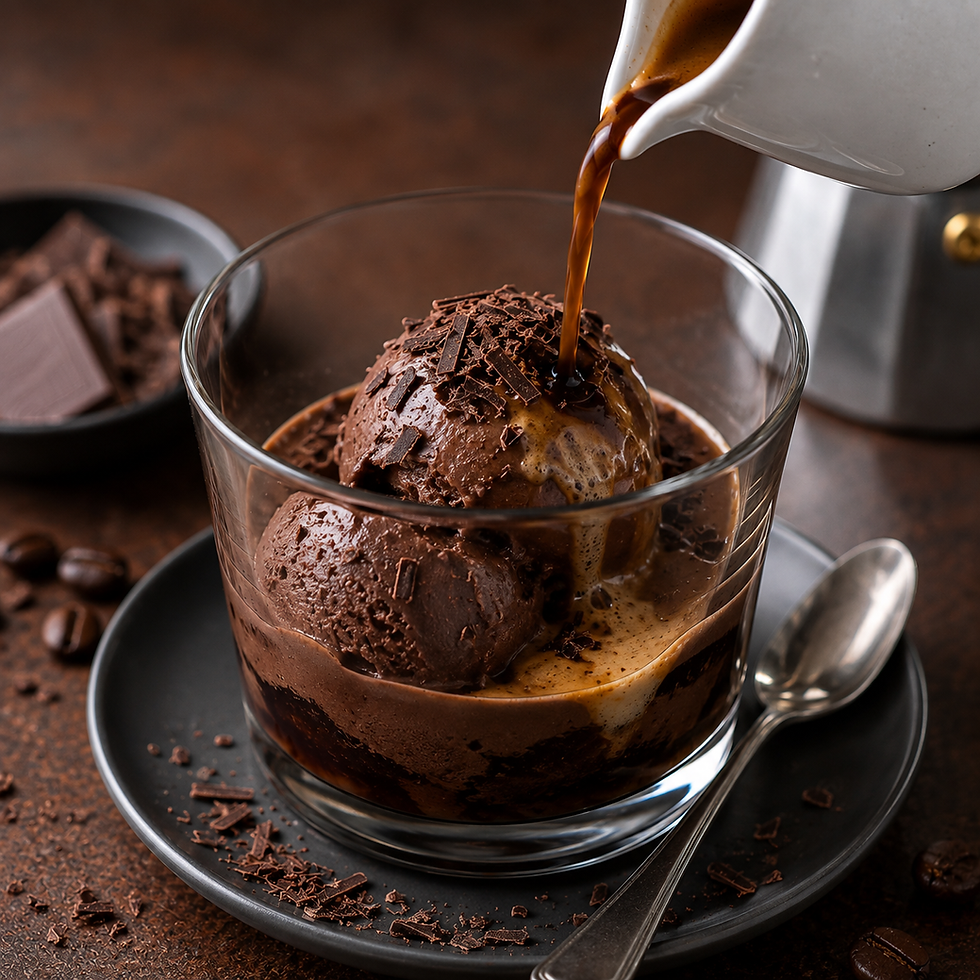
Serve this cold, in small quantities, in something that does not warm it. Chilled steel or ceramic coupes are ideal and glass is acceptable; avoid a warm plate and avoid a wide flat one, where a water base loses its edges within a minute. Two modest scoops are more than enough, because the flavour is concentrated and a large portion tires the palate long before the bowl is empty.
Finish with restraint. Three or four grains of flaky salt on the surface lift the cocoa and make the bitterness read as depth rather than as astringency. A few toasted almonds or a scatter of shaved Modica chocolate adds the crunch that the smooth base invites, and either one is plenty. No cream, no mint leaf, no chocolate sauce: the argument of the recipe is that the chocolate needs no help.
Professional Technique
Removing the cream changes what the recipe has to solve. A milk base arrives with butterfat and milk proteins that give body, hold the structure and tame the cocoa; take them out and the chocolate has to supply the richness on its own, which is why the bar goes in at 7 oz (200 g) for a quart rather than the 4 oz a custard version would need. Milk fat is not neutral. It coats the tongue in a thin film that slows the release of the volatile aromatics in cocoa, which is why a cream gelato tastes rounder and at the same time less chocolatey. On water, those aromatics reach the nose unimpeded: the fruit, the roast and the faint acidity of a good bar all come through, along with any defect in it.
Sugar has to do a second job once the dairy is gone. In a milk base the lactose and the milk solids contribute to keeping the frozen mixture soft; with water alone, the dissolved sugar is nearly the only thing standing between you and a block of ice, because it lowers the freezing point of the water around it. That is why this base carries more sugar than a custard one and why part of it is dextrose. Dextrose has a smaller molecule than sucrose, so gram for gram it depresses the freezing point more effectively while tasting less sweet, and it lets the gelato stay scoopable without turning the flavour into candy.
In the mouth the two versions are genuinely different desserts. The milk version is rounder, longer and warmer, and the chocolate arrives late and stays. The water version is colder on the tongue, sharper at the front, and it finishes clean and short, closer to a very rich sorbet than to ice cream. Neither is better, but they are not interchangeable, and the water base is the one that shows a fine bar honestly.
Texture and Moisture Control
Without dairy proteins to get in the way, the only defence against large ice crystals is speed and cold. Freeze the machine bowl for a full 24 hours, chill the base to refrigerator temperature before it goes in, and do not churn in a warm kitchen. A base that enters the machine at 50F (10C) spends its first minutes warming the bowl instead of freezing, and every one of those minutes grows crystals that you will feel on the tongue for as long as the gelato lasts.
The cornstarch and the small amount of cocoa powder are there as texture insurance rather than for flavour. Both bind free water in the base and raise its viscosity slightly, and a thicker liquid moves more slowly around the paddle, which produces smaller crystals. Two teaspoons is the right amount: more and the gelato turns gummy and tastes of starch, less and it goes icy within a day. Sieving the base after blending is what removes any grain the starch leaves behind.
Water gelato firms faster and thaws faster than a milk one. Store it at around 0F (minus 18C), serve it at about 10F (minus 12C), and never refreeze a container that has gone soft.
Professional Mise en Place
This is a two day preparation with a short active window on each day, so the organisation is mostly about the freezer and the clock.
Equipment and tools
Gelato machine with a bowl frozen for a full 24 hours
Heavy saucepan, balloon whisk and immersion blender
Fine mesh sieve and a shallow metal container for hardening
Digital thermometer and a large bowl for the ice bath
Prepared ahead
Base cooked, sieved and aged, 4 hours to 2 days ahead, kept refrigerated
Chocolate chopped and the dry mixture whisked together, on the day
Almonds toasted and cooled, up to 3 days ahead, kept in a sealed jar
Service setup
Coupes or bowls in the freezer for 20 minutes before service
Scoop in a jug of hot water, wiped dry between portions
Flaky salt and garnishes in small dishes within reach
Gelato out of the freezer 5 to 8 minutes before the first scoop
Chef Tips
Taste the bar before you commit to it. Whatever you notice while eating it plain, dried fruit, tobacco, sourness, a chalky finish, will be twice as obvious in the finished gelato, because there is no dairy in the recipe to soften any of it.
Weigh the water rather than measuring it by volume, and weigh the pan before and after cooking. A quarter cup lost to evaporation moves the balance noticeably, and topping it back up to the starting weight with cold water costs nothing.
A pinch of ground cinnamon or a very small amount of chilli, added with the dry ingredients, is a genuine Modican reference rather than a modern flourish. Keep it under a quarter teaspoon, and use one or the other, not both.
Make this the day before you want it and no earlier. A water base is at its best between 2 and 24 hours after churning, and the difference between day one and day four is something you can taste.
Common Mistakes
Adding the chocolate to boiling liquid. The chocolate seizes into grains that no amount of whisking will smooth out, and the fat separates into an oily film on the surface. Take the pan off the heat, wait half a minute, then add the chocolate and leave it alone for a minute before whisking.
Churning the base warm. A base above refrigerator temperature wastes the coldest minutes of the cycle and comes out coarse and grainy. Chill it below 40F (4C) and make sure the machine bowl has had a full day in the freezer.
Cutting the sugar to make it taste more adult. Sugar is doing structural work in a dairy free base, not just sweetening it. Reduce it and the gelato freezes into something you cannot get a scoop into.
Using a bar above 80 percent. Very high percentage chocolate carries less sugar of its own, and the base finishes dry and astringent. Stay between 70 and 72 percent, and never use chocolate chips, which are formulated to hold their shape instead of melting.
Skipping the ageing step. Four hours in the refrigerator lets the base come together properly. Churned immediately, the same ingredients give a thinner, icier and duller gelato.
Wine Pairing
Recioto della Valpolicella DOCG: The classic answer and the most reliable one. Dried Corvina grapes give sweet black cherry and cocoa notes of their own, and the wine keeps real acidity and a fine tannic grip under the sugar, so it meets the bitterness of the bar instead of sliding off it.
Montefalco Sagrantino Passito DOCG: For anyone who wants the pairing to have teeth. Sagrantino is one of the most tannic grapes in Italy and the dried grape version keeps that structure alongside the sweetness: tannin against cocoa tannin, with sour cherry and bitter herb underneath. It handles a very dark bar better than any lighter dessert wine.
Marsala DOC: The Sicilian pairing, and the one this gelato was born next to. Choose a Semisecco or Dolce Superiore, where the oxidative walnut, dried fig and caramel character bridges the roast in the chocolate. The fortified alcohol also warms the palate between spoonfuls of something served frozen.
Moscato di Scanzo DOCG: A rarity worth finding: a red Moscato dried on racks in Lombardy and aged for years, with rose, dried strawberry and a faint sage note. Lighter in body than the wines above, it works best with the gelato served plain, and it makes the fruit side of a single origin bar easier to read.
Malvasia delle Lipari DOC: The alternative Sicilian choice, from the Aeolian islands, all dried apricot, honey and a saline finish that comes from the volcanic soil and the sea air. The salinity is the point: it echoes the flaky salt on the surface of the gelato and keeps the pairing from turning into one long sweet note.
Storage & Reheating
Store the gelato in a shallow airtight container with parchment pressed onto the surface, at around 0F (minus 18C). It is at its best within 24 hours of churning and stays genuinely good for about a week, after which the crystals coarsen and the aroma of the chocolate fades. A deep tub keeps worse than a shallow one, because the centre takes far longer to freeze and thaws unevenly every time the lid comes off.
The uncooked base keeps refrigerated in a sealed container for up to 2 days before churning, and this is the better thing to make ahead. Whisk it before use. Do not freeze the base to churn later, and never refreeze gelato that has softened on the table: the water in it refreezes as large crystals and the texture is gone for good.
Nutrition
Per serving, based on 6 servings of about 5 oz (150 g):
Calories: 265 kcal
Total Fat: 11 g
Saturated Fat: 6.5 g
Trans Fat: 0 g
Unsaturated Fat: 4 g
Cholesterol: 0 mg
Sodium: 105 mg
Total Carbohydrates: 41 g
Fiber: 4 g
Total Sugars: 33 g
Added Sugars: 30 g
Protein: 3 g
Lactose: 0 g
Principal micronutrients: iron, magnesium, copper, manganese, potassium
These figures are estimates and move with the bar you choose. Because there is no dairy in the recipe, the gelato is naturally lactose free and cholesterol free.


Comments