
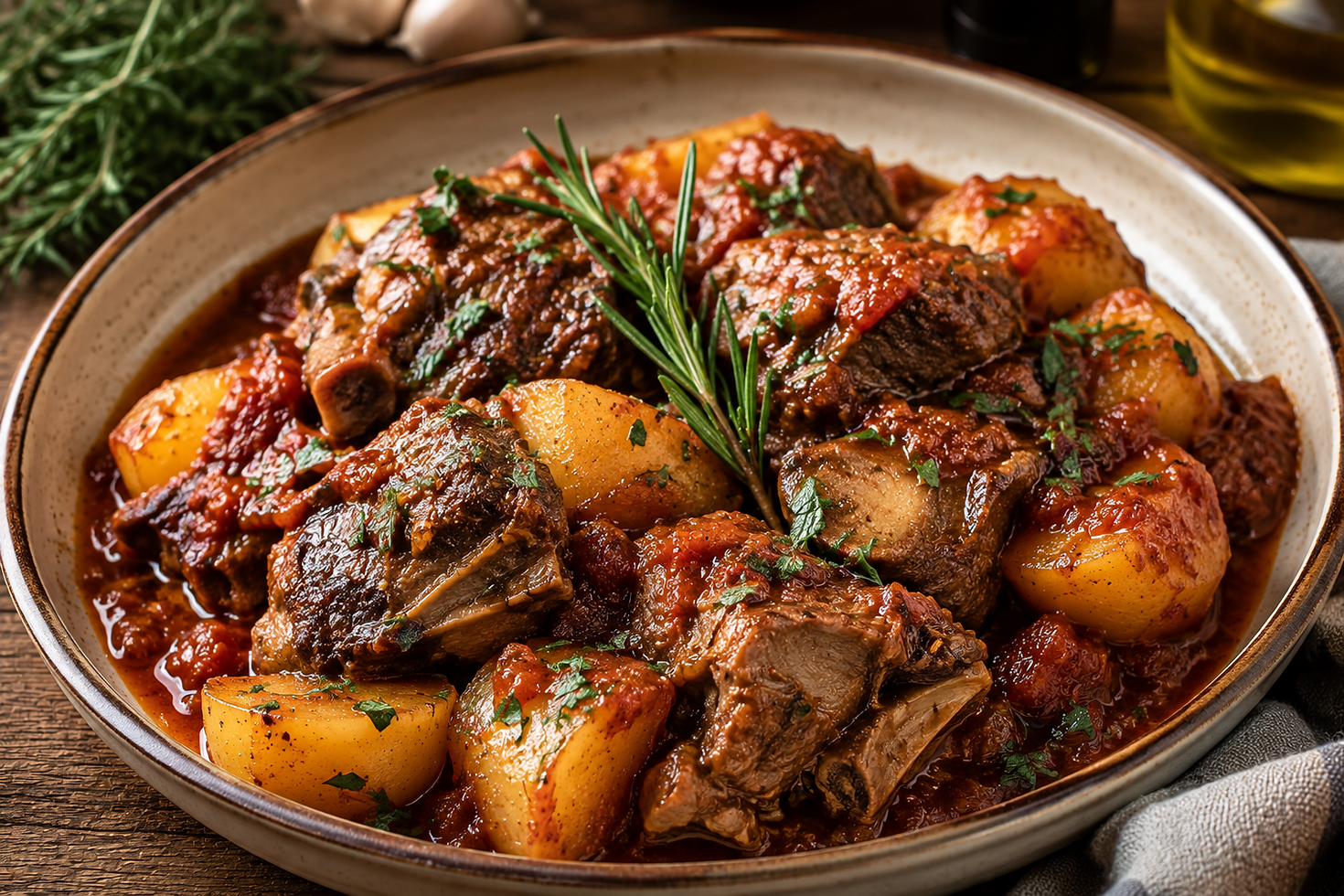
Italian Potenza Style Lamb | Agnello alla Potentina
Updated: 7 days ago

Agnello alla Potentina is a robust lamb preparation associated with Potenza and the mountain cooking of Basilicata. The cuisine of this inland region is built on sheep and goat, durum wheat, preserved peppers, olive oil, aromatic herbs and patient cooking rather than elaborate garnish. Lamb is especially at home in this landscape, where pastoral traditions shaped both everyday meals and feast-day cooking. The best versions taste direct and concentrated: browned meat, garlic, rosemary, wine, tomato and the natural sweetness of potatoes, with enough peperoncino to sharpen the finish without covering the lamb.
The technical objective is to brown the lamb deeply, build a clean aromatic base, deglaze completely, then braise slowly until the connective tissue softens and the sauce becomes glossy. Potatoes are added late enough to hold their shape. Tomato should support the meat rather than turn the dish into a generic tomato stew. Resting before service allows the juices to settle and the sauce to tighten naturally around the lamb.
This version follows professional kitchen logic while respecting the rustic character of the dish. Bone-in lamb shoulder or shank gives the best combination of flavor, collagen and moisture. The braising liquid is deliberately controlled: enough tomato for body, enough wine for aroma, and enough stock to cook gently without boiling the meat.
Ingredients
• Bone-in lamb shoulder or lamb shanks: 3 lb (1.36 kg), cut into large serving pieces
• Yukon Gold or other all-purpose potatoes: 1 1/2 lb (680 g), peeled and cut into large pieces
• Extra virgin olive oil: 3 tbsp (45 ml)
• Yellow onion: 1 large, thinly sliced
• Garlic: 4 cloves, lightly crushed
• Dry red wine: 1 cup (240 ml)
• Crushed or peeled tomatoes: 14 oz (400 g)
• Light lamb or chicken stock: 1 cup (240 ml), plus more only if needed
• Tomato paste: 1 tbsp (16 g)
• Fresh rosemary: 2 sprigs
• Red wine vinegar: 1 tbsp (15 ml), added gradually to taste
• Peperoncino: 1 small dried chili, or to taste
• Fine sea salt: approximately 2 tsp (10 g), adjusted during cooking
• Freshly ground black pepper: 1 tsp (2 g)
• Flat-leaf parsley: 2 tbsp (8 g), finely chopped for finishing
Preparation
1. Heat the oven to 325°F (165°C). Pat the lamb completely dry and season with salt and black pepper. Dry meat browns; wet meat steams, so this first step directly affects the final flavor.
2. Heat the olive oil in a heavy Dutch oven or braising pan over medium-high heat. Brown the lamb in batches, leaving space between the pieces. Turn only when a dark crust has formed. Transfer the browned lamb to a tray and keep all rendered juices.
3. Reduce the heat to medium. Add the onion and cook until softened and lightly golden, about 6 minutes. Add garlic, rosemary and peperoncino and cook for about 30 seconds, just until aromatic. Stir in the tomato paste and cook until it darkens slightly.
4. Deglaze with the red wine, scraping every browned bit from the bottom of the pan. Reduce the wine by roughly half before adding tomatoes and stock. This removes raw alcohol notes and concentrates the fond into the braising base.
5. Return the lamb and its juices to the pan. The liquid should reach about halfway up the meat rather than cover it. Bring to a gentle simmer, cover and transfer to the oven. Braise for about 1 hour and 20 minutes.
6. Add the potatoes around the lamb without stirring aggressively. Continue cooking, partially covered, for another 35 to 45 minutes, until the lamb is fork-tender and the potatoes are cooked through but still intact.
7. Remove the pan from the oven and let it stand for 15 minutes. Skim excess fat. If the sauce is thin, remove lamb and potatoes and reduce the liquid over medium heat until glossy enough to coat the back of a spoon.
8. Stir in the red wine vinegar a little at a time, tasting after each addition. Return lamb and potatoes to the sauce and warm gently. Adjust salt, black pepper and peperoncino only after the sauce reaches its final concentration.
Technical Balance
Moisture control is the professional difference. Lamb releases liquid as it cooks, tomatoes contribute water, and a covered braise loses very little through evaporation. Too much stock produces boiled meat and a diluted sauce. Start with less liquid than seems necessary and add only a small amount if the pan becomes dry. A proper braise finishes with concentrated cooking juices, not soup.
Browning determines the final depth. Crowding the pan lowers the temperature and prevents the Maillard reaction that gives roasted lamb its savory character. Work in batches and allow the pan to recover heat between them. The fond on the bottom is valuable; the wine must dissolve it completely so that flavor returns to the sauce.
Potatoes need separate attention. Cut them into large, even pieces and add them only after the lamb has begun to tenderize. If added at the beginning, they can collapse before the meat is ready and make the sauce starchy. Nestle them around the lamb rather than stirring repeatedly.
Professional Technique
Keep the braising liquid at a quiet simmer throughout cooking. High heat tightens the exterior of the lamb and can make the sauce greasy before collagen has time to convert into gelatin. When ready, a fork should enter easily but the pieces should still hold their shape. Perform the final reduction only after tenderness is achieved, because tenderness and sauce concentration are separate technical goals.
For service, use a warm shallow bowl or plate. Place one generous piece of lamb slightly off center, arrange potatoes around it, and spoon the reduced sauce over the meat rather than flooding the plate. Finish with a few drops of extra virgin olive oil and a restrained amount of parsley. The presentation should remain rustic but disciplined.
Chef Tips
• Choose lamb with bone and connective tissue; very lean boneless cuts can dry out before the sauce develops enough depth.
• Brown in batches. A crowded pan is the fastest way to lose roasted flavor.
• Add potatoes late and keep the pieces large so they remain intact during the final braise.
• Use rosemary carefully. It should perfume the lamb, not dominate the sauce.
• Taste the finished sauce before adding more salt because reduction can increase salinity dramatically.
• Rest the braise for 15 minutes before serving to improve texture and sauce consistency.
Common Mistakes
• Boiling the lamb aggressively instead of maintaining a gentle braise.
• Adding too much stock and finishing with a watery sauce.
• Burning garlic or tomato paste before deglazing.
• Cutting potatoes too small or adding them at the beginning.
• Overseasoning before the sauce has reduced.
• Serving immediately from the oven without allowing meat and sauce to settle.
Wine Pairing
Aglianico del Vulture Superiore DOCG — The most regionally coherent choice: dark fruit, acidity, savory structure and firm tannin have enough authority for lamb while remaining connected to Basilicata.
Taurasi DOCG — Another serious Aglianico expression, with acidity, tannin and earthy depth for the slow braise and concentrated sauce.
Montepulciano d’Abruzzo DOC — Generous dark fruit and flexible tannin work naturally with browned lamb, tomato and potatoes.
Chianti Classico DOCG — Sangiovese acidity cuts through lamb fat while herbal notes echo rosemary and garlic.
Etna Rosso DOC — A fresher mineral alternative whose red fruit and fine tannins keep the pairing precise rather than heavy.
Storage & Reheating
Cool leftovers rapidly and refrigerate in a sealed container with their cooking liquid for up to 3 days. Refrigerating lamb and sauce together allows you to remove solidified surface fat before reheating. Warm slowly in a covered pan at 300°F (150°C), adding only a small splash of stock if the sauce has tightened excessively. Avoid repeated reheating, which dries the lamb and breaks down the potatoes.
The dish can be prepared one day ahead. An overnight rest often improves integration of the braising sauce. Reheat gently and perform the final seasoning only after the sauce is hot, because cold food makes salt and acidity difficult to judge accurately.
Nutrition
Estimated nutrition per serving, based on 6 servings:
Calories: 620 kcal
Total Fat: 36 g
Saturated Fat: 12 g
Trans Fat: less than 0.5 g
Unsaturated Fat: 23.5 g
Cholesterol: 125 mg
Sodium: 690 mg
Total Carbohydrates: 31 g
Fiber: 4 g
Total Sugars: 6 g
Added Sugars: 0 g
Protein: 42 g
Lactose: 0 g
Main micronutrients: iron 4 mg; zinc 6.5 mg; vitamin B12 2.8 mcg; potassium 1,000 mg
Values are estimates calculated from the stated recipe quantities and may vary with ingredient brands, trimming, cooking loss, retained sauce and final portioning.
Chef Gianluca Deiana Abis


Comments