
Italian Bolognese Christmas Cake | Certosino di Bologna
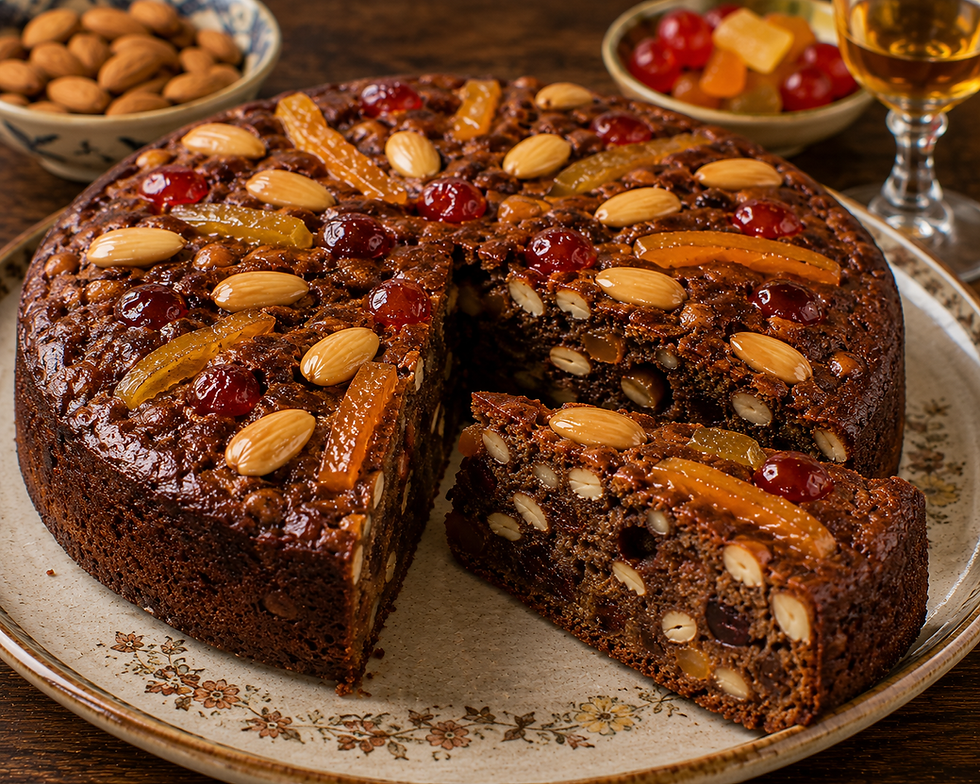
Certosino is not a cake for tonight. It is baked in early December, glazed with honey, wrapped and left alone until Christmas. There is no butter, no egg and no real leavening in it, only honey, spice, cocoa, almonds and candied fruit, all of them keepers.
Yield: 12 servings, one 9 inch (23 cm) round. Prep: 35 minutes. Cook: 50 minutes. Maturation: 2 to 4 weeks. Difficulty: intermediate. Region: Bologna, Emilia Romagna.
The Story
The older name of this cake is panspeziale, the bread of the spice merchant. In medieval Bologna the Arte degli Speziali, the guild of apothecaries and spicers, held the monopoly on pepper, cinnamon, cloves, imported almonds, candied citrus peel, honey and wax. A thirteenth century apothecary sold medicine, and medicine was largely spice suspended in honey, so a spiced honey cake was a pharmacist's job rather than a baker's, and the guild statutes protected it as such.
The second name comes from the Certosa di Bologna, the Carthusian monastery founded outside the city walls in 1334. The certosini refined the panspeziale and blessed the cakes at Christmas, and the monastic name slowly displaced the guild one. When Napoleon suppressed the monastery in 1797 and the Certosa became Bologna's monumental cemetery, the cake kept the name and moved into domestic kitchens and pastry shops, where it has stayed.
The apothecary's logic survives in the modern recipe. Honey is the main sweetener because it is hygroscopic and antibacterial. Candied fruit replaces fresh because candying was itself a preservation craft the speziali controlled. Spices appear in quantities that would be excessive in any other Italian cake, because spice was the guild's stock in trade. Almonds and pine nuts supply the richness that butter supplies elsewhere. Bologna has other Christmas sweets, but every pasticceria in the centre stacks this one in the window through Advent, and families time the baking to Santa Lucia on 13 December.
It also belongs to a wider family. Ferrara's pampepato, Siena's panforte and the honey and spice breads of half of northern Europe all descend from the same medieval habit of binding nuts, dried fruit and precious spices with honey, a habit that travelled along the spice routes through Venice and up the Po valley. What sets the Bolognese cake apart is its restraint. It has no glossy coating of chocolate, no white sugar frosting, and it is never dressed up as a dessert for the end of a large meal.
In Bologna it is cut thin and passed around in the last days of December, with a glass of something sweet, as much a gesture of hospitality as a sweet. That is the spirit of this recipe: no shortcuts on the ingredients, and no rush at the end. The cake rewards the cook who plans in December for a table set in January.
Ingredients
For the honey base
Honey, mild and floral such as acacia or wildflower, 1 cup (340 g)
Granulated sugar, 3/4 cup (150 g)
Whole milk, 3/4 cup (180 ml)
Dark chocolate, 70 percent cocoa, finely chopped, 4 oz (113 g)
For the dry mixture
All purpose flour, 3 cups (380 g)
Unsweetened cocoa powder, 1/2 cup (45 g)
Ground cinnamon, 1 tsp (2.6 g)
Freshly grated nutmeg, 1/4 tsp (0.5 g)
Ground cloves, 1/8 tsp (0.3 g)
Baking soda, 1 tsp (5 g)
Fine sea salt, 1/2 tsp (3 g)
For the fruit and nuts
Whole almonds, skin on, 1 1/2 cups (215 g), part reserved whole for the top
Pine nuts, 1/2 cup (68 g)
Candied orange peel, cut in large pieces, 1 cup (180 g)
Candied citron, cut in large pieces, 1/2 cup (90 g)
Candied cherries, whole, 1/2 cup (90 g), part reserved for the top
For the pan and the glaze
Unsalted butter, 2 tbsp (28 g), for the pan
Parchment paper, one disc cut to a 9 inch (23 cm) round pan, plus a second sheet for wrapping
Honey, 2 tbsp (42 g), for the finishing glaze
Water, 1 tsp (5 ml), to loosen the glaze
Aluminium foil or an airtight tin, for the maturation
Preparation
Step 1: Toast the nuts
Heat the oven to 350°F (175°C). Toast the almonds for 7 to 8 minutes and the pine nuts on a separate tray for 4 to 5, until both smell sweet. Cool completely. Keep 20 handsome almonds whole for the top and chop the rest into halves and thirds, never into rubble, because you want to meet a piece of almond, not a texture.
Step 2: Prepare the fruit and the pan
Cut the candied orange and citron into thumbnail pieces, about 1/2 inch (12 mm). Halve most of the cherries and keep a dozen whole. If the fruit is hard, steam it over simmering water for 2 minutes and pat it dry, but never soak it, since water washes out the syrup that preserves it. Butter a 9 inch (23 cm) pan, line it with parchment and butter that too.
Step 3: Warm the honey and chocolate
Stir the honey, sugar and milk over low heat until the sugar dissolves and the mixture is barely warm, around 120°F (50°C). Take it off the heat, add the chocolate, wait 2 minutes, then stir until glossy. Honey scorches easily and loses its aroma with heat, so this step is about dissolving, not cooking. Cool for 10 minutes.
Step 4: Sift the dry mixture
Sift the flour, cocoa, cinnamon, nutmeg, cloves, baking soda and salt into a large bowl and whisk briefly, so the small amount of clove is dispersed evenly. A pocket of concentrated clove in one slice is unpleasant and unmistakable.
Step 5: Make the batter
Pour the honey mixture over the dry ingredients and stir with a sturdy spatula until no flour remains. It will be a stiff paste, and that is correct. Stop as soon as it comes together, because overworked gluten makes the cake bready and tough instead of dense and close.
Step 6: Fold in the fruit and nuts
Fold in the chopped almonds, pine nuts, candied peel and halved cherries with a cutting motion. If the batter sticks to the spatula, wet the spatula rather than adding liquid, because every addition of liquid costs crumb density later.
Step 7: Fill the pan and decorate
Press the batter level with a wet spatula, about 1 1/2 inches (4 cm) deep. Set the reserved almonds and cherries in concentric rings and press each one in so it stays anchored when the cake is cut.
Step 8: Bake
Bake at 350°F (175°C) for 45 to 50 minutes, until the surface has lost its shine, the edges pull slightly from the pan and the centre feels firm under a fingertip. Skip the skewer, since chocolate and fruit coat it regardless. Pull it slightly early, since it keeps setting as it cools.
Step 9: Glaze and cool
Warm the 2 tablespoons of honey with the water and brush it over the hot cake, around the decoration. Cool the cake completely in its pan on a rack, about 3 hours. Warm certosino is fragile and cracks across the middle if it is moved.
Step 10: Wrap and mature
Turn out the cold cake, peel off the parchment and wrap it in fresh parchment, then in foil or an airtight tin. Store it in a cool cupboard for at least 2 weeks. Do not cut it before then.
Plating
Bring the whole cake to the table first, decorated side up on a wooden board, so the mosaic is seen before it is cut. Use a long serrated knife with a sawing motion, wiping the blade between slices because the glaze drags. Cut slices about 1/2 inch (12 mm) thick and halve them, since the cake is very rich.
Serve at cool room temperature, around 64°F (18°C), with nothing else on the plate. No cream, no custard, no sauce: the slice already holds chocolate, honey, spice and fruit. A small piece of aged hard cheese alongside is a genuine Emilian habit and works against the sweetness. The cut face is the argument for the recipe, a near black crumb studded with amber peel, pale almonds and red cherries.
Professional Technique
The technique of this recipe is time. Straight from the oven certosino is two materials sharing a pan: a dry, crumbly crumb and candied fruit still heavy with syrup, with the honey glaze sitting on top. Over two to three weeks in a sealed wrapping, moisture moves from the fruit and glaze into the crumb until the whole cake is uniform, and the spice and cocoa flavours spread and join. Bake on Santa Lucia and it is ready by Christmas.
The wrapping follows from that. Cool the cake completely first, at least 3 hours, because any warmth left inside becomes condensation under the wrapper and spoils the glaze. Then wrap it in parchment, which touches honey without sticking, and add a second layer that water and air cannot cross, either foil folded tight or a lidded tin. The paper protects the surface and the outer layer keeps the moisture inside the cake, which is where the redistribution needs it.
Where the cake lives follows too. Keep it cool and dark, around 55°F to 68°F (13°C to 20°C), but never in the refrigerator, where the crumb would harden and the whole process would stall. And it is never cut early. A slice at day five shows dry crumb beside wet fruit, and every time the wrapping is opened it lets out moisture that is still moving. Write the baking date on the foil and wait. The patience is part of the recipe, and the cake is finished only when the wrapping comes off.
Texture and Moisture Control
The target is dense, close and slightly chewy, with no visible air cells. The single teaspoon of baking soda reacts with the acidity of honey and cocoa to prevent a brick, not to lift the cake, which should rise barely a quarter inch. If yours domes or cracks across the top, the batter was too wet or the oven too hot, and it is drifting toward an ordinary spice cake.
Moisture is set at the start. The batter should be stiff enough to hold a spatula upright, because a slack batter lets the candied fruit sink and bakes a wet seam at the base. Very little water leaves in the oven, which is why the bake is short for a cake this dense and why even 5 extra minutes shows. Judge doneness by the matt surface and firm resistance, and let residual heat finish the job.
The honey glaze then seals the top. Brush it on hot, when the surface is still open, so it sets into a thin lacquer instead of sitting as a sticky film. If a slice ever turns out dry, the cake was overbaked and no amount of waiting will repair it. Sweet wine in the glass is the only remedy.
Professional Mise en Place
Equipment and tools
Two baking trays, so almonds and pine nuts toast separately
Stiff spatula or wooden spoon for the thick batter
9 inch (23 cm) round pan, parchment, pastry brush
Microplane for fresh nutmeg
Foil or a lidded tin for the weeks of storage
Fine sieve large enough for 3 cups of flour with the cocoa and spices
Long serrated knife
Prepared ahead
The whole cake, baked and wrapped 2 to 4 weeks before service
Nuts toasted and decoration almonds set aside on baking day
Candied fruit cut on baking day only, steamed briefly if hard
Spices measured into the flour before any liquid is warmed
Pan buttered and lined before the honey warms
Honey glaze measured and ready, so it goes on the hot cake at once
Service setup
Cake unwrapped 1 hour before service and brought to 64°F (18°C)
Almonds and cherries for any spare decoration kept within reach
Whole cake shown decorated side up, then cut
Serrated knife, hot damp cloth and a flat board for thin slices
Small glasses for the wine, one per guest
Sweet wine opened and chilled to 54°F (12°C)
Chef Tips
Buy honey for its flavour, because here it is the flavour. Acacia or wildflower gives a clean floral base that lets spice and cocoa lead. Chestnut honey makes a darker, more bitter cake worth trying once you know the standard. Avoid eucalyptus, which collides with the clove.
Cut the candied fruit yourself from whole peel. The diced mixed peel sold in tubs is dry, cut too small and made from the cheapest fruit, which is why so many homemade certosini taste like supermarket panettone. Whole candied peel from a good grocer costs more and transforms the cake.
Bake two cakes and hide one. A single cake is finished within a week of unwrapping, so you never taste it at six or eight weeks, when it is arguably at its peak. The batter takes the same effort for two pans as for one.
Write the baking date on the foil. The cake looks identical at two weeks and two months, and it keeps for three months without any safety concern.
Common Mistakes
Cutting it too soon. On day one the crumb is dry, the spices are raw and the honey sits on the surface. Two weeks wrapped is the minimum, three or four the intention.
Boiling the honey. Above 160°F (70°C) honey loses its floral aromatics and then caramelises bitter. Warm it only until the sugar dissolves and add the chocolate off the heat.
Overdoing the cloves. One eighth of a teaspoon looks tiny, but doubling it gives a cake that tastes of the dentist. Measure it with a proper measuring spoon and sift it through the flour.
Beating the batter. Stir only until no dry flour shows. Worked batter bakes bready and tough instead of dense and close.
Wrapping plastic against the glaze. Condensation collects under it and turns the lacquer tacky and dull. Use parchment, then foil or a tin, so the surface stays glossy for the whole maturation.
Using pre diced mixed peel. Commercial tubs are dry and cut too small. Buy whole orange peel and citron and cut thumbnail pieces yourself, so every slice shows large jewels of fruit.
Wine Pairing
Vin Santo del Chianti Classico DOC: The most complete match, built on concentration through time. Years in small sealed barrels give dried fig, walnut skin and a rancio note that runs alongside the aged spice and candied peel. Its acidity is high for a sweet wine, so a slice never coats the palate. Serve at 54°F (12°C) in a small glass.
Recioto della Valpolicella DOCG: The choice when the chocolate is what you want to follow. Made from Corvina dried on racks, it is sweet but firmly tannic, and that tannin meets the cocoa solids and toasted almonds without either side softening. Its dried cherry fruit echoes the candied cherries on top. Serve at 61°F (16°C).
Moscato di Scanzo DOCG: The connoisseur's answer, a tiny Lombard appellation near Bergamo making a sweet red from dried grapes. Rose petal perfume and a genuine spice note of its own meet the cinnamon and nutmeg on equal terms, and the small production suits a cake served in thin slices. Pour it in very small glasses, since a little goes a long way, and let it warm slightly in the hand to open the perfume.
Brachetto d'Acqui DOCG: The lightest option, right for a long Christmas table where a heavy sweet wine would tire people. Low in alcohol at around 5 percent, gently sparkling and full of rose and red berry aroma, its carbonation cuts the honey directly, which the still wines above cannot do. It is the friendliest pairing for guests who find the others too heavy.
Storage & Reheating
Wrapped in parchment and foil, or sealed in a tin, and kept in a cool dark cupboard, certosino keeps for three months and improves over the first month. There are no eggs, no butter in the crumb and very little free water, so nothing in it spoils. Never refrigerate it, before or after cutting, because cold hardens the candied fruit and stales the crumb faster.
Check the wrapping once a week during the first fortnight to confirm it is still snug. Once cut, press a piece of parchment against the exposed face, rewrap and return it to the cupboard, where it keeps another month. A mature cake can be frozen in a third layer of wrap for up to 3 months and thawed unopened overnight at room temperature. There is no reheating: certosino is served cool, never warm, since warming melts the honey glaze and blurs the slices.
Nutrition
Per serving, based on 12 servings:
Calories: 590 kcal
Total Fat: 27 g
Saturated Fat: 4 g
Trans Fat: 0 g
Unsaturated Fat: 23 g
Cholesterol: 3 mg
Sodium: 150 mg
Total Carbohydrates: 80 g
Fiber: 5 g
Total Sugars: 45 g
Added Sugars: 34 g
Protein: 10 g
Lactose: 0.7 g
Micronutrients: magnesium, iron, calcium, vitamin E, copper
These figures are estimates and vary with the brand of chocolate and candied fruit. Cholesterol is very low because the cake contains no egg and no butter.


Comments