
Italian Umbrian Black Truffle Crostini | Crostini Umbri al Tartufo Nero
Updated: 6 days ago

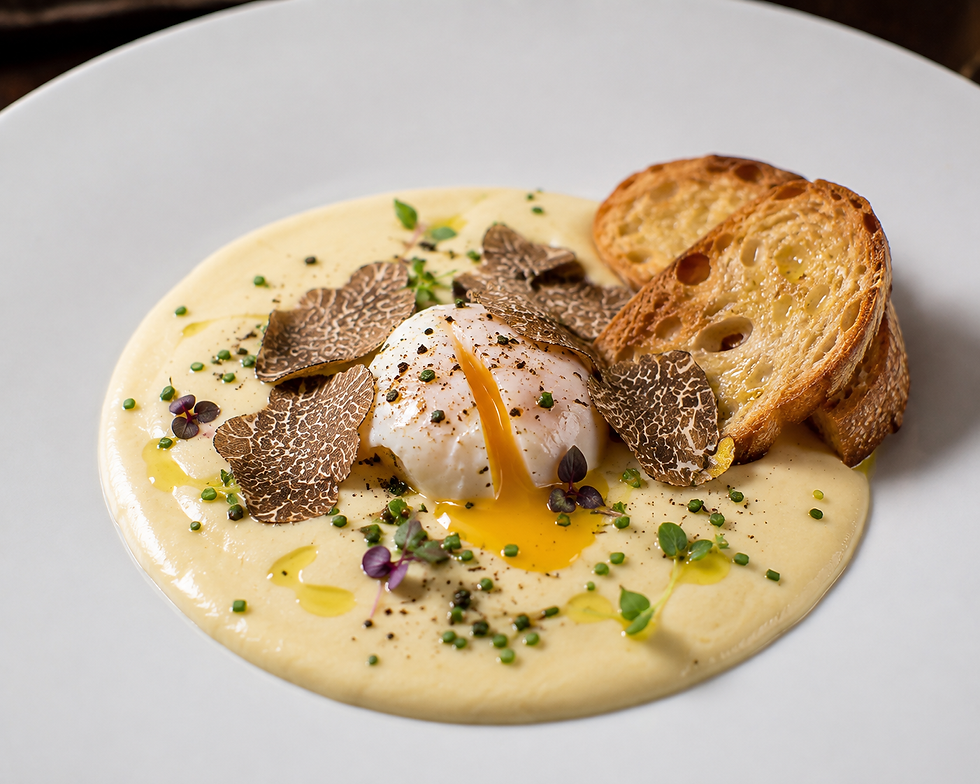
Umbrian black truffle crostini are an exercise in concentration and restraint. Country bread provides crunch, extra virgin olive oil carries aroma, and a small amount of anchovy can deepen savoriness without announcing itself. Black truffle must remain the unmistakable center. Long cooking, heavy cheese or aggressive garlic would cover the volatile perfume that justifies the dish.
Each crostino should be crisp at the perimeter and slightly yielding beneath the topping. The truffle mixture must be spoonable and moist, never greasy or puréed beyond recognition. Serve warm rather than scorching hot, because excessive temperature sends the aroma away before the first bite.
This professional version is written for four to six diners unless otherwise stated. Measure the principal ingredients by weight when possible, keep heat controlled, and taste at every stage. Regional cooking is precise because simple ingredients leave nowhere for careless technique to hide. Read the method once before beginning, prepare every component, and reserve final seasoning until cured meat, cheese, stock or reduced liquid has contributed its own salt.
The ingredient list uses U.S. customary measures first with metric equivalents. Times are guides, but sensory cues take priority: color, aroma, resistance and moisture reveal more than a timer alone. Use the named regional product when practical because its fat, salt and maturation affect the balance; when it is unavailable, choose a high-quality product with the closest composition rather than an unrelated luxury substitute.
Before cooking, establish three reference points: the raw ingredient's aroma, the intended final texture, and the temperature at which the dish will be served. These references make correction possible. Moisture can be reduced, seasoning can be refined, and a sauce can be loosened, but only when the cook knows what has changed. Keep measured reserve liquid nearby, use a wide enough pan to avoid steaming, and clean the rim of every serving plate before it leaves the kitchen.
Regional authenticity also depends on proportion. The principal ingredient must remain recognizable, supporting aromatics should be finely cut, and finishing fat should carry flavor without forming a visible layer. Taste a complete bite that includes the main component, sauce, garnish and cheese together. If it feels heavy, adjust with controlled acidity or a fresher finish; if it feels thin, improve concentration or texture before reaching automatically for more salt.
For organized service, complete the slow or resting stages first and leave only the final texture-sensitive work for the last minutes. Prepare warm plates for hot food, room-temperature plates for bread and pastry, and chilled containers for ingredients that must stay cold. This sequence protects the contrast between crisp and tender elements and reduces the temptation to hold finished food. A professionally cooked regional recipe should appear effortless because its timing has been planned.
Ingredients
• 8 slices unsalted country bread, each about 1/2 inch (1.25 cm) thick, 10 oz (285 g) total
• 2 oz (55 g) fresh Umbrian black truffle, carefully cleaned
• 5 tbsp (75 ml) extra virgin olive oil, divided
• 1 small garlic clove (3 g), lightly crushed
• 2 oil-packed anchovy fillets (10 g), drained
• 1 tsp (5 ml) fresh lemon juice
• 2 tbsp (30 ml) warm unsalted vegetable stock or water
• 1/8 tsp (0.75 g) fine sea salt, only if needed
• 1/4 tsp (0.6 g) freshly ground black pepper
• 1 tsp (2 g) finely chopped flat-leaf parsley, optional and restrained
Preparation
1. Brush the truffle with a soft damp brush, rinse only if soil remains in crevices, and dry immediately. Reserve about one-quarter for shaving at service.
2. Finely mince the remaining truffle by hand. Avoid processing it into paste, which damages texture and warms the truffle.
3. Warm 3 tbsp (45 ml) olive oil with the crushed garlic over very low heat for 3 minutes. Remove the garlic before it colors.
4. Add anchovy and stir until dissolved. Remove the pan from direct heat, add minced truffle, warm stock and black pepper, and stir for 30 to 45 seconds. The mixture must not fry.
5. Taste before adding salt. Stir in lemon juice drop by drop; it should brighten the oil without making the topping taste lemony.
6. Grill or toast the bread until crisp at the edges but not completely dry. Brush the hot surface with the remaining 2 tbsp (30 ml) olive oil.
7. Spoon the warm truffle mixture onto the bread, allowing it to soak slightly into the center. Hold for no longer than 2 minutes.
8. Finish with thin shavings of reserved truffle and, if used, a few grains of parsley. Serve immediately on a warm plate.
Professional Technique
Truffle aroma is volatile and fat-soluble. Gentle warmth releases it into the olive oil, while high heat destroys its complexity. Work with a small pan, remove it from the burner before adding truffle, and control seasoning through tasting. The anchovy is a seasoning mechanism, not a visible topping; if it tastes fishy, too much was used.
Professional consistency comes from controlling variables before service. Weigh the main ingredient, standardize the cut or portion, preheat the cooking surface fully, and keep a small tasting spoon nearby. If the recipe includes a sauce or dressing, judge it with the main component rather than alone: starch, bread, meat or pastry changes the perception of salt, fat and acidity. Warm plates for hot savory dishes and cool plates for desserts, then serve promptly so the intended contrast is still present.
Chef Tips
• Buy truffles firm and intensely aromatic, and use them as soon as possible.
• Clean only immediately before cooking; storing washed truffles accelerates deterioration.
• Choose bread with an open but sturdy crumb so it absorbs oil without collapsing.
• Plate small portions: concentration is more elegant than a thick, heavy mound.
• Make one controlled test portion whenever hydration, thickness or heat can vary. Correcting a small test is faster and safer than adjusting an entire batch after cooking.
Common Mistakes
• Frying the truffle or leaving it over direct heat.
• Using so much garlic or anchovy that the truffle becomes secondary.
• Toasting bread until hard from edge to center.
• Preparing the topped crostini early and allowing steam and oil to soften them.
• Holding the finished dish too long before serving. Carryover heat, steam and absorption continue to change texture even after cooking stops.
Wine Pairing
Powerful tannin and dark fruit match slow-cooked goose, truffle and robust Umbrian flavors; decanting improves balance. Serve at the appropriate cellar temperature and select a dry or sweet style according to the dish; the wine should refresh the palate while allowing Crostini Umbri al Tartufo Nero (Italian Umbrian Black Truffle Crostini) to remain the focus.
Bright acidity, red fruit and restrained tannin refresh cured pork, browned butter and roast poultry without masking delicate aromatics. Serve at the appropriate cellar temperature and select a dry or sweet style according to the dish; the wine should refresh the palate while allowing Crostini Umbri al Tartufo Nero (Italian Umbrian Black Truffle Crostini) to remain the focus.
Nebbiolo's perfume, acidity and earthy complexity can mirror black truffle when the crostini are served with restraint. Serve at the appropriate cellar temperature and select a dry or sweet style according to the dish; the wine should refresh the palate while allowing Crostini Umbri al Tartufo Nero (Italian Umbrian Black Truffle Crostini) to remain the focus.
Storage & Reheating
Truffle topping is best used immediately. If necessary, refrigerate it in a covered glass container for up to 24 hours and warm only gently. Store plain toasted bread airtight at room temperature for 1 day and re-crisp at 325°F (165°C) for 4 minutes. Do not store assembled crostini.
Discard food left at room temperature for more than 2 hours. Reheat only the portion needed, use a thermometer for meat and filled preparations, and avoid repeated cooling and reheating. Texture after storage will not equal fresh service, so keep sauces, garnishes and crisp elements separate whenever possible.
Nutrition
Per serving of 2 crostini: approximately 285 calories, 6 g protein, 31 g carbohydrates, 15 g fat, 2 g saturated fat, 3 g fiber, and 360 mg sodium.
Nutrition values are estimates and vary with ingredient brands, trimming, absorbed cooking fat and final portion size. Wine and optional accompaniments are not included.




Comments