
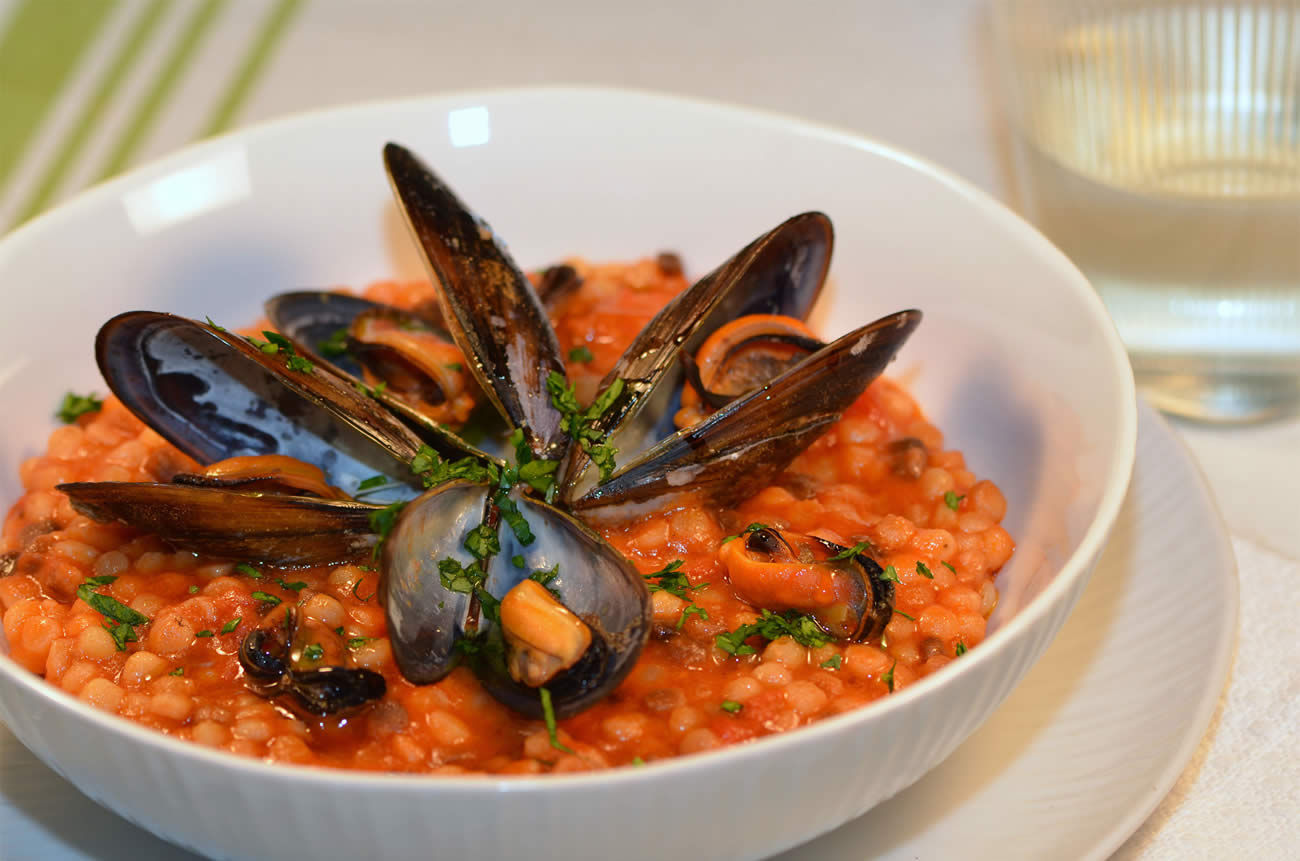
Italian Sardinian Fregola | Fregola Sarda con le Cozze
Updated: Sep 13

Fregola sarda con le cozze brings toasted Sardinian pasta and mussels together in a tomato broth enriched with filtered shellfish liquor and white wine. Chef Gianluca Deiana Abis cooks the fregola directly in the sauce, much like risotto, so each grain absorbs marine flavor.
Most mussels are removed from their shells for easy eating, while twelve attractive shells return as garnish. Garlic, parsley and peperoncino remain measured so the broth tastes of mussels first.
This expanded version preserves the original quantities and thirteen minute fregola method while adding precise shellfish checks, filtration, salt control and service timing.
Servings and Timing
Servings: 4. Prep Time: about 20 minutes. Cook Time: about 20 minutes. Total Time: about 40 minutes.
Recipe Information
Servings: 4. Prep Time: about 20 minutes. Cook Time: about 20 minutes. Total Time: about 40 minutes.
Preparation time: 15 minutes
Cooking time: 35 minutes
Difficulty: 2 out of 5
Ingredients
2.2 pounds fresh mussels
130 grams, or about two thirds cup, fregola sarda
Flat leaf parsley, stems and leaves separated
1 garlic clove
Peperoncino flakes to taste
250 milliliters, or 1 cup, puréed peeled tomatoes, fresh or canned
2 tablespoons extra virgin olive oil
120 milliliters, or one half cup, dry white wine
Water as needed
Recipe at a Glance
Preparation time: 15 minutes
Cooking time: 35 minutes
Difficulty: 2 out of 5
Serves: 4
Buy Mussels From a Trusted Seller
Choose mussels from a reputable seafood counter with reliable refrigeration and harvest information. Shells should smell clean and marine, not sour or strongly fishy.
Keep them cold during transport and refrigerate in a breathable container. Do not seal live mussels tightly in fresh water or an airtight bag.
Sort the Mussels
Discard cracked or badly damaged shells. A mussel that is slightly open before cooking may still be alive; tap it gently and discard it if it does not close.
These checks happen immediately before cooking. Do not keep questionable shellfish in the batch hoping heat will correct poor condition.
Scrub and Debeard
Rinse mussels under cold running water and scrub away grit or attached material. Pull away any fibrous beard toward the hinge with a firm motion.
Work quickly and return cleaned mussels to refrigeration if the pan is not ready. Avoid soaking, which can kill them and dilute their natural liquor.
Prepare the Parsley
Wash flat leaf parsley and dry it. Chop the stems separately from the leaves. Stems enter the steaming liquid, while minced leaves finish the fregola.
This separation uses the entire herb according to its texture. Stems provide aroma during cooking, and tender leaves retain fresh color near service.
Steam With White Wine
Place cleaned mussels in a wide pan with one half cup dry white wine and chopped parsley stems. Cover and bring to a boil.
Cook only until shells open. Shake the pan gently to distribute heat. Mussels become tough when held long after opening.
Discard Mussels That Stay Closed
Remove opened mussels as they become ready if necessary. At the end, discard any shell that remains closed, following Chef Deiana Abis’s method.
Do not force a closed shell open for tasting. Food safety and quality take priority over saving one piece.
Filter the Mussel Liquid
Pour the pan liquid through a colander to remove large debris, then filter it again through clean kitchen paper or an unused coffee filter.
Fine filtering removes sand that would otherwise ruin the dish. Keep the liquor hot and taste a drop cautiously because salinity can be intense.
Shell Most of the Mussels
Remove most mussels from their shells as soon as they are cool enough to handle. Reserve about twelve of the best looking shells for garnish.
Keep the meat covered and cold if the sauce is not starting immediately. Discard empty shells and clean the workspace before handling ready ingredients.
Prepare the Garlic Oil
Dry the frying pan, add two tablespoons olive oil and warm it gently. Peel the garlic clove and cut it into two pieces.
Tilt the pan off the heat so garlic sits in the oil and fries gently. Remove it as soon as it turns golden. Dark garlic would make the entire broth bitter.
Add Tomato and Peperoncino
Return the pan to heat and add one cup puréed peeled tomatoes. Season with peperoncino according to taste.
Do not add salt yet. Filtered mussel liquor carries natural salinity, and its concentration increases as fregola absorbs liquid.
Add the Fregola
Bring tomato to a boil and stir in 130 grams fregola. Add about half the filtered mussel liquor and reduce to medium heat.
Stir periodically so toasted pasta cooks evenly and does not stick. Fregola should remain surrounded by enough liquid to swell without becoming soup.
Cook Like Risotto
Cook for about thirteen minutes, adding more mussel liquor when the pan becomes dry. Taste each addition before using it because the sauce can become too salty quickly.
When salinity is already correct, add hot water instead. This preserves cooking moisture without concentrating the sea beyond balance.
Know When Fregola Is Ready
The grains should be almost tender but retain a firm center. Fregola varies by size and producer, so the clock provides guidance rather than absolute proof.
The sauce should look creamy from starch yet still flow gently around the pasta. It thickens further during the final rest.
Return the Mussels
Fold shelled mussels into the fregola near the end, giving them only enough time to become hot. Long recooking makes them rubbery.
Add one tablespoon minced parsley leaves and taste. Use extra mussel liquor, hot water or a tiny amount of salt only after judging the complete pan.
Rest With Shell Garnishes
Turn off the heat and arrange reserved mussels in their shells over the fregola. Cover and rest for a couple of minutes.
Residual steam warms the garnish while pasta finishes absorbing sauce. Do not extend the rest until the mussels dry and the fregola becomes stiff.
Serve on Warm Plates
Spoon fregola into preheated shallow bowls and place three shell mussels on each portion. Distribute shelled meat evenly through all four plates.
Finish with parsley and a small thread of olive oil only if desired. Cheese is unnecessary because it would cover the shellfish liquor.
Fregola in Sardinian Cooking
Fregola is a characteristic Sardinian pasta formed into small grains and often toasted. Its shape resembles large couscous, but its cooking behavior and roasted flavor give it a distinct identity.
Mussels and clams are classic partners. The dish can be prepared in bianco without tomato or with tomato as in this version, always using shellfish liquor as a central ingredient.
Plan the Workflow
Clean mussels first, then chop parsley and prepare tomato, garlic, wine and fregola. Once steaming begins, the liquor becomes the timing center of the recipe.
Filter, shell and measure the liquid before starting tomato sauce. This keeps the pan from waiting while mussels sit warm and exposed.
Choose the Fregola Size
Fregola is sold in different grain sizes and degrees of toast. Medium grains suit this method because they absorb sauce while retaining a distinct center.
Read the package and compare its timing with the original thirteen minutes. A larger grain may need longer and additional liquid.
Do Not Rinse Fregola
Add dry fregola directly to the tomato sauce unless the package gives a specific contrary instruction. Surface starch helps create the characteristic creamy broth.
Rinsing would also remove some toasted flavor. Inspect for packaging debris, measure accurately and move directly to the pan.
The Importance of a Wide Pan
A wide frying pan lets grains spread in an even layer and gives mussels enough room to open during the first stage. It also makes stirring easier.
A narrow pot concentrates heat and encourages uneven absorption. Surface area supports the risotto style method and makes evaporation easier to judge.
Control Tomato Intensity
One cup puréed tomato should support shellfish without becoming a heavy red sauce. Choose a clean product with balanced acidity and no strong seasoning.
Cook it briefly in garlic oil before fregola enters. This removes raw flavor while preserving enough liquid for pasta absorption.
Peperoncino Should Remain Secondary
Begin with a small pinch of chile and allow it to bloom in tomato. Mussels provide delicate sweetness that excessive heat can hide.
Additional chile can be served at the table. A moderate base keeps the dish welcoming and lets wine pairing remain comfortable.
Measure the Mussel Liquor
After filtering, note how much liquid the mussels released. The quantity varies according to shellfish and pan conditions, so not every batch produces the same amount.
Keep hot water ready as backup. The cook should never force all salty liquor into the pan merely because it exists.
Stir Without Crushing
Use a wooden spoon or silicone spatula to move fregola across the pan bottom. Stir often enough to prevent sticking but not constantly.
Periodic movement releases starch while preserving grain shape. Aggressive mixing can break softened fregola and make the sauce pasty.
Balance Broth and Grain
Near the end, draw a spoon through the pan. The sauce should flow slowly back into the path while grains remain distinct.
If the track stays dry, add hot water or acceptable liquor. If liquid rushes back like soup, cook briefly before returning mussels.
Handle Shell Garnishes
Choose twelve intact open shells with attractive mussels and clean their exterior after steaming if any debris remains. Keep them covered so meat does not dry.
Arrange three per plate for four guests. Equal garnish makes every portion feel complete and eliminates searching through the pan at service.
Serve Safely
Shellfish should reach the table hot and be eaten promptly. Cool leftovers quickly and refrigerate, but reheating can make mussels firm and fregola soft.
Discard any shellfish that developed questionable odor or sat at unsafe temperature. Food safety matters more than preserving one leftover portion.
A Bianco Variation
The original note mentions fregola in bianco. To explore that direction, omit tomato and build the cooking liquid from filtered mussel liquor, water, olive oil, garlic and parsley.
This is a variation rather than the archived formula. Salt control remains identical, and peperoncino should still be measured carefully.
Scaling the Recipe
For two people, halve mussels, fregola, tomato and wine. Still reserve enough attractive shell mussels for balanced garnish.
For eight, use two pans rather than crowding one. Mussels need space to open and fregola needs a broad surface to cook evenly.
Final Sensory Checkpoints
Fregola should be tender with a firm center and carry a creamy tomato broth. Mussels should remain plump, and no sand should appear between the teeth.
Aroma should be white wine, parsley and clean sea, followed by gentle garlic and chile. Salinity must feel natural, never concentrated enough to tire the palate.
Mussels Release Their Own Seasoning
The liquid inside each shell contains sea water and natural juices. Once wine and evaporation concentrate it, even a small volume can season the entire pan.
That is why salt waits until the end. Tasting before each addition is the only reliable way to respect variation between batches.
Keep Open Mussels Moist
As mussels are shelled, cover the meat with a spoonful of filtered liquor. This prevents drying while tomato and fregola begin cooking.
Use only a little liquid so the meat remains easy to fold into the pan. Keep it cold if the waiting period will be more than brief.
Warm the Plates Without Overheating
A warm bowl preserves the fluid sauce, but a very hot one continues cooking shellfish. Use gentle heat and dry each plate before service.
Fregola should spread slightly after spooning, not remain as a rigid mound. Correct texture in the pan before it reaches the bowl.
Do Not Add Cheese
Parmigiano or pecorino would introduce strong salt and dairy flavor to a broth already rich in mussel liquor. Chef Deiana Abis’s recipe needs neither.
For extra richness, use a small final thread of olive oil. This preserves the identity of tomato, fregola and sea.
Transporting Fresh Mussels
Keep the trip from market to refrigerator short. Use ice packs, but do not let mussels sit submerged in melted fresh water.
At home, remove any sealed plastic cover that prevents breathing and follow the seller’s storage instructions. Cook as soon as practical.
Shell Disposal and Cleanup
Collect discarded shells in a sturdy bag and remove them promptly. Wash the sink, colander, filter setup and work surface after shellfish handling.
Use clean utensils when returning cooked mussels to fregola. Early preparation surfaces may carry debris removed from raw shells.
Rest Only Briefly
The covered two minute rest warms garnish and settles flavor, but fregola keeps drinking broth. Set a timer and uncover promptly.
If the pan tightened, add one spoonful of hot water and fold gently before plating. Do not flood it after the mussels have returned.
Preserve the Parsley Aroma
Stems tolerate steaming, but leaves belong at the end. Add minced leaves only after the fregola is nearly cooked.
Fresh parsley should look green and smell clear at the table. Long boiling turns it dark and removes the contrast with tomato.
Recognize a Complete Sauce
A spoonful should contain several fregola grains, tomato broth and mussel together. If the liquid remains separate, more gentle stirring may be needed.
If all liquid has vanished, the pasta will continue drying on the plate. Finish slightly looser than the exact texture you want to eat.
Use a Dry White Wine
The cooking wine should taste clean, crisp and free from obvious sweetness. Since it becomes part of the mussel liquor, flaws remain visible.
Pour the measured half cup rather than estimating from the bottle. Too much wine delays opening and can make the broth sharply acidic.
A Final Taste Before Service
Taste one grain with one mussel, not broth alone. This reveals the combined salt level and whether fregola has reached the correct center.
Adjust only then, cover for the brief rest and serve without another long reduction.
This final check protects both pasta texture and natural shellfish flavor.
The Zafferano & Co. Perspective
Chef Gianluca Deiana Abis’s fregola sarda con le cozze is a complete Italian Sardinian first course. Toasted pasta absorbs tomato, white wine and filtered mussel liquor while garlic, parsley and chile provide structure.
Steam mussels only until open, filter every grain of sand, control salinity and cook fregola to a firm center. Warm the mussels at the end and serve immediately. The result is deeply marine, balanced and unmistakably Sardinian.
Professional Technique
Seafood quality and temperature control are decisive. Dry the surface before searing, avoid overcrowding the pan, and stop cooking as soon as the center reaches the intended doneness. Shellfish should open cleanly and be removed from heat promptly; delicate fish benefits from gentle handling and minimal reheating.
Mistakes to Avoid
Poor shellfish, unfiltered liquor, early salt, burnt garlic and overcooked mussels are the main failures. Adding all liquor without tasting can make the dish inedible.
Sort carefully, filter twice, build liquid gradually and return mussels only at the end. The sea should taste concentrated, not harsh.
Chef Gianluca’s Recommendation
For the best result, prioritize ingredient quality and execute the basic technique cleanly before adding decorative touches. The finished recipe should taste balanced first; presentation comes second. Make the final adjustment for salt, acidity, sweetness, or texture immediately before service, then serve without unnecessary delay.
Wine Pairing
Moscato d’Asti DOCG — aromatic sweetness and fresh acidity match the dessert without making the finish heavy.
Vin Santo del Chianti Classico DOC — oxidative complexity and balanced sweetness complement baked, nutty and pastry flavors.
Brachetto d’Acqui DOCG — red-fruit perfume and gentle sparkle refresh the palate between sweet bites.
Pairing the Dish Within a Menu
Serve a light vegetable antipasto before fregola and a simple fish or vegetable course afterward. Another tomato rich seafood plate would repeat the same flavors.
As a casual main course, increase the portion slightly and add a green salad. Bread is optional because fregola already supplies starch.
Nutrition per Serving
Approximate nutrition per serving: 460 calories, 1.2 oz protein, 0.99 oz carbohydrates, 0.78 oz fat, 0.18 oz saturated fat, 0.14 oz fiber, 0.18 oz sugars, 720 mg sodium, and 105 mg cholesterol. Values vary with the fish, sauce, and portion size.
Reheating Leftover Fregola
Warm leftovers gently with a small amount of water, adding mussels near the end. The dish will be thicker because fregola continues absorbing liquid.
Do not boil repeatedly. Low heat protects the shellfish as much as possible, though the first service remains the best texture.
Storage and Reheating
Cool leftovers promptly and refrigerate in an airtight container for up to 3 days. Reheat gently with a small amount of stock, water, or sauce as appropriate. Avoid repeated reheating because it damages texture and can dry proteins or overcook starches.


Comments