

Morzeddhu Catanzarese (Italian Catanzaro Tripe Stew)
- 3 days ago
- 6 min read
Story and Tradition
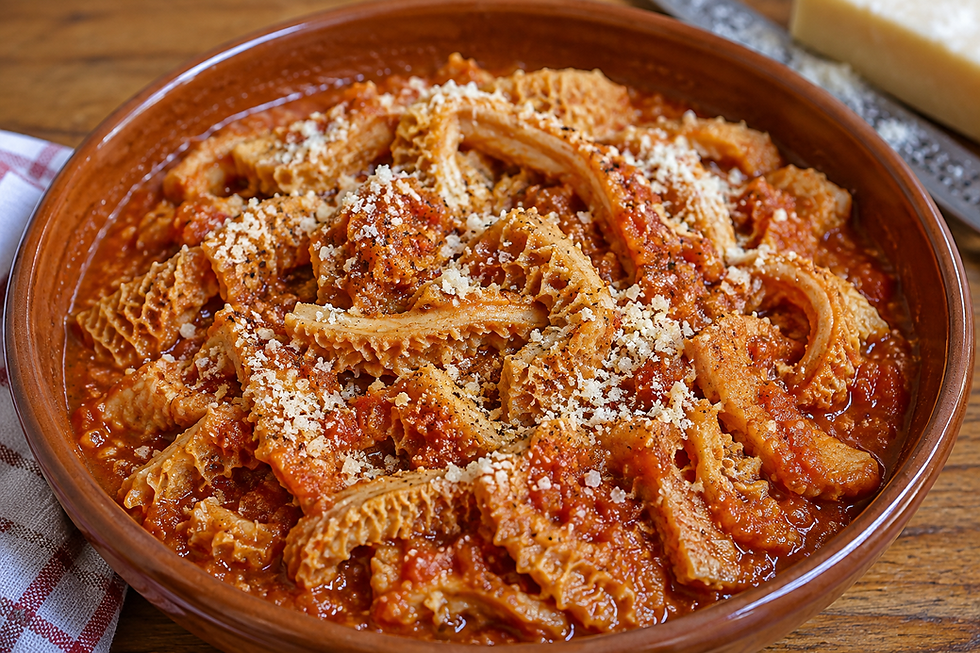
Morzeddhu is one of the most recognizable dishes of Catanzaro and one of Calabria’s clearest examples of cucina di recupero: a cooking culture that transforms inexpensive cuts and offal through long, careful preparation. Traditionally associated with workers and market food, morzeddhu turns tripe and other bovine offal into a highly seasoned tomato stew often served inside a local bread called pitta.
Recipes vary, and older preparations can include several cuts of offal beyond tripe. This version focuses on cleaned beef tripe so the method can be repeated reliably in a modern kitchen while preserving the defining elements: long cooking, tomato, peperoncino, oregano, bay and a sauce concentrated enough to soak bread without becoming watery.
The dish should be spicy, but heat is not the entire point. Proper morzeddhu has depth from slow-cooked tripe, sweetness from onion and tomato, fragrance from oregano and bay, and a warm chili finish. The tripe should be tender but retain enough texture to remain identifiable.
Recipe Information
Serves: 6
Preparation time: 30 minutes
Cooking time: 2 1/2 to 3 hours
Resting time: 15 minutes
Total time: about 3 hours 30 minutes
Ingredients
• Cleaned beef tripe: 3 lb (1.35 kg), cut into strips about 1/2 inch wide
• Crushed tomatoes: 4 cups (960 g)
• Yellow onion: 1 large, finely sliced
• Garlic: 4 cloves, crushed
• Extra virgin olive oil or rendered beef fat: 3 tbsp (45 ml)
• Dry red wine: 3/4 cup (180 ml)
• Unsalted beef stock or water: 2 cups (480 ml), approximately
• Dried Calabrian peperoncino: 1 to 2 tsp, adjusted to heat preference
• Dried oregano: 2 tsp
• Bay leaves: 2
• Tomato paste: 1 tbsp (18 g)
• Fine sea salt: about 2 tsp, adjusted after reduction
• Freshly ground black pepper: 1 tsp
• Flat-leaf parsley: 2 tbsp, chopped, optional for a fresher finish
Preparing the Tripe
Even when tripe is sold cleaned, rinse it thoroughly under cold running water and inspect it carefully. Trim any hard excess fat or discolored edges. Place it in a large pot, cover with cold water and bring to a boil. Simmer 10 minutes, then drain and rinse again. This short blanch removes residual aromas and produces a cleaner final sauce.
Cut the cooled tripe into pieces of similar width. Uniform strips cook more evenly and make the finished stew easier to eat, especially if it will be served inside bread.
Building the Stew
1. Heat olive oil or rendered fat in a heavy casserole over medium heat. Add onion and cook 8 to 10 minutes until fully soft and beginning to turn golden.
2. Add garlic, oregano, bay and half the peperoncino. Cook 30 seconds, then add tomato paste and cook 1 minute.
3. Add the blanched tripe and stir for several minutes so it is coated with the aromatic base.
4. Pour in the red wine and simmer until reduced by about half.
5. Add crushed tomatoes and 1 1/2 cups (360 ml) stock or water. Bring to a gentle simmer, cover partially and cook 2 to 2 1/2 hours.
6. Stir every 20 to 30 minutes and add small amounts of hot stock only if the sauce threatens to dry before the tripe is tender.
7. When the tripe is tender but still has texture, uncover and reduce the sauce until it is thick enough to cling strongly to the pieces.
8. Taste and add remaining peperoncino, salt and black pepper as needed. Rest 15 minutes before serving.
Professional Technique
Tripe responds to time more than aggressive temperature. It contains collagen and muscle structure that need a long gentle simmer. Boiling hard does not make it tender faster in a useful way; instead, it can make the sauce greasy and the tripe unevenly textured. Maintain small bubbles and allow time to do the work.
The blanching stage is worth keeping even with prepared tripe because it gives the final tomato sauce a cleaner flavor. The objective is not to remove all character from the offal, but to eliminate stale or sulfurous notes that would compete with oregano and chili.
Sauce concentration should happen primarily at the end. During the long tenderizing stage, the pot needs enough moisture to keep the tripe surrounded by steam and liquid. Once tenderness is achieved, uncover and reduce to the thick Catanzaro-style consistency appropriate for bread service.
Chef Tips
Taste the peperoncino before using it. Dried Calabrian chilies vary enormously in strength. Add only half at the beginning and correct heat at the end, when the sauce is concentrated and the true spice level is easier to judge.
If using a mixture of offal in a more historical interpretation, add each cut according to tenderness rather than at one time. Lean muscular pieces may need longer cooking than liver-like components, which can become grainy if overcooked.
Make the dish a day ahead when possible. After refrigeration, excess fat is easy to remove and the oregano, chili and tomato become more integrated. Reheat slowly and restore consistency with a small amount of water if necessary.
Common Mistakes
Do not skip cleaning and blanching. Do not use so much water that the stew becomes soup. Do not add all the chili at the beginning, and do not judge the final salt level before the tomato has reduced.
Another mistake is cutting the tripe too finely. Small pieces lose identity and can create a mushy texture. Strips should remain visible and substantial after several hours of cooking.
Wine Pairing
Cirò Bianco DOC — A regional white option whose freshness can cool peperoncino while handling tomato and offal.
Cerasuolo d’Abruzzo DOC — A structured dry rosato has enough fruit for tomato and enough acidity for a rich tripe stew.
Etna Rosso DOC — Fine tannins and volcanic freshness work well with tomato, oregano and chili.
Montepulciano d’Abruzzo DOC — Generous fruit and savory spice stand up to the concentrated sauce.
Aglianico del Vulture Superiore DOCG — For a fuller pairing, firm tannin and dark fruit match long-cooked offal and tomato.
Serving with Pitta
In Catanzaro, morzeddhu is strongly associated with pitta, a ring-shaped local bread. The bread is not simply a side: its open crumb absorbs the spicy tomato juices and turns the stew into a portable, satisfying meal. When serving inside bread, reduce the sauce slightly more than you would for a plated bowl so it saturates without immediately leaking.
Cut a section of bread open along one side, leaving a hinge if possible. Spoon in morzeddhu while hot, including enough sauce to moisten the crumb. Allow it to stand for a minute before eating so the bread absorbs the juices.
Storage and Reheating
Cool promptly and refrigerate in an airtight container for up to 4 days. Reheat slowly over low heat, stirring from the bottom and adding a small amount of water if necessary. Freeze for up to 2 months. The texture of tripe holds up very well to freezing and reheating.
Nutrition per Serving
Approximate values per serving: 480 calories; 39 g protein; 20 g carbohydrates; 25 g fat; 8 g saturated fat; 4 g fiber; 9 g sugars; 650 mg sodium. Values vary with the tripe cut and amount of fat retained.
Professional Holding and Service
Morzeddhu holds better than many meat dishes because the tripe remains protected by sauce. Keep it at a gentle temperature rather than a rolling boil. During a long service, check the bottom frequently because concentrated tomato can scorch once the liquid level falls.
For plated service, use a warm shallow bowl and keep the portion compact. Spoon sauce around the tripe rather than drowning it. For bread service, portion immediately before serving so the pitta absorbs flavor without becoming completely soft.
The finished balance should be spicy, aromatic and deeply savory, with tripe that is tender but still pleasantly resilient. If chili dominates every other flavor, it was added too heavily. If tomato dominates, the sauce needs more meat-derived depth or longer cooking. If greasy, skim before final reduction rather than trying to compensate with extra acidity.
Further Texture Control
Tripe from different parts of the stomach has different thickness and texture. Honeycomb tripe has more structure and holds sauce well, while smoother sections can soften faster. If your batch contains mixed types, check the thinner pieces earlier and remove them temporarily if needed. Return them during the final reduction.
The sauce will thicken noticeably as it cools because gelatin from the tripe sets. Do not reduce the hot stew until it resembles paste. Aim for a sauce that still moves slowly in the pot. After the 15-minute rest, it will naturally become more cohesive and bread-friendly.


Comments