
Italian Aged Pecorino Cheese | Pecorino Stagionato
Updated: Sep 13
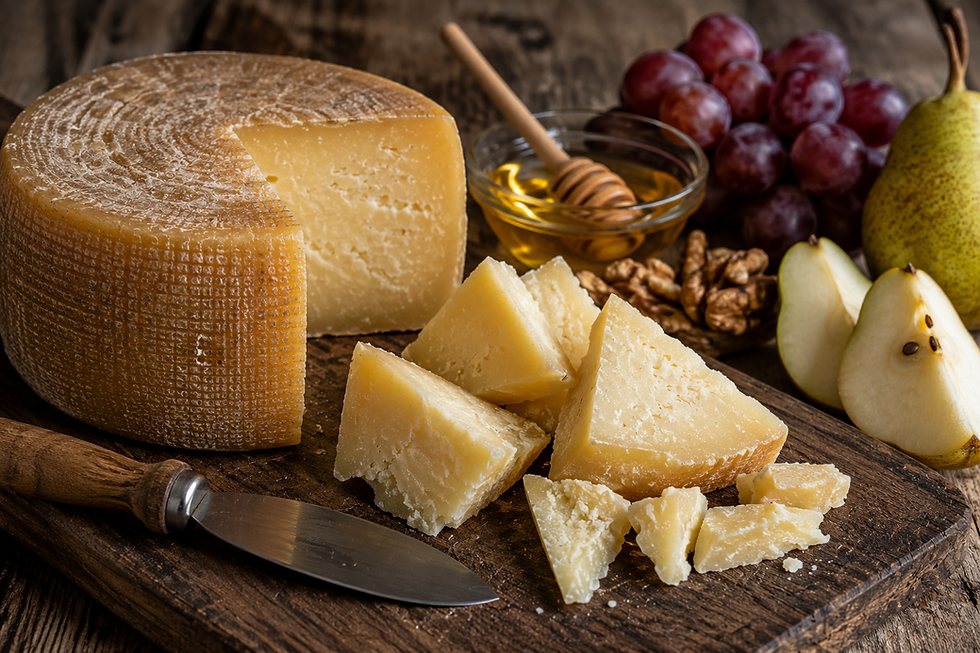
Pecorino stagionato is not merely an ingredient but a category of Italian sheep’s-milk cheeses shaped by pasture, climate, aging and cheesemaking tradition. In Sardinia, aged pecorino develops a compact texture, pronounced salinity and a long savory finish that can range from toasted nuts to dried herbs and lanolin-like complexity.
Serving aged pecorino professionally means controlling temperature and portion size. Cheese served directly from the refrigerator tastes muted and feels excessively firm. Aged pecorino is best brought toward cool room temperature and cut into deliberate, modest portions that allow the aroma to open gradually.
Ingredients
Serves 4
8 oz aged Pecorino Sardo or other Italian aged pecorino (225 g)
4 thin slices rustic Italian bread or pane carasau
2 tbsp chestnut or wildflower honey (30 g)
2 tbsp toasted walnuts (20 g)
1 small ripe pear, thinly sliced
Freshly ground black pepper, optional
Technical Explanation
Aged pecorino is best understood as a finished product that still requires correct service. Cold cheese tastes muted and feels firmer than it should, so tempering it at room temperature is essential. Forty-five to sixty minutes is usually enough for the aroma to open without allowing the surface to dry.
Cutting style changes perception. Thin wedges and irregular shards expose more surface area than thick cubes, releasing aroma and allowing the cheese to soften more quickly on the palate. Very thick pieces can make an aged pecorino feel harder and saltier than its actual balance.
Sweet accompaniments should be controlled. Honey works because it contrasts salt and sharpness, but too much masks the complexity created during aging. A small amount of chestnut honey is especially effective because its slight bitterness matches the savory depth of aged sheep’s milk cheese.
Fresh pear contributes water, acidity and gentle sweetness, while toasted walnuts add fat and texture. These elements should remain separate on the board rather than being piled over the cheese. The guest should be able to taste the pecorino alone before combining it with accompaniments.
Bread or pane carasau provides a neutral, crisp base, but it should not be heavily seasoned. Garlic, oil or strong herbs can interfere with the cheese. The objective is to give structural contrast and cleanse the palate between bites without introducing a competing flavor profile.
Wine pairing depends on maturity. Firmer, more intensely aged pecorino can handle structured reds, while younger examples often favor whites. Whatever the choice, the wine should refresh the palate and complement the cheese’s nutty, savory character rather than amplify saltiness.
Preparation
Remove the pecorino from refrigeration 45 to 60 minutes before serving so its aroma and texture can fully develop.
Cut the cheese into thin wedges or small irregular shards rather than thick cold cubes.
Toast the rustic bread lightly, or use crisp pane carasau at room temperature.
Toast the walnuts briefly in a dry pan until aromatic, then cool completely.
Slice the pear immediately before service so it stays fresh and does not oxidize.
Arrange the pecorino on a room-temperature board or plate with enough space between pieces.
Place honey, walnuts, pear and bread beside the cheese rather than covering it, allowing each guest to control the balance.
If desired, finish the cheese with a very small amount of freshly ground black pepper.
Serve immediately, keeping sweet garnishes restrained so the aged pecorino remains the central flavor.
Professional Technique
Temper the cheese for 30 to 45 minutes before service.
Cut across the wheel so each portion includes a representative balance of paste and rind-side character.
Pair sweet accompaniments sparingly; honey should frame the cheese, not cover it.
Chef Tips
Use a clean knife dedicated to the cheese.
Serve with neutral or lightly toasted bread.
Avoid heavily flavored crackers.
Offer honey or fruit in small quantities.
Store the cut surface wrapped closely to prevent dehydration.
Common Mistakes
Serving the cheese ice-cold.
Cutting oversized portions.
Using too much honey.
Wrapping aged cheese loosely and allowing it to dry.
Pairing it with overpowering condiments.
Regional Context and Service
Cheese service is often underestimated because there is little active cooking, but temperature, cutting and accompaniment determine whether the product tastes balanced or blunt. A mature Italian cheese should be treated with the same precision as a cooked course, especially when it is the focus of the plate.
The serving surface should be neutral and odor-free. Strong wooden boards, perfumed garnishes or refrigerated plates can interfere with aroma. A plain ceramic plate or clean board at room temperature allows the cheese to express its own character without external distraction.
Portion size should encourage tasting rather than fatigue. Small wedges are preferable to oversized blocks because aged cheese is concentrated in salt, fat and aroma. Guests can always take another piece, while a large serving can overwhelm both palate and wine pairing.
Accompaniments should be selected for contrast: crisp bread for texture, fresh fruit for acidity and water, nuts for roasted depth, and honey for controlled sweetness. Each should remain optional so the cheese can still be evaluated on its own.
Advanced Quality Control
Aged cheese should be evaluated before service for aroma, rind condition and moisture. Any piece with excessive ammonia, surface damage or unwanted mold should be trimmed or rejected. Proper maturation gives complexity, not unpleasant sharpness or off aromas.
Temperature should be controlled gradually. Do not warm aged cheese near a stove or under heat lamps to speed the process. Slow tempering at room temperature protects texture and prevents surface oils from separating before the center has softened.
Use a clean knife dedicated to cheese service. Onion, garlic, cured meat or strong spice aromas transfer easily to fat-rich cheese. Cross-contamination of aroma is especially noticeable with mature pecorino or Montasio because the product is served without cooking.
The board should provide enough space for guests to identify each accompaniment separately. Honey, fruit and nuts are supporting elements, not decoration to be scattered randomly. Clear separation improves both appearance and the tasting experience.
When serving several cheeses, aged examples should generally come later in the tasting sequence because their flavor is more persistent. When serving a single cheese as here, start by tasting it alone before adding honey or fruit so its actual character remains clear.
Wine should be poured in moderate amounts and tasted alongside the cheese rather than used to wash away intensity. The best pairing creates a new balance between acidity, fat, salt and aroma while allowing both products to remain recognizable.
For hospitality service, label the cheese accurately when possible, including regional origin and DOP status. Precision in naming matters because mature Italian cheeses can differ significantly even when they share a broad category such as pecorino.
Leftover cut cheese should be wrapped in breathable cheese paper or parchment followed by a loose outer wrap. Airtight plastic directly against the surface can trap moisture and dull aroma. Bring leftovers back to room temperature gradually before serving again.
Professional Service & Quality Control
For a professional cheese course, portion aged pecorino according to intensity rather than visual size. A deeply aged cheese needs less weight on the plate than a young cheese because the flavor is more concentrated. Cut pieces shortly before service and avoid leaving them exposed to dry air for extended periods.
A proper service sequence matters. Bring the cheese toward cool room temperature, arrange bread and honey separately, and allow the guest to combine them. This preserves the ability to taste the pecorino first on its own and then evaluate how each accompaniment changes its salinity, nuttiness and finish.
Wine Pairing
Storage & Reheating
Wrap Pecorino in cheese paper or parchment followed loosely by another protective layer. Avoid sealing it permanently in airtight plastic. Store it in the refrigerator in a relatively stable area rather than directly against the coldest surface.
Nutrition per Serving
Nutrition depends on the exact ingredients and portion size used. Any values should be treated as an estimate rather than a laboratory analysis.
Aged pecorino changes significantly as moisture leaves the cheese. The paste becomes firmer and more granular, while salt, sheep’s-milk sweetness and savory compounds become more concentrated. This is why the same weight of a mature pecorino tastes more intense than a young wheel and why portion size should decrease as aging increases.
Storage also affects quality. Once cut, the exposed face should be wrapped closely and protected from refrigerator air. Before service, unwrap only the amount needed and allow it to temper gradually. Avoid repeated cycles of warming and chilling because they encourage moisture loss and can make the surface oily or brittle.


Comments