
Italian Lemon Tagliolini with Bottarga, Zucchini and Mint | Tagliolini al Limone Rivisitati, Bottarga, Zucchine e Menta
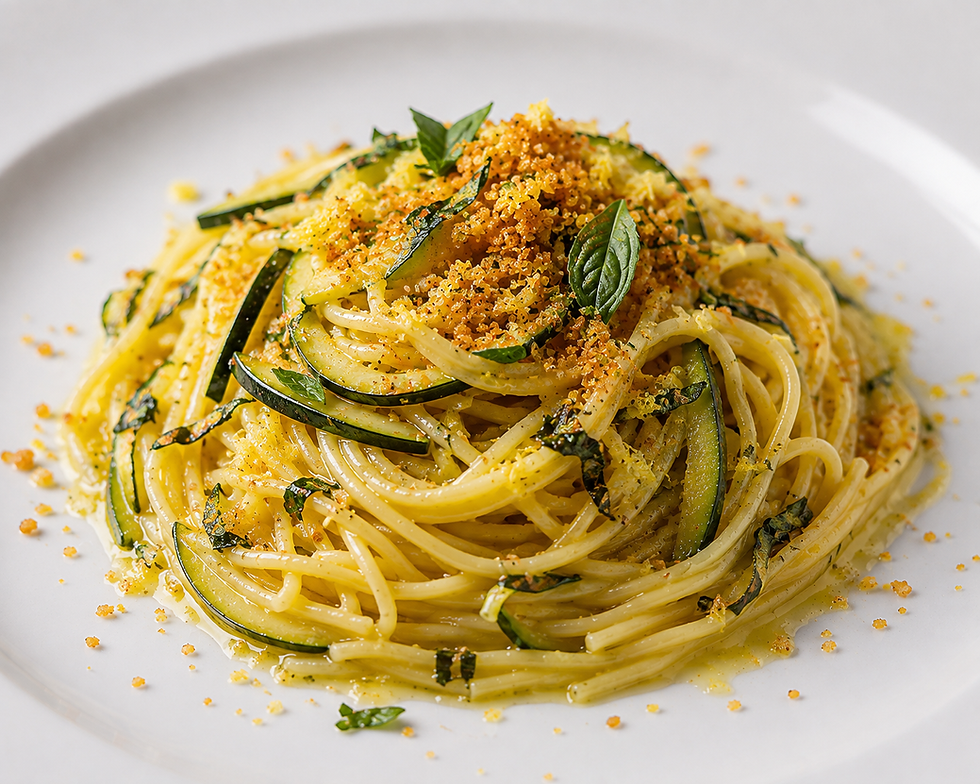
Fine egg tagliolini dressed with almost nothing: green olive oil, a little pasta water, zucchini cooked until sweet but still holding their shape, mint torn in at the last second and bottarga di muggine grated over the top off the heat. No cheese, no cream, no stock. The salt comes from a cured fish roe, so every other seasoning decision is made around it.
Rivisitati means reinterpreted, and the word is doing honest work. The starting point is the plain lemon pasta of the Tyrrhenian coast. What changes is that the acidity is carried by zest and a restrained amount of juice, and the savoury weight comes from Sardinian bottarga instead of aged cheese. Zucchini sit between the two as a sweet vegetal bridge, and mint stops the plate reading as simply rich.
The difficulty is not the pasta, which anyone can cut. It is the bottarga, expensive, intensely salty and ruined by heat, and the zucchini, which turn to water if handled carelessly. Both are dealt with in the last three minutes, and everything below is arranged so those three minutes are the only ones needing real attention.
Yield: 4 servings. Prep: 45 minutes. Rest: 30 minutes. Cook: 15 minutes. Total: about 1 hour 30 minutes. Difficulty: intermediate. Course: primo piatto. Region: Sardinia for the bottarga, central Italy for the egg pasta.
The Story
Bottarga di muggine is the anchor of this dish and the reason it is Sardinian at all. It is the egg sac of the grey mullet, taken whole, salted, pressed between boards and air dried for weeks until firm enough to shave. The centre of production is Cabras, on the Sinis peninsula near Oristano, where the mullet are caught in the brackish lagoon. The method is Phoenician in origin and the name came through Arabic, from butarih, salted fish eggs.
For centuries it was preserved food for people who could not afford waste, not a luxury. That reversed in the last fifty years, and a good lobe from Cabras now costs more by weight than most meat, which is why it is shaved rather than poured on. The Sicilian version made from tuna roe is darker and far more assertive, not interchangeable, and it would flatten this plate.
Tagliolini, on the other hand, are not Sardinian. Thin ribbons of rich egg pasta belong to Emilia, Piedmont and the Marche, where eggs and soft wheat were plentiful. Pairing them with a lagoon cured roe from western Sardinia is a modern restaurant decision rather than a tradition, and it works for one reason: a fine tender ribbon carries a powerful dry seasoning better than any dried semola shape, because the roe clings instead of sliding off.
Ingredients
For the tagliolini
Tipo 00 flour, 1 1/2 cups (200 g)
Semola rimacinata di grano duro, 1/3 cup (50 g)
Egg yolks, large, 6
Whole egg, large, 1
Extra virgin olive oil, 1 tsp (5 ml)
Fine sea salt, 1/4 tsp (1.5 g)
Semola for dusting, 2 tbsp (20 g)
For the zucchini
Small firm zucchini, Romanesco or Genovese, 1 lb (450 g)
Extra virgin olive oil, 3 tbsp (45 ml)
Garlic clove, lightly crushed and left whole, 1
Fine sea salt, 1/4 tsp (1.5 g)
For the lemon and mint dressing
Untreated lemons, 2
Extra virgin olive oil, delicate and green, 1/4 cup (60 ml)
Unsalted butter, cold, 1 tbsp (14 g)
Fresh mint leaves, 16 to 20
Reserved pasta cooking water, about 3/4 cup (180 ml)
Freshly ground white pepper, to taste
For finishing
Bottarga di muggine, whole lobe rather than jarred powder, 1 1/2 oz (45 g)
Finely grated lemon zest, from 1/2 lemon
Small mint leaves, 8
Extra virgin olive oil, a few drops per plate
Preparation
Mix and rest the tagliolini dough
Mound the two flours on a board, make a well and add the yolks, the whole egg, the oil and the salt. Draw the flour in from the walls with a fork, then knead for a full 10 minutes until the dough is smooth and springs back slowly. It will feel firm, almost stiff, because a yolk rich dough carries very little water. Wrap it and rest it at room temperature for 30 minutes so the gluten relaxes and the flour finishes hydrating.
Roll and cut the ribbons
Divide the dough into four and work one piece at a time, keeping the rest wrapped. Roll each down to about 1/32 inch (0.8 mm), thin enough to see your hand through, dust with semola, fold loosely and cut ribbons a scant 1/8 inch (2 mm) wide. Lift and shake them open at once, toss with more semola and set them in loose nests. Sticky tagliolini fuse into a block within minutes and no amount of boiling water separates them again.
Cut the zucchini for texture, not speed
Trim the zucchini and cut them lengthwise into planks about 1/8 inch (3 mm) thick, then stack and cut those into julienne of the same width. Stop at the seedy core and set it aside, because that part is almost entirely water and will thin the sauce. A julienne holds its shape through cooking and lies alongside the pasta, which a rough dice never does.
Sweat the zucchini without letting them colour
Warm the 3 tbsp (45 ml) of olive oil in a wide pan over medium low heat with the crushed garlic for a minute until fragrant, then take the garlic out. Add the zucchini and the salt and cook 6 to 8 minutes, stirring often, until tender and sweet but still distinct. They must not brown: colour brings a roasted flavour that fights both the mint and the bottarga.
Build the lemon and mint base off the heat
Zest both lemons finely, reserving the zest of half a lemon for the finish, and juice one of them, measuring 3 tbsp (45 ml). Take the zucchini pan off the heat, stir in the zest and the 1/4 cup (60 ml) of dressing oil and tear in most of the mint. Leave it to infuse 5 minutes while the water comes up. Mint gives its volatile oils to warm fat and loses them entirely in a hot pan.
Cook the tagliolini in barely salted water
Bring 5 qt (4.7 l) of water to the boil and salt it with only 1 tbsp (15 g), half the usual amount. The bottarga carries the salt here, and water seasoned normally pushes the finished plate past the point of pleasure. Drop the nests in, stir gently and cook 60 to 90 seconds only. Lift out 3/4 cup (180 ml) of the water before you drain.
Toss off the heat, then grate the bottarga last
Return the pan to the lowest heat, add the drained tagliolini with a splash of cooking water and the cold butter, and toss 30 to 40 seconds until oil, water and starch pull together into a light sauce that clings. Add the lemon juice, take the pan off the heat entirely and only now grate about two thirds of the bottarga over the pasta, tossing once. Correct with water, never with salt.
Plating
Serve on wide flat plates at room temperature rather than in warmed bowls. This dish is deliberately less hot than most pasta, because bottarga turns acrid above roughly 140°F (60°C) and mint loses its perfume at the same point. A plate from the warming drawer pushes both past their limit before it reaches the table.
Lift a portion with tongs and a carving fork, twist it into a loose nest and set it slightly off centre so the zucchini julienne fall visibly around it rather than being buried. Discard any mint leaves that have gone dark.
Grate the remaining third of the bottarga over each plate at the table, holding the rasp high so it falls as a fine even veil. Finish with the reserved zest, a few small mint leaves and a little raw olive oil. No cheese, and never a wedge of lemon on the rim: the acidity has already been measured into the pan.
Professional Technique
The technique that decides this dish is knowing that bottarga is a seasoning, not an ingredient to be cooked. It is roughly 35 percent fat and heavily salted, and its aroma sits in volatile compounds driven off quickly by heat while the amino acids behind its savoury depth turn bitter and metallic. Grated into a hot pan it tastes of old fish oil. Off the heat it stays sweet, nutty and faintly bitter in the right way. Two thirds in the pan and one third at the table gives both integration and perfume.
The second technique is the sauce, which has no cheese to bind it. The emulsion here is olive oil and pasta water held by two starches: the one leaving the egg pasta in its short cooking, and the softer one released by the zucchini as they break down at the edges. That bond is weaker than a cheese sauce, so it wants less agitation and less heat. Forty seconds of gentle tossing is the whole mantecatura, and a cold knob of butter stabilises it without making it taste of butter.
The third is salt accounting. Between the bottarga, the pasta water, the salt on the zucchini and the salt in the dough, four sources feed one plate, and only the bottarga is both essential and unadjustable at the end. So the others are cut deliberately: half salt in the water, a bare quarter teaspoon on the vegetables, nothing after the roe goes in. Correct a flat plate with pasta water and lemon.
Texture and Moisture Control
Zucchini are about 95 percent water and will surrender all of it if you let them. Cutting away the seedy core removes the wettest part before cooking starts, a wide pan lets the rest evaporate rather than pool, and medium low heat with regular stirring keeps them sweating instead of stewing.
Fresh tagliolini behave nothing like dried pasta. They are already hydrated, they cook in about 80 seconds and they go on softening fast in any residual heat, so there is no margin for a long finish in the sauce. Cook them a few seconds short, drain the moment they float and let the brief toss finish them. Their surface starch is loose and abundant, so the sauce comes together faster than you expect and overthickens just as fast.
Hold the sauce looser than looks right. Fresh egg pasta keeps absorbing liquid on the plate, and a dressing that seemed correct in the pan will have been drunk within a minute. Keep a few spoonfuls of cooking water beside the stove through plating. Mint is the other casualty: torn leaves in a warm pan go black within two minutes, so the leaves in the infusion are for flavour and the leaves on the plate are torn at the last moment.
Professional Mise en Place
Almost everything can be ready an hour before service, and the stretch from boiling water to plated pasta is about three minutes.
Equipment and tools
Pasta machine or a long rolling pin, a bench scraper and a wide board
Trays lined with semola dusted cloth for the cut nests
Wide saute pan, 12 inches (30 cm), for the zucchini and the finish
Microplane rasp kept dry and used only for the bottarga and the zest
Spider skimmer, tongs and a ladle standing in the pasta water
Prepared ahead
Dough mixed and rested, up to 4 hours ahead, wrapped at room temperature
Tagliolini cut into nests, up to 2 hours ahead, dusted and left uncovered to dry slightly
Zucchini julienned, up to 3 hours ahead, kept dry and cold with the cores discarded
Zucchini sweated and cooled, up to 2 hours ahead, warmed through at service
Bottarga lobe skinned and wrapped, kept cold, never grated in advance
Service setup
Water at the boil salted at half the usual rate, 1 tbsp (15 g) for 5 qt (4.7 l)
Zucchini and lemon oil base warm in the wide pan, off the flame
Cooking water, cold butter, lemon juice and mint lined up in order
Rasp, reserved zest and small mint leaves set by the plates
Plates at room temperature, deliberately not warmed
Chef Tips
Buy a whole lobe of bottarga in its wax, not the jarred powder. Powder is made from trimmings, oxidises within days of opening and tastes flatly salty where a lobe tastes of the sea and hazelnuts. Peel the thin membrane before grating and wrap the rest tightly.
If the tagliolini are cut more than an hour ahead, leave the nests uncovered. A little surface drying helps them hold shape in the water, while a covered tray traps humidity and welds the ribbons together.
Use the smallest, firmest zucchini in the box. Large ones are mostly seed and water and will not give a julienne that holds. If only large ones are available, cut away everything from the core inwards and accept twice the weight for the same yield.
Tear the mint, never chop it. A knife crushes the leaf against the board, bruises the oil cells and leaves the dark bitter edge you see on badly cut herbs. Tearing opens the leaf cleanly, and the difference is obvious in a dish this quiet.
Common Mistakes
Grating the bottarga into a hot pan. Heat drives off its aroma and turns the savoury compounds bitter and metallic. Take the pan off the flame first and add the roe to pasta that has stopped cooking, keeping a third of it back for the table.
Salting the pasta water normally. The bottarga is already delivering the salt for four plates, and water seasoned at the usual ten grams per litre makes the finished dish inedible. Use half, and season nothing after the roe goes in.
Browning the zucchini. Colour brings a roasted, caramelised note that fights the mint and buries the delicate roe. Keep the heat medium low, stir often, and pull them while they are still green and sweet.
Leaving the seedy core in. That part is almost pure water and it releases into the pan, thinning the dressing into something grey and loose. Cut it out and use only the firm outer flesh.
Overcooking fresh tagliolini. At this thickness they need 60 to 90 seconds and nothing more, and pasta drained a minute late arrives soft and pasty. Taste at 60 seconds and drain the moment they float.
Adding cheese. Parmigiano or Pecorino over a bottarga sauce sets two strong cured savoury flavours against each other and both lose. This plate is finished with roe, zest and oil, and nothing else.
Wine Pairing
Vermentino di Gallura DOCG: The home pairing, from granite soils in the north of the island. Its saline bite meets the salt of the bottarga head on rather than being overwhelmed, and the bitter almond finish echoes the roe. Enough weight to carry the olive oil without turning heavy.
Nuragus di Cagliari DOC: Lighter, sharper and lower in alcohol, which is its virtue with a dish this saline. High acidity and green apple fruit scrub the palate, and the wine adds no aromatic weight of its own to argue with the mint. The choice for a long lunch.
Alghero DOC: Look for the Torbato, the Catalan grape grown on limestone around Alghero. Broader and waxier than Vermentino, with a white flower and citrus peel perfume that runs alongside the lemon zest instead of competing with it. Its softer acidity suits the sweetness of the zucchini.
Grillo Sicilia DOC: The mainland answer, and a convincing one. Grown for freshness rather than for Marsala, Grillo brings ripe citrus, a herbal edge and enough body to stand against cured roe. The faint sappy note some bottlings carry meets the mint more precisely than any Sardinian white here.
Cinque Terre DOC: From Ligurian terraces above the sea, a blend led by Bosco with Albarola and Vermentino. Pale, dry and unmistakably saline, it was made for the anchovies and olive oil of its own coast and behaves the same way here. A delicate wine for a delicate plate.
Storage & Reheating
The finished plate does not hold. Fresh egg pasta keeps drinking the dressing until it goes soft, the mint darkens and the bottarga loses its perfume within minutes of being grated. Serve it immediately and cook only what will be eaten.
The components are a different matter. Cut tagliolini keep 2 days refrigerated in dusted nests on a tray, or freeze on the tray until solid and bag them for 1 month, cooking straight from frozen with 20 seconds added. Sweated zucchini keep 2 days airtight in the refrigerator and are best warmed in a dry pan rather than a microwave. Do not freeze them, since they thaw watery.
A whole lobe of bottarga keeps for months. Wrapped in its wax or in parchment and then foil, in the coldest part of the refrigerator at about 37°F (3°C), it stays good for 6 months and firms up as it ages. Cut the exposed face clean each time and never store it in plastic wrap alone, which sweats. If a portion must be reheated, use a wide pan over low heat with a spoon of water and add fresh roe at the end.
Nutrition
Per serving, based on 4 portions of tagliolini:
Calories: 620 kcal
Total Fat: 31 g
Saturated Fat: 7 g
Trans Fat: 0.1 g
Unsaturated Fat: 22 g
Cholesterol: 330 mg
Sodium: 780 mg
Total Carbohydrates: 58 g
Fiber: 3 g
Total Sugars: 4 g
Added Sugars: 0 g
Protein: 22 g
Lactose: 0.1 g
Principal micronutrients: omega 3 fatty acids, vitamin B12, vitamin A, folate, selenium, iodine, potassium
These figures are estimates. Cholesterol is high because of the yolk rich dough and the roe, and sodium varies widely with how much bottarga reaches the plate.


Comments