
Italian Palmier Cookies | Ventagli di Pasta Sfoglia Caramellati
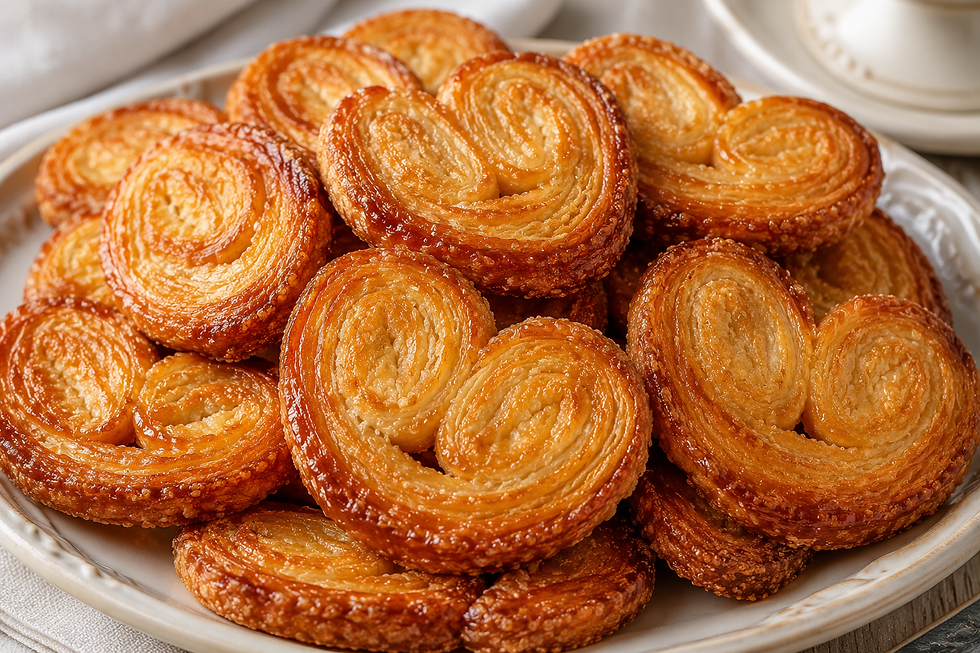
A ventaglio is puff pastry and sugar, and the sugar does the work. It is not dusted on at the end. The dough is rolled out in it, folded through it, sliced, and baked until the layer touching the tray melts and sets again as brittle amber caramel.
What comes out is a fan of buttery leaves under a glassy shell that cracks when you bite. It takes half an hour of work and one deliberate turn in the oven.
Yield: about 30 cookies, 10 servings of 3. Prep: 25 minutes. Chill: 45 minutes. Bake: 20 minutes. Total: about 1 hour 30 minutes. Difficulty: easy to intermediate. Course: pasticceria secca. Region: French in origin, Italian by adoption.
The Story
The ventaglio is French by birth and Italian by residence. In France it is the palmier, named for the palm leaf its two spirals resemble, and it enters the professional pastry repertoire in the early decades of the twentieth century, when puff pastry stopped being a weekly luxury and became something a bakery turned out every morning. Italy took it, renamed it for what it looks like, a folding fan, and gave it a permanent place at the pasticceria counter.
Its real origin, in both countries, is thrift. Puff pastry is rolled and cut into rectangles and rounds all day, and the trimmings cannot be balled up and rerolled without destroying the layers that took hours to build. What a baker can do is stack the scraps flat, roll them out gently, and turn them into something that need not be perfectly regular. Ventagli and the whole family of sugared puff pastry biscuits exist because of that pile of offcuts. They are the most elegant leftovers in the trade.
In Italian bakeries they belong to the pasticceria secca, the tray of dry biscuits sold by weight and carried home in a paper parcel tied with string for the Sunday table, next to amaretti and brutti ma buoni. In the bar they are what you eat standing up beside an espresso at eleven in the morning. Nobody in Italy thinks of them as French any more, and they have simply been there for a hundred years. A good one is judged by sound as much as taste: it should snap cleanly, shatter into flakes, and leave a faint burnt sugar note on the tongue that makes you reach for a second.
The shape travels under many names. English speakers call it elephant ears, German bakers call it pig's ears, and the French see a palm leaf where the Italians see a fan. Every one of those names describes the same fold, and the fold has a purpose beyond looks. Two spirals meeting in the middle give the sugar the greatest possible surface to stick to, so a small biscuit carries a large amount of caramel. It is a piece of quiet engineering, worked out by pastry cooks who wanted the most flavour from the fewest ingredients and no waste at all. The recipe below keeps to that spirit: two ingredients, one fold, and a hot oven.
Ingredients
For the pastry
All butter puff pastry, 1 lb 2 oz (500 g), well chilled, as one sheet or two smaller ones
Cold water, 1 tbsp (15 ml), for brushing
For the rolling sugar
Granulated sugar, 1 1/4 cups (250 g)
Fine sea salt, 1/4 tsp (1.5 g)
Ground cinnamon, 1/2 tsp (1 g), optional
For the tray
Extra granulated sugar, 2 tbsp (25 g), scattered on the bare metal
Butter, oil or spray for the tray, none at all
For finishing, optional
Dark chocolate, 70 percent, 3 1/2 oz (100 g), melted, for dipping one edge
Flaky sea salt, a few crystals per biscuit
Read the pastry label. Butter puff pastry browns better and tastes of something, while pastry made with vegetable fat tastes of very little. The sugar must be ordinary granulated: powdered sugar contains starch and dissolves too fast, and it will not give you a crisp shell.
Choose a heavy tray. Thin trays warp in a hot oven, and a warped tray means uneven contact, so some biscuits caramelise and others stay pale. A dark tray colours faster than a light one, so watch it more closely. Keep the pastry in the refrigerator until the moment you need it.
Preparation
Step 1. Mix the rolling sugar
Stir the granulated sugar, salt and cinnamon together in a wide bowl and keep it within reach for the whole of the shaping. The salt is small but it stops the finished biscuit from tasting merely sweet.
Step 2. Sugar the bench instead of flouring it
Scatter about 3 tablespoons of the sugar over a cold work surface, covering an area a little larger than the pastry sheet. This replaces flour completely. Do not reach for flour out of habit, even a pinch.
Step 3. Roll the pastry into the sugar
Lay the cold pastry on the sugar, scatter more over the top, and roll to a rectangle of about 10 by 14 inches (25 by 35 cm), 1/8 inch (3 mm) thick. Lift and turn the sheet, adding sugar underneath each time, so both faces are pressed full of crystals. If the butter softens, slide the sheet onto a tray and chill it for 15 minutes.
Step 4. Fold in stages
Brush the surface very lightly with cold water and press on one more scattering of sugar. Mark the centre line with the back of a knife. Fold each long edge to the centre, brush and sugar again, fold each edge to the centre a second time, then close the two halves like a book. The log is now eight layers deep and about 2 inches (5 cm) across.
Step 5. Chill the log until it is firm
Wrap the log and refrigerate it for 45 minutes, or freeze it for 20. This is about temperature, not resting: warm pastry squashes under the knife and the layers smear together. The log should feel solid when pressed.
Step 6. Slice and arrange on the bare tray
Heat the oven to 400°F (200°C) with a rack in the middle. Cut the log into slices a scant 1/2 inch (12 mm) thick with a thin sharp knife, pressing straight down and wiping the blade every few cuts. Scatter a little extra sugar over two ungreased heavy trays and set the slices cut side down, at least 2 1/2 inches (6 cm) apart, pressing each one down gently.
Step 7. Bake the first side
Bake for 11 to 13 minutes without opening the door. At 11 minutes lift one biscuit at the edge with a palette knife: the underside should be deep amber. The tops will still look pale and puffed, which is correct. The base goes from amber to black in under 2 minutes.
Step 8. Turn every biscuit and finish
Pull the tray out and turn each ventaglio over with a palette knife and tongs, working fast so the tray keeps its heat. Bake for 6 to 8 more minutes until the second side matches the first, a glossy mahogany with the caramel clear, not bitter.
Step 9. Lift them while they are hot
Leave the tray out of the oven for no more than 60 to 90 seconds, then move each biscuit to a wire rack with a palette knife. Wait longer and the caramel cools and glues them to the tray. They are limp when lifted and turn crisp as they cool, in about 20 minutes.
Plating
At home they go on a plate in a loose pile. The traditional presentation is the pasticceria tray: ventagli standing on edge in overlapping rows beside two or three other dry biscuits, so the spiral, the only decoration they have, is visible.
As a plated dessert they are the crisp element against something soft and cold, two leaned against a quenelle of gelato or laid across a bowl of zabaione. Add them at the last second, since they soften within minutes on anything wet. If you dip one curved edge in melted dark chocolate, add flaky salt while it is soft, and leave the rest of the caramel bare. A biscuit dipped all over in chocolate loses the caramel surface it was made for.
Professional Technique
The technique of this recipe is one substitution: sugar takes the place of the flour every other pastry is rolled on. Rolled out on granulated sugar, the sheet takes crystals into its surface layers, and they dissolve into the moisture there and sit inside the outer leaves rather than on top of them. In the oven that syrup melts and caramelises against the hot metal, becoming the amber shell. Flour would do the opposite. It has no water to give up and no sugar to melt, so it stays raw, dry and floury, and bakes into a dull chalky film.
Everything else follows from it. The sugar is granulated, never powdered, because icing sugar carries starch and dissolves so quickly that it turns to paste and cloud instead of clear caramel. The tray gets no butter, oil or spray, because the pastry already carries its own butter and added fat would make the sugar slide and fry rather than set. The tray is a bare, heavy sheet so the caramel forms directly on the metal.
The base touches the tray and reaches caramelising temperature long before the top, which is exposed only to hot air, so each biscuit is turned halfway through. Then comes the timing. As the caramel cools it hardens and bonds to the tray, so the biscuits must be lifted while it is still soft, within about 90 seconds of leaving the oven. That is why a ventaglio is a fast recipe at the end, with the palette knife in your hand before the tray is even on the bench, and a slow one at the beginning, where the only real work is keeping everything cold.
Texture and Moisture Control
A finished ventaglio has two textures that must coexist: a hard caramel shell on both faces and a dry, open, flaky interior. The shell comes from sugar and heat. The interior comes from water leaving the dough as steam, which is why the bake has to run the full 17 to 21 minutes across both sides. A biscuit pulled the moment it looks brown keeps a damp centre that turns leathery within the hour.
Butter temperature governs everything before the oven. Solid sheets of butter separate the layers and turn to steam pockets in the heat, so a warm log leaks fat onto the tray, fries instead of baking, and comes out dense and greasy. Chill the pastry whenever it turns tacky and never let sliced biscuits wait at room temperature.
After baking the enemy is humidity. Caramel takes up water from the air, so a biscuit left uncovered in a damp kitchen goes from brittle to tacky in hours. Cool them completely on a rack before they go near a container, since even slightly warm biscuits steam themselves soft in a sealed tin. A dry day is the best day to bake them, and a summer kitchen the hardest.
Professional Mise en Place
Shaping is one unbroken sequence because the pastry warms as you work, and the bake needs attention at two precise moments. Set everything out before the pastry leaves the refrigerator.
Equipment and tools
Two heavy flat baking trays, ungreased
Rolling pin and a cold work surface, marble or stainless steel
Thin sharp knife, bench scraper and a palette knife
Pastry brush, bowl of cold water, wire rack, airtight tin
A kitchen timer, because the amber stage cannot be judged by memory
Prepared ahead
Rolling sugar mixed and covered, up to 1 month
Shaped log wrapped, refrigerated up to 2 days or frozen up to 2 months
Oven preheated a full 20 minutes
Trays stacked and ready, with the extra sugar measured out in a small bowl
Melted chocolate only after the biscuits are cold, if you use it
Service setup
Timer set for 11 minutes, then 6
Palette knife and tongs beside the oven, rack cleared and waiting
Second tray sliced and ready to go in
Tin left open and dry until the biscuits are cold
Plates or a tray ready, so the finished biscuits go straight from the rack to the table
Chef Tips
Buy all butter puff pastry and check the label. Pastry made with margarine still puffs, since steam does the lifting, but it browns poorly and leaves a waxy film that the caramel cannot hide.
Do not add more sugar hoping for a thicker shell. What the pastry cannot absorb slides off, pools on the tray and burns, leaving a bitter black ring around each biscuit. One and a quarter cups is right for 1 lb 2 oz (500 g) of pastry.
Slice the log straight from the freezer when you can. The knife goes through without compressing anything, the cut faces stay square, and the fans come out symmetrical. It is also the easiest way to bake six biscuits on a weekday.
Watch the first tray and note what your oven did. The window between amber and burnt on the underside is about 90 seconds wide. Once you know your oven needs 12 minutes and not 11, the recipe becomes reliable.
Common Mistakes
Rolling out on flour. It dries the surface, blocks the sugar and leaves a pale powdery crust with no caramel.
Greasing the tray. Fat makes the sugar slide and fry, and the shell turns greasy instead of glassy.
Never turning them. The undersides blacken while the tops stay blond and damp. Turn at 11 to 13 minutes.
Slicing a warm log. The layers smear together and the biscuits bake into flat ovals with no spiral. Chill first.
Crowding the tray. Each slice opens to nearly twice its width. Leave 2 1/2 inches (6 cm) around each one.
Waiting too long to lift them. The caramel sets within minutes and glues them to the tray, tearing the shell off when you pull.
Using powdered sugar. The starch in it clouds the caramel and the fine grains dissolve into paste, so the shell comes out dull and patchy.
Storing them warm. Biscuits that go into a tin with any heat left steam themselves soft within the hour and the shell turns tacky.
Wine Pairing
Vin Santo del Chianti Classico DOC: The classic Tuscan answer to any dry biscuit. Years in small sealed barrels give it toffee, walnut and dried fig notes that sit directly on the caramel without either seeming louder, and its acidity stays high enough under the sweetness to lift the butter off the palate. Serve it slightly cool and pour a small measure, since it is intense and the biscuit is light.
Ramandolo DOCG: A Friulian sweet white from Verduzzo grapes, with honey, quince and dried apricot and a faint tannic grip from the thick skins. That grip scrapes the butter away between bites instead of adding more sweetness on top of it. Serve it cool, not cold, in small measures, because it is rich and a little goes a long way.
Moscato d'Asti DOCG: Lightly sparkling, low in alcohol and only gently sweet, with peach and white flower aromas. The soft bubbles cleanse the palate after each shard, and the wine is delicate enough not to fight the caramel. Serve it well chilled, in a small glass, at the end of a meal or with an afternoon coffee on a Sunday.
Conegliano Valdobbiadene Prosecco Superiore DOCG: Choose the Dry or Extra Dry style, which carries real residual sugar and matches the biscuit instead of being flattened by it. Pear and citrus stay light, and the bubbles cut the fat. Serve it at 43°F (6°C), and pour it for a tray of mixed biscuits, since it works as well with the almond ones as with these.
Storage & Reheating
Once completely cold, ventagli keep in an airtight tin at room temperature for 5 days, at their best in the first two. Lay parchment between the layers and keep the tin away from the stove. Never refrigerate them: the humidity turns the caramel sticky within hours. If they will travel, pack them in a rigid tin, not a bag, because the fans are fragile and the flakes shed easily.
The raw shaped log stores better. Wrapped in two layers it keeps 2 days in the refrigerator and 2 months in the freezer, and it slices straight from frozen. Add 1 or 2 minutes to the first side. Baked biscuits can be frozen for 1 month, though they lose some crispness.
To revive softened biscuits, give them 4 to 5 minutes at 325°F (165°C) on a tray, then cool completely on a rack. Never use the microwave, which melts the caramel and leaves the pastry chewy.
Nutrition
Per serving, 3 cookies, based on 10 servings:
Calories: 340 kcal
Total Fat: 20 g
Saturated Fat: 10 g
Trans Fat: 0.5 g
Unsaturated Fat: 9.5 g
Cholesterol: 25 mg
Sodium: 180 mg
Total Carbohydrates: 36 g
Fiber: 1 g
Total Sugars: 13 g
Added Sugars: 13 g
Protein: 4 g
Lactose: 0.2 g
Principal micronutrients: vitamin A, iron, folate, thiamin
These figures are estimates and vary with the pastry brand and the sugar the pastry absorbs.


Comments