
Italian Lobster | Aragosta con Burro e Limone
Updated: Aug 31
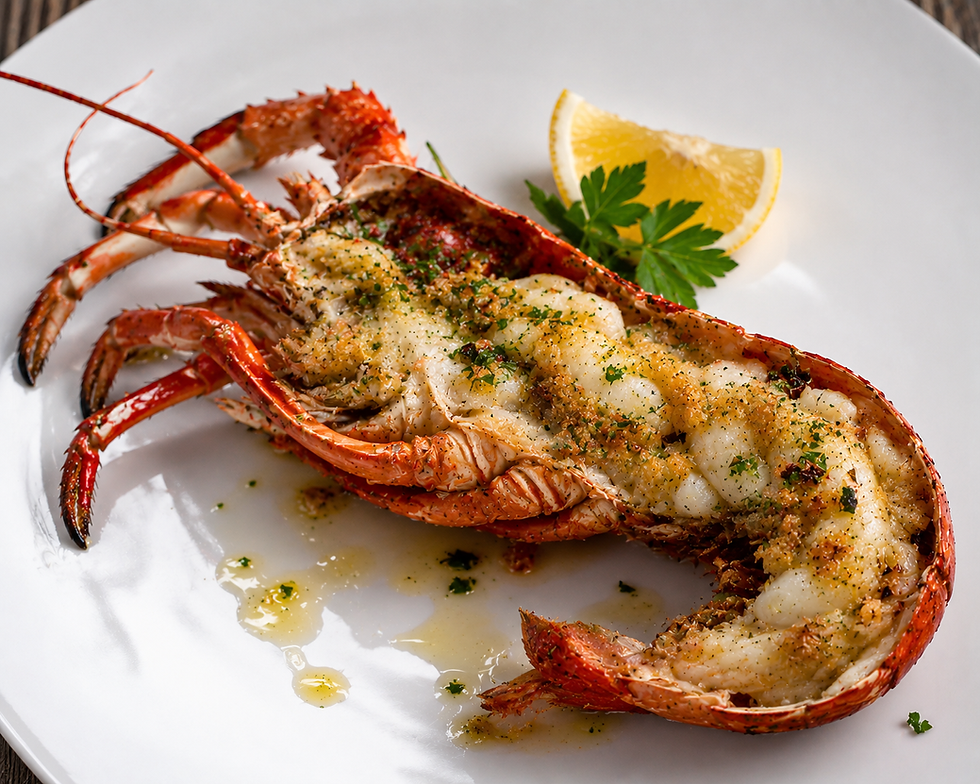
Aragosta con Burro e Limone (Italian Lobster with Butter and Lemon) Aragosta con Burro e Limone is a refined lobster preparation built around one essential principle: the sauce must enhance the natural sweetness of the lobster without covering it. Lobster already has richness, sweetness, salinity, and an unmistakable marine character. It does not need a heavy sauce. What it needs is controlled cooking and a delicate emulsion of butter, fresh lemon, lobster juices, and just enough seasoning to bring those flavors forward. Although butter is used less aggressively in Mediterranean seafood cooking than in many French preparations, it has an important place in northern Italian cuisine and in modern Italian restaurant cooking. Combined carefully with lemon, it creates an elegant sauce particularly suited to lobster. The key word is balance. Too much butter and the dish becomes heavy. Too much lemon and the acidity destroys the lobster's sweetness. Too much garlic and you stop tasting the lobster. Prepared correctly, the final sauce should be glossy and light, coating the lobster rather than surrounding it in a pool of fat. Servings: 2Prep Time: 20 minutesCook Time: 15 minutesTotal Time: About 35 minutesDifficulty: Medium Aragosta or Astice? Before preparing the recipe, there is an important Italian distinction. In Italy, aragosta and astice are not simply two names for the same animal. Aragosta traditionally refers to spiny lobster, including the prized Mediterranean spiny lobster. It is recognizable by its long antennae and the absence of the enormous front claws associated with American lobster. Astice refers to clawed lobster. In the United States, Maine lobster is therefore closer to what an Italian would call astice. For an authentic Mediterranean interpretation, spiny lobster is ideal. However, excellent American lobster can also be prepared using exactly the same butter-and-lemon technique. The cooking time simply needs to be adapted to the size and species. Aragosta con Burro e Limone is built around the balance of its principal ingredients, correct temperature control, and disciplined seasoning. The preparation should preserve the identity of the main ingredient rather than bury it under unnecessary garnish or excess sauce. The method below follows professional Italian kitchen logic: organize the mise en place first, cook each component to its proper texture, and bring the elements together only when they are ready for service.
The Story
Aragosta con Burro e Limone (Italian Lobster with Butter and Lemon) Aragosta con Burro e Limone is a refined lobster preparation built around one essential principle: the sauce must enhance the natural sweetness of the lobster without covering it. Lobster already has richness, sweetness, salinity, and an unmistakable marine character. It does not need a heavy sauce. What it needs is controlled cooking and a delicate emulsion of butter, fresh lemon, lobster juices, and just enough seasoning to bring those flavors forward. Although butter is used less aggressively in Mediterranean seafood cooking than in many French preparations, it has an important place in northern Italian cuisine and in modern Italian restaurant cooking. Combined carefully with lemon, it creates an elegant sauce particularly suited to lobster. The key word is balance. Too much butter and the dish becomes heavy. Too much lemon and the acidity destroys the lobster's sweetness. Too much garlic and you stop tasting the lobster. Prepared correctly, the final sauce should be glossy and light, coating the lobster rather than surrounding it in a pool of fat. Servings: 2Prep Time: 20 minutesCook Time: 15 minutesTotal Time: About 35 minutesDifficulty: Medium Aragosta or Astice? Before preparing the recipe, there is an important Italian distinction. In Italy, aragosta and astice are not simply two names for the same animal. Aragosta traditionally refers to spiny lobster, including the prized Mediterranean spiny lobster. It is recognizable by its long antennae and the absence of the enormous front claws associated with American lobster. Astice refers to clawed lobster. In the United States, Maine lobster is therefore closer to what an Italian would call astice. For an authentic Mediterranean interpretation, spiny lobster is ideal. However, excellent American lobster can also be prepared using exactly the same butter-and-lemon technique. The cooking time simply needs to be adapted to the size and species. Aragosta con Burro e Limone is built around the balance of its principal ingredients, correct temperature control, and disciplined seasoning. The preparation should preserve the identity of the main ingredient rather than bury it under unnecessary garnish or excess sauce. The method below follows professional Italian kitchen logic: organize the mise en place first, cook each component to its proper texture, and bring the elements together only when they are ready for service.
Ingredients
For the recipe
For the Lobster
2 whole lobsters, approximately 1–1 1/4 lb each
1 tablespoon extra virgin olive oil
Fine sea salt, as needed
Freshly ground black pepper, to taste
For the Butter and Lemon Sauce
5 tablespoons high-quality unsalted butter, divided
2 tablespoons fresh lemon juice
1 teaspoon finely grated lemon zest
2 tablespoons dry Italian white wine
2 tablespoons reserved lobster juices or light lobster stock
1 small garlic clove, lightly crushed
1 tablespoon finely chopped fresh Italian parsley
Fine sea salt, only if needed
Freshly ground black pepper, to taste
For Finishing
1 tablespoon finely chopped fresh Italian parsley
Fresh lemon zest
A few drops of extra virgin olive oil, optional
Fresh lemon wedges for serving
Step 1 — Prepare the Lobster
Preheat the oven to 425°F (428°F).
Using a very sharp chef's knife, carefully split each lobster lengthwise.
Clean the head cavity as necessary and remove the intestinal tract.
Preserve as much of the natural lobster liquid as possible.
Arrange the lobster halves shell-side down on a roasting tray.
The shell becomes a natural cooking vessel, protecting the underside of the meat while allowing the exposed surface to roast.
Season the meat very lightly with sea salt and freshly ground black pepper.
Brush with extra virgin olive oil.
Step 2 — Start the Lobster in the Oven
Place the lobster into the hot oven.
Roast for approximately 7–10 minutes initially, depending on size.
We do not want to completely cook the lobster yet.
The final cooking will happen with the butter and lemon sauce.
This two-stage approach gives much greater control over the final texture.
Step 3 — Build the Flavor Base
While the lobster is roasting, place a small saucepan over medium-low heat.
Add 1 tablespoon of butter.
Add the lightly crushed garlic clove.
Allow the garlic to perfume the butter gently for approximately 1 minute.
Preparing the Seafood
Servings: 2Prep Time: 20 minutesCook Time: 15 minutesTotal Time: About 35 minutesDifficulty: Medium Region: Italy Difficulty: Intermediate Servings: 4
Preparing the Aromatic Base
Prep Time: 25 minutes Cook Time: 25 minutes Total Time: About 50 minutes
Cooking the Seafood
The biggest mistake with this dish is thinking that Aragosta con Burro e Limone means lobster with melted butter and lemon squeezed over it. It shouldn't. Make a real emulsion.
Preparing the Accompaniments
Reduce a little white wine with the natural lobster juices. Add fresh lemon. Lower the temperature and gradually whisk in cold butter.
Combining the Components
Then use that sauce sparingly. You should taste the lobster first. Then butter.
Finishing the Dish
Then the freshness of lemon. If you taste butter before you taste lobster, you used too much. That balance is the entire dish.
Plating
For a traditional presentation, place one lobster half on each warm plate and spoon the butter and lemon sauce directly over the exposed meat. For a more refined restaurant presentation, carefully remove the tail meat after cooking and slice it into large medallions. Arrange three or four medallions following the natural curve of the lobster tail. A cleaned section of shell can be incorporated discreetly into the presentation to communicate the ingredient without overwhelming the plate. Spoon the butter and lemon emulsion around and lightly over the lobster. Finish with a few extremely fine pieces of parsley and a little fresh lemon zest. Keep plenty of negative space. Do not add unnecessary microgreens, flowers, towers, vertical decorations, or unrelated sauces. The lobster should be immediately recognizable.
Professional Technique
Control heat and moisture deliberately. Prepare all components before the final cooking stage, season progressively instead of all at once, and judge doneness by texture and appearance as well as by time. Keep the principal ingredient clearly identifiable and finish the dish only when every component is ready to be served together.
Texture and Moisture Control
Control moisture deliberately. Excess liquid weakens flavor and structure, while excessive heat or reduction can dry the main ingredient. Adjust gradually and allow each addition to integrate before making another correction.
Professional Mise en Place
Complete the mise en place before cooking begins. Measure ingredients, prepare garnishes and finishing elements, organize pans and utensils, and keep temperature-sensitive ingredients refrigerated until needed.
Chef Tips
Use unsalted butter. Lobster juices already contain natural salinity and give you much better control over seasoning. Keep the butter cold before emulsifying. Cold butter incorporates more gradually and makes temperature control easier. Never boil the finished butter sauce. High heat can destroy the emulsion. Use freshly squeezed lemon juice. Bottled lemon juice does not belong in this dish. Preserve the lobster juices. A small quantity gives the butter sauce enormous depth. Don't drown the lobster. The sauce should glaze the meat. Use garlic with restraint. Lobster must remain the dominant flavor. Cook according to the lobster, not only the clock. Species, weight, starting temperature, and oven performance all affect cooking time.
Common Mistakes
Overcooking the Lobster This remains the greatest danger. Perfect lobster should be moist, sweet, and tender. Rubbery lobster has simply been cooked too long. Boiling the Butter Sauce Once the butter has been emulsified, aggressive heat can cause separation. Using Too Much Lemon Lemon should provide freshness and acidity. The dish should still taste primarily of lobster. Using Too Much Butter More butter does not automatically create a better dish. The sauce should remain balanced enough that you can still taste the natural salinity and sweetness of the lobster. Browning the Garlic Brown garlic introduces bitterness and a roasted flavor that is unnecessary here. Adding Cheese There is absolutely no need for Parmigiano Reggiano or Pecorino in this preparation. The butter already provides richness.
Wine Pairing
Vermentino di Gallura DOCG — A balanced pairing chosen to support the structure, richness, acidity, and aromatic profile of the dish.
Fiano di Avellino DOCG — A balanced pairing chosen to support the structure, richness, acidity, and aromatic profile of the dish.
Etna Bianco DOC — A balanced pairing chosen to support the structure, richness, acidity, and aromatic profile of the dish.
Grillo Sicilia DOC — A balanced pairing chosen to support the structure, richness, acidity, and aromatic profile of the dish.
Nuragus di Cagliari DOC — A balanced pairing chosen to support the structure, richness, acidity, and aromatic profile of the dish.
Storage
Seafood is best eaten immediately. Refrigerate cooked leftovers within 1 hour and use within 1 day. Reheat only once, gently and briefly, to avoid drying the seafood or making shellfish rubbery. Chef Gianluca
Nutrition
Calories: approximately 480 kcal Protein: 1.34 oz Carbohydrates: 0.78 oz Fat: 0.88 oz Saturated Fat: 0.25 oz Fiber: 0.11 oz Sugars: 0.14 oz Sodium: 820 mg Cholesterol: 145 mg


Comments