Italian Friulian Blecs with Wild Boar Ragù | Blecs al Ragù di Cinghiale
Updated: Oct 24

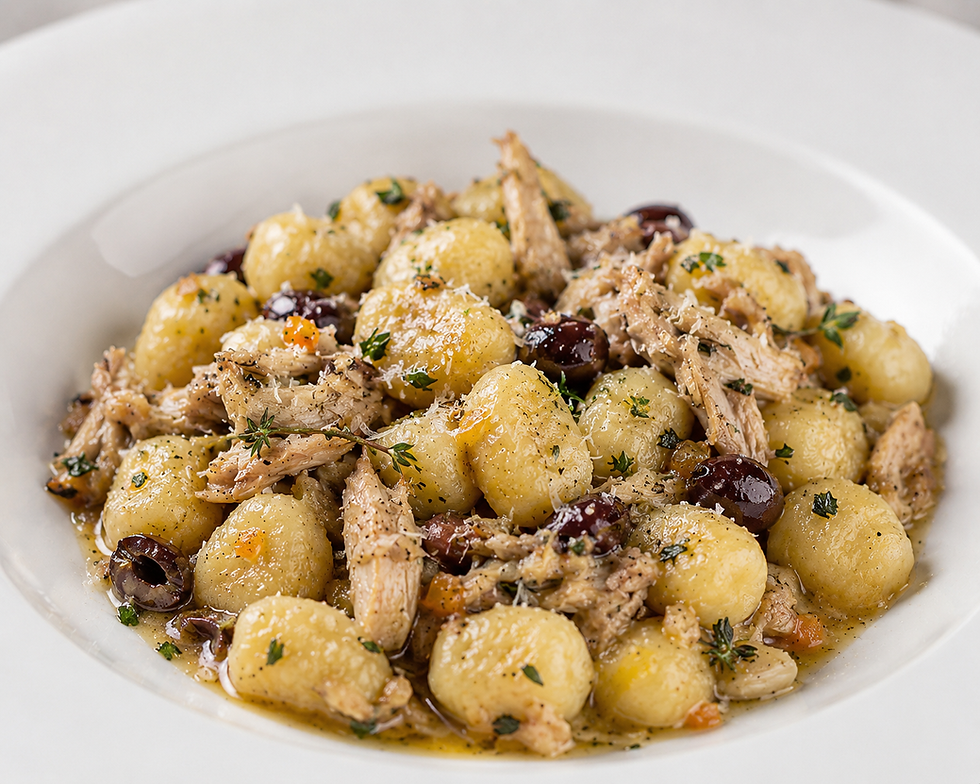
Blecs al Ragu di Cinghiale folds two mountain stories into one bowl. The pasta is buckwheat, cut into ragged diamonds from the offcuts of a rolled sheet, and it belongs to the poorest cooking in Carnia. The sauce is wild boar, marinated overnight in red wine and juniper, then braised until it falls apart under a spoon. Neither half is refined, and together they are one of the best things the Friulian table produces.
The technical interest sits in the pasta. Buckwheat carries no gluten, so a dough made with too much of it tears on the pin and dissolves in the pot. Two parts wheat flour to one part buckwheat is the working proportion: unmistakable in flavour, still strong enough to handle. Blecs stay thick, rough and slightly chewy, and that surface is exactly what holds a heavy game sauce.
The ragu is built in stages with nothing rushed. Wild boar is lean, dense and strongly flavoured, and a night in wine with juniper and bay softens the fibre and rounds the gamey edge without erasing it. What follows is a long low simmer with the lid ajar, a hard reduction, and a finish in the pan with cold butter and grated Montasio rather than cream.
Yield: 6 servings. Prep: 45 minutes. Marinating: 8 to 12 hours. Dough rest: 30 minutes. Cook: 2 hours 45 minutes. Difficulty: intermediate. Course: primo piatto. Region: Friuli Venezia Giulia, Carnia and the Natisone valleys.
The Story
Blecs are named after a scrap of cloth. The word comes from the German Blatz, a patch, the same root behind the Austrian Fleckerl, and it describes the pasta exactly: irregular diamonds and triangles cut from a sheet, including the ragged edges a cook anywhere else would trim off and throw away. In Carnia and in the Natisone valleys along the Slovenian border that was never a stylistic decision. Flour cost money and nothing edible left the kitchen.
Buckwheat reached these valleys in the seventeenth century and stayed because it suited them. It is not a cereal but the seed of a plant related to sorrel and rhubarb, it ripens in about ten weeks, and it grows at altitude on thin acid soil where wheat fails. The same seed built polenta taragna in Valtellina and pizzoccheri in Teglio. Its flavour is dark, faintly bitter and slightly mineral, and it is why blecs taste of somewhere specific.
Wild boar belongs to the same landscape. The animal had nearly disappeared from Friuli by the early twentieth century and returned in force after the Second World War, so the autumn hunt is now management as much as tradition. Meat coming down from the Collio and the Carso was lean and tough and was treated accordingly: marinated in local Refosco, braised slowly with juniper from the hedgerows, and stretched across as many plates as possible by serving it on pasta instead of as a roast.
Ingredients
For the marinade
Wild boar shoulder, boneless, 2 lb (900 g)
Refosco or another dry red wine, 2 cups (475 ml)
Yellow onion, quartered, 1
Carrot, cut in chunks, 1
Celery stalk, cut in chunks, 1
Garlic cloves, crushed, 3
Juniper berries, crushed, 8
Bay leaves, 2
Rosemary sprig, 1
Black peppercorns, 10
For the ragu
Extra virgin olive oil, 3 tbsp (45 ml)
Unsalted butter, 2 tbsp (28 g)
Pancetta, finely diced, 3 oz (85 g)
Yellow onion, finely diced, 1 medium
Carrot, finely diced, 1 medium
Celery stalk, finely diced, 1
Tomato paste, 2 tbsp (32 g)
Dry red wine, 1 cup (240 ml)
Beef or game stock, hot, 2 cups (475 ml)
Fine sea salt, 1 1/2 tsp (9 g)
Freshly ground black pepper, to taste
For the blecs dough
All purpose flour, 1 1/2 cups (190 g)
Buckwheat flour, 3/4 cup (95 g)
Large eggs, 2
Warm water, 3 tbsp (45 ml)
Extra virgin olive oil, 1 tsp (5 ml)
Fine sea salt, 1/2 tsp (3 g)
For finishing
Unsalted butter, cold, 2 tbsp (28 g)
Montasio mezzano, grated, 2 oz (55 g)
Coarse salt for the pasta water, 2 1/2 tbsp (38 g)
Flat leaf parsley, chopped, 1 tbsp
Freshly ground black pepper, to taste
Preparation
Step 1

Cut the boar shoulder into chunks of about 1 1/2 inches (4 cm), trimming silverskin and hard fat. Put the meat in a nonreactive bowl with the wine, onion, carrot, celery, garlic, juniper, bay, rosemary and peppercorns, press it under the liquid and refrigerate for 8 to 12 hours. Do not go past twelve, or the surface protein turns pale and grainy while the inside is unchanged. Drain over a bowl, keep the marinade, discard the aromatics and dry every piece on kitchen paper.
Step 2

Set a heavy casserole over medium high heat with the olive oil. Brown the boar in three or four batches, never crowding the pan, turning the pieces only when they release themselves. Each batch takes about 6 minutes and should finish dark rather than grey. Move the meat to a plate. Lower the heat, add the butter and the pancetta and render for 3 minutes, then the onion, carrot and celery for 10 to 12 minutes, scraping the base as they release their water.
Step 3

Stir in the tomato paste and cook it for 2 minutes until it darkens and smells sweet instead of raw. Add the fresh red wine, reduce by half, then pour in the reserved marinade and reduce for 5 minutes more. Return the meat with its juices, add hot stock until the pieces are almost covered, bring to a bare simmer and set the lid ajar. Cook for 2 hours 15 minutes to 2 hours 30 minutes, until a chunk crushes under a spoon. Shred the meat with two forks and return it to the pan.
Step 4

While the ragu simmers, make the dough. Mix both flours and the salt on a board, make a well and add the eggs, the oil and the warm water. Bring it together with a fork, then knead for 8 to 10 minutes. It feels tighter and less springy than an egg pasta and looks faintly speckled, which is correct. If the edges crack, add water a teaspoon at a time. Wrap it and rest it for 30 minutes at room temperature so the buckwheat starch hydrates fully.
Step 5

Roll the dough on a floured board, or on the second to last setting of a pasta machine, to about 1/16 inch (1.5 mm). Blecs are thicker than tagliatelle and must stay that way, because a thin buckwheat sheet breaks up in the water. Cut irregular diamonds and triangles of roughly 2 inches (5 cm), leaving the edges uneven, and use the offcuts exactly as they fall. Dust them with buckwheat flour and spread them on a floured tray in one layer.
Step 6

Bring 5 quarts (4.7 L) of water to a rolling boil and add the coarse salt. Buckwheat pasta needs properly salted water, because the dough carries very little and the flour is naturally bitter. Bring the ragu back to a gentle simmer, loosening it with stock if it has tightened. Drop the blecs in, stir once, and cook for 3 to 4 minutes from the moment they float, tasting one for a definite chew. Reserve 1/2 cup (120 ml) of the water.
Step 7
Lift the blecs straight into the ragu with a spider rather than draining them dry, keeping the pan over medium low heat. Add a splash of cooking water and toss for a minute so the loose starch binds sauce to pasta. Take the pan off the heat, drop in the cold butter and the grated Montasio and toss until the sauce turns glossy. Add more water until the pasta moves slowly on the spoon, correct the salt and pepper, fold in the parsley and serve.
Plating
Warm the bowls before anything is tossed. This is a heavy autumn dish and it loses texture faster than almost any other pasta, because buckwheat sets as it cools and the ragu tightens with it. Shallow bowls work better than flat plates, since the sauce needs somewhere to gather instead of spreading into a thin film.
Spoon a portion into the centre of each bowl and let it settle rather than shaping it into a nest. Blecs are irregular and should look irregular, some pieces folded, some flat. Grate a little more Montasio over the top, add one turn of black pepper and stop. No garnish improves this plate. Serve immediately and put any remaining ragu on the table rather than loading it into the bowls.
Professional Technique
The controlling technique is blending two flours that behave nothing alike. Wheat builds a gluten network when hydrated and worked; buckwheat contributes starch, colour and flavour but nothing structural, so every gram dilutes that network. At one third buckwheat the sheet still rolls cleanly. Push it to half and it cracks and sheds pieces into the pot. That is why this dough is kneaded longer than an egg pasta and rested a full 30 minutes.
The second is reusing the marinade instead of pouring it away. That liquid holds most of what the meat gave up overnight, including soluble proteins that turn it grey on first contact with heat. Added raw it dulls the sauce. Reduced hard after the fresh wine has gone in, it loses the raw alcohol and the harsh edge of the juniper and returns to the pan concentrated.
The finish is a mantecatura done off the heat, and with Montasio it has to be. It is a firm mountain paste of around thirty percent fat, and above 150F (65C) that fat separates and the protein pulls into strings. Cold butter dropped in at the same moment lowers the pan temperature, while the starchy cooking water supplies the amylose that keeps fat and liquid bound. In that order the sauce turns glossy in under a minute; over a live flame it breaks.
Texture and Moisture Control
Buckwheat absorbs more water than wheat and keeps absorbing it after it leaves the pot, which changes how the sauce must be judged. A ragu that looks right in the pan reads dry in the bowl two minutes later. The answer is to finish the dish slightly looser than it should be served, so the blecs pull in the last of the liquid on the way to the table. Reserved cooking water is the only correct adjustment, since stock adds salt and cream flattens the buckwheat.
The ragu sits between two failures. Reduced too far it becomes a dry mince that coats nothing; left too loose it slides off and pools. Draw a spoon across the surface and the track should hold a couple of seconds before closing. Cooking point is the other variable: blecs at 3 minutes are firm in the centre, at 5 they soften and break at the corners, and since they finish another minute in the pan they should leave the water on the firm side.
Professional Mise en Place
The dish splits cleanly into a long unattended braise and a fast finish, so almost everything can be done the day before. Only the water, the cooking and the tossing belong to service.
Equipment and tools
Heavy casserole of 5 quarts (4.7 L) with a lid
Large nonreactive bowl for the marinade
Rolling pin or pasta machine, pastry wheel, bench scraper
Wide saute pan that holds all the pasta
Spider skimmer, floured trays, box grater
Prepared ahead
Boar marinated overnight, drained and dried, marinade reserved
Ragu cooked and shredded, up to 2 days ahead and better on the second day
Blecs cut on floured trays, up to 4 hours ahead uncovered
Montasio grated, parsley chopped at the last minute
Stock hot for loosening the sauce
Service setup
Pasta water boiling and salted before anything else
Ragu warm in the wide saute pan, not the casserole
Cooking water ladle and cold butter within reach
Bowls warming, never hot enough to cook the cheese
Pepper mill and extra Montasio at the pass
Chef Tips
Buy buckwheat flour from somewhere with real turnover and smell it before using it. It is high in unsaturated fat and goes rancid faster than any wheat flour, and a stale bag tastes of cardboard in a way no ragu will hide. Keep the rest in the freezer.
Make the ragu a day ahead. The braise is better after a night in the refrigerator, the fat sets on top and lifts off cleanly, and the flavour reads deeper and less sharp. Rewarm it slowly with a splash of stock, never from cold onto a high flame.
If wild boar is unavailable, pork shoulder from an older animal is the honest substitute, with the marinade cut to 6 hours and a third less juniper. It will taste good but not like this dish, which depends on the gaminess pushing back against the buckwheat.
Cut more blecs than you need and freeze the extra on the tray before bagging them. They cook from frozen in about a minute longer and lose nothing, and a buckwheat sheet is too much work for one batch.
Common Mistakes
Using too much buckwheat in the dough. Half and half sounds more authentic and gives a sheet that tears on the pin and disintegrates in the water. Keep wheat flour at roughly two thirds of the total, which is the traditional proportion.
Crowding the pan when browning the boar. Too much meat at once drops the temperature, the pieces release water and stew in it, and the deep colour that carries the sauce never happens. Work in three or four batches.
Throwing away the marinade. It holds most of the wine flavour and much of what the meat gave up overnight. Reduce it hard with the fresh wine and the ragu gains depth no amount of stock can replace.
Boiling the braise instead of simmering it. A hard boil tightens lean game and turns it stringy however long it cooks. Keep the surface barely moving with the lid ajar for the full two and a half hours.
Finishing the cheese over direct heat. Montasio breaks above about 150F (65C) and leaves the sauce oily and stringy. Pull the pan off the flame, add cold butter with the cheese, and let residual heat do the work.
Rolling the blecs too thin. A thin buckwheat sheet has nothing holding it together and comes out of the water in fragments. At 1/16 inch (1.5 mm) the pasta keeps its chew and stands up to a heavy ragu.
Wine Pairing
Refosco dal Peduncolo Rosso Friuli DOC: The wine that went into the marinade and the obvious bottle for the finished plate. Refosco is deeply coloured and high in acidity, with dark plum fruit and a bitter almond finish that picks up the buckwheat. That acidity cuts the pancetta fat and the butter of the mantecatura and leaves the palate clean.
Schioppettino Friuli Colli Orientali DOC: Grown around Prepotto on the Slovenian border and close to extinct fifty years ago. Its signature is black pepper sitting over dark cherry fruit, and it lands on the crushed juniper and peppercorns in the braise as if chosen for them. The tannin is finer than Refosco, so it reads lighter while keeping structure.
Pignolo Friuli Colli Orientali DOC: The most serious red the region makes, for when you want a bottle with age. Pignolo is dense, firmly tannic and slow to open, with dried fruit, tobacco and resin, and it needs real weight behind it. Boar braised for two and a half hours gives it that. Decant it an hour ahead, because a young one poured straight will flatten the pasta.
Teroldego Rotaliano DOC: From the gravel plain of the Campo Rotaliano in Trentino, the practical choice when Friulian bottles are hard to find. Dark berry fruit, moderate tannin and a bright line of acidity meet the game without the grip of Pignolo. Serve it near 61F (16C) so the alcohol does not show against the fat.
Alto Adige DOC Lagrein: Another Alpine red built for meat cooked a long time. Lagrein is inky and full bodied, with dark chocolate and violet aromas and a faintly bitter close, and that bitterness runs parallel to the buckwheat instead of fighting it. Pour it when the ragu has been reduced hard and the dish is at its richest.
Storage & Reheating
Store the ragu and the pasta separately and the dish loses almost nothing. The ragu keeps in an airtight container in the refrigerator for 4 days and improves for the first two. It freezes for 3 months in portions with a little of its liquid and should thaw overnight in the refrigerator. Uncooked blecs keep 4 hours on a floured tray or 2 months frozen flat and then bagged.
Rewarm the ragu in a wide pan over low heat with 2 to 3 tablespoons of stock, stirring until it loosens and steams. It should never boil a second time, because the meat fibres have given everything they have and boiling only dries them. Correct the salt once it is hot.
Dressed pasta is the harder case. Keep it covered in the refrigerator for 1 day only and reheat it in a covered saute pan over low heat with a few tablespoons of water, tossing every thirty seconds until it moves freely. Avoid the microwave, which pastes the buckwheat starch and breaks the cheese emulsion.
Nutrition
Per serving, based on 6 portions:
Calories: 640 kcal
Total Fat: 26 g
Saturated Fat: 11 g
Trans Fat: 0 g
Unsaturated Fat: 13 g
Cholesterol: 165 mg
Sodium: 720 mg
Total Carbohydrates: 52 g
Fiber: 4 g
Total Sugars: 5 g
Added Sugars: 0 g
Protein: 44 g
Lactose: 0.6 g
Principal micronutrients: iron, zinc, magnesium, manganese, niacin, vitamin B12, calcium
These figures are estimates. Wild boar varies widely in fat with the season and the animal, most of the marinade is discarded, and the sodium depends on how salty the pancetta and Montasio are.



Comments