
Brasato di Manzo al Vino Rosso (Italian Red Wine Braised Beef)
Updated: 6 days ago

A great brasato is not simply beef cooked in wine. It is a carefully built Italian braise in which collagen rich beef, properly reduced red wine, aromatic vegetables and patient low heat become tender meat and a naturally glossy sauce. This version is served with fondant potatoes, glazed pearl onions and roasted carrots for a complete main course with the warmth of the traditional dish and the precision of restaurant technique.
The Story
Brasato di manzo belongs to the northern Italian tradition of slow cooking substantial cuts of beef in wine. Piedmont is especially associated with brasato al Barolo, but the method works beautifully with another dry, full bodied Italian red wine that you would be happy to drink. The wine should support the beef with acidity, fruit and tannin, never overwhelm it with sweetness or harsh oak.
The defining texture comes from chuck roast. Its connective tissue gradually converts to gelatin during the long braise, giving the meat richness while helping the cooking liquid become a proper jus. A lean roasting cut may look elegant when raw, but it generally becomes dry before it develops the succulent texture expected from brasato.
Marinating the beef overnight seasons the exterior and introduces the wine and aromatics. Fresh vegetables are then used to build the braise, because vegetables that have spent twelve hours in wine have already surrendered much of their flavor. The meat is browned deeply, the wine is reduced before stock is added, and the finished liquid is strained and reduced without flour.
Recipe Details
Servings: 6
Preparation time: 45 minutes, plus 12 hours for marinating
Cooking time: about 4 hours
Total time: about 16 hours, including marinating and resting
Oven temperature for the braise: 300°F (150°C)
Oven temperature for the garnishes: 400°F (200°C)
Ingredients
For the Beef and Marinade
3.5 lb boneless beef chuck roast (1.6 kg)
1 bottle dry, full bodied Italian red wine, about 3 cups (750 ml)
1 medium yellow onion, roughly chopped, about 7 oz (200 g)
1 large carrot, roughly chopped, about 5 oz (140 g)
1 celery stalk, roughly chopped, about 2 oz (60 g)
2 garlic cloves, lightly crushed, about 0.35 oz (10 g)
2 bay leaves
2 rosemary sprigs
4 thyme sprigs
1 tsp black peppercorns (3 g)
For the Braise and Natural Jus
1.5 tsp kosher salt (9 g)
1 tsp freshly ground black pepper (3 g)
2 tbsp extra virgin olive oil (30 ml)
1 medium yellow onion, finely diced, about 7 oz (200 g)
1 large carrot, finely diced, about 5 oz (140 g)
2 celery stalks, finely diced, about 4 oz (120 g)
1 tbsp tomato paste (18 g)
2 cups unsalted beef stock (480 ml)
1 tbsp cold unsalted butter (14 g)
For the Fondant Potatoes
3 large russet potatoes, about 2 lb (900 g), peeled and cut into 6 even cylinders
2 tbsp unsalted butter (28 g)
1 tbsp extra virgin olive oil (15 ml)
1 cup unsalted beef stock (240 ml)
2 thyme sprigs
0.5 tsp kosher salt (3 g)
For the Glazed Pearl Onions
18 peeled pearl onions, about 9 oz (250 g)
1 tbsp unsalted butter (14 g)
0.5 cup unsalted beef stock (120 ml)
1 tsp granulated sugar (4 g)
1 pinch kosher salt
For the Roasted Carrots
12 slender baby carrots, about 12 oz (340 g)
1 tbsp extra virgin olive oil (15 ml)
1 tbsp unsalted butter (14 g)
2 thyme sprigs
0.5 tsp kosher salt (3 g)
0.25 tsp freshly ground black pepper (0.5 g)
Preparation
Use a heavy Dutch oven or braising pan with a tight lid. The five steps below keep every stage in the correct order, from the overnight marinade to the final plate.
Step 1

Place the beef in a nonreactive container. Add the wine, roughly chopped onion, carrot, celery, garlic, bay leaves, rosemary, thyme and peppercorns. The beef should be mostly surrounded by the marinade. Cover and refrigerate for 12 hours, turning the roast once if it is not fully submerged.
Remove the beef from the marinade. Strain the wine through a fine sieve and reserve it for the braise. Discard the used vegetables and herbs. Pat every surface of the beef completely dry with paper towels; moisture left on the surface will prevent proper browning.
Step 2

Heat the oven to 300°F (150°C). Tie the roast with kitchen twine at intervals of about 1.5 inches (4 cm) so it holds an even shape. Season it on all sides with the salt and black pepper.
Heat the olive oil in the Dutch oven over medium high heat. Sear the beef for 3 to 4 minutes on each broad side, then brown the ends. Do not move it until each surface releases easily and develops a deep mahogany crust. Transfer the browned roast to a tray.
Step 3
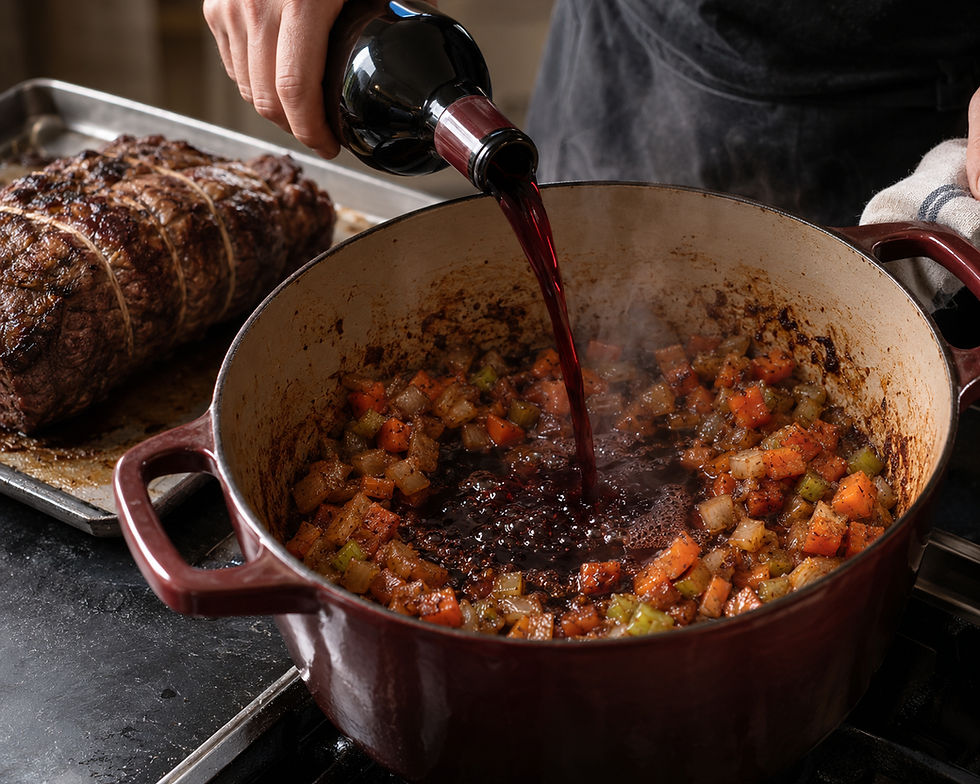
Lower the heat to medium. Add the fresh diced onion, carrot and celery to the same pot. Cook for 8 to 10 minutes, stirring and scraping the browned fond from the base, until the vegetables soften and begin to caramelize. Stir in the tomato paste and cook for 2 minutes, until it darkens slightly.
Pour in the reserved red wine and scrape the bottom thoroughly. Bring it to a steady simmer and reduce by about half, 12 to 15 minutes. Reducing the wine now removes its raw alcoholic edge and concentrates its flavor before the stock is introduced. Return the beef to the pot and add enough stock to reach roughly halfway up the roast.
Step 4

Cover the pot and transfer it to the oven. Braise for 3 to 3.5 hours, turning the roast halfway through. The liquid should barely tremble, never boil hard. The beef is ready when a thin skewer enters the center with very little resistance and the meat is tender but still holds its shape. An internal temperature around 200 to 205°F (93 to 96°C) is a useful reference, but resistance is the more reliable test.
Rest the beef in the braising liquid for 30 minutes. Lift it carefully to a tray. Strain the liquid into a clean saucepan, pressing lightly on the vegetables, then discard them. Skim the fat and simmer the liquid for 10 to 15 minutes, or until it coats the back of a spoon. Remove from the heat and whisk in the cold butter. Remove the twine, slice the beef across the grain into pieces about 0.5 inch (1.25 cm) thick, and warm the slices gently in the jus without boiling.
Step 5

While the beef rests, prepare the garnishes at 400°F (200°C). For the potatoes, heat the oil and butter in an oven safe pan and brown the cylinders on both flat sides. Add the stock, thyme and salt so the liquid comes halfway up the potatoes. Roast for 25 to 30 minutes, basting twice, until golden and creamy at the center.
For the pearl onions, combine the onions, butter, stock, sugar and salt in a small pan. Simmer gently for 15 to 20 minutes, swirling the pan near the end, until the onions are tender and covered with a shiny glaze. For the carrots, toss them with olive oil, thyme, salt and pepper. Roast for 20 to 25 minutes, then add the butter and turn them in the pan juices.
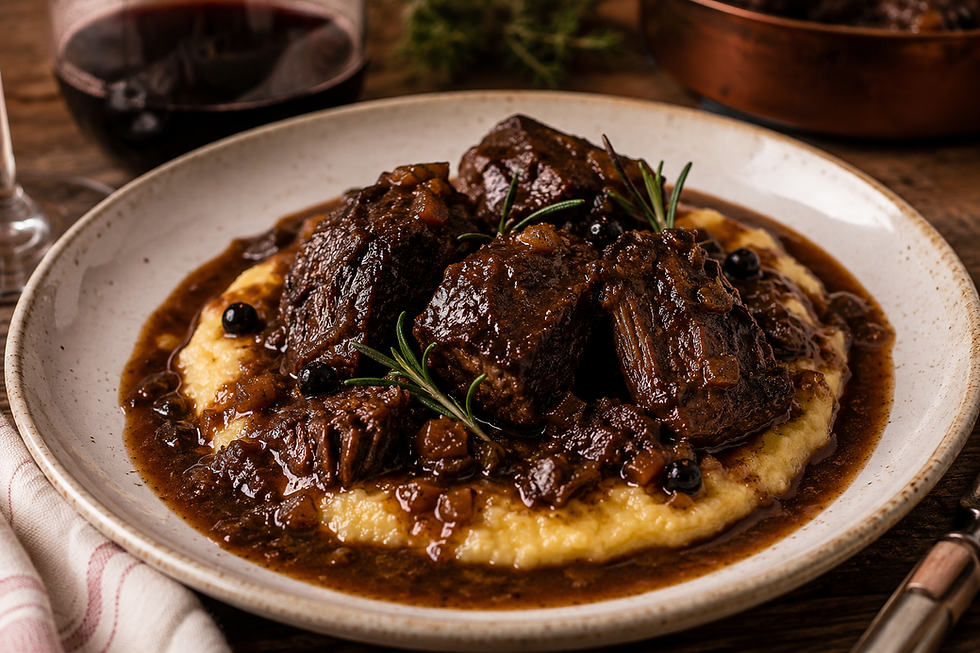
Place two thick slices of warm brasato on each heated plate. Add one fondant potato, three pearl onions and two roasted carrots. Spoon the red wine jus over and around the beef while leaving part of the browned surface visible. Finish with a few thyme leaves and serve immediately.
Professional Technique
The sequence is the technique. Marinating gives the beef aromatic contact, but it does not replace seasoning. Drying the roast before it enters the hot fat is essential because water must evaporate before browning can begin. A large whole roast also preserves the identity of brasato and loses less moisture than small pieces.
Reduce the wine before adding stock. If wine, stock and beef enter the pot together, the sauce can retain a thin, raw flavor. Partial submersion is equally important: the lower half of the roast cooks in liquid while the covered environment surrounds the upper half with moist heat. Turning the roast once keeps the cooking even.
Judge doneness by resistance rather than time alone. Chuck can reach a food safe temperature long before its collagen has softened. After braising, let the meat rest in its liquid so the fibers relax without drying. Straining, skimming and reducing the cooking liquid creates body naturally; the final cold butter adds sheen and rounds the acidity without turning the jus into a heavy gravy.
Chef Tips
Prepare the brasato one day ahead for the cleanest slices. Chill the whole roast in the strained jus, remove the solidified fat, slice the cold meat, then reheat it gently in the sauce.
Choose a dry red wine with balanced acidity. A flawed or aggressively sweet wine will become more obvious after reduction.
Use a pot that fits the roast closely. An oversized pot requires too much liquid and slows the reduction.
Keep the braise at a very gentle simmer. Vigorous boiling tightens the meat fibers and clouds the sauce.
Warm the serving plates. Brasato and its jus cool quickly, especially when plated with several separate garnishes.
Common Mistakes
Using a lean cut: tenderloin, eye of round and other lean roasts cannot produce the gelatin rich texture of chuck.
Searing wet beef: surface moisture steams the meat and prevents the dark crust that gives depth to the sauce.
Crowding or repeatedly moving the roast: let each surface remain in contact with the hot pot until a genuine crust forms.
Skipping the wine reduction: unreduced wine can leave the finished jus sharp and alcoholic.
Completely submerging the meat: this changes the controlled braise into a boil and dilutes the sauce.
Reducing before skimming: concentrated fat makes the jus greasy. Skim first, then reduce.
Slicing with the grain or reheating at a boil: both make properly braised beef seem tougher and drier.
Wine Pairing
The best pairing mirrors the dish: enough acidity to refresh the palate, firm but mature tannins for the beef, and savory complexity for the reduced wine jus. Serve the wine slightly below room temperature, around 60 to 64°F (16 to 18°C).
Barolo DOCG: the classic Piedmontese choice, with structure, acidity and earthy depth for a long braise.
Barbaresco DOCG: elegant Nebbiolo perfume and slightly gentler structure complement the beef without hiding the vegetables.
Brunello di Montalcino DOCG: vibrant acidity and savory Sangiovese character work especially well with the glossy jus.
Amarone della Valpolicella DOCG: a richer option for cold weather service, best when the bottle is balanced rather than excessively sweet.
Chianti Classico DOCG: a fresher, more accessible pairing whose acidity keeps the complete plate lively.
Storage and Reheating
Cool the beef and jus promptly and refrigerate within 2 hours. Store the meat submerged in the strained jus in an airtight container for up to 3 days at 40°F (4°C) or colder.
For reheating, slice the beef and place it in a covered pan with enough jus to keep it moist. Warm gently until the center reaches 165°F (74°C). Do not boil.
Freeze the beef with its jus for up to 2 months. Thaw overnight in the refrigerator before reheating.
Store the vegetable garnishes separately. Pearl onions and carrots reheat gently in a covered pan. Fondant potatoes are best the day they are made; reheat them at 375°F (190°C) for 8 to 10 minutes to restore the exterior.
Nutrition
Approximate nutrition per serving, including garnishes: 780 calories, 50 g protein, 54 g carbohydrates, 38 g fat, 16 g saturated fat, 7 g fiber, 13 g sugars, 890 mg sodium and 160 mg cholesterol. Values vary with the cut of beef, the amount of reduced jus served and the exact garnish portions.




Comments