
Italian Meatballs with Tomato Sauce | Polpette di carne alla salsa di pomodoro

Polpette tell you more about how an Italian kitchen works than almost any other dish. Nothing about them is luxurious: ground beef and pork, stale bread soaked in milk, an egg, grated Parmigiano, parsley, nutmeg, and a tomato sauce of onion, garlic and canned tomatoes. The result depends on two things that cost nothing, how little you handle the meat and how gently the sauce is allowed to bubble.
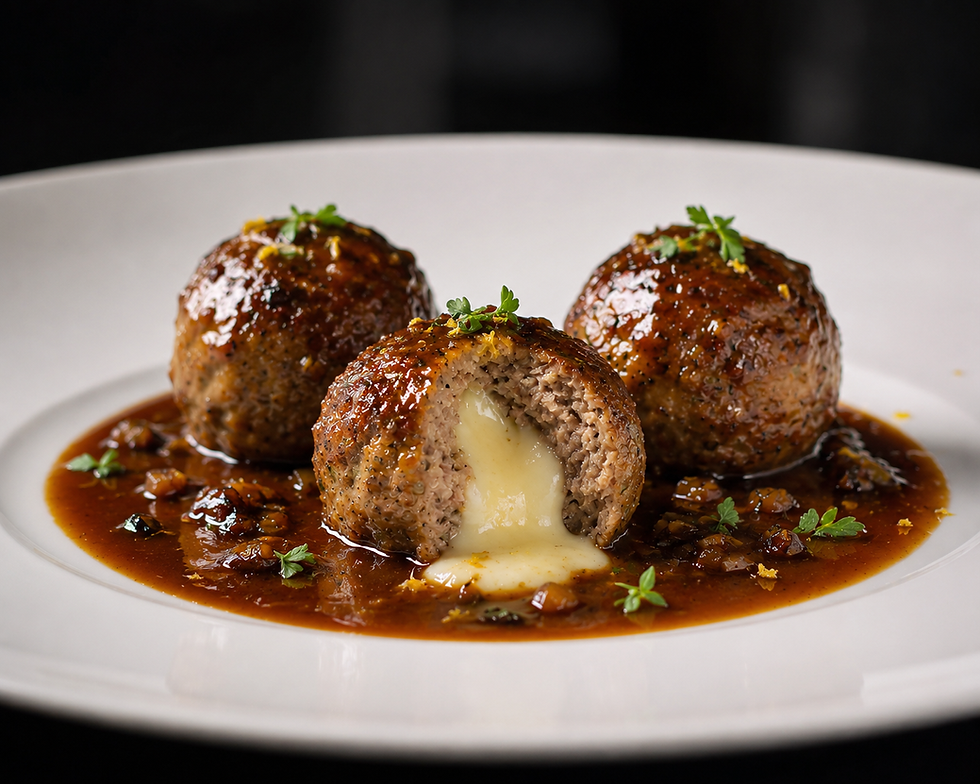
The method here is the one the photograph shows: shaped by hand, rested, browned in olive oil, then finished slowly in the tomato sauce. The browning is not there to cook the meatball but to build the fond that dissolves into the sauce, so that by the end the sauce tastes of meat and the meat tastes of tomato.
Yield: 4 servings, about 12 to 14 meatballs. Prep: 30 minutes. Rest: 20 minutes. Cook: 1 hour 10 minutes. Total: about 2 hours. Difficulty: easy to intermediate. Course: secondo. Region: central and southern Italy, with versions across the whole peninsula.
The Story
The polpetta was invented by economy, not ambition. Long before ground meat came in trays the Italian kitchen dealt with scraps from a larger cut, the last of a boiled beef, trimmings a butcher sold cheaply. Chopped fine and bound with something starchy, they fed more people than they had any right to. The binder was almost always stale bread, the one thing a household never threw away: soaked in milk, squeezed and broken into the meat, it turned half a pound of pork into a plateful.
That soaked bread, the panata, is the whole secret. It carries water into the interior of the meatball and holds it there through cooking, and it interrupts the network of meat proteins so the texture stays open instead of tightening. Dry breadcrumbs do neither: they arrive thirsty, pull water out of the meat, and give a firm, slightly sandy result Italians recognise at once as the wrong kind of meatball.
Size is where the Italian and Italian American traditions separate. In Italy the polpetta is small, roughly the size of a walnut, and it is a secondo, eaten on its own plate with bread and its sauce. The large meatball on a mound of spaghetti is an American invention, born in the immigrant neighbourhoods where meat was suddenly cheap for people who had spent generations making a little go a long way.
The regional versions show how far the idea stretches. Naples makes polpette al ragu, dropped raw into a long cooked meat and tomato sauce so they release their fat into it over hours. Sicily adds raisins and pine nuts, the Arab sweet and savoury signature of the island. Abruzzo makes them the size of a hazelnut for broth or timballo. Almost everywhere they are a Sunday dish and better on Monday, which is the other reason they survived.
Ingredients
For the meatballs
Ground beef, 80 to 85 percent lean, 1 lb (454 g)
Ground pork, 1/2 lb (227 g)
Stale Italian bread, crust removed, 3 oz (85 g)
Whole milk, 1/2 cup (120 ml)
Large egg, 1
Parmigiano Reggiano, finely grated, 2 1/2 oz (75 g)
Flat leaf parsley, finely chopped, 2 tbsp (8 g)
Garlic clove, small, finely grated, 1
Fine sea salt, 1 1/2 tsp (9 g)
Freshly ground black pepper, 1/2 tsp (1 g)
Freshly grated nutmeg, 1 small pinch
Extra virgin olive oil for browning, 3 tbsp (45 ml)
For the tomato sauce
Extra virgin olive oil, 2 tbsp (30 ml)
Yellow onion, small, finely chopped, 1
Garlic clove, lightly crushed, 1
Canned whole peeled tomatoes, 28 oz (794 g)
Water, 1/2 cup (120 ml)
Fresh basil leaves, 6
Fine sea salt, 1 tsp (6 g)
Freshly ground black pepper, to taste
For finishing
Parmigiano Reggiano, grated, 1 oz (30 g)
Extra virgin olive oil, 1 tbsp (15 ml)
Fresh basil leaves, small, 4
Preparation
Step 1. Soak the bread in milk
Tear the crustless bread into rough pieces and pour the cold milk over it. Leave it 10 minutes, turning once, until soft through with no dry centre. Lift it out and squeeze, but only until it stops dripping: you want it wet and heavy, not wrung out. Press it dry and you have thrown away the water that was going to keep the polpette tender. Break it into small shreds with your fingers so it disappears into the meat rather than sitting in lumps.
Step 2. Season the panata before the meat goes in
Put the shredded bread in a wide bowl with the egg, Parmigiano, parsley, grated garlic, salt, pepper and nutmeg, and mix thoroughly. The order matters. Seasoning distributed through the wet bread first means you can mix it hard without consequence, and the meat then needs only seconds of handling. Season after the meat goes in and you must work the mixture far longer to get the salt through it, which is what makes a tough polpetta.
Step 3. Combine the meats and rest the mixture
Add the beef and pork and fold them into the seasoned panata with your fingertips, lifting and turning rather than pressing or kneading. Stop the moment the colour looks even, under a minute. Fry a teaspoon and taste it now, while you can still adjust the salt. Then refrigerate 20 minutes: the fat firms so the meatballs hold their shape instead of slumping, and cold mixture rolls far more cleanly.
Step 4. Roll them to one weight
Portion into pieces of about 2 oz (55 g), giving 12 to 14 polpette, and roll each between lightly wet palms with just enough pressure to close the surface. Do not compact them, because a polpetta packed tight cooks dense. Weigh the first two or three: uniform size is the only way they finish at the same moment. Set them on a plate in a single layer, not touching.
Step 5. Brown them in olive oil
Heat the olive oil in a wide heavy skillet over medium heat until it shimmers. Add the polpette in batches with clear space around each and leave them alone two to three minutes before turning. You want a deep golden crust on two or three faces only, not all over and not cooked through: that crust is Maillard browning, and it creates roasted compounds raw meat does not have. Turn with tongs rather than a fork, which tears the surface.
Step 6. Build the tomato sauce in the same pan
Pour off all but a thin film of the browning fat, keeping the browned bits on the bottom. Add the fresh olive oil and the onion over low heat and cook 8 to 10 minutes until soft and sweet, stirring so it does not colour, then the crushed garlic for 30 seconds only. Crush the tomatoes by hand into the pan, add the water and salt, and scrape the base so the fond dissolves into the sauce. Simmer uncovered 15 minutes to take the raw edge off the tomatoes.
Step 7. Finish the polpette in the sauce
Return the polpette to the pan in a single layer so the sauce comes two thirds of the way up each. Adjust the heat until the surface shows a slow lazy bubble every second or two and no more. Partially cover and cook 35 to 45 minutes, turning carefully once or twice, adding the basil in the last 10 minutes so its aroma stays fresh. The sauce must never boil: a hard boil tightens the outside and squeezes moisture out through it long before the centre is done. They are ready when a thin knife slides in without resistance and the centre reads 160°F (71°C). Rest off the heat 5 minutes before serving.
Plating
Serve them hot, on warm plates. A cold plate pulls the temperature out of a sauced dish faster than anything else and the fat starts to look dull within a minute. Warm the plates in a low oven and dry them before plating.
Three polpette per person is a generous secondo. Spoon a pool of sauce onto the plate, set the polpette into it rather than on top, then spoon a little more over each so it glazes and the browned surface still shows. Do not flood the plate. Finish with a light grating of Parmigiano, a few drops of raw olive oil and one or two small basil leaves added at the last second. Bread on the table is not optional, because the sauce left on the plate is the point.
Professional Technique
The technical core is fat and protein management, and the first decision is made at the butcher counter. Beef at 80 to 85 percent lean carries enough fat that some renders into the sauce and the rest stays inside the meatball. Very lean beef at 93 percent has nothing to give up and after forty minutes of simmering it is dry and grainy. Pork is not there for flavour alone: pork fat melts lower than beef fat and stays soft at serving temperature, which is why the two meat mixture has outlasted every attempt to reduce it to one.
The second lever is salt and its timing. Salt dissolves myosin on the surface of the ground meat, and that solubilised protein is the glue holding a polpetta together without any added binder, which is why an unsalted mixture falls apart in the pan. But the same mechanism keeps working the longer you mix, and past a point it sets into an elastic gel that reads as bouncy. Salt into the bread first, meat under a minute: binding without bounce.
The third is the fond. Browning welds caramelised meat protein to the pan, and building the sauce in that same pan transfers all of it, which is why polpette finished in a sauce made separately taste flatter with identical ingredients. The exchange runs both ways: the meatballs give fat and gelatin to the sauce, which gains body and gloss, and take on tomato and basil in return.
Texture and Moisture Control
Judge the mixture by feel. A rolled ball should give slightly under your thumb and be just tacky enough to cling to a damp palm. Crumbling at the edges means not enough moisture, and the fix is a tablespoon of the soaking milk rather than another egg, which would turn it rubbery. A mixture that smears has been over squeezed or over mixed, and 20 minutes in the refrigerator usually brings it back.
Temperature during the finish separates a tender polpetta from a firm one. Ground meat starts contracting around 140°F (60°C) and expels water as it goes, and the faster that happens the more it loses. At a bare simmer, 180 to 190°F (82 to 88°C), the outside firms slowly while the panata holds water inside, and the meatball can sit in the sauce three quarters of an hour with very little loss. At a rolling boil near 212°F (100°C) the surface sets hard within minutes and squeezes the juices out through it, the mechanism behind every dry meatball that was cooked long enough. Pull them at 160°F (71°C).
The sauce needs the opposite attention. It must stay fluid enough to keep the polpette wet, so if it tightens before they are cooked add hot water a few tablespoons at a time. Reduced too far it stops protecting the meat and starts drawing moisture out of it.
Professional Mise en Place
Equipment and tools
Wide heavy skillet, 12 in (30 cm), with a lid
Wide mixing bowl and a small bowl for soaking the bread
Digital scale and an instant read thermometer
Tongs and a wooden spoon
Tray for the shaped and the browned meatballs
Prepared ahead
The meat mixture, made and refrigerated covered up to 24 hours
The polpette, shaped raw in a single layer, up to 8 hours
The tomato sauce, up to 3 days ahead and refrigerated
The whole dish, finished a day ahead and reheated, which improves it
Parmigiano grated and parsley chopped, covered and cold
Service setup
Plates warming in a low oven, dried before use
Basil picked at the last minute, kept dry, never chopped in advance
A small jug of hot water beside the pan to loosen the sauce
Bread sliced and ready for the sauce left on the plate
Chef Tips
Weigh the first three polpette, then trust your hand. Uniform weight is the easiest way to make them all finish at the same moment, and after three you will feel the right size without the scale.
Fry a teaspoon of the mixture and eat it before you roll anything. Raw meat tastes blander than cooked, so tasting off a spoon tells you nothing useful. This is the only chance you get to fix the salt.
Keep a jug of hot water beside the pan for the whole simmer. Sauce that tightens is normal and a splash of hot water costs nothing, while cold water stalls the cooking.
Common Mistakes
Using dry breadcrumbs instead of bread soaked in milk. This is the mistake that defines a bad polpetta. Dry crumbs enter thirsty and pull water out of the meat as it cooks, giving a firm, gritty texture. Stale bread and milk take ten minutes and there is no substitute.
Buying meat that is too lean. Ground beef above about 90 percent lean has no fat reserve to survive forty minutes in a simmering sauce and finishes dry and chalky however gently you cook it. Ask for 80 to 85 percent and keep the pork.
Mixing the meat like bread dough. Kneading or squeezing develops the dissolved proteins into an elastic gel and the result is springy rather than tender. Fold with your fingertips and stop the second the colour is even.
Boiling the sauce instead of simmering it. A rolling boil sets the surface hard and then forces the juices out through it, so the polpette dry out while appearing to cook properly. You want a lazy bubble every second or two and the lid only partly on.
Wine Pairing
Chianti Classico DOCG: The most natural match, because Sangiovese was shaped by exactly this food. Its bright red cherry acidity meets the tomato head on instead of being flattened by it, as any low acid red is here. The firm dusty tannin has the grip to cut the beef and pork fat, and the savoury edge runs into the browned crust.
Montepulciano d'Abruzzo DOC: Abruzzo makes tiny polpette and this is what is drunk with them. Rounder and softer in tannin than Sangiovese, with dark plum and a faint bitter almond finish, and that softness is an advantage when the sauce is sweet from the long cooked onion. Enough fresh acidity remains to handle the tomato.
Barbera d'Asti DOCG: Barbera is the high acid, low tannin red, and that combination is unusually useful here. The sharp acidity scours the fat and resets the palate between mouthfuls, while the absence of aggressive tannin means nothing clashes with the metallic edge tomato can leave. The fruit is dark and juicy rather than sweet.
Romagna Sangiovese DOC: The same grape as Chianti but grown in Romagna, where it comes out softer, fruitier and more immediately drinkable, which makes it the better choice when the polpette are the whole meal. The acidity is still there for the tomato, and the faintly bitter herbal finish picks up the parsley and basil.
Valpolicella Classico DOC: The lightest option, and a good one if you brown the polpette lightly and keep the sauce fresh rather than long cooked. Corvina gives sour cherry, a little almond bitterness and very gentle tannin, so it refreshes rather than confronts. Serve it slightly cool, around 60°F (16°C), which sharpens its acidity against the fat.
The rule underneath all five is the same: dry, medium bodied, high in acidity, moderate in tannin and alcohol. Tomato makes any red that lacks acidity taste flabby, and sugar against tomato acidity turns metallic, so dessert wines are simply wrong here.
Storage & Reheating
Polpette in tomato sauce are genuinely better the next day, so cook them a day ahead without hesitation. Cool the pan to room temperature within two hours, then transfer the polpette and their sauce together into an airtight container with the sauce covering them. They keep 3 to 4 days refrigerated. Never store them drained: the sauce is what stops the surface drying out.
Reheat in a covered pan over low heat with a few tablespoons of water stirred into the sauce, turning once, for 12 to 15 minutes until hot through. The pan beats the oven, which dries exposed surfaces, and a microwave, which heats unevenly and toughens the outside. Never let the sauce return to a boil.
They freeze well cooked in their sauce for up to 3 months, in portions with enough sauce to cover, thawed overnight in the refrigerator. Better still, freeze them raw and shaped, open frozen on a tray then bagged, for up to 2 months, then brown straight from frozen and add 10 minutes in the sauce.
Nutrition
Per serving, based on 4 servings of 3 polpette each with their share of sauce, cheese and oil.
Calories: 610 kcal
Total Fat: 41 g
Saturated Fat: 15 g
Trans Fat: 1 g
Unsaturated Fat: 24 g
Cholesterol: 155 mg
Sodium: 1180 mg
Total Carbohydrates: 18 g
Fiber: 3 g
Total Sugars: 9 g
Added Sugars: 0 g
Protein: 43 g
Lactose: 2 g
Principal micronutrients: iron, zinc, selenium, vitamin B12, niacin, calcium, phosphorus, potassium, vitamin A and lycopene from the tomatoes
These figures are estimates. The largest variables are the fat percentage of the beef, how much browning oil is poured off, and the salt in the canned tomatoes, which can move the sodium several hundred milligrams either way.



Comments