
Cotechino di Modena con Lenticchie (Italian Modena Cotechino)
- 5 days ago
- 6 min read
Updated: 1 day ago
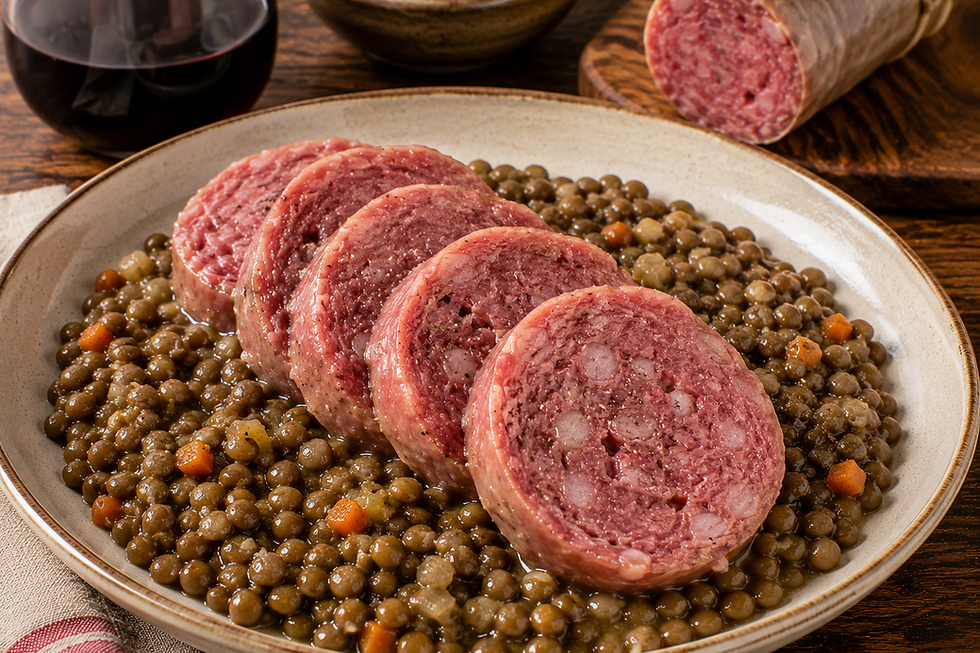
Traditional Italian Modena Cotechino with Lentils
Story of the Dish
Cotechino di Modena is one of Emilia-Romagna’s great pork traditions and a central dish of the Italian New Year table. Its name comes from cotica, pork rind, which contributes the characteristic soft texture. Lentils are traditionally associated with prosperity because their round shape recalls coins, but the pairing also works gastronomically: earthy lentils balance the rich, seasoned sausage.
Recipe Information
Difficulty: Intermediate
Region: Emilia-Romagna
Servings: 6
Prep Time: 20 minutes
Cook Time: 2 hours 30 minutes
Total Time: About 3 hours
Ingredients
1 traditional uncooked Cotechino Modena IGP, 1 1/2 to 2 lb
Cold water as needed
2 cups dried small brown or green lentils
2 tbsp extra-virgin olive oil
1 small onion
1 carrot
1 celery stalk
1 tbsp tomato paste
4 cups light vegetable or meat stock
1 bay leaf
Fine sea salt
Fresh black pepper
Ingredient Control, Texture and Service
Ingredient control is especially important in Cotechino di Modena con Lenticchie (Traditional Italian Modena Cotechino with Lentils). Taste cured, aged, salted, or fermented ingredients before they enter the pan so the seasoning of the entire recipe can be adjusted around them. Measure strong ingredients conservatively and add more only after the base flavor is established. When vegetables are part of the preparation, cook them to the texture the dish requires rather than simply until soft; their structure contributes to the final balance.
Heat management should remain deliberate from the first step to the last. Use higher heat only when you need evaporation, browning, or a crisp surface, then lower the temperature once moisture and tenderness become the priority. A hard boil rarely improves a regional Italian recipe and often damages protein, cheese, starch, or delicate aromatics. When reducing wine, stock, or cooking juices, stop before the liquid becomes salty or sticky; final concentration continues naturally as the dish rests and cools slightly.
Professional seasoning happens in layers. Salt lightly at the beginning, taste after the main cooking stage, then correct only after cheese, cured meat, concentrated stock, or other naturally salty ingredients are present. Freshly ground pepper, herbs, citrus, vinegar, or wine should be used to sharpen the finished flavor without covering the identity of the recipe. If a sauce tastes dull, acidity is often the missing element; if it tastes harsh, a small amount of fat or cooking liquid may restore balance.
For texture, judge the food with both sight and touch. Sauces should coat rather than pool with separated fat. Pasta, rice, dumplings, potatoes, and grains should retain definition. Meat should be tender but not dry, and seafood should remain moist and cleanly structured. If the recipe contains a filling, allow enough rest for it to set before slicing or serving. If it contains a crust or fried component, serve promptly so steam does not soften it.
Plan the final minute before plating. Have serving dishes ready, remove inedible aromatics, adjust sauce consistency, taste one complete bite, and clean the rim of the plate. Keep garnish minimal and edible. The finished presentation should look like the same regional dish cooked with greater precision, not a different dish decorated for appearance.
For leftovers, cool food quickly and store it in shallow airtight containers. Reheat only the portion needed. Add moisture gradually to starches and braises, use moderate heat for proteins, and avoid boiling emulsified cheese or butter sauces. When a recipe is naturally better freshly cooked, use leftovers in a new preparation rather than repeatedly reheating them.
Preparation
1. Place fresh cotechino in cold water and bring very gradually toward a gentle simmer. Cook 2 to 2 1/2 hours, keeping it submerged.
2. Rinse lentils. Prepare a soffritto with onion, carrot and celery in olive oil.
3. Cook tomato paste briefly, add lentils and bay leaf, then add stock to cover by about one inch.
4. Simmer 30 to 40 minutes until tender but still intact. Season near the end and reduce liquid until the lentils are moist and glossy.
5. Rest the cooked cotechino for 5 minutes, remove casing if desired and cut into thick slices.
6. Serve two or three slices over a generous bed of lentils.
Professional Technique
For service, warm plates for savory dishes and chill plates or serving dishes when appropriate for cold desserts. Finish sauces immediately before plating, because emulsions tighten as they cool. Reserve cooking water or stock whenever starch is involved so the final consistency can be corrected without adding cream. If the preparation contains cheese, incorporate it away from aggressive heat to avoid separation. If it contains meat or fish, allow a short rest when appropriate so juices redistribute before slicing.
The recipe should taste balanced rather than merely intense. Salt, acidity, sweetness, bitterness, fat, and aroma should support one another. If a finished dish tastes heavy, correct with acidity or a small amount of hot cooking liquid before adding more salt. If it tastes thin, reduce or emulsify rather than automatically adding more fat. These final adjustments are what separate a professional result from a recipe that is technically cooked but not fully finished.
Before serving Cotechino di Modena con Lenticchie (Traditional Italian Modena Cotechino with Lentils), make one final technical check: the main ingredient must retain its intended texture, the sauce or dressing must be cohesive rather than separated, and seasoning must be judged only after every concentrated ingredient has been incorporated. Taste a complete bite, not the sauce alone. If the dish needs freshness, correct it with acidity or a small amount of cooking liquid before reaching automatically for more salt. If the texture is too tight, loosen gradually; if too loose, reduce gently rather than adding unnecessary thickeners.
Keep the final presentation connected to the recipe's regional character. Warm savory plates and chill plates for cold preparations when appropriate. Portion consistently, leave the principal ingredient visible, and use garnish only when it contributes flavor. Serve immediately once the correct texture is achieved, because rice, pasta, cheese emulsions, fried foods, and delicate proteins all deteriorate when held too long.
For advance preparation, complete only the steps that do not compromise texture. Chop aromatics, measure ingredients, prepare stocks and sauces, and organize equipment ahead of time, but reserve final cooking, emulsification, crisping, or mantecatura for service. This keeps the recipe precise without making the process unnecessarily complicated.
When reheating leftovers, use lower heat than during the original cooking and restore moisture gradually. Starches need a splash of water or stock, braised dishes benefit from reheating in their own sauce, and cheese-based preparations should never be boiled. The goal is to return the food to serving temperature without cooking it a second time.
Chef Tips
Cook cotechino extremely gently and use small lentils that retain their shape. Keep tomato restrained and salt carefully.
Mistakes to Avoid
Avoid aggressive boiling, collapsed lentils, too much tomato, oversalting, slices that are too thin and serving the cotechino cold.
Do not rush the main cooking stage, overcrowd pans, or compensate for weak flavor with excess salt, sugar, cheese, or garnish. Avoid overcooking delicate ingredients and do not let a finished sauce sit over aggressive heat. Follow the texture cues in the method because ingredient size and equipment can change exact timing.
Verdicchio dei Castelli di Jesi
Fresh acidity and savory structure keep the pairing balanced.
Vermentino di Gallura
Citrus, herbs, and salinity complement many Italian preparations.
Etna Bianco
Minerality and tension support complex flavors without heaviness.
Chianti Classico
Sangiovese acidity works well when the dish benefits from a red wine.
Franciacorta Brut
Bubbles and acidity refresh the palate and cut richness.
Serving and Presentation
Serve with a restrained, natural presentation that keeps the traditional food clearly visible. Avoid unnecessary decorative garnishes and allow the regional ingredients and textures to define the plate.
Wine Pairing
Lambrusco Grasparossa, Lambrusco Salamino, Lambrusco di Sorbara, Gutturnio Frizzante and Sangiovese di Romagna are excellent choices.
Nutrition per Serving
Carbohydrates: 1.69 oz
Fat: 0.85 oz
Saturated Fat: 0.28 oz
Fiber: 0.14 oz
Sugars: 0.21 oz
Sodium: 680 mg
Cholesterol: 95 mg
Approximate nutrition per serving: 560 calories, 1.48 oz protein, 0.85 oz carbohydrates, 1.09 oz fat, 0.35 oz saturated fat, 0.14 oz fiber, 0.21 oz sugars, 760 mg sodium, and 135 mg cholesterol. Values vary with the cut of meat and serving size.
Storage and Reheating
Cool leftovers promptly, refrigerate in a covered container, and use within 2 days unless the preparation is seafood or contains a more perishable component. Reheat gently only as needed and avoid repeated temperature cycling.



Comments