
Potato and Montasio Frico | Frico Friulano con Patate

Frico con patate is the version of frico that feeds people rather than the one that decorates a plate. No onion, no flour, no egg, no cream. Boiled potatoes and aged Montasio go into a heavy pan and come out as one golden cake, crisp on both faces and soft enough in the middle to cut with a fork. Everything it tastes of comes from two ingredients and from how long you leave the pan alone.
The dish belongs to the mountain farms of Carnia and the Val Canale, in the north of Friuli Venezia Giulia, where Montasio has been made since the Middle Ages and where a wheel that cracked or aged badly was too valuable to throw away. Frico was the answer to that problem long before it was a recipe, and the potato arrived much later to stretch it into a meal.
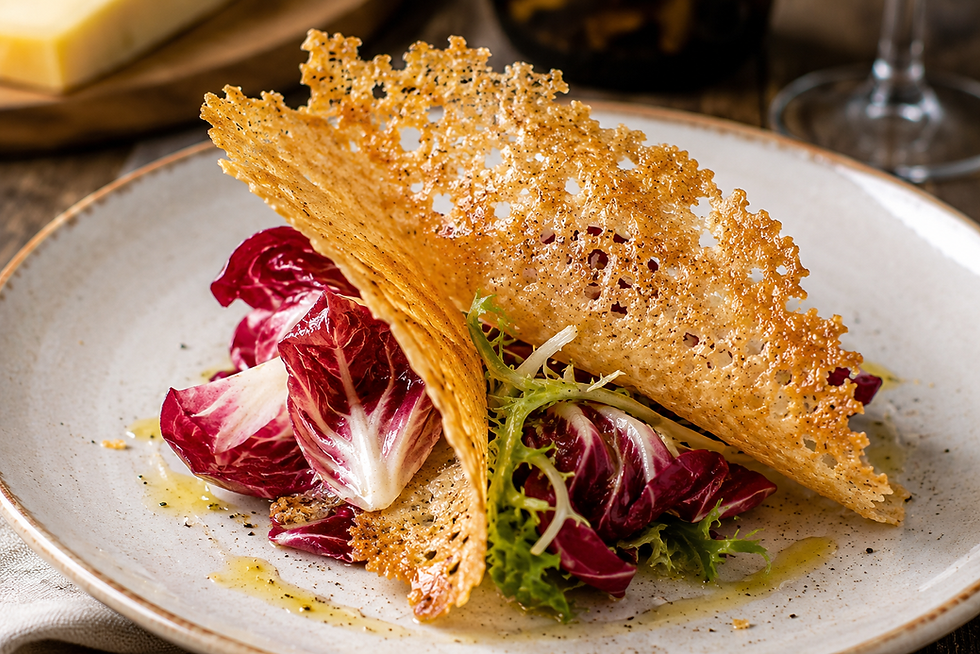
What follows is the soft frico, the frico morbido, not the lace thin cheese wafer that carries the same name. The potatoes are cooked the day before and chilled overnight, the cheese is grated cold and in two ages, the heat stays moderate, and the cake is turned once and only once.
Yield: 4 to 6 servings as a side dish. Prep: 20 minutes, plus overnight chilling. Cook: 35 minutes. Rest: 5 minutes. Total: about 1 hour, plus chilling. Difficulty: intermediate. Course: contorno. Region: Friuli Venezia Giulia, Carnia and the Val Canale.
The Story
Montasio comes before frico, and without it there is no dish. The cheese takes its name from the plateau above the Val Canale, and its making is credited to the Benedictine monks of the abbey of Moggio Udinese, working those high pastures by the thirteenth century. By 1775 it was listed by name, with a price, in the market records of San Daniele del Friuli. It received its DOP in 1996. What matters here is that Montasio is a cooked curd mountain cheese that melts cleanly at one age and browns at another.
Frico began as salvage. In a casera, the cheese making room of a mountain dairy, a wheel occasionally split or aged badly, and the rinds and offcuts accumulated with nowhere to go. Melted in a pan over the fire they became supper, eaten straight from the iron with polenta. That is the oldest frico, cheese alone. The potato entered Carnia in the decades after the Napoleonic period, spreading through the Alpine valleys as insurance against famine, and cooks quickly worked out that it stretched the cheese and gave the pan something to hold onto.
Two things separate this recipe from its neighbours. It has no onion, which makes it the plainer of the two potato versions, and it is soft rather than crisp. Carpacco di Dignano has run a Sagra del Frico every summer since 1979, cooking it in pans the size of cartwheels, and the argument over onion or no onion is older than that festival. This is the version without.
Ingredients
For the potatoes
Waxy yellow potatoes, similar size, 1 3/4 lb (800 g)
Coarse sea salt for the cooking water, 1 tbsp (18 g)
For the cheese
Montasio DOP mezzano, aged 5 to 10 months, 10 oz (285 g)
Montasio DOP stravecchio, aged over 18 months, 2 oz (55 g)
For the pan
Unsalted butter, 1 1/2 tbsp (21 g)
Extra virgin olive oil, 1 tbsp (15 ml)
For finishing
Fine sea salt, 1/4 tsp (1.5 g), or to taste
Freshly ground black pepper, to taste
Preparation
Step 1

Boil the potatoes whole in their skins. Put them in cold water, add the coarse salt, bring to a bare simmer and cook 30 to 40 minutes, until a thin knife slides to the centre with no resistance. Never cut them first: a peeled or halved potato takes on water through the cut surface, and that water is what ruins a frico later. Drain and let the steam come off.
Step 2

Peel them warm and chill them overnight. The skins come away in sheets while the potatoes are hot, so do it immediately with a small knife and a cloth. Spread them on a tray in a single layer, cool to room temperature uncovered, and refrigerate at least 8 hours. This waiting time is not a convenience, it is the step that makes the texture work.
Step 3

Grate the cold potatoes on the large holes of a box grater. They should come off in short thick shreds, not a paste. Work straight from the refrigerator, because a potato that has warmed back up smears against the blade. Do not rinse or press the shreds: their surface starch is the only binder this recipe has.
Step 4

Grate the two Montasio separately. The mezzano goes on the large holes and does the melting, the stravecchio on the fine holes for flavour and browning. Keep them in separate bowls and keep both cold. Cheese grated at room temperature clumps, melts unevenly and leaves pale patches in the finished crust.
Step 5

Heat a 10 inch (25 cm) heavy skillet over medium heat and add the butter and olive oil together. The oil raises the point at which the butter burns, the butter gives the crust a flavour oil alone cannot. Once the foam subsides and the fat runs thin, drop to medium low. From here the heat never goes above that.
Step 6

Add the grated potato and press it into an even layer. Spread it from the centre outwards with the back of a spoon until it meets the pan wall, flat and about 3/4 inch (2 cm) deep. Season with the fine salt and a grinding of pepper. Cook 8 to 10 minutes undisturbed, so the underside dries and sets into a base.
Step 7

Scatter the cheese over the potato in two additions. The mezzano goes on first and melts for 2 minutes, then a fork folds it down through the potato with about six turns, no more. Scatter the stravecchio over the top and leave it. Overworking here breaks the shreds into mash and the frico loses its open texture.
Step 8

Brown the first side properly. Press the surface flat once more, then cook undisturbed for 12 to 14 minutes, resisting every impulse to lift and look before the tenth minute. It is ready when the edges pull back from the pan on their own, the cake slides as one piece when you shake the handle, and the smell turns from melting cheese to toasted cheese.
Step 9

Turn it once with a plate and finish the second side. Slide the frico onto a flat plate wider than the pan, cover it with the pan, invert the two together and lower the cake back in. Cook 8 to 10 minutes more, again without moving it. Slide it onto a warm plate and rest 5 minutes before cutting, or the centre will run.
Plating
Frico is cut at the table, not in the kitchen. Slide the whole cake onto a warm wooden board or a plain terracotta plate, let it rest its five minutes, then cut it into wedges with a serrated knife using a sawing motion rather than pressure. A straight blade pressed down compacts the middle and pushes molten cheese out of the cut face.
Serve it hot but not straight from the pan, at around 150°F (65°C), on plates warmed to the same temperature. Too hot and the cheese is rubbery; too cool and the fat sets on the palate. In Friuli a slab of soft white polenta goes beside the wedge, on the plate first so the frico leans against it. Nothing else belongs there: no herbs, no cream, no salad round the edge. Grind black pepper over the cut surface at the table.
Professional Technique
The overnight chill carries this recipe, and it is chemistry rather than tradition. Boiling makes starch granules absorb water and swell into a soft fragile structure. Cooling that cooked starch for several hours lets the amylose chains realign and partly recrystallise, a process called retrogradation, and the shreds you grate the next day are firmer and hold their edges through twenty minutes in a hot pan. Grate a potato boiled an hour ago and the same recipe gives you mash with cheese in it.
Using Montasio at two ages in one pan is a functional split, not a flourish. A mezzano of five to ten months keeps enough moisture and intact casein to melt into long smooth threads that bind the potato. A stravecchio of eighteen months or more has lost that water and broken its proteins down into free amino acids, so it toasts rather than melts. Young cheese inside for the bind, old cheese on the surface for the crust.
The single turn is the third. Every flip risks a break along a seam that has not set, and every break lets rendered fat escape into the pan, where it fries the exterior instead of colouring it. The first side gets the longer time because it has to be strong enough to become the roof.
Texture and Moisture Control
Three sources of water sit in this pan and all must leave before browning starts: the potato holds the most, the mezzano Montasio a surprising amount, the butter a little. Nothing on the surface can exceed 212°F (100°C) while liquid water is present, which is why a frico rushed on high heat sits pale and weeping and then scorches the instant the moisture goes. Moderate steady heat lets the water leave gradually.
That is also why the potato goes in alone for the first eight to ten minutes. It is a drying stage, not a cooking stage, since the potato is already cooked through: the shreds lose surface moisture, the exterior starch sets, and a thin base forms that the cheese can melt into rather than sit on. Cheese added to a wet potato traps the water underneath and the middle comes out slack however long the outside cooks.
Fat behaves differently. Montasio renders a lot of butterfat as it heats, and where it goes decides the crust. In an intact cake it stays between the shreds and keeps the interior soft. In a broken or stirred one it pools in the pan, the surface starts frying, and you get a greasy shell over a dry centre. If a rim of clear fat appears after the turn, tilt the pan and blot it away.
Professional Mise en Place
A two day preparation with a twenty minute window at the end. Everything except the pan work is done in advance, and once the potato hits the fat the cook stays with it.
Equipment and tools
Heavy 10 inch (25 cm) skillet, cast iron or a thick aluminium nonstick pan
Box grater with both large and fine holes
Flat plate wider than the pan, for the turn
Wide flexible spatula and a fork for folding the cheese
Instant read thermometer
Prepared ahead
Potatoes boiled, peeled and refrigerated 1 day ahead, uncovered on a tray
Both Montasio grated separately, up to 4 hours ahead, kept cold and covered
Butter weighed and olive oil measured, at hand beside the stove
Serving board or terracotta plate warmed and waiting
Service setup
Potatoes grated at the last moment, straight from the refrigerator
Pan preheated over medium, then dropped to medium low before the potato goes in
Turning plate set beside the stove before the first side is browned
Polenta held soft and warm if serving it, never allowed to set
Plates warm, pepper mill and serrated knife on the table
Chef Tips
Buy Montasio with the DOP mark and ask for the age in months rather than a label word. Mezzano and stravecchio are used loosely at the counter, and a cheese sold as aged that is really four months old gives a slack frico with no crust. If only one age is available, take the younger and grate a little Parmigiano Reggiano over the surface for browning.
Choose potatoes of the same size and boil them whole together. Mixed sizes mean the small ones collapse while the large stay firm in the middle, and once grated you cannot tell until the frico refuses to hold. Yellow waxy varieties keep their shreds best; floury baking potatoes turn to purée on the grater.
If the turn worries you, use two pans. Brown the first side, slide the cake onto the flat plate, put the second pan face down over it, invert, and set that pan on the heat. The frico never travels back into a pan already hot and slick with fat, which is where most breaks happen.
Make a whole one even for two people. A thin cake in a large pan dries before it browns, and a small pan changes the proportion of crust to centre entirely. Cook the full quantity and keep half for the next day: it reheats better than almost any other potato dish.
Common Mistakes
Grating the potatoes the same day they are boiled. Warm cooked starch shears under the blade, so you get paste instead of shreds and a dense mash of a frico. The overnight chill is what firms it. If you cannot wait, give the peeled potatoes 3 hours in the coldest part of the refrigerator and accept a softer result.
Cooking over high heat to save time. The surface cannot brown while water is still leaving it, so high heat does nothing for ten minutes and then scorches the cheese in seconds once the moisture is gone. Burnt Montasio is acrid and nothing removes that taste. Medium low, the whole way.
Turning the frico more than once. Each turn risks a break along a seam that has not set, and each break releases butterfat into the pan, where it fries the outside and dries the inside. One turn, at the right moment, with a plate. Lifting the edge every two minutes does the same damage more slowly.
Cutting it straight out of the pan. The five minute rest is when the melted cheese cools just enough to set into the potato. Cut too early and the centre runs out onto the board, leaving hollow wedges and a crust separated from the middle. The shortest step in the recipe and the easiest to skip.
Wine Pairing
Collio Friulano DOC: The regional answer and the most exact one here. Friulano has a broad waxy texture that stands up to the fat of a cheese heavy cake without needing oak, and it finishes on a bitter almond note that runs alongside the toasted Montasio crust. Its aromatics are quiet, which matters: a dish built on two ingredients does not want a wine narrating over it.
Ribolla Gialla Collio DOC: The high acid choice for anyone who finds Friulano too soft against this much cheese. Ribolla is lean and taut, green citrus and white flower with no residual sweetness, and that sharpness scrubs rendered butterfat off the palate between forkfuls. Reach for it when frico is the whole meal rather than a side, because palate fatigue is the real risk.
Trento DOC: A metodo classico sparkling from the mountains just west of Friuli, and mechanically the most effective foil here. Carbon dioxide and high acidity together lift fat off the tongue faster than any still wine, while the bready character from lees ageing echoes the toasted surface rather than competing with it. Serve it at about 43°F (6°C).
Schioppettino Friuli Colli Orientali DOC: The red for a table that wants one, a native Friulian grape rescued from near extinction in the 1970s. Light in body with soft tannin and a genuine black pepper aroma from rotundone in the grape itself, it picks up the pepper ground over the frico at the table. Serve it cool, around 57°F (14°C).
Storage & Reheating
Cool the frico on a rack before it goes anywhere, so the steam trapped underneath escapes instead of condensing into the crust. Cut it into portions, wrap each closely in parchment and then foil, and refrigerate up to 3 days in an airtight container. Stacking warm wedges welds them together and destroys both faces when you separate them.
Reheat in a dry skillet over medium low heat, the only method that restores the crust: 4 to 5 minutes a side with no added fat, since the frico releases plenty of its own. For several portions at once use a 400°F (200°C) oven for 8 minutes on a rack set over a tray. Never a microwave, which steams the crust from within and leaves a soft grey wedge. Frico freezes well for up to 2 months because the starch is already retrograded; thaw overnight in the refrigerator, then reheat in the dry skillet with 2 extra minutes a side.
Nutrition
Per serving, based on 6 side dish portions:
Calories: 340 kcal
Total Fat: 20 g
Saturated Fat: 12 g
Trans Fat: 0.4 g
Unsaturated Fat: 7 g
Cholesterol: 58 mg
Sodium: 520 mg
Total Carbohydrates: 23 g
Fiber: 2 g
Total Sugars: 1 g
Added Sugars: 0 g
Protein: 18 g
Lactose: 0.3 g
Principal micronutrients: calcium, phosphorus, vitamin A, vitamin B12, potassium, selenium, zinc
These figures are estimates. Lactose is low because Montasio loses almost all of it during ageing, and sodium depends on how salty the particular wheel is, since aged mountain cheeses vary widely from dairy to dairy.



Comments