
Crispy Montasio Cheese Wafer | Frico Croccante di Solo Montasio
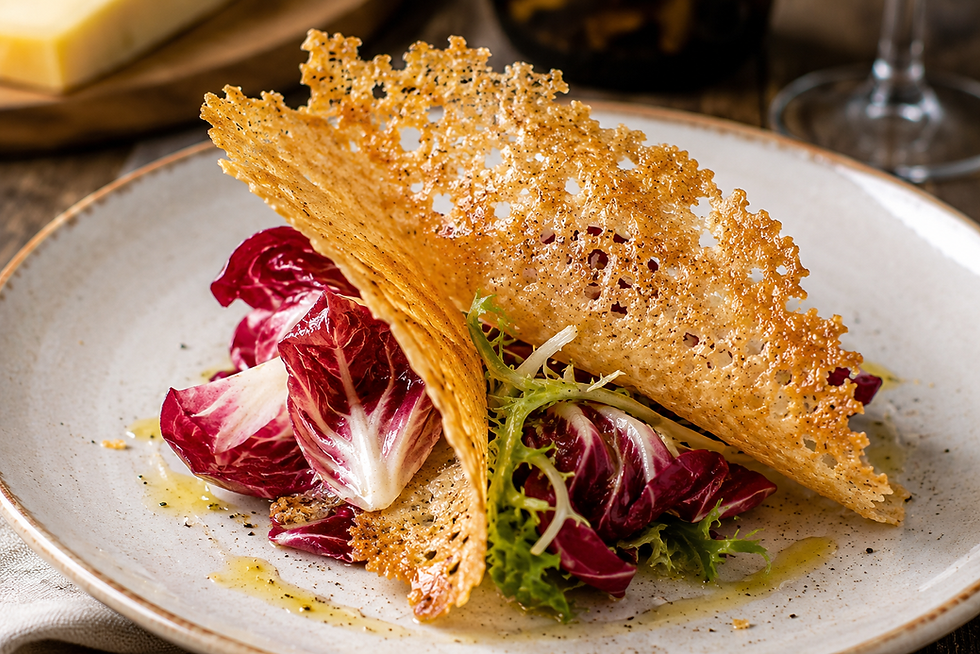
Frico croccante is the thinnest thing Friuli Venezia Giulia makes and one of the loudest to eat. A handful of grated Montasio goes into a dry pan, the fat runs out of it, the proteins brown into a golden lace, and what is lifted out four minutes later snaps like glass. No potato, no onion, no flour, no egg, no butter. Cheese and controlled heat, nothing else.
This is the crisp branch of the frico family and it belongs apart from the soft one. Frico morbido is a thick pan cake of cheese and potato, eaten hot with a fork in the mountain houses of Carnia. Frico croccante is a wafer, served beside polenta, next to a bitter leaf salad, or standing upright in a glass with a cold white wine.
Almost everything that goes wrong here goes wrong for one of two reasons: the wrong age of cheese, or the wrong pan temperature. Montasio that is too young carries too much water and steams into a pale rubbery disc. A pan driven too hot scorches the milk sugars before the fat has rendered. Get those two right and the rest is patience.
Yield: 8 wafers, about 4 servings as a contorno. Prep: 15 minutes. Cook: 25 minutes. Cooling: 10 minutes. Total: about 50 minutes. Difficulty: intermediate. Course: contorno and aperitivo. Region: Friuli Venezia Giulia, Carnia and the hills above Udine.
The Story
Frico is older than most people assume. In the fifteenth century Maestro Martino da Como, who wrote the Libro de arte coquinaria, recorded a preparation he called caso in patellecte, cheese browned in small pans. Friuli claims that line of descent, and reasonably so: the method he describes is what a cook in Carnia still does with a handful of gratings.
What kept the dish alive was economy. In the malghe, the summer dairies of the Carnic Alps, whole wheels were currency and were sold down in the valley. What stayed behind was rind trimmings, broken edges and the scraps left when a wheel was cut. Frico is cucina di recupero in its purest form: those pieces were grated and browned rather than thrown away, and tasted better than the cheese had on its own.
The cheese carries a monastic pedigree. Montasio takes its name from the Jof di Montasio massif in the Julian Alps, and its production is traced to the Benedictine abbey of Moggio Udinese, where monks were making it by the thirteenth century. It became a DOP cheese in 1986. The grades matter more than the history: fresco at two to five months, semistagionato at five to ten, stagionato beyond ten, stravecchio past eighteen. Crisp frico lives in the middle of that range.
Ingredients
For the frico
Montasio DOP semistagionato, aged 6 to 10 months, coarsely grated, 9 oz (255 g)
Montasio DOP stagionato, aged over 12 months, finely grated, 2 oz (55 g)
Freshly ground black pepper, to taste
For the pan and the shaping
Neutral oil for wiping the pan, 1/2 tsp (2 ml)
Rolling pin or a clean glass bottle, for curving the wafers
Parchment paper, 2 sheets
For serving
Coarse polenta, cooked and cooled, 1 cup (250 g), optional
Radicchio or frisee leaves, 2 cups (60 g), optional
Extra virgin olive oil, 1 tbsp (15 ml)
Flaky sea salt, a very small pinch per wafer, optional
Preparation
Choose and grate the cheese
Buy Montasio in a piece and grate it yourself. Pregrated cheese is dusted with anticaking starch, which turns chalky in the pan and stops the edges going clear. Take the rind off cleanly, grate the semistagionato on the large holes of a box grater and the stagionato on the fine holes. The coarse gratings give the wafer its open lace structure, the fine ones melt first and knit it together. Keep them in separate bowls.
Dry the gratings and portion them
Spread the grated cheese on a parchment lined tray and leave it uncovered at room temperature for 20 minutes. Surface water is the commonest cause of a soft frico and twenty minutes of air removes a surprising amount of it. Then combine about 1 oz (30 g) of coarse gratings with a scant 1/4 oz (7 g) of fine ones per wafer, toss loosely and grind black pepper over each. Have all eight portions ready: once the pan is hot there is no time to weigh.
Set the pan and find the right heat
Use a heavy nonstick skillet of 8 to 10 inches (20 to 25 cm) over medium heat for 3 minutes. Wipe it with a paper towel barely dampened with neutral oil, then again with a dry towel so a film remains but no pooled oil. Test with three gratings: they should slump and sweat within about 10 seconds without sizzling or colouring. If they brown at once the pan is too hot.
Form the wafer and let the fat render
Scatter one portion over the pan in an even circle about 6 inches (15 cm) across, thin enough to see the pan through it in places. Do not press it and do not stir it. Over 2 to 3 minutes the cheese slumps, bubbles, then releases a clear pool of yellow fat at the edge. That rendering is the point: what leaves as fat cannot stay in the wafer as grease.
Pour off the fat and turn the wafer
Once the bubbling slows and the edge sets into a lace ring of pale gold, tip the pan over a bowl and let the rendered fat run out. Keep it: it is excellent for frying potatoes. Return the pan to the heat for 30 to 45 seconds, then slide a thin offset spatula under the centre and flip in one movement. Give the second side 45 seconds only. This is where wafers are lost to overcooking.
Shape while it is still pliable
Lift the wafer onto parchment. For about 20 seconds it behaves like warm wax and takes any shape you give it, then it sets and shatters if bent. Drape it over a rolling pin for a curved tile, press it into a small bowl for a cup, or leave it flat for a shard. Decide before you lift: there is no second attempt.
Cool the wafers and check the crack
Cool each wafer on a rack rather than a plate, so air reaches both faces and steam escapes instead of condensing underneath. Give them a full 10 minutes. Frico is soft leaving the pan and turns crisp only as it cools, so judging it hot misleads. Break the first one: it should crack cleanly with a dry sound. If it bends, the remaining portions need more heat and a longer render.
Plating
Frico croccante is served warm or at room temperature, never hot and never reheated to order. Use a dry plate at room temperature: a warm one softens the underside within a minute, and any trace of moisture on the porcelain does the same.
As a contorno beside polenta, cut the cooled polenta into fingers, pan crisp them and lean two wafers against them so the shards stand upright. Nothing wet should touch the frico. If a dressed salad shares the plate, keep clear space between them.
For an aperitivo, stand the wafers in a tall glass or lay them overlapping on a wooden board with the smallest pinch of flaky salt and a few drops of olive oil added at the last second. Serve within thirty minutes of cooling.
Professional Technique
The technique is a controlled separation followed by a controlled dehydration, both in the same pan. Past about 150°F (65°C) the casein network holding the curd together relaxes and the butterfat trapped inside escapes. Left in the pan, that fat fries the cheese from below and gives a greasy wafer, which is why it is poured off as the bubbling slows. What remains is protein, milk solids and water, and the second stage drives the water out until the sheet turns brittle on cooling.
The blend of two ages is the part most recipes leave out. Montasio at six to ten months has the moisture and melting behaviour to flow into a continuous sheet but on its own can stay slightly supple. The older cheese, past twelve months, has lost water and developed free amino acids and tyrosine crystals, so it browns faster and adds savoury depth without moisture. A fifth by weight of it sharpens flavour and tightens texture without risking the structure.
The browning is Maillard chemistry on lactose and milk proteins rather than sugar caramelisation, and it runs fast within a narrow band. Below roughly 300°F (150°C) the wafer dries slowly and stays blond and bland. Above about 375°F (190°C) the lactose burns before the water has left, giving the acrid note people mistake for aged cheese. Holding the pan between those figures is the decision that separates a good frico from a bad one.
Texture and Moisture Control
Crispness in frico is a matter of residual water and nothing else. A wafer holding more than a few percent moisture is leathery however brown it looks, and that water comes from three sources: the cheese, condensation onto cold gratings, and steam trapped underneath as it cools. The air dry handles the first two, the wire rack the third, since a wafer flat on a plate traps its own steam and softens from below while the top stays deceptively crisp.
Fat is the opposite variable. Enough must render out to stop the wafer being greasy, but once it has gone the dry protein sheet scorches in seconds because nothing buffers the heat. The pour off point is a timing cue, read by ear as much as by eye: rapid bubbling drops to a slow irregular popping when the render is complete.
Once cooled, the enemy is ambient humidity. A wafer left in a warm kitchen reabsorbs moisture within an hour and loses its snap, which is why frico is made close to service. In a humid kitchen hold the cooled wafers in an airtight tin with a few grains of dry rice wrapped in paper.
Professional Mise en Place
Frico is made one wafer at a time, about four minutes each, so everything is staged before the first portion reaches the pan.
Equipment and tools
Heavy nonstick skillet, 8 to 10 inches (20 to 25 cm), used for nothing else that day
Box grater with coarse and fine faces, and a digital scale
Thin offset spatula, long enough to reach the centre of the wafer
Wire cooling rack, parchment sheets and a rolling pin for shaping
Small bowl for the rendered fat, kept beside the stove
Prepared ahead
Cheese grated and air dried on parchment, up to 2 hours ahead, uncovered
Eight portions weighed, blended and set out on a tray in a line
Polenta cooked, cooled, cut into fingers and ready to crisp, up to 1 day ahead
Salad leaves washed and dried completely, refrigerated and undressed
Service setup
Pan brought to temperature and tested with three gratings before service begins
Rack and parchment cleared and dry, within arm's reach of the stove
Rolling pin or shaping bowl set out, since shaping has a 20 second window
Plates dry and at room temperature, never warmed
Chef Tips
Taste the cheese before you grate it. Montasio varies between dairies and between wheels, and a piece that tastes flat and milky in the hand makes a flat and milky wafer. You want one already faintly sharp: the pan concentrates whatever flavour is there and invents none of its own.
Keep the rendered fat. It is clean, intensely savoury and keeps refrigerated for two weeks in a sealed jar. Potatoes fried in it are among the best things in the Friulian repertoire, and using it that way is faithful to a dish that exists because nothing was wasted.
Make one test wafer before committing the rest. Pan behaviour varies more than recipes admit, and a single trial tells you whether your medium heat matches the one described here. Adjust once, then hold every later wafer to identical timing.
If you want to flavour the frico, add the aromatic dry and add very little. A pinch of crushed fennel seed, a few needles of chopped rosemary or a grind of black pepper scattered over the gratings will survive the heat. Anything wet, fresh herbs included, steams and softens the sheet.
Common Mistakes
Using young Montasio or a substitute cheese. Montasio fresco at two to five months carries too much water and yields a soft pale disc that never crisps. Mozzarella and fontina fail for the same reason. If Montasio is unavailable, use an aged Asiago or a Piave vecchio.
Starting with a pan that is too hot. High heat browns the lactose before the butterfat has rendered, so the wafer turns dark and bitter while still holding grease. Medium heat on a heavy pan is correct, and the three grating test prevents the problem in ten seconds.
Leaving the rendered fat in the pan. Cheese sitting in its own released fat fries rather than dries, and comes out heavy and slick however long it cooks. Pour the fat off the moment the rapid bubbling slows, then return the pan to the heat.
Stirring or pressing the cheese. Pressing compacts the lace into a slab that traps moisture in the middle, and stirring breaks the sheet before the proteins knit. Scatter the gratings once and leave the wafer alone until it is time to pour and turn.
Judging crispness while the wafer is hot. Frico is pliable straight out of the pan and turns brittle only as it cools, so a cook who tests it hot overcooks the next one. Wait the full ten minutes and judge the batch by the first cooled wafer.
Wine Pairing
Collio Friulano DOC: The local answer and the bottle poured with frico across the province. Friulano is dry and medium bodied with a pronounced bitter almond finish, and that bitterness runs alongside the browned milk proteins instead of fighting them. Its acidity rinses rendered butterfat from the palate between wafers, while a slightly waxy texture gives it presence against concentrated aged cheese.
Ribolla Gialla Collio DOC: Leaner and sharper than Friulano, with high acidity, citrus peel and a stony finish. Choose it when the frico carries a high proportion of older Montasio and tastes very savoury, because this wine cuts rather than accompanies. Serve it at around 46°F (8°C), which keeps the acidity tight against a warm wafer.
Franciacorta DOCG: Not Friulian, but technically the best match here for a rendered fat texture. Bubbles and bottle fermented acidity scrub fat from the palate in a way no still wine manages, and the bread and hazelnut character from the lees echoes the toasted note in the browned cheese. Choose a brut with low dosage: the frico brings salt, not sweetness.
Refosco dal Peduncolo Rosso Friuli DOC: The regional red, for anyone who wants one with cheese. Dark plum fruit, unusually high acidity for a red, and a firm rustic tannin that grips the fat instead of being coated by it. Serve at around 59°F (15°C) so the acidity stays forward and the wine does not sit heavily against a wafer that weighs almost nothing.
Schioppettino Friuli Colli Orientali DOC: A more aromatic Friulian red, marked by black pepper and violet, with lighter tannin than Refosco. It works best when the frico has been seasoned with pepper or fennel seed, since the wine repeats that spice rather than introducing a competing one.
Storage & Reheating
Frico croccante is a dish to make and eat, and every hour of storage costs it something. Once fully cooled, the wafers keep at cool room temperature in an airtight tin, layered between parchment, for up to 2 days. Never refrigerate them: a wafer taken out of a humid refrigerator goes limp within minutes. Do not freeze them.
A stored wafer that has lost its snap can be revived once. Lay the wafers on a rack over a baking sheet, give them 3 to 4 minutes at 300°F (150°C), then cool them on the rack for 5 minutes. The oven drives out the reabsorbed moisture and the second cooling restores brittleness. A microwave turns them to rubber.
The other components store on their own terms. Cooked polenta keeps refrigerated in a sealed container for 3 days and is best crisped in a pan. The rendered Montasio fat keeps refrigerated in a sealed jar for 2 weeks. Grated cheese weighed out but not cooked keeps airtight for 2 days and needs a fresh 20 minute air dry.
Nutrition
Per serving, based on 4 servings of 2 wafers each, counting the frico alone without polenta or salad:
Calories: 295 kcal
Total Fat: 23 g
Saturated Fat: 14 g
Trans Fat: 0.8 g
Unsaturated Fat: 7 g
Cholesterol: 72 mg
Sodium: 590 mg
Total Carbohydrates: 1 g
Fiber: 0 g
Total Sugars: 0.5 g
Added Sugars: 0 g
Protein: 20 g
Lactose: 0.2 g
Principal micronutrients: calcium, phosphorus, vitamin A, vitamin B12, zinc, selenium
These figures are estimates. A significant share of the butterfat is poured out of the pan during the render and is not eaten, so the fat and calorie values are lower than the raw weight of the cheese suggests. Sodium depends on the wheel and on whether flaky salt is added.


Comments