
Italian Coffee Gelato | Gelato al Caffè
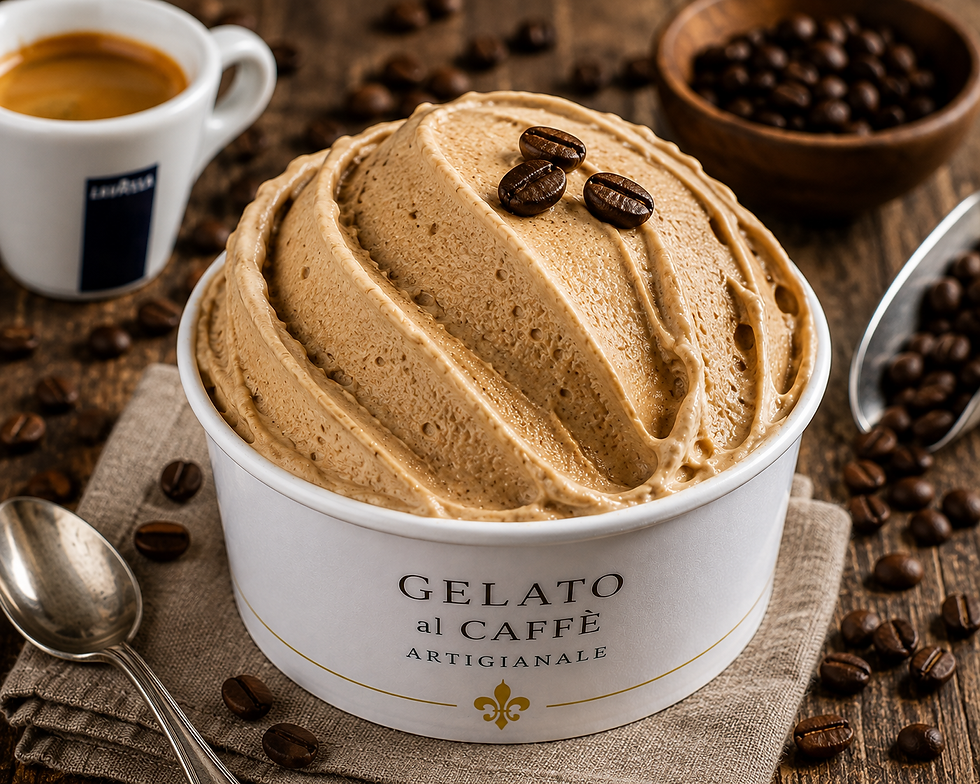
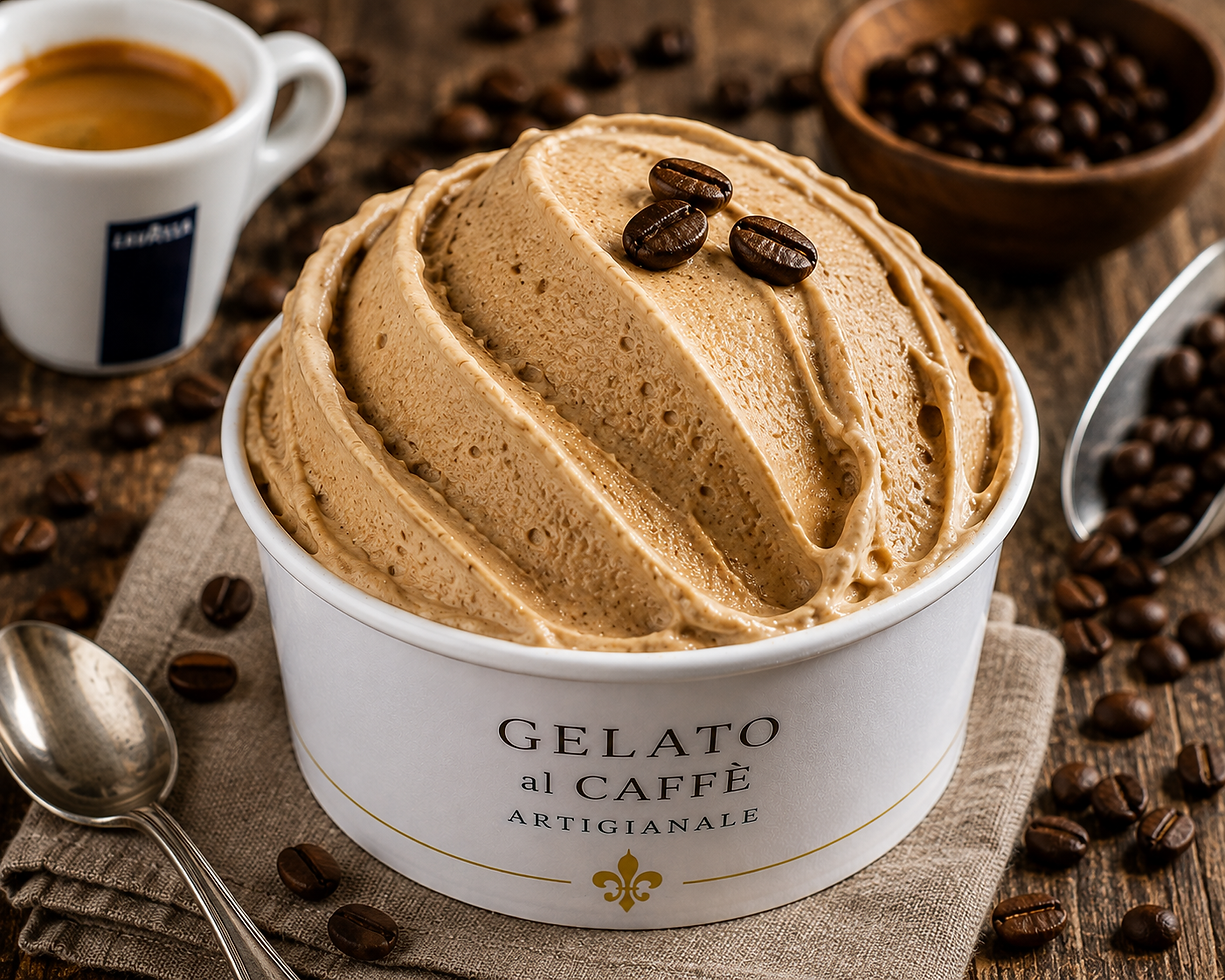
Gelato al caffè is the flavour that shows immediately whether a gelateria knows what it is doing. The cream is simple, the custard is simple, and the only real question is how the coffee got into the dairy. This version answers it by never heating the coffee at all: cracked beans steep in cold milk overnight, and the base is built around that infusion rather than around a shot of espresso poured in at the end.
Yield: about 1 quart (950 ml), 6 servings. Prep: 30 minutes. Infusion: 14 hours. Cook: 15 minutes. Aging: 12 hours. Churn: 25 minutes. Difficulty: intermediate. Course: dolce.
The Story
Coffee reached Italy through Venice, where the first botteghe del caffè opened along the lagoon in the middle of the seventeenth century and turned a Levantine drink into a civic habit. Gelato arrived in the same city in the same century, and the two grew up side by side in the same rooms. By the time the cafes of Turin, Naples and Trieste had settled into their own rituals, coffee was not one flavour among many in a gelateria case: it was the flavour that proved the house could handle bitterness without drowning it in sugar.
Trieste matters more than its size suggests. For most of the nineteenth century it was the port through which green coffee entered the Austro Hungarian empire, and it is still where the largest Italian roasters keep their plants. The city drinks more coffee per person than anywhere else in the country, and its bars carry their own vocabulary for it, a nero, a capo, a goccia. A coffee gelato made in Trieste is judged the way a coffee is judged, on roast character and on the length of the finish, not on sweetness.
The custard base belongs to the other half of the story. Southern gelato is often built on milk, cornstarch and no eggs at all, a lighter and whiter style that suits fruit. The northern tradition, closer to the French crema, leans on egg yolks, and yolks are what coffee needs. Their fat and their lecithin hold aromatic compounds that would otherwise blow off, and their faint sulphurous sweetness fills in underneath the roast where an eggless base sounds hollow.
What has changed in Italian gelaterie over the last twenty years is the coffee itself. A generation ago the flavour came from a jug of leftover espresso or from a commercial coffee paste, and it tasted burnt because both are. The better houses now treat the bean as an ingredient with an origin, and the ones paying the closest attention have gone back to infusing it cold, which is where this recipe starts.
Ingredients
For the cold coffee infusion
Medium roast arabica coffee beans, whole, 2 1/2 oz (70 g)
Whole milk, 2 1/2 cups (600 ml)
Heavy cream, 36 percent fat, 3/4 cup (180 ml)
For the custard base
Egg yolks, large, 5, about 3 oz (90 g)
Granulated sugar, 2/3 cup (135 g)
Dextrose, 3 tbsp (35 g)
Skimmed milk powder, 2 tbsp (14 g)
Fine sea salt, 1/4 tsp (1.5 g)
Whole milk, cold, up to 1/2 cup (120 ml), to correct the volume after straining
For finishing
Dark rum, 1 tbsp (15 ml)
Unsweetened cocoa powder, 1 tsp (2 g)
For serving
Coffee beans, toasted, 3 per serving
Amaretti biscuits, small, 1 per serving
Heavy cream, lightly whipped and unsweetened, 2 tbsp (30 ml) per serving, optional
Preparation
Crack the beans, do not grind them
Put the whole beans in a heavy freezer bag and crush them with the base of a pan until each bean is broken into three or four pieces. You want gravel, not powder. Combine the cracked beans, the milk and the cream in a container, stir once so nothing floats dry, cover and refrigerate for 14 hours. Twelve is the minimum and eighteen is the limit, past which the dairy starts to taste of cardboard rather than coffee.
Strain the infusion twice and measure what you lost
Pour the infusion through a fine mesh sieve into a jug and let it drip without pressing. Then pass it a second time through the sieve lined with a double layer of damp muslin. Do not squeeze the cloth. The beans hold roughly 3 to 4 fl oz (90 to 120 ml) of dairy, so measure what came through and bring it back up to 3 1/4 cups (780 ml) with cold milk.
Whisk the yolks with the sugars
Combine the yolks, granulated sugar, dextrose, milk powder and salt in a bowl and whisk hard for a full minute, until the mixture pales and falls from the whisk in a ribbon. Whisking the sugar in now rather than later keeps the yolk proteins separated, which raises the temperature at which they will set and gives you a margin of several degrees on the stove.
Cook the custard to 185°F (85°C)
Warm the infused dairy in a heavy saucepan to about 150°F (65°C), then pour a third of it into the yolks while whisking. Return everything to the pan over medium low heat and stir constantly with a flat wooden spoon, keeping the spoon on the base. Take it to 185°F (85°C) on a probe and hold it there for 30 seconds. The custard will coat the spoon and leave a clean line when you draw a finger through it.
Chill it hard, then age it overnight
Strain the custard into a bowl set in ice water and stir until it drops below 68°F (20°C), which should take four or five minutes. Stir in the rum and the cocoa powder, cover the surface and refrigerate for 12 hours. Aging is not a rest for your convenience: the fat crystallises, the proteins hydrate and the base thickens visibly, and a churned base that skipped it melts faster in the bowl.
Churn to a low overrun
Have the machine bowl frozen for at least 24 hours and the base at 39°F (4°C) or below. Churn for 20 to 25 minutes, until the gelato pulls away from the wall in a dense ribbon and holds a soft peak on the paddle. Stop there. Italian gelato runs at 25 to 35 percent overrun against 60 or more for commercial ice cream, and the extra churning that adds air is exactly what dilutes the coffee.
Harden it flat in a metal tray
Scrape the gelato into a shallow metal tray in a layer no more than 1 1/2 inches (4 cm) deep, smooth the top, press cling film onto the surface and freeze at 0°F (minus 18°C) for 4 hours. A shallow metal tray takes the core temperature down in a fraction of the time a deep plastic tub needs, and the faster that happens the smaller the ice crystals stay.
Plating
Move the tray from the freezer to the refrigerator for 12 to 15 minutes before service. Gelato is meant to be eaten at about 10°F (minus 12°C), warmer than ice cream, and at that temperature the aromatic compounds in the coffee lift and the texture turns from hard to plastic under the spatula.
Serve in chilled glass coupes rather than on plates, since a flat plate gives a scoop nowhere to go once it starts to soften. Draw the gelato across the tray with a warmed flat spatula into a folded quenelle instead of digging out a ball. Set three toasted beans and one amaretto biscuit against the side. A spoonful of unsweetened whipped cream is traditional and welcome, placed beside the gelato and never on top of it, where it would insulate the surface and mute the roast.
Professional Technique
The whole dish turns on one decision: the coffee goes into the dairy cold and stays there for fourteen hours, and no espresso is added at any point. Heat and pressure are what pull the sharp end of the bean into a cup. Chlorogenic acids break down under heat into quinic and caffeic acids, and the heavier bitter compounds of the roast are soluble in hot water long before they are soluble in cold. A cold soak in whole milk leaves most of them in the grounds and takes the aromatic oils, the caramelised sugars and the caffeine instead. What comes out of the sieve tastes of coffee at full strength but with the edges rounded off, and it tastes of the bean rather than of the machine.
Adding espresso to a finished base does the opposite of what people expect. A double shot is around 2 fl oz (60 ml) of water carrying a great deal of acidity, and water is the one thing a gelato base does not want more of. The acid works on the milk proteins in a cold custard and you can watch the surface go from glossy to slightly curdled and grainy within a minute of stirring it in, which no amount of churning will fix.
The grind size is the other half of the technique and it decides whether the gelato is smooth on the tongue. Fine grounds are small enough to pass a sieve and light enough to stay suspended in a viscous base, and once the mixture is frozen they sit in it as hard specks that grate between the teeth. Cracked beans are large enough that a single pass through a mesh takes them all out. Straining a second time through damp muslin, without pressing it, catches the silt that the first pass let through, and pressing it would push that silt straight back in.
Texture and Moisture Control
The texture of this gelato is decided in three places: the aging, the speed of the hardening and the temperature at which it reaches the spoon. Twelve hours of aging lets the yolk lecithin and the milk proteins hydrate fully and lets the butterfat crystallise into a network that holds water in place. A base churned straight from the ice bath will still freeze, but it will drain a puddle in the bowl within five minutes.
Hardening is a race. Every minute the gelato spends between the churn and the deep freeze is time for small crystals to join into large ones, and large crystals are what the tongue reads as sandy. A shallow metal tray with the surface covered pulls the core down in about two hours, while the same volume in a deep tub can take most of a day and comes out coarse. Once hardened, keep it at a steady 0°F (minus 18°C). Repeated softening and refreezing at the freezer door is the single most common cause of a gritty tub.
Serving temperature is a texture control, not a convenience. Straight from the freezer the gelato is glassy and reads mostly as cold. Fifteen minutes in the refrigerator brings it to plastic, and the coffee arrives in the nose before the first spoon reaches the mouth.
Professional Mise en Place
This is a two day preparation with almost nothing left for the last minute, so the planning is about freezer space and timing rather than speed at the pass.
Equipment and tools
Gelato machine with a bowl frozen at least 24 hours, or a compressor machine
Digital probe thermometer reading to 1 degree
Fine mesh sieve and a double layer of clean muslin
Heavy bottomed saucepan and a flat wooden spoon
Shallow metal tray, cling film, warmed flat spatula for service
Prepared ahead
Cold infusion started 14 hours before the custard, kept refrigerated
Custard cooked, strained and aged 12 hours in the refrigerator
Gelato churned and hardened flat at least 4 hours before service
Coffee beans toasted and cooled, amaretti kept in a sealed tin
Service setup
Coupe glasses chilled in the freezer, spatula sitting in hot water
Tray moved to the refrigerator 12 to 15 minutes before the first plate
Whipped cream held unsweetened and cold, whisked to soft peaks only
Chef Tips
Buy beans roasted within the last two weeks and smell them before you crack them. A medium roast gives you the caramel and the dried fruit; a dark Italian espresso roast gives you carbon, and a cold infusion has no way of softening that.
Weigh the strained infusion instead of guessing. The beans keep back more dairy than anyone expects, and a base that is 3 fl oz short of volume comes out of the machine noticeably harder and tastes oversweet because everything else in it is concentrated.
Keep the probe in the custard from the moment the pan goes back on the heat. The span between 180°F (82°C) and 190°F (88°C) is the whole working range, and yolk scrambles quickly at the base of the pan where you cannot see it happening.
If the tub has been in the freezer more than three days and has gone firm, do not microwave it. Move it to the refrigerator for 20 minutes, then work it briefly with a spatula in a cold bowl to bring the texture back.
Common Mistakes
Grinding the beans fine for the infusion. Fine particles pass the sieve, stay suspended in a thick base and freeze into hard specks you feel against your teeth. Crack the beans coarsely so a single pass through a mesh removes all of them.
Stirring in a shot of espresso at the end. It adds water and acidity to a cold custard, and the proteins respond by going grainy and dull. The coffee flavour belongs in the dairy from the start.
Squeezing the muslin. Pressing the cloth forces the silt you have just separated back into the liquid, along with the bitter fines that the cold soak was designed to leave behind. Let it drip and accept the loss.
Churning past a soft peak. Every extra minute beats in air, and air dilutes coffee faster than anything else in the recipe. Stop when the gelato holds its shape on the paddle.
Hardening it in a deep tub. A thick block freezes slowly from the outside in, and slow freezing grows large ice crystals. Spread it no more than 1 1/2 inches (4 cm) deep in metal.
Wine Pairing
Vin Santo del Chianti Classico DOC: The most complete answer on the list. Dried Malvasia and Trebbiano grapes give a wine of real sweetness, but the long oxidative aging in caratelli builds a walnut and dried fig character that meets the roast of the coffee on its own ground rather than sitting beneath it. Crucially the acidity stays high, which is what keeps a sweet wine from turning cloying against a custard carrying five yolks.
Marsala DOC: Choose a Superiore Dolce and serve it in a small glass at cellar temperature. Fortification takes it to around 18 percent, and that warmth is useful against something served at 10°F (minus 12°C), since alcohol carries aroma across a cold palate that would otherwise read as numb. Its burnt sugar and toasted almond notes come from the same Maillard chemistry as the roast in the bean.
Recioto della Valpolicella DOCG: The sweet appassimento red, for anyone who wants a red with dessert. Corvina dried on racks through the winter gives concentrated black cherry and dried plum with enough residual sugar to balance the bitterness of the coffee directly. Keep the tannin low by choosing a bottling without heavy oak, and serve it at 57°F (14°C) so the fruit stays lifted.
Malvasia delle Lipari DOC: The lightest pairing here and the one to pour if the meal has already been long. Sun dried Malvasia from the Aeolian islands is moderately sweet rather than unctuous, with candied orange peel, apricot and a faint saline lift from the volcanic soils. That citrus edge cuts the fat of the cream and leaves the finish clean instead of coated.
Storage & Reheating
Gelato is never reheated, it is tempered, and the storage rules exist to protect the texture rather than the safety. Keep it in a shallow airtight container with cling film pressed directly onto the surface and the lid on top. That double barrier is what stops the surface dehydrating into a leathery skin and stops it taking up the smell of everything else in the freezer, which a coffee base absorbs readily.
At a steady 0°F (minus 18°C) it holds its quality for 5 days and stays perfectly good for 2 weeks, though by then the coffee aroma has flattened. Store it at the back of the freezer, never in the door. To serve, move the container to the refrigerator for 12 to 15 minutes. Never soften gelato in a microwave or at room temperature: the outside melts while the core is still solid, and what refreezes is coarse. The uncooked base keeps refrigerated for 2 days before churning.
Nutrition
Per serving, based on 6 servings of about 5 1/2 oz (155 g):
Calories: 290 kcal
Total Fat: 15 g
Saturated Fat: 8 g
Trans Fat: 0 g
Unsaturated Fat: 6 g
Cholesterol: 205 mg
Sodium: 95 mg
Total Carbohydrates: 32 g
Fiber: 0 g
Total Sugars: 30 g
Added Sugars: 28 g
Protein: 6 g
Lactose: 5 g
Principal micronutrients: calcium, phosphorus, riboflavin, vitamin A, vitamin B12, selenium
These figures are estimates. Caffeine works out at roughly 60 mg per serving, and the dairy held back by the spent beans is discarded rather than eaten.


Comments