Vegan Spring Minestrone with Peas, Fava Beans and Asparagus | Minestrone Primaverile Vegano

Minestrone primaverile is the minestrone of the first warm weeks of the year, when Italian markets fill with fresh peas, fava beans in their long pods, thin asparagus, spring onions and new potatoes. Unlike the winter minestrone, thick with dried beans and cabbage and cooked for hours, the spring version is quick, light and green, built on a clear vegetable broth made from the pods and trimmings. Each vegetable goes into the pot at the exact moment that keeps its color and sweetness, and small ditalini give the soup body. A mint and basil oil and a little lemon zest, added at the table, make it taste of spring in every spoonful, entirely plant based.
Yield: 6 servings. Prep: 50 minutes. Cook: 50 minutes. Rest: 3 minutes. Course: primo piatto. Region: all of Italy.
The Story
Minestrone takes its name from minestra, the Italian word for soup, from the Latin ministrare, to serve. The minestra was the dish served from the common pot, and the minestrone, the big minestra, was the soup of many vegetables cooked together. There is no single recipe for it in Italy: every region, and every season, has its own. In winter it is dense with dried beans, cabbage and squash; in spring and early summer it changes completely, following what the garden gives.
Spring vegetables have a special place in Italian cooking because their season is short and eagerly awaited. In Rome, the vignarola is a spring stew of fava beans, peas, artichokes and lettuce, made only for a few weeks a year. In Palermo, the frittedda combines the same young fava beans, peas and artichokes. Fava beans are among the oldest cultivated legumes of the Mediterranean and were already common food in ancient Rome; in central and southern Italy, eating the first raw fava beans from the pod is still a ritual of early May.
This recipe is not a codified regional dish but a seasonal minestrone in the Italian tradition, the kind that home cooks all over the country make when the first peas arrive. It takes from that tradition its essential principles: a soffritto as the base, a broth made from the vegetables themselves, short pasta cooked in the soup and a generous finishing oil. Minestrone is often served with grated aged cheese at the table; this vegan version does not need it, because the sweetness of the young vegetables and the green oil give the soup all the richness it needs.
What makes the spring minestrone difficult is timing. Peas, fava beans and asparagus cook in a few minutes and lose their color and sweetness quickly, while potatoes and pasta need longer. This recipe uses the professional method of building the soup in stages: a broth from the pods and trimmings, a soffritto of spring onions and leek, potatoes and pasta first, and the green vegetables at the end, some of them blanched separately so they stay bright. The result is a minestrone that looks as fresh as it tastes.
Ingredients
Buy the vegetables as young and fresh as possible, on the day you cook them. Pea and fava pods should be bright green, firm and crisp, never yellowed or limp: the sugars of peas begin turning into starch within hours of picking. Choose thin asparagus with tight tips. Fresh fava beans need double peeling, first from the pod and then from their pale skin, which takes time but is essential for color and tenderness. If fresh peas are not available, frozen petite peas are a good substitute; frozen fava beans also work, peeled after thawing.
For the pod broth
Pea pods and fava pods, from the vegetables below
Asparagus woody ends, from the asparagus below
Leek green tops, 1 cup (60 g)
Celery, 1 stalk, roughly chopped
Flat leaf parsley stems, a small handful
Bay leaf, 1
Black peppercorns, 6
Cold water, 2 1/2 quarts (2.4 l)
For the minestrone
Extra virgin olive oil, 1/4 cup (60 ml)
Spring onions, white and pale green parts, thinly sliced, 6, 4 oz (110 g)
Leek, white part, thinly sliced, 1 medium, 4 oz (110 g)
Celery, finely diced, 1 stalk, 2 oz (55 g)
Garlic, 1 clove, finely chopped
New potatoes, peeled and diced 1/2 inch (12 mm), 10 oz (280 g)
Carrot, young, finely diced, 1 small, 3 oz (85 g)
Ditalini or other small soup pasta, 5 oz (140 g)
Fresh peas in the pod, 2 lb (900 g), giving about 2 cups (300 g) shelled
Fresh fava beans in the pod, 2 lb (900 g), giving about 1 1/3 cups (200 g) double peeled
Thin green asparagus, 12 oz (340 g), cut in 1 inch (2.5 cm) pieces, tips kept apart
Zucchini, young, diced 1/2 inch (12 mm), 1 small, 5 oz (140 g)
Baby spinach, 2 cups (60 g)
Fine sea salt and freshly ground black pepper, to taste
For the mint and basil oil and the garnish
Fresh mint leaves, 1/2 cup (15 g)
Fresh basil leaves, 1 cup (25 g)
Extra virgin olive oil, fruity, 1/2 cup (120 ml)
Fine sea salt, 1 pinch
Organic lemon, 1, for the zest
Pea shoots or small mint leaves, to garnish
Extra virgin olive oil, to finish
Preparation
Step 1

Shell the vegetables and make the pod broth. Shell the peas and the fava beans, keeping the pods. Snap the woody ends off the asparagus where they break naturally. Rinse the pods well, put them in a pot with the asparagus ends, the leek tops, celery, parsley stems, bay leaf, peppercorns and 2 1/2 quarts (2.4 l) of cold water. Bring to a simmer and cook gently for 25 minutes, no longer, then strain through a fine sieve, pressing lightly. You should have about 7 cups (1.7 l). The pods are full of the sweet, green flavor of the vegetables; a short simmer extracts it, while a long one turns the broth dull and grassy.
Step 2

Blanch and peel the fava beans. Bring a pot of salted water to a boil and prepare a bowl of ice water. Blanch the shelled fava beans for 1 minute, then transfer them to the ice water. Pinch each bean at one end and squeeze it out of its pale skin; the bright green bean inside is tender and sweet. Blanch the asparagus tips in the same water for 1 minute and cool them in the ice water too. This separate cooking keeps the most delicate vegetables bright green and prevents them from overcooking in the soup.
Step 3
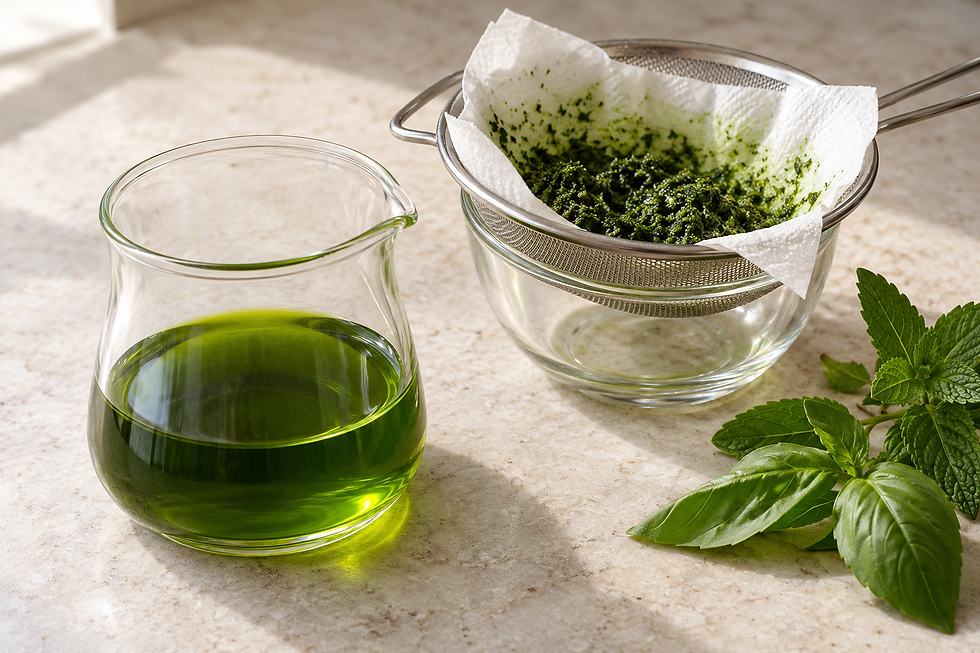
Make the mint and basil oil. Blanch the mint and basil leaves in the boiling water for 10 seconds, plunge them into ice water and squeeze them completely dry in a towel. Blend them with 1/2 cup (120 ml) of fruity olive oil and a pinch of salt at high speed for 1 minute, then strain through a fine sieve lined with a paper towel without pressing. The blanching fixes the chlorophyll, so the oil stays vivid green, and softens the sharp, raw edge of the mint so it perfumes rather than dominates.
Step 4

Cook the soffritto gently. In a heavy pot of at least 5 quarts (4.7 l), warm 1/4 cup (60 ml) of olive oil over medium low heat. Add the spring onions, the leek and the celery with a pinch of salt and cook for 8 to 10 minutes, stirring often, until soft and translucent, without color. Add the garlic for the last minute. In a spring minestrone the soffritto must stay pale and sweet: browning would add a roasted note that covers the delicate taste of the young vegetables.
Step 5

Cook the potatoes and the pasta. Add the potatoes and the carrot and stir for 2 minutes. Pour in 6 cups (1.4 l) of hot pod broth, bring to a simmer and cook for 10 minutes, until the potatoes are just tender. Add the ditalini and cook, stirring often, for 2 minutes less than the time on the package. The potatoes release starch into the broth and give it a light body, and the pasta adds more as it cooks, so the soup thickens slightly without any purée.
Step 6

Add the green vegetables in order. When the pasta has 4 minutes left, add the asparagus pieces and the zucchini. After 2 minutes, add the fresh peas. In the last minute, add the peeled fava beans, the asparagus tips and the spinach, and stir until the spinach wilts. If you use frozen peas, add them with the fava beans. Season with salt and pepper. Each vegetable is added according to its cooking time, so that all of them reach the table tender, sweet and bright at the same moment.
Step 7

Rest briefly and finish. Take the pot off the heat and let the minestrone rest for 3 minutes, no longer: the pasta finishes cooking in the residual heat, while a longer rest would make the greens turn olive colored. Check the texture: the broth should be light and slightly velvety, with the vegetables and pasta generously filling every ladle. Add a little hot broth if it has thickened too much, grate the zest of half the lemon over the pot and stir once.
Plating
Serve in warm, wide bowls, heated to about 140°F (60°C). Ladle about 1 1/2 cups (350 g) of minestrone into each bowl, making sure every portion has a good share of peas, fava beans, asparagus tips and pasta, with the green vegetables visible on the surface. Serve it hot but not boiling, at about 165°F (74°C), so the aroma of the oil is not lost.
Drizzle 2 tsp (10 ml) of mint and basil oil over each bowl in small drops, add a thin thread of olive oil, a little more lemon zest, a turn of black pepper and a few pea shoots or small mint leaves. The guest eats it with a spoon; the first perfume is the mint and the lemon, followed by the sweetness of the peas and the nutty taste of the fava beans.
Professional Technique
The key ratio is broth to solids. For this quantity of vegetables and 5 oz (140 g) of pasta, the soup needs about 6 cups (1.4 l) of broth at the start and up to 1 cup (240 ml) more at the end. The spring minestrone should be lighter than the winter one: the vegetables should be generously covered by a broth that flows freely, with just enough body to coat the spoon.
The hidden variable is the freshness of the peas. Freshly picked peas are sweet and cook in 2 to 3 minutes; peas picked a few days earlier have turned part of their sugar into starch and need up to 5 minutes. Taste one pea before adding them and adjust the timing. If the peas are not sweet, a pinch of sugar is a common Italian trick, but good peas never need it.
The doneness test is color and bite. At the moment of serving, the peas and fava beans should be bright green and tender, the asparagus tender with a slight resistance at the center, and the pasta just past al dente. If anything is olive green, it has cooked too long or rested too long.
Color and Timing Control
The green color of spring vegetables comes from chlorophyll, and chlorophyll is fragile. Long cooking, acidity and a covered pot all turn it from bright green to dull olive. This is why the most delicate vegetables are blanched separately and cooled in ice water, why the soup cooks uncovered, and why the lemon is added as zest at the end rather than as juice during cooking, because acid speeds up the loss of color.
Time is the main ingredient of this soup. Write down the cooking time of each vegetable before you start: potatoes 10 to 12 minutes, pasta according to the package, asparagus pieces and zucchini 4 minutes, peas 2 to 3 minutes, blanched fava beans and asparagus tips 1 minute. Working backward from the end of the pasta's cooking, every vegetable goes in at the right moment and the whole soup is ready at once.
The spring minestrone is a soup to be cooked shortly before eating. Kept hot for a long time, it loses both color and texture: the pasta swells, the peas turn starchy and the broth turns cloudy. If you need to cook ahead, prepare the broth, the soffritto and the potatoes in advance and add the pasta and the green vegetables only in the last 12 minutes before service.
Professional Mise en Place
The spring minestrone is fast once everything is ready. The real work is shelling and peeling, which can be done hours ahead, so the final cooking takes only about 25 minutes.
Equipment and tools
Heavy pot of at least 5 quarts (4.7 l) for the soup, pot for the broth
Pot of boiling salted water and a large bowl of ice water for blanching
Fine sieve, slotted spoon, ladle, wooden spoon
Blender and paper towels for the herb oil, fine grater for the lemon zest
Prepared ahead
Peas and fava beans shelled, fava beans blanched and peeled, up to 6 hours ahead, refrigerated
Asparagus cut, tips blanched and cooled, up to 6 hours ahead
Pod broth strained, up to 2 days ahead, refrigerated
Mint and basil oil blended and strained, up to 1 day ahead, refrigerated
Service setup
Pod broth hot beside the soup pot
Green vegetables in separate containers, in order of cooking time
Bowls warmed to about 140°F (60°C)
Herb oil in a squeeze bottle, olive oil, lemon, grater, pepper mill and pea shoots on the pass
Chef Tips
Ask for help with the shelling. Shelling peas and double peeling fava beans is the traditional work of the Italian spring kitchen, often done around the table by the whole family. Two people finish it in 20 minutes, and the pods go straight into the broth.
Add a few fresh artichokes, as in the Roman vignarola, when they are in season. Clean two young artichokes down to the tender heart, slice them thin, keep them in water with lemon juice and add them to the soup with the potatoes. They give a slightly bitter, nutty note that balances the sweet peas.
For a heartier version, add 1 cup (170 g) of cooked white beans or chickpeas with the potatoes. The soup becomes a complete meal while staying light and green, and the legumes add creaminess to the broth.
Serve it lukewarm on a warm day. Like many Italian minestroni, the spring version is pleasant at room temperature, but then cook the pasta separately and add it to the bowls, because cooling in the broth makes it soft. Add the herb oil only at the last moment.
Common Mistakes
Using old peas and fava beans. Pods picked days earlier give starchy, gray vegetables. Buy them fresh, bright and crisp, and cook them the same day.
Skipping the second peeling of the fava beans. The pale skin of the fava bean is tough and bitter and turns gray in the soup. Blanch and peel every bean.
Making the broth with long cooking. Pods simmered for an hour give a dull, grassy broth. Simmer them for 25 minutes only.
Browning the soffritto. Browned onions and leek cover the delicate spring flavors. Keep the soffritto pale and sweet.
Adding all the vegetables together. Peas and asparagus tips overcook while the potatoes are still hard. Follow the order of cooking times.
Covering the pot. A lid traps the acids released by the vegetables and turns them olive green. Cook the soup uncovered.
Keeping it hot for too long. The pasta swells and the greens lose their color. Serve the minestrone within minutes of finishing it.
Wine Pairing
Vermentino di Gallura DOCG: The white of northeastern Sardinia, grown on granite soils, with notes of white flowers, citrus, Mediterranean herbs and a saline finish. Its herbal side meets the mint and basil oil and its freshness lifts the sweet peas. Serve it at about 50°F (10°C).
Verdicchio di Matelica DOC: A white from an inland valley of the Marche, with crisp acidity, notes of green apple and almond and a slightly bitter finish. Its almond note suits the fava beans and its acidity balances the asparagus. Serve it at about 50°F (10°C).
Roero Arneis DOCG: The Arneis white of the sandy hills of Roero, in Piedmont, with notes of pear, white flowers and fresh herbs and a soft texture. Its delicate aromas never cover the young vegetables. Serve it at about 50°F (10°C).
Trento DOC: The classic method sparkling wine of the mountains of Trentino, mainly from Chardonnay and Pinot Noir. Its fine bubbles and mountain freshness clean the palate after the olive oil and the starch, and its citrus notes echo the lemon zest. Serve it at about 46°F (8°C).
Storage & Reheating
Refrigerator: the spring minestrone is best eaten the day it is made. Leftovers keep for 2 days in an airtight container, but the pasta absorbs the broth and the green vegetables lose some of their color. The pod broth keeps for 3 days and the herb oil for 2 days in a closed jar. Freezer: the finished soup does not freeze well, because the pasta turns soft and the peas grainy; the pod broth, however, freezes perfectly for up to 3 months and is an excellent base for spring risotto.
Reheat leftovers in a pan over medium low heat with about 1/3 cup (80 ml) of broth or water per portion, stirring gently, just until steaming, about 4 to 5 minutes; longer heating dulls the greens further. In the microwave, add the same liquid, cover and heat at 70 percent power for 1 minute 30 seconds, stir, then 1 minute more. Finish with fresh herb oil and lemon zest to bring back the spring aroma.
Nutrition
Per serving, based on 6 servings:
Calories: 360 kcal
Total Fat: 17 g
Saturated Fat: 2 g
Trans Fat: 0 g
Unsaturated Fat: 15 g
Cholesterol: 0 mg
Sodium: 540 mg
Total Carbohydrates: 43 g
Fiber: 10 g
Total Sugars: 8 g
Added Sugars: 0 g
Protein: 12 g
Principal micronutrients: vitamin C, vitamin K, folate, vitamin A, thiamin, iron, manganese, potassium
These figures are estimates, calculated on the quantities listed and rounded to the nearest whole number, assuming that about half of the herb oil is used for serving. They vary with the size of the vegetables and the amount of broth.


Comments