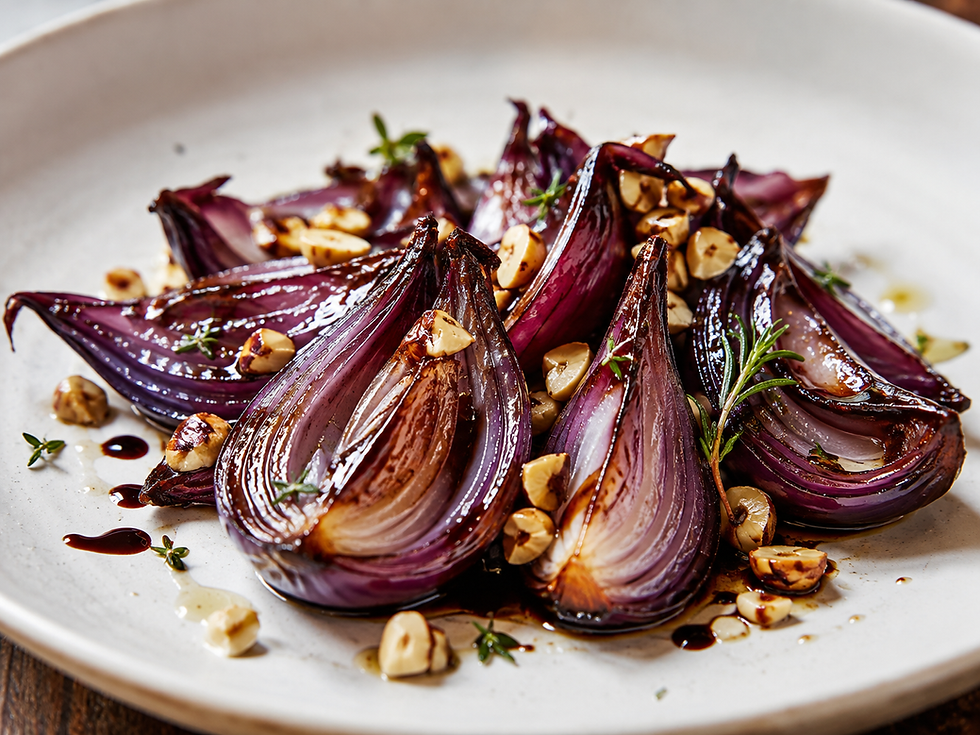
Vegan Toasted Walnuts in Balsamic and Rosemary Marinade | Noci Tostate e Marinate al Balsamico e Rosmarino

Noci tostate e marinate al balsamico e rosmarino are walnut halves toasted until golden, steeped while still warm in a marinade of balsamic vinegar of Modena, saba and rosemary, then drained, coated with the reduced marinade and baked again until the surface sets into a thin, glossy, crisp lacquer. The walnut gives its toasted, slightly bitter depth; balsamic and saba bring a sweet and sour richness; rosemary adds a resinous, mountain note. Unlike a raw marinade, this version is dry, crunchy and stable, perfect for the aperitivo, a cheese-free antipasto board or a winter salad. It is entirely plant based by nature: walnuts, grape must, vinegar, olive oil, herbs and salt.
Yield: 8 servings. Prep: 15 minutes. Cook: 40 minutes. Rest: 2 hours marinating, plus 20 minutes cooling. Course: antipasto. Region: inspired by Emilia-Romagna.
The Story
Walnuts have grown in the Po Valley for many centuries, and in Emilia the walnut tree has a special place in rural tradition. Around Modena, families still pick the green walnuts in late June, by tradition on or around the night of San Giovanni, June 24, to make nocino, the dark liqueur of the area. The walnut tree stood near many farmhouses of the plain, and the nuts, dried in autumn, were part of the winter pantry, eaten with bread and wine or used in sweets for the holidays.
Modena is also the home of balsamic vinegar, one of the most famous products of Italian gastronomy. Two different products carry the name. Aceto Balsamico Tradizionale di Modena DOP is made only from cooked grape must, aged for at least 12 years in a series of barrels of decreasing size and different woods, and sold in a small, standard bottle. Aceto Balsamico di Modena IGP is made from grape must and wine vinegar, aged for a shorter time, and is the balsamic used every day in kitchens around the world. The historical record of a precious vinegar in the Este court of Modena goes back several centuries.
Saba, also called sapa, is even older. It is grape must cooked slowly until it reduces to a dark, thick syrup, and it was known in Roman times as a sweetener. In Emilia-Romagna, Marche and Sardinia, rural families made it at the grape harvest and used it through the year on polenta, on snow in winter as a treat for children, in breads and in sweets. Before sugar became cheap, cooked must was one of the main sweeteners of the Italian countryside.
Glazed walnuts are not a codified traditional dish of Modena, and this article does not present them as one. This recipe brings together three ingredients of the Emilian table, walnuts, balsamic vinegar and saba, in a contemporary aperitivo. The method is precise: toast the walnuts to bring out their sweetness, marinate them warm so they absorb the vinegar and must, then reduce the marinade and bake the walnuts again so the glaze sets crisp, without stickiness and without bitterness.
Ingredients
Choose fresh walnut halves from the latest harvest, pale gold, sweet-smelling and crisp. Taste one raw: any trace of paint or cardboard means the fats have oxidized, and toasting will only make it stronger. For the vinegar, use a good Aceto Balsamico di Modena IGP, ideally aged and with a density close to a light syrup; check the label for grape must as the first ingredient. Keep the precious Tradizionale DOP for finishing, not for cooking. Saba is sold in Italian specialty shops and online; it must contain only cooked grape must. If you cannot find it, an equal quantity of vincotto made only from grapes is the closest substitute.
For the walnuts
Walnut halves, fresh, 10 oz (280 g), about 2 1/2 cups
Extra virgin olive oil, 1 tsp (5 ml)
Fine sea salt, 1/4 tsp (1.5 g)
For the balsamic marinade
Aceto Balsamico di Modena IGP, 1/3 cup (80 ml)
Saba, cooked grape must syrup, 3 tbsp (45 ml)
Extra virgin olive oil, 2 tbsp (30 ml)
Fresh rosemary, 2 sprigs, about 4 inches (10 cm) each
Fine sea salt, 1/2 tsp (3 g)
Freshly ground black pepper, 1/4 tsp (0.5 g)
Dried red chili, crumbled, 1 pinch
For finishing
Fresh rosemary needles, very finely chopped, 1 tsp (1 g)
Flaky sea salt, 1/2 tsp (1 g)
Aceto Balsamico Tradizionale di Modena DOP, a few drops, optional
Preparation
Step 1

Toast the walnuts. Heat the oven to 325°F (165°C). Toss the walnut halves with 1 tsp (5 ml) of olive oil and 1/4 tsp (1.5 g) of fine salt, spread them in a single layer on a baking sheet lined with parchment and toast them for 9 to 11 minutes, stirring once halfway, until they are golden, fragrant and crisp when broken. Watch them closely after 8 minutes: walnuts have a thin skin and a high fat content, and they go from toasted to burnt in less than 2 minutes. Toasting develops their sweetness through browning reactions and dries the kernel, so it can absorb the marinade without turning soft.
Step 2

Warm the marinade. While the walnuts toast, combine the balsamic vinegar, the saba, 2 tbsp (30 ml) of olive oil, the rosemary sprigs, 1/2 tsp (3 g) of salt, the black pepper and the chili in a small saucepan. Warm the mixture over low heat to about 160°F (70°C), stirring, until the salt dissolves and the rosemary releases its aroma, then take it off the heat. Do not boil it at this stage. Warming the marinade helps the walnuts absorb it, because warm liquids are thinner and penetrate the folds of the kernel more easily, while the rosemary infuses gently into the vinegar and the oil.
Step 3

Marinate the walnuts warm. As soon as the walnuts come out of the oven, tip them into a heatproof glass or ceramic bowl and pour the warm marinade over them. Stir well to coat every walnut, then leave them for 2 hours at room temperature, stirring every 30 minutes. As the toasted walnuts cool, they draw the liquid into their crevices and pores. Two hours are enough for the balsamic and saba to reach the inside of the folds; longer and the walnuts lose too much of their crunch, which the final baking cannot fully restore.
Step 4

Drain and reduce the marinade. Set a sieve over a small saucepan and drain the walnuts, pressing them lightly to recover the liquid. Discard the rosemary sprigs. Spread the walnuts back on a baking sheet lined with fresh parchment. Bring the drained marinade to a simmer over medium heat and reduce it for 3 to 5 minutes, until it thickens into a syrup that coats the back of a spoon and reaches about 220°F (105°C). The reduction concentrates the sugars of the saba and the balsamic, so the glaze will set crisp in the oven instead of staying sticky.
Step 5

Glaze the walnuts. Pour the hot reduced syrup over the walnuts on the baking sheet and toss them quickly with a spatula so every piece is evenly coated, then spread them again in a single layer, without touching each other. Work fast: as it cools, the syrup thickens and becomes harder to spread. A thin, even coat is the goal. Too much glaze pools on the tray and burns; too little leaves the walnuts dull and patchy.
Step 6

Bake to set the lacquer. Lower the oven to 300°F (150°C) and bake the glazed walnuts for 10 to 14 minutes, stirring them once after 6 minutes, until the glaze is bubbling gently, has turned a deep, shiny mahogany and no longer looks wet. The syrup on the tray will darken first; stop before it smokes. At this temperature the residual water evaporates and the sugars set into a thin, glassy layer. Higher heat would burn the glaze and make it bitter before the water had gone.
Step 7

Cool and finish. Take the tray out of the oven and immediately sprinkle the walnuts with the finely chopped rosemary needles and the flaky salt, so they stick to the glaze while it is still soft. Separate any walnuts that touch with two forks, then leave them to cool completely on the tray for 20 minutes. The glaze hardens as it cools and becomes crisp. Taste one: it should crackle, then reveal a sweet, sour and savory coating over a crunchy, toasted walnut, with a clear rosemary aroma. Break up any small clusters by hand.
Plating
Serve the walnuts at room temperature in small bowls or on a wooden board, about 1/4 cup (35 g) per person. A dark slate or a rustic board shows off the glossy mahogany glaze; on a white plate, the walnuts can be arranged in a small mound with a sprig of fresh rosemary beside them.
For a refined finish, place a few drops of Aceto Balsamico Tradizionale di Modena DOP on the plate next to the walnuts, so the guest can touch a walnut to it before eating. Serve them with slices of fresh pear or apple, a few grapes, grilled bread with olive oil and a glass of Lambrusco. The guest eats them with the fingers: they should be dry to the touch, crisp, and leave only a faint aroma of rosemary on the fingers.
Professional Technique
The key ratio is the marinade. For 10 oz (280 g) of walnuts, 1/3 cup (80 ml) of balsamic and 3 tbsp (45 ml) of saba give enough liquid to coat every walnut during the marinade and, once reduced, enough glaze for a thin, even lacquer. More liquid makes the walnuts soggy and leaves excess syrup that burns on the tray; less leaves bare patches. The saba is essential: balsamic alone contains too little sugar to set into a crisp glaze.
The hidden variable is water. The walnuts take in water from the vinegar during the marinade; the reduction removes water from the syrup; the final baking removes the rest. If any of these steps is too short, the glaze stays tacky and the walnuts turn soft within hours. That is why the syrup is reduced to about 220°F (105°C) and the walnuts are baked until they no longer look wet.
The doneness test is in the cooling. A properly finished walnut, after 20 minutes on the tray, feels dry to the touch, crackles under the teeth and does not stick to the fingers. If it is still sticky, return the tray to a 300°F (150°C) oven for 3 to 5 minutes more and cool again. If it tastes bitter, the glaze or the walnut has burnt, and the batch must start again.
Glaze and Crunch Control
The glaze is a balance of sugar, acid and heat. Saba brings natural fruit sugars, balsamic brings acidity and its own sweetness, and the reduction and baking concentrate both. Watch the color: the glaze should move from glossy brown to deep mahogany. As soon as you see the edges of the syrup on the tray turn black or smell sharp smoke, take the tray out. Burnt sugar turns bitter quickly, and no amount of salt can correct it.
Crunch depends on the first toasting and on the length of the marinade. Walnuts toasted until crisp before marinating keep a firm structure that survives two hours in liquid. Untoasted walnuts absorb the vinegar like a sponge and never recover their crunch. Keep the marinade at two hours, and do not refrigerate the walnuts during it: in the cold, the oil thickens and the absorption becomes uneven.
Humidity is the enemy after baking. A crisp glaze is hygroscopic: it draws water from the air and softens. Cool the walnuts in a dry place, away from steam and the stove, and store them in an airtight container as soon as they are completely cold. On a humid day, add a few minutes to the final baking.
Professional Mise en Place
The walnuts can be made up to a week ahead and stored airtight. Organize the work so the marinade is warm when the walnuts come out of the oven, and so the reduced syrup goes on the walnuts while still hot.
Equipment and tools
Two baking sheets, parchment paper, oven thermometer
Small heavy saucepan, instant-read thermometer
Heatproof glass or ceramic bowl, fine mesh sieve
Heatproof silicone spatula, two forks, timer
Airtight glass jar or tin for storage
Prepared ahead
Walnuts sorted and tasted for freshness
Marinade measured and rosemary washed and dried
Walnuts toasted, marinated, glazed and cooled, up to a week before service
Rosemary needles chopped very fine just before the final baking
Service setup
Walnuts in their airtight container, opened only at service
Bowls or wooden boards, fresh rosemary sprigs for garnish
Aceto Balsamico Tradizionale di Modena DOP in a small dropper bottle
Sliced pears or apples prepared at the last moment
Chef Tips
Line the baking sheets with fresh parchment for the glazing. The parchment used for the first toasting may carry oil and small burnt fragments, and the hot syrup sticks less to a clean sheet. Never glaze directly on metal: the sugars caramelize hard onto the tray and tear the glaze from the walnuts.
Keep a few unglazed toasted walnuts as a reference. Comparing the glazed walnuts with the plain toasted ones during the final baking shows how far the color has moved and helps you stop at the right moment, before the glaze turns from mahogany to black.
Change the herb with the dish. Rosemary is classic with balsamic, but thyme or a few crushed juniper berries in the marinade work very well for a winter board, and a pinch of ground fennel seed gives a sweeter, anise note that suits autumn salads.
Use the walnuts beyond the aperitivo. Chopped coarsely, they are excellent on a salad of radicchio and pear, on roasted squash, on a vegan risotto with red wine or on a bowl of polenta with sautéed mushrooms. Add them at the last moment, so the glaze does not soften in the moisture of the dish.
Common Mistakes
Using cheap balsamic with thickeners. Some low quality balsamics contain thickeners and added sugars that burn quickly. Choose an Aceto Balsamico di Modena IGP with grape must listed first.
Skipping the saba. Balsamic alone does not contain enough sugar to set crisp. The saba gives the glaze body and shine.
Over-toasting the walnuts at the start. Dark walnuts turn bitter after the second baking. Toast them only until golden, because they will cook again.
Marinating too long. After more than 3 hours the walnuts lose their crunch for good. Keep the marinade to 2 hours.
Not reducing the marinade. A thin syrup leaves the walnuts sticky. Reduce it until it coats a spoon and reaches about 220°F (105°C).
Baking at high heat. Above 325°F (165°C) the glaze burns before the water evaporates. Bake at 300°F (150°C) and stir once.
Storing them warm. Steam condenses in the container and softens the glaze. Cool the walnuts completely before closing the jar.
Wine Pairing
Lambrusco di Sorbara DOC: The most delicate Lambrusco, from the plain north of Modena, pale ruby, with sharp acidity, light fizz and notes of violet and wild strawberry. Its acidity and bubbles cut the sweet glaze and refresh the palate, a pairing from the same land as the balsamic. Serve it at about 50°F (10°C).
Lambrusco Grasparossa di Castelvetro DOC: From the hills south of Modena, a deep purple Lambrusco with dark berries, firm tannins and a dry finish. Its body and fruit stand up to the balsamic, while its tannins match the slight bitterness of the walnut skin. Serve it at about 54°F (12°C).
Barbera d'Asti DOCG: A Piedmontese red with bright acidity, red cherry fruit and low tannins. Its acidity balances the sweetness of the saba, and its fruit meets the toasted walnut without overwhelming it. Serve it at about 59°F (15°C).
Alta Langa DOCG: A classic method sparkling wine from the high hills of southern Piedmont, from Pinot Nero and Chardonnay, with fine bubbles and notes of bread crust and dried fruit. Its dryness and acidity cleanse the sweet glaze, and its toasty notes echo the walnut. Serve it at about 46°F (8°C).
Storage & Reheating
Room temperature: keep the cooled walnuts in an airtight glass jar or tin, in a cool, dry and dark place, for up to 1 week. They contain no fresh garlic and are dried by the double baking, so they do not need the refrigerator, where humidity would soften the glaze. Freezer: they can be frozen for up to 2 months in an airtight container; let them come back to room temperature in the closed container for 1 hour, so no condensation forms on the glaze.
If the walnuts have softened, spread them on a baking sheet lined with parchment and warm them in a 300°F (150°C) oven for 4 to 6 minutes, until the glaze bubbles slightly and dries again. Let them cool completely on the tray for 15 minutes before serving or storing: the crunch returns only once they are cold.
Nutrition
Per serving, based on 8 servings:
Calories: 265 kcal
Total Fat: 24 g
Saturated Fat: 2 g
Trans Fat: 0 g
Unsaturated Fat: 22 g
Cholesterol: 0 mg
Sodium: 260 mg
Total Carbohydrates: 11 g
Fiber: 2 g
Total Sugars: 7 g
Added Sugars: 0 g
Protein: 5 g
Principal micronutrients: manganese, copper, magnesium, phosphorus, vitamin B6, plant omega-3 alpha-linolenic acid
These figures are estimates, calculated on the quantities listed and rounded to the nearest whole number. The sugars come from the grape must in the saba and the balsamic vinegar and are counted as natural sugars. They vary with the size of the walnuts and the density of the balsamic used.


Comments