
Pezzata di Pecora (Italian Molise Slow Cooked Mutton)
- 3 days ago
- 6 min read
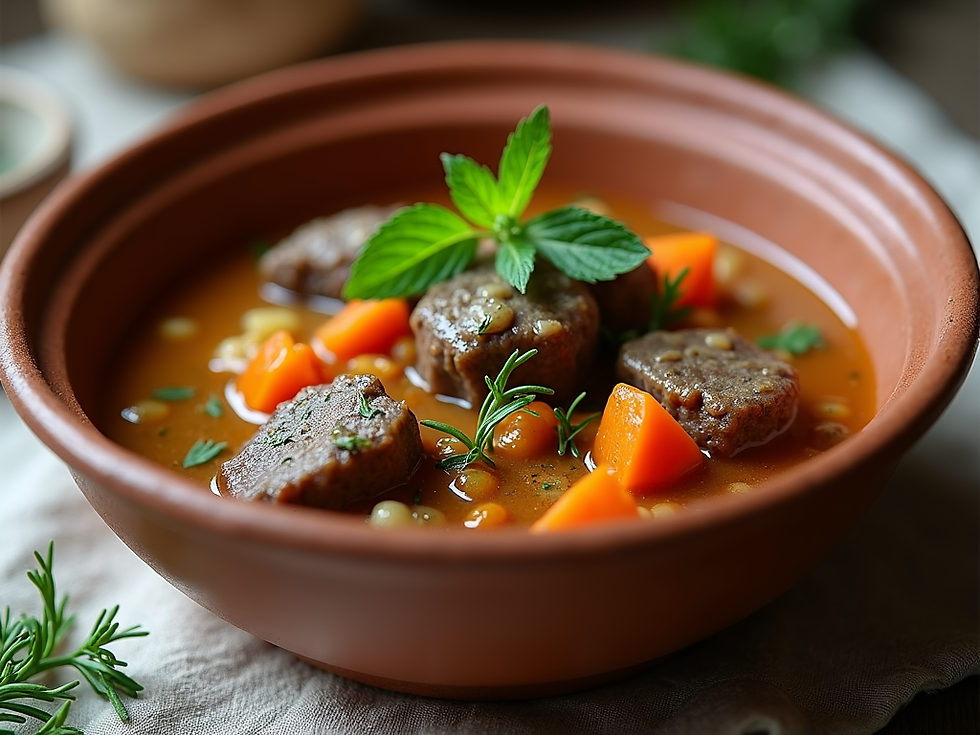
Pezzata di pecora is a dish built around time, not complication. It belongs to the pastoral cooking of the central Apennines and is strongly associated with Molise, where mature sheep was historically cooked slowly for gatherings, transhumance, and rural celebrations. The flavor is deliberately deeper than lamb: mutton has more character, more connective tissue, and more fat, so the correct technique is a patient simmer or low braise that transforms a robust cut into something tender and aromatic.
The professional key is to respect the meat rather than trying to hide it. A clean trim, a controlled initial sear, a modest amount of wine, and enough time for collagen to dissolve produce a sauce with natural body. Potatoes are added late enough to keep their shape, while rosemary, bay, garlic, and black pepper should perfume the broth without turning the dish medicinal. The result should taste of sheep first, herbs second, and tomato or wine only as supporting elements.
Ingredients
3 1/2 lb (1.6 kg) mature mutton shoulder or neck, bone-in when possible, cut into large pieces
2 tbsp (30 ml) extra-virgin olive oil
1 large yellow onion, about 10 oz (280 g), sliced
1 medium carrot, about 4 oz (115 g), diced
1 celery stalk, about 2 oz (60 g), diced
3 garlic cloves, lightly crushed
1 cup (240 ml) dry white wine
1 1/2 cups (360 ml) crushed peeled tomatoes or light passata
2 cups (475 ml) unsalted meat stock or water, plus more as needed
1 1/2 lb (680 g) waxy potatoes, peeled and cut into large chunks
2 small rosemary sprigs and 2 bay leaves
1 1/2 tsp kosher salt, plus more to finish; freshly ground black pepper
Professional Preparation
Trim only excessive exterior fat and silverskin from the mutton. Leave connective tissue that will melt during the long cooking. Pat the pieces completely dry and season lightly with salt and pepper.
Heat a heavy Dutch oven over medium-high heat. Add the olive oil and brown the mutton in batches, keeping space between the pieces. Develop a deep brown surface without scorching the fond, then transfer the meat to a tray.
Lower the heat to medium. Add onion, carrot, and celery and cook 8–10 minutes until softened and lightly golden. Add garlic for the final minute. Deglaze with the wine and reduce it by roughly two-thirds so no raw alcohol aroma remains.
Return the mutton to the pot. Add tomatoes, rosemary, bay, and enough stock or water to come about halfway up the meat. Bring only to a gentle simmer, cover partially, and cook on very low heat for 2 1/2–3 hours. Alternatively, braise in a 315°F (157°C) oven.
Turn the pieces every 40–45 minutes and skim excess fat from the surface. Add a little hot stock only if the pot becomes dry; the finished sauce should be concentrated, not soupy.
When the meat is nearly fork-tender, add the potatoes. Continue cooking 35–45 minutes, uncovered for the final portion if necessary, until the potatoes are tender and the sauce lightly coats a spoon.
Remove rosemary stems and bay leaves. Rest the pot off the heat for 15 minutes, then skim again and adjust salt and pepper. If the sauce is loose, remove the meat and potatoes briefly and reduce the liquid before recombining.
Serve hot in warmed bowls with enough cooking juices to moisten the meat. The dish improves after a short rest because the gelatin relaxes and the flavors integrate.
Professional Technique
Mutton requires a lower, slower heat than a quick lamb preparation. A hard boil tightens muscle fibers and emulsifies fat into the sauce, making the dish feel greasy. The ideal cooking liquid should barely tremble. At that temperature, collagen converts gradually to gelatin while the meat retains enough moisture to remain succulent.
Do not cut the meat too small. Pieces around 2 1/2–3 inches (6–7.5 cm) survive a long braise and remain recognizable on the plate. Bone-in pieces contribute body and mineral depth, but the bone should not dominate the portion. If using boneless shoulder, reduce the liquid slightly because you will get less gelatin from the bones.
Potatoes are not a thickener to be dissolved into the sauce. Use a waxy or all-purpose variety and add them only during the final stage. Their job is to absorb the braising juices while retaining clean edges. If the potato collapses, the sauce becomes starchy and obscures the flavor of the mutton.
Common Mistakes
Using young lamb and calling it pezzata changes the identity of the dish; the mature flavor of sheep is part of the point.
Skipping the browning stage leaves the broth flat. Browning should be deliberate but never blackened.
Adding too much tomato turns a pastoral meat braise into tomato stew. The tomato should support, not dominate.
Boiling aggressively makes the meat fibrous and the fat cloudy. Maintain a quiet simmer.
Adding potatoes at the beginning causes them to disintegrate before the mutton is tender.
Wine Pairing
Wine Pairing: Montepulciano d’Abruzzo DOC — Firm acidity and dark fruit refresh the palate while standing up to mature mutton.
Wine Pairing: Aglianico del Vulture Superiore DOCG — Aglianico’s tannin and savory herbal character match the depth of the long braise.
Wine Pairing: Taurasi DOCG — Taurasi gives structure and length when the cooking juices are concentrated and gelatin-rich.
Wine Pairing: Montefalco Sagrantino DOCG — Sagrantino has enough grip for the pronounced flavor of sheep and works especially well with rosemary.
Wine Pairing: Cannonau di Sardegna DOC — Cannonau offers warm Mediterranean spice and a rounded finish without hiding the meat.
Storage, Reheating, and Service
For restaurant service, cook the pezzata one day ahead through the braising stage, cool it rapidly, and refrigerate it in its liquid. The next day, remove the solidified fat, reheat gently, and add freshly cooked or partially cooked potatoes so the final texture remains precise. This method often gives a cleaner sauce and a more integrated flavor than serving immediately after the first cook.
At home, leftovers keep well for up to three days under refrigeration. Reheat covered over low heat with a spoonful of water or stock, never at a rolling boil. Freezing is possible for the meat and sauce, but potatoes become mealy after thawing; for best quality, freeze the mutton without the potatoes and add fresh potatoes when reheating.
Regional Context and Professional Service
In Molise, pezzata is tied to pastoral culture and to the practical need to cook mature sheep slowly until tough connective tissue becomes tender. That history explains the technique: this is not a quick lamb sauté dressed up as a regional recipe. The character of mature meat, the long simmer, and the restrained aromatics are essential to the identity of the dish.
When buying mutton, look for shoulder or neck with a clean, fresh aroma, firm fat, and enough connective tissue to reward a long braise. If true mutton is unavailable, older lamb can approximate the texture, but young spring lamb will cook faster and taste milder. Adjust the cooking time to the animal rather than forcing every batch into the same schedule.
The sensory test for doneness is resistance at the connective seams. A fork should enter easily, but the meat should still remain in pieces when lifted. If the sauce tastes greasy, rest the pot and skim it rather than trying to hide the fat with acidity. A clean, gelatinous sauce is the hallmark of a controlled braise.
For a larger gathering, use a broad pot rather than a very deep one so the meat cooks in an even layer. Increase stock only enough to maintain the original liquid level. Overfilling a large pot with liquid weakens the sauce and extends reduction time, which can overcook the meat before the flavor becomes concentrated.
Serve pezzata as a substantial second course with potatoes from the braise and a simple bitter green or salad on the side. The contrast of something fresh and lightly bitter helps balance the richness better than an additional heavy starch. Bread is useful for the juices, but the plate should remain focused on the mutton.
Nutritionally, the dish is protein-rich and can vary widely in fat depending on the cut and trimming. Skimming rendered fat after cooking materially changes the final richness without sacrificing the gelatin and flavor extracted during the braise. Portion size and the amount of sauce served are more useful controls than aggressively trimming every piece before cooking.
Chef’s Final Note
Traditional regional cooking becomes professional when the technique is precise but the identity of the dish remains recognizable. Work carefully with temperature, texture, seasoning, and timing; the goal is not to modernize the recipe out of existence, but to make its original logic clear on the plate.
Additional Professional Notes
Ingredient quality matters most in simple regional recipes. Taste the cooking liquid before final reduction, season progressively rather than all at once, and judge doneness by texture instead of a timer alone. Mature meats, legumes, fresh pasta, and onions all vary naturally, so professional consistency comes from reading the food as it cooks and adjusting heat, moisture, and resting time accordingly.
When scaling this recipe for a larger table, do not simply multiply liquid in direct proportion. Increase the principal ingredients and aromatics proportionally, but add stock or water only to reach the same physical level around the food. A larger pot evaporates differently from a small one, and maintaining the original concentration is more important than following a mathematical liquid ratio.
For the cleanest presentation, warm the serving plates, remove stray herb stems or excess surface fat, and spoon sauce with intention. Regional food does not need decorative manipulation to look refined. Proper reduction, intact ingredients, natural gloss, and a controlled portion communicate more professionalism than unnecessary garnish.


Comments