

Italian Molise Baked Salt Cod | Baccalà Arracanato
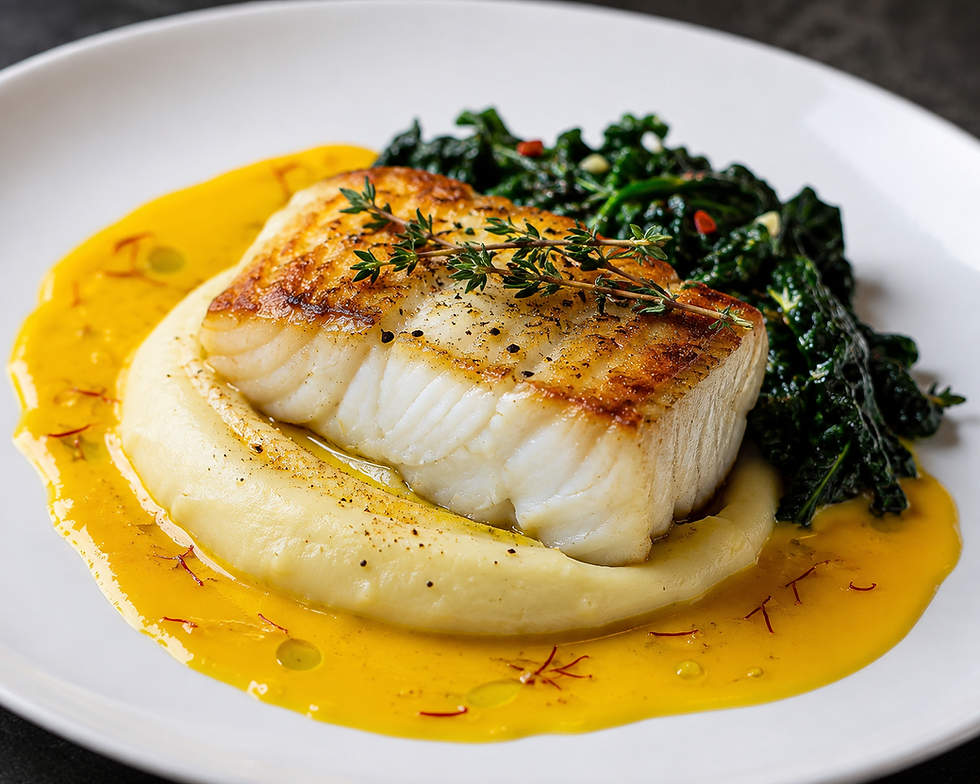
Arracanato is a verb before it is a dish. In the dialect of Molise and of the Abruzzo hills next door it means to cover something in seasoned breadcrumbs and put it in the oven, and it is done to lamb, to mussels, to vegetables and, on the one night of the year that matters most, to salt cod. The crumb carries oregano, garlic and parsley, and in the older households it also carries raisins and pine nuts, a sweetness that surprises anyone who meets the dish for the first time.
The cooking itself is almost nothing. Desalted cod goes into an oiled dish, the crumb goes over it, and twenty minutes of heat does the rest. What the recipe asks of you is patience two days earlier, when the fish goes into cold water, and precision in the last four minutes, when the difference between a crust that shatters and a crust gone bitter is measured in seconds.
Get those two things right and the result is a hard golden top, a white fish underneath that separates into wide moist flakes, and a pool of oregano scented oil at the bottom of the dish that people mop up with bread long after the cod is gone.
Yield: 4 main course servings. Prep: 30 minutes, after 48 hours of desalting. Cook: 25 minutes. Total: about 1 hour, plus desalting. Difficulty: intermediate. Course: secondo. Region: Molise, and the Abruzzo hills that border it.
The Story
Molise is a region of mountains with a coastline it barely uses. Campobasso, Isernia, Agnone and the Matese villages sit hours from the water on roads that until the last century were mule tracks, and the fish that reached them was the fish that could not spoil. That meant baccala, dry as a board, stacked in the grocer shops beside the salt and the dried beans, bought in one piece and soaked at home. It was the protein that arrived when no animal was being killed.
The Church calendar did the rest. The vigil of Christmas is a lean night across southern Italy, and in Molise it is the night baccala arracanato appears, after the fried vegetables and before the sweets. Families argue about the crumb the way others argue about ragu. Some add tomato, some slide potatoes underneath, some insist the raisins and pine nuts are a modern intrusion, when in fact they are the oldest part of the recipe, a survival of the medieval southern habit of sweetening savoury food.
The oregano is the local signature and it is not interchangeable. The hills of Molise and upper Abruzzo dry a wild oregano with small grey leaves and a resinous, almost camphorous edge, sold on the stalk at the markets of Isernia and Agnone rather than in jars. It is strong enough to stand up to a fish that has spent two days losing salt, which is precisely the problem the crumb was invented to solve.
Ingredients
For the salt cod
Boneless salt cod fillet, thick centre cut, 1 3/4 lb (800 g) after desalting
Cold water, for soaking, changed every 8 hours
Extra virgin olive oil, for the baking dish, 1 tbsp (15 ml)
Yellow potatoes, peeled and sliced 1/8 inch thick, 10 oz (285 g), optional base
Dry white wine, 1/4 cup (60 ml)
For the arracanato crumb
Stale country bread, grated to coarse crumbs, 3 oz (85 g), about 1 1/2 cups
Dried wild oregano on the stalk, crumbled, 1 tbsp (3 g)
Garlic cloves, very finely chopped, 2
Flat leaf parsley, finely chopped, 3 tbsp (10 g)
Golden raisins, soaked in warm water and drained, 2 tbsp (20 g)
Pine nuts, 2 tbsp (18 g)
Salt packed capers, rinsed and roughly chopped, 1 tbsp (10 g)
Crushed red pepper flakes, 1/4 tsp (0.5 g)
Extra virgin olive oil, 1/4 cup (60 ml)
Freshly ground black pepper, to taste
For finishing
Extra virgin olive oil, 2 tbsp (30 ml)
Lemon, zest only, 1/2
Flat leaf parsley, chopped, 1 tbsp
Fine sea salt, only after tasting
Preparation
Step 1
Desalt the cod. Rinse the surface salt off the fillet, then submerge it in a deep container of cold water, skin side up so the salt falls away rather than settling back onto the flesh. Refrigerate for 48 hours and change the water every 8 hours, five or six changes in all. A thick centre cut wants the full 48 hours, a thin tail piece as little as 24. Do not guess: poach a small trimming for a minute and taste it. It should be seasoned, not salty.
Step 2
Dry and portion the fish. Pat the cod completely dry and leave it uncovered on a rack in the refrigerator for 30 minutes so the surface firms up. Run your fingertips along the fillet against the grain and pull any pin bones with tweezers. Cut it into four squarish portions of even thickness, keeping the skin on, because the skin holds the flake together in the oven and releases gelatin into the oil underneath.
Step 3
Soak the raisins and toast the pine nuts. Cover the raisins with warm water for 10 minutes, then drain and squeeze them dry. Raisins that go into the crumb dry pull moisture out of the bread and scorch before the fish is cooked. Toast the pine nuts in a dry pan over medium heat for 2 to 3 minutes, moving them constantly, until pale gold, then tip them straight out. They keep colouring in the residual heat and a burnt pine nut is bitter all the way through.
Step 4
Build the crumb. Grate the stale bread rather than blitzing it, which gives an irregular crumb with real structure instead of sand. Combine it with the oregano, garlic, parsley, capers, chilli and black pepper, then fold in the raisins and pine nuts. Pour in the olive oil and work it through with your fingers until every crumb is coated and the mixture just holds together when pressed. Do not salt it. The cod and the capers are both bringing salt and you cannot take it back out.
Step 5
Lay the base. Heat the oven to 400°F (200°C) with a rack in the upper third. Brush a shallow baking dish with olive oil and lay the potato slices over the bottom in a single overlapping layer, season lightly and give them 12 minutes in the oven on their own. They need that head start or they will still be raw when the cod is ready. Pour the white wine around them and set the cod on top, skin side down, leaving a finger of space between the pieces.
Step 6
Crust and bake. Press the crumb over each portion in an even layer about a quarter inch thick so it adheres rather than sitting loose. Drizzle the finishing oil over the crust and bake for 14 to 18 minutes. The cod is done when a thin blade slides into the centre without resistance and the flesh reads 130°F (54°C). Past 140°F (60°C) the fibres contract, water is forced out and the fish turns dry and stringy.
Step 7
Colour the crust and rest. Move the dish to the top of the oven or under a medium grill for 2 to 4 minutes, staying beside it, until the crumb is deep gold and the pine nuts have darkened one shade. Take it out while the colour looks slightly short, because it deepens on the counter. Rest 5 minutes so the flakes settle and the oil and wine emulsify into a thin sauce.
Plating
Warm the plates, since cod cools faster than almost any fish and a cold plate takes the crust down with it. Lift each portion with a wide offset spatula slid underneath the skin so the crumb stays where you put it, and set it slightly off centre with the potato slices fanned beneath rather than hidden.
Spoon a little of the oregano scented oil from the bottom of the dish around the fish, never over the crust, which would soften in seconds everything the last four minutes were for. Finish with lemon zest grated over the top, a pinch of parsley and nothing else. Lemon juice is a mistake here: it wets the crumb and fights the raisins. Bring bread to the table, because the oil at the bottom is half the point.
Professional Technique
The technique that defines arracanato is the oiled crumb, and it works because of what oil does to bread before the heat arrives. Dry breadcrumbs scattered on fish absorb the moisture rising out of it and turn to paste. Crumbs already saturated with olive oil cannot take on water, so steam passes through the layer instead of being trapped in it, and the fat conducts heat well enough to brown the surface while the fish underneath stays below 140°F (60°C). That is why the oil goes into the crumb in a bowl and not over it in the dish.
The second technique is splitting the cooking from the browning. Salt cod has already been cured, so its proteins are partly denatured and its structure is firmer than fresh cod, and it wants a moderate steady 400°F (200°C) rather than a fast blast. The crust is then finished at the end under direct heat, so browning and cooking never compete for the same minutes.
Texture and Moisture Control
Three moisture systems run at once here and they all drain into the same place. The cod releases water and gelatin downward, the potatoes give up starch and absorb wine, and the crumb sheds oil. Left alone they produce a soggy base and a greasy crust. The layering controls it: potatoes at the bottom to soak up what falls, skin between potato and flesh to slow the release, and a crust on top that never sits in liquid.
The window for the fish is narrow. Desalted cod is around 80 percent water and holds it only while the muscle fibres stay relaxed. At 130°F (54°C) the flakes separate cleanly under a fork and still glisten. By 145°F (63°C) the same fillet has expelled a pool of white liquid and gone cottony. A thermometer through the side of a portion is worth more than any timing, because a fish that soaked 48 hours cooks faster than one that soaked 24.
The crust has its own failure mode, which is bitterness rather than softness. Garlic chopped fine and suspended in oil among breadcrumbs meets direct radiant heat during the grill stage and goes from sweet to acrid in about 40 seconds. Keeping the dish in the upper third rather than against the element, and pulling it one shade early, protects it.
Professional Mise en Place
Almost everything here happens two days before service. The only live work is the bake and the grill, so the discipline is in the timing of the desalting and in keeping the crumb dry until the last moment.
Equipment and tools
Deep container for desalting, large enough to hold the fillet flat under water
Box grater for the stale bread, fish tweezers, wide offset spatula
Shallow ceramic or enamelled baking dish that goes to the table
Instant read thermometer, small dry pan for the pine nuts
Prepared ahead
Cod desalted, dried and portioned, up to 24 hours ahead, on a rack in the refrigerator
Crumb mixed with everything except the oil, up to 2 days ahead in a sealed container
Pine nuts toasted and raisins soaked and squeezed, on the day
Potatoes sliced and held in cold water, drained and dried before use
Service setup
Oven at 400°F (200°C) with the rack already in the upper third
Crumb dressed with oil only 10 minutes before it goes on the fish
Plates warm, bread on the table, thermometer within reach of the oven
Nothing acidic near the finished dish except zest
Chef Tips
Buy a thick centre cut and refuse the tail. Tail pieces desalt unevenly and overcook long before the crust colours, which forces you to choose between raw crumb and dry fish.
Taste a poached trimming before you commit. Desalting is the only genuinely variable step here and it depends on thickness, cure and the temperature of your refrigerator. Two days is a guide, not a rule.
Grate the bread, do not process it. A processor produces an even powder that packs into a dense lid and steams. A box grater on a two day old loaf gives crumbs of three or four sizes, and that irregularity is what lets steam escape and gives the crust its shatter.
If you want the tomato version, use very little. Four or five halved cherry tomatoes tucked between the portions add acidity and colour. Anything more and the liquid rises, the potatoes stew and the crumb loses its edge.
Common Mistakes
Rushing the desalting with warm water. Warm water pulls salt out faster but also starts cooking the surface proteins and leaves the flesh slack. Cold water in the refrigerator, changed every 8 hours, is the only method that gives firm flakes.
Putting dry breadcrumbs on the fish. Uncoated crumbs drink the moisture coming off the cod and become a damp grey layer instead of a crust. Work the oil through the crumb in a bowl first.
Salting the crumb. Between the cod and the capers there is already a great deal of salt, and desalted fish still carries seasoning right through the flesh. Season at the table, after tasting.
Baking until the fish flakes apart on its own. By the time cod falls apart at a touch it has passed 145°F (63°C) and squeezed out its water. Pull it at 130°F (54°C), when a blade slides in but the portion still holds its shape.
Leaving it under the grill unattended. Chopped garlic in oil among hot breadcrumbs turns bitter in under a minute, and pine nuts go from gold to black almost as fast. Two to four minutes with your eyes on it.
Wine Pairing
Biferno DOC Bianco: The bottle from the valley this dish belongs to, built on Trebbiano with Malvasia and Bombino behind it. It is dry, moderate in alcohol and gently herbal, and that herbal edge meets the wild oregano in the crumb rather than arguing with it. Acidity enough to cut the olive oil, restraint enough to leave the cod alone.
Tintilia del Molise DOC Rosato: Drawn off early from the region's own dark skinned grape, it keeps a firm structure and a peppery bite that most rosati lack. It is the one wine here that handles the raisins and pine nuts, because its red fruit finds the sweetness instead of being ambushed by it, while its sapidity works against the salt still carried in the fish.
Cerasuolo d'Abruzzo DOC: The deeply coloured Abruzzese rosato from Montepulciano grapes, crossing the border this recipe straddles. It has real body for a pink wine and a sour cherry acidity that slices the oil in the crust, while a faint tannic grip stands up to the browned crumb in a way no white can manage. Serve at 54°F (12°C), not colder.
Offida Pecorino DOCG: From the Marche hills a short way north, and the most structured white here. Pecorino ripens with high extract and firm acidity, giving weight enough to sit under baked fish and a savoury, almost saline finish that echoes the capers. Its aniseed and yellow apple aromatics lift the parsley without smothering the oregano.
Falanghina del Sannio DOC: The neighbour from inland Campania, and the choice when the crust has been pushed to the darker end of gold. Brisk green apple acidity scrubs the palate between mouthfuls of an oily crumb, and the faintly bitter almond finish sits comfortably beside the toasted pine nuts.
Storage & Reheating
Cover the cooled dish tightly and refrigerate for up to 2 days. Do not transfer the portions to a plastic box: the crust sweats against the lid overnight and comes out wet. Keep them in the baking dish, with the oil and potatoes around them, which stops the fish drying and lets you reheat everything in one piece.
Reheat uncovered at 350°F (175°C) for 8 to 10 minutes, then 1 minute near the top of the oven to bring the crust back. A microwave steams the crumb into a paste and toughens the fish at the same time. If the dish looks dry going in, add a tablespoon of water or white wine to the bottom, never over the crust.
This is one of the few baked fish dishes that is genuinely good cold the next day with bread, which is how the leftovers of the Christmas vigil get finished in Molise. Do not freeze it: the cooked flesh comes back woolly and the crust turns to sand. The uncooked desalted fillet freezes well for up to 2 months.
Nutrition
Per serving, based on 4 main course portions with the potato base:
Calories: 560 kcal
Total Fat: 30 g
Saturated Fat: 4.5 g
Trans Fat: 0 g
Unsaturated Fat: 24 g
Cholesterol: 95 mg
Sodium: 1150 mg
Total Carbohydrates: 30 g
Fiber: 3 g
Total Sugars: 6 g
Added Sugars: 0 g
Protein: 42 g
Lactose: 0 g
Principal micronutrients: iodine, selenium, vitamin B12, vitamin D, phosphorus, potassium, magnesium
These figures are estimates. Sodium is the least predictable value and depends almost entirely on how thoroughly the cod was desalted.


Comments