
Scapece Molisana (Italian Molise Marinated Fried Fish)
- Aug 23
- 4 min read
Updated: 2 days ago
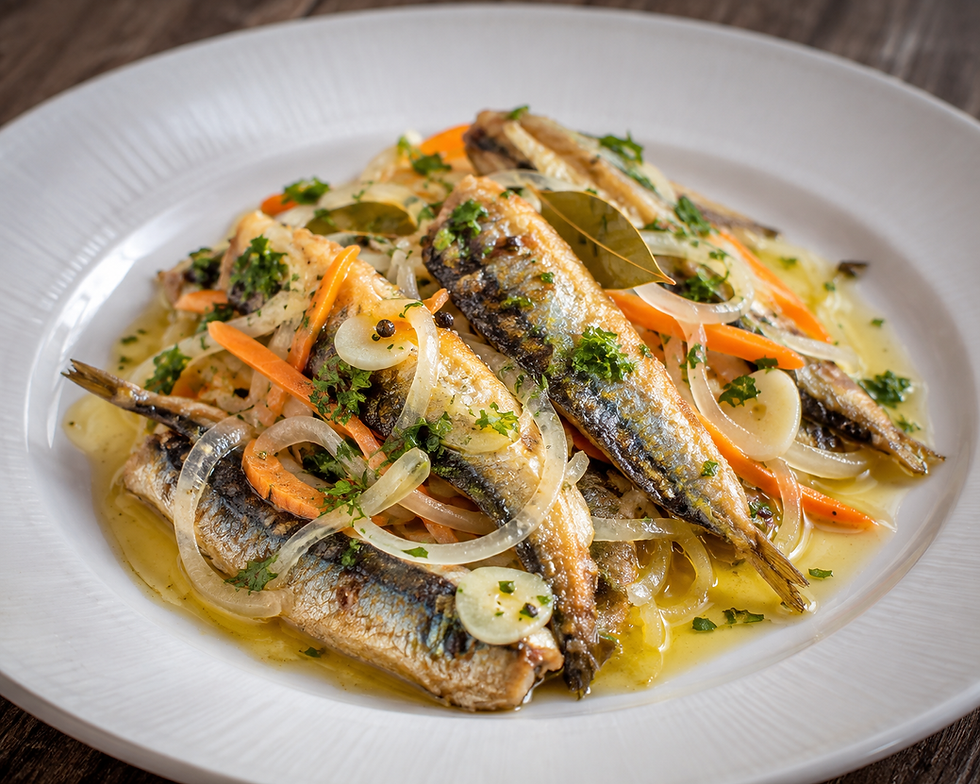
Scapece is one of the oldest and most intelligent preservation techniques in central and southern Italian cooking. In Molise, especially along the Adriatic coast around Termoli, fried fish preserved with vinegar, aromatics, herbs, and olive oil became both a practical way to extend freshness and a dish with a clear regional identity. Long before refrigeration, cooks understood that frying fish and then dressing it with an acidic marinade could protect it, intensify flavor, and make it suitable for markets, feast days, travel, and family tables.
The word scapece appears in different forms across several Italian regions, but the Molisan preparation belongs naturally to the fishing culture of the Adriatic. Small fish such as sardines, anchovies, or mackerel can be used, as can firm white fish cut into manageable pieces. What matters is the contrast between the crisp fried exterior and the fragrant acidity of the marinade.
A good scapece should never taste brutally of vinegar. The acid should be rounded by olive oil, garlic, onion, herbs, and, only when necessary, the smallest amount of sugar. The fish should remain structured rather than soggy. Too little resting time leaves the frying and marinade disconnected; too long in an excessively acidic liquid damages the texture.
For modern restaurant presentation, the technique should remain traditional even if the plating becomes cleaner. Arrange the fish with restraint, spoon the marinade rather than flooding the plate, and allow the onions, herbs, and olive oil to explain the preparation visually.
Servings: 4. Preparation Time: 25 minutes. Cooking Time: 20 minutes. Marinating Time: minimum 2 hours, ideally 6 to 12 hours. Total Time: about 3 hours minimum.
Ingredients
1 1/2 lb (680 g) fresh sardines, anchovies, or small firm white fish fillets, cleaned
3/4 cup (90 g) all-purpose flour
1/4 cup (40 g) fine semolina flour
1 tsp kosher salt
1/4 tsp freshly ground black pepper
Neutral frying oil, as needed
3/4 cup (180 ml) white wine vinegar
1/4 cup (60 ml) dry white wine
1/3 cup (80 ml) extra virgin olive oil
2 garlic cloves, thinly sliced
1 small yellow onion, very thinly sliced
1 small carrot, very thinly sliced
2 bay leaves
1 tsp whole black peppercorns
1 tsp coriander seeds, optional
1 tbsp chopped flat-leaf parsley
1 tbsp finely chopped fresh mint
1 tsp granulated sugar, only if needed to balance the vinegar
1/2 tsp kosher salt
Preparation
Clean small fish carefully, removing heads, interiors, and central bones when appropriate. Rinse very briefly and pat completely dry. If using larger white fish, cut into pieces about 2 to 3 inches (5 to 7.5 cm) long and no more than 3/4 inch (2 cm) thick. Season lightly.
Combine the all-purpose flour and semolina. Dredge the fish lightly and shake away all excess. A heavy coating becomes pasty after marinating.
Heat 1 1/2 to 2 inches (4 to 5 cm) frying oil to 350°F (177°C). Fry in small batches. Small fish generally need 2 to 3 minutes; larger pieces may require 3 to 4 minutes. Transfer to a rack and avoid heavy seasoning after frying.
Combine the vinegar, white wine, garlic, onion, carrot, bay leaves, peppercorns, coriander seeds if using, and salt in a small saucepan. Bring to a gentle simmer for 4 to 5 minutes, just long enough to soften the vegetables slightly and release the aromatics.
Remove the marinade from the heat and cool for about 5 minutes. Stir in the extra virgin olive oil, parsley, and mint. Taste carefully. Add sugar only if the vinegar is excessively sharp; the marinade should remain savory and acidic, not sweet.
Arrange the fried fish in a shallow nonreactive glass, ceramic, or stainless-steel dish. Spoon the warm marinade over the fish and distribute the vegetables and herbs evenly.
Cool to room temperature, cover, and refrigerate at least 2 hours. For deeper flavor, rest 6 to 12 hours. Very delicate fish should not be left in an overly acidic marinade for an unnecessarily long time.
Remove from refrigeration 20 to 30 minutes before serving. Scapece is best slightly cool or near room temperature rather than ice cold.
Professional Technique
Three variables control scapece: frying temperature, acidity, and marinating time. The fish must begin crisp because some softening is inevitable. Keep the oil near 350°F (177°C); cooler oil increases absorption, while excessive heat browns the flour before the fish cooks. The marinade should be warm enough to release aromatic flavor but not aggressively boiling when it meets delicate fish. White wine softens the vinegar and olive oil gives roundness and length. Always taste the marinade before using it because vinegars vary significantly in strength. For refined plating, arrange three or four pieces in a loose line, add only a few strands of marinated onion and carrot, and spoon a small amount of marinade around the fish.
Chef Tips
Choose the freshest fish possible because scapece does not hide poor quality.
Dry the fish thoroughly before flouring.
Use only a light dusting of flour.
Fry in small batches to maintain temperature.
Use glass, ceramic, or stainless steel for marinating.
Serve slightly cool rather than directly from the refrigerator.
Common Mistakes
Using wet fish and producing an uneven coating.
Overcrowding the fryer and dropping the oil temperature.
Using too much flour.
Pouring aggressively boiling marinade over delicate fish.
Using so much vinegar that the preparation becomes harsh.
Marinating in reactive aluminum.
Serving ice cold, which mutes aroma and thickens the olive oil.
Wine Pairing
Moscato d’Asti DOCG — aromatic sweetness and fresh acidity match the dessert without making the finish heavy.
Vin Santo del Chianti Classico DOC — oxidative complexity and balanced sweetness complement baked, nutty and pastry flavors.
Brachetto d’Acqui DOCG — red-fruit perfume and gentle sparkle refresh the palate between sweet bites.
Storage and Reheating
Scapece is designed to be eaten cool or at room temperature, so reheating is not recommended. Store in an airtight glass or ceramic container in the refrigerator for up to 3 days, keeping the fish well coated with marinade. Bring only the portion needed toward room temperature before serving. Freezing is not recommended because the texture of fried and marinated fish deteriorates after thawing.
Nutrition per Serving
Approximate per serving: 430 calories, 31 g protein, 18 g carbohydrates, 25 g fat, 4 g saturated fat, 2 g fiber, 3 g sugars, 720 mg sodium, and 105 mg cholesterol.


Comments