
Wine Pairing: Biferno DOC Bianco
Updated: Sep 4
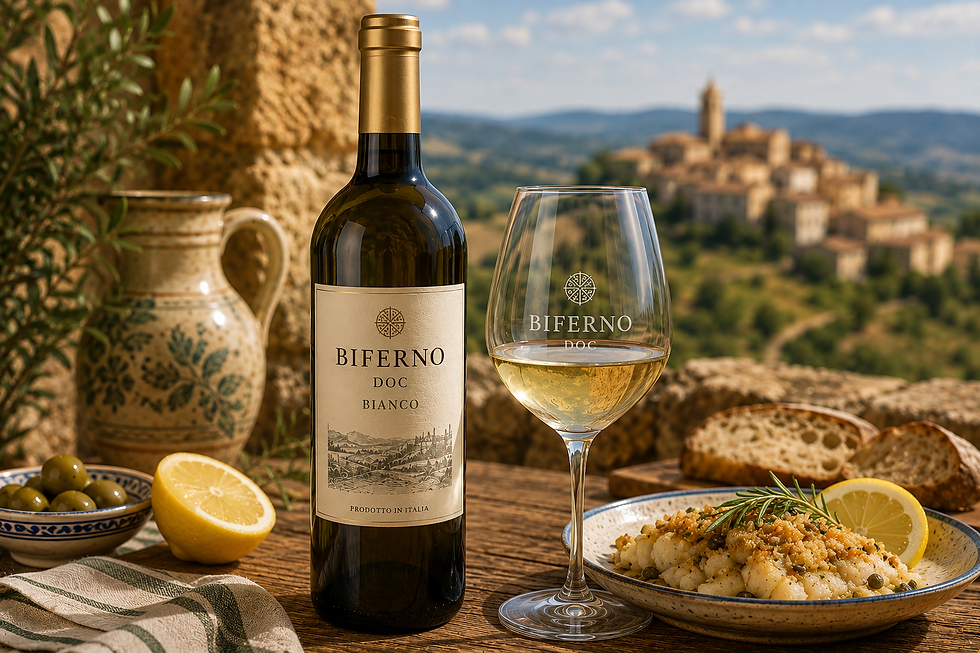
Biferno DOC Bianco is best approached as a working table wine first and a denomination second. Its identity comes from the rolling hills of Molise between the central Apennines and the Adriatic, where climate, exposure and local viticultural habits shape the grape before any cellar choice is made. The most convincing bottles are not simply ripe or polished; they carry enough acidity, savory detail and aromatic definition to make food taste clearer. That practical quality is central to the Zafferano & Co. approach to pairing, because a wine should create movement through a meal rather than sit beside it as decoration. When the bottle is well chosen, the region becomes easier to understand through texture, freshness and the way the finish responds to salt, fat, herbs and browning. In General, the useful question for Biferno DOC Bianco is how the detail changes bottle choice, serving temperature, food weight or expected development in the cellar.
This guide therefore treats Biferno DOC Bianco as a range rather than one fixed flavor. A young, minimally oaked bottle can be vivid and direct, while a more concentrated or mature version may show deeper spice, earth, dried fruit or tertiary complexity. The right choice depends on the plate. Delicate dishes need transparency; slow-cooked meats, aged cheese and reduction sauces can absorb more structure. Sweet styles need desserts that are not sweeter than the wine, while rosato and white styles are usually strongest when freshness remains the main line. Buying intelligently means matching producer style to cooking technique, not chasing the biggest score.
What Biferno DOC Bianco Is
Biferno DOC Bianco centers on Trebbiano Toscano. In the glass it is typically fresh dry white with lemon, yellow apple, white flowers, herbs and a clean savory finish. The denomination is valuable because it preserves a recognizable local profile even when individual wineries use different vessels, extraction levels or aging regimes.
The legal name sets boundaries, but quality still comes from farming. Harvest date, vine balance, site exposure and careful fermentation determine whether the wine feels alive or merely correct. A bottle can satisfy the rules and still lack the energy that makes pairing work.
In the U. S. market, the category is often more interesting than its fame suggests. Limited distribution can make some producers difficult to find, but that scarcity is also why specialist Italian retailers remain the best source for serious examples.
The Territory of Molise
the rolling hills of Molise between the central Apennines and the Adriatic. This geography shapes ripening and acidity, especially where altitude, sea influence or mountain air tempers daytime heat. Those conditions are visible in the finished wine as freshness and savory detail.
Soils and exposures vary from village to village, which prevents the denomination from tasting completely uniform. Better sites tend to translate their differences into texture and aromatic length rather than simple power.
For pairing, cooler-site wines are usually more agile with lean meat, vegetables and seafood, while warmer or lower sites can give broader fruit and body for richer preparations. Site character is therefore a practical purchasing tool, not just a geographic fact.
Grapes and Production Rules
Trebbiano Toscano is the central grape; Bombino Bianco is the second useful reference for understanding local synonyms or blending context. Exact percentages, yields and aging obligations should always be checked against the current disciplinary rules and the producer label, especially when Riserva, rosato, superiore or sweet categories are involved.
Rules protect typicity but cannot replace judgment. Fermentation temperature, maceration, oak, steel, concrete and bottle age all influence how the legal wine tastes in practice.
For food, sensory structure matters more than the regulation sheet. Choose a bottle by acidity, tannin, sweetness, aromatic intensity and weight, then use the denomination rules as background.
How Trebbiano Toscano Behaves Here
Trebbiano Toscano supplies the core fruit, acidity and structural signature. Where companion varieties are used, they can adjust perfume, body or tannin while leaving the regional identity intact.
Young examples emphasize fruit and flowers. With more extraction or aging, darker fruit, spice, earth and savory notes become more prominent. That shift changes which dishes work best.
The most useful pairing decision is therefore not simply young versus old, but transparent versus concentrated. Lighter bottles suit simpler cooking; denser examples need browning, protein, fat or longer sauces.
Tasting Profile
A representative bottle shows fresh dry white with lemon, yellow apple, white flowers, herbs and a clean savory finish. The aroma should feel integrated, with fruit supported by herbal, earthy, floral, mineral or spice notes rather than dominated by makeup from the cellar.
On the palate, acidity gives direction. Tannin, alcohol, sweetness or lees texture supply weight depending on the style, but the finish should remain sufficiently fresh to invite another bite.
With age, primary fruit can move toward dried flowers, tea, leather, nuts, tobacco, honey or forest-floor notes. Mature bottles pair best with food that is flavorful but not cluttered.
Serving Temperature, Glassware and Decanting
Serve Biferno DOC Bianco at about 46–50°F (8–10°C). Too cold and the wine becomes mute; too warm and alcohol or sweetness can feel heavier than the food. A clean medium-sized stem is usually the most versatile choice.
Start slightly cool and allow the glass to open naturally. Shop the right glass and shop a decanter.
Italian Braised Beef with Polentaworks with Biferno DOC Bianco because the dish offers enough flavor to engage the wine without erasing its regional character. Choose a fresher, less oaked bottle when the preparation is delicate and a broader or more mature version when roasting, braising, cheese or reduction increases intensity. Acidity should refresh fat and salt; tannin should meet protein rather than fight spice; sweetness, where relevant, should remain equal to or greater than the sweetness of the food. The best version of this pairing leaves both the dish and the wine more legible after the first bite, which is a better test than whether the combination merely feels rich.
Polenta con Funghiworks with Biferno DOC Bianco because the dish offers enough flavor to engage the wine without erasing its regional character. Choose a fresher, less oaked bottle when the preparation is delicate and a broader or more mature version when roasting, braising, cheese or reduction increases intensity. Acidity should refresh fat and salt; tannin should meet protein rather than fight spice; sweetness, where relevant, should remain equal to or greater than the sweetness of the food. The best version of this pairing leaves both the dish and the wine more legible after the first bite, which is a better test than whether the combination merely feels rich.
Pollo alla Cacciatora Marchigianaworks with Biferno DOC Bianco because the dish offers enough flavor to engage the wine without erasing its regional character. Choose a fresher, less oaked bottle when the preparation is delicate and a broader or more mature version when roasting, braising, cheese or reduction increases intensity. Acidity should refresh fat and salt; tannin should meet protein rather than fight spice; sweetness, where relevant, should remain equal to or greater than the sweetness of the food. The best version of this pairing leaves both the dish and the wine more legible after the first bite, which is a better test than whether the combination merely feels rich.
Risotto al Radicchio di Trevisoworks with Biferno DOC Bianco because the dish offers enough flavor to engage the wine without erasing its regional character. Choose a fresher, less oaked bottle when the preparation is delicate and a broader or more mature version when roasting, braising, cheese or reduction increases intensity. Acidity should refresh fat and salt; tannin should meet protein rather than fight spice; sweetness, where relevant, should remain equal to or greater than the sweetness of the food. The best version of this pairing leaves both the dish and the wine more legible after the first bite, which is a better test than whether the combination merely feels rich.
Agnello in Umido alla Toscanaworks with Biferno DOC Bianco because the dish offers enough flavor to engage the wine without erasing its regional character. Choose a fresher, less oaked bottle when the preparation is delicate and a broader or more mature version when roasting, braising, cheese or reduction increases intensity. Acidity should refresh fat and salt; tannin should meet protein rather than fight spice; sweetness, where relevant, should remain equal to or greater than the sweetness of the food. The best version of this pairing leaves both the dish and the wine more legible after the first bite, which is a better test than whether the combination merely feels rich.
Fritto Misto di Mareworks with Biferno DOC Bianco because the dish offers enough flavor to engage the wine without erasing its regional character. Choose a fresher, less oaked bottle when the preparation is delicate and a broader or more mature version when roasting, braising, cheese or reduction increases intensity. Acidity should refresh fat and salt; tannin should meet protein rather than fight spice; sweetness, where relevant, should remain equal to or greater than the sweetness of the food. The best version of this pairing leaves both the dish and the wine more legible after the first bite, which is a better test than whether the combination merely feels rich.
Baccalà Arracanatoworks with Biferno DOC Bianco because the dish offers enough flavor to engage the wine without erasing its regional character. Choose a fresher, less oaked bottle when the preparation is delicate and a broader or more mature version when roasting, braising, cheese or reduction increases intensity. Acidity should refresh fat and salt; tannin should meet protein rather than fight spice; sweetness, where relevant, should remain equal to or greater than the sweetness of the food. The best version of this pairing leaves both the dish and the wine more legible after the first bite, which is a better test than whether the combination merely feels rich.
Crostata di Ricotta Romanaworks with Biferno DOC Bianco because the dish offers enough flavor to engage the wine without erasing its regional character. Choose a fresher, less oaked bottle when the preparation is delicate and a broader or more mature version when roasting, braising, cheese or reduction increases intensity. Acidity should refresh fat and salt; tannin should meet protein rather than fight spice; sweetness, where relevant, should remain equal to or greater than the sweetness of the food. The best version of this pairing leaves both the dish and the wine more legible after the first bite, which is a better test than whether the combination merely feels rich.
Pairing Principles
Match structure before flavor. Acidity cuts richness, tannin needs protein or fat, aromatic wines need dishes that do not smother perfume, and sweet wines require equal or lower sweetness in the food.
Regional pairing is a useful starting point, not a law. Cooking method changes the equation: frying adds fat, roasting adds sweetness and bitterness, braising adds depth, and raw preparations preserve delicacy.
Five Biferno DOC Bianco Producers to Know
Di Majo Norante,Borgo di Colloredo,Catabbo,Campi Valerio,Angelo D'Uva
These estates are useful reference points because they show different interpretations of the same denomination, from traditional restraint to cleaner modern fruit and more ambitious cellar work. Producer style matters especially in small Italian appellations, where vineyard scale and individual decisions can be more visible than in large-volume regions.
U. S. retail prices for representative bottles are often around $15–28, although scarce estates, older vintages and special selections can cost more. Distribution is uneven, so specialist Italian merchants are usually the most dependable source.
Compare producers by style rather than reputation alone. One estate may emphasize stainless steel and fruit purity, another longer maceration or wood, and another bottle age. Those choices affect food pairing more directly than a small difference in critic score.
Price and Value
Biferno DOC Bianco generally offers its strongest value when it tastes unmistakably regional. At $15–28 in the U. S. market, a serious bottle should show more than ripeness: it should have enough freshness and savory detail to justify choosing it over a generic international style.
For a cellar, two contrasting producers are more useful than multiple identical expressions. Buy one bottle for freshness and another for structure or aging potential, then pair them differently.
Aging and Storage
Store bottles in darkness at a stable cellar temperature with minimal vibration. Exact aging potential depends on acidity, tannin, sweetness, concentration and closure rather than the denomination name alone.
Fresh styles often reward earlier drinking; structured reds, concentrated whites and sweet wines can develop much longer. Provenance and storage history matter as much as theoretical longevity.
Common Mistakes
Serving temperature is the easiest error to avoid. Whites and rosati lose aroma when too cold; reds become broad and alcoholic when too warm. The second mistake is pairing by prestige instead of structure.
Another mistake is assuming that more oak, alcohol or bottle age means better wine. For food, proportion is more valuable than power. A restrained bottle can outperform a famous one if it fits the dish.
Wine Spectator and Zafferano & Co. Rating
Wine Spectator scores belong to individual wines and vintages, not to Biferno DOC Bianco as a whole. Any score must be tied to the exact producer and vintage reviewed; a blanket denomination score would be inaccurate.
Zafferano & Co. Rating: ★★★★☆. The rating reflects regional identity, table usefulness, value and the denomination's ability to show a distinctive Italian voice across producers.
Why Biferno DOC Bianco Matters
Biferno DOC Bianco matters because it keeps a specific grape-and-place relationship visible. Small Italian denominations are important precisely because they resist the idea that every wine must taste internationally familiar to be relevant.
It also matters because the category earns its place at the table. A useful wine becomes more articulate with food: fruit sharpens, savory detail becomes clearer, and the finish stays refreshing. This flexibility is part of value. A bottle that can move through several courses while remaining recognizably tied to Molise is often more compelling than a technically impressive wine designed mainly for impact in isolation. For collectors and restaurants, that means buying for function as well as reputation, and giving lesser-known regional wines enough attention to show what they can do with real cooking. In practical terms, that versatility is what makes the denomination worth returning to: it can teach the drinker about place while still performing the basic job of wine at dinner, which is to refresh the palate and make the next bite more appealing.


Comments