
Italian Marche Chicken Cacciatore | Pollo alla Cacciatora Marchigiana
Updated: 3 days ago

“Alla cacciatora” describes a broad hunter-style family of Italian preparations rather than one national standardized recipe. Regional and household versions differ in wine, tomato, herbs, olives and vegetables. This Marche-oriented version keeps the profile direct: bone-in chicken is browned, white wine is reduced, tomato and rosemary form the braise, and olives add a final savory accent.
The important distinction from a generic tomato chicken stew is concentration. The chicken must be browned before liquid is added, and the sauce should reduce until it coats rather than floods the pieces. Breast and leg portions should be monitored separately so the leaner meat is not sacrificed while joints become tender.
Recipe Information
Servings: 6. Prep time: 25 minutes. Cooking time: 1 hour 5 minutes. Total time: about 1 hour 30 minutes. Difficulty: Intermediate. Course: Main course. Cuisine: Marche, Italy. Best season: year round. Service temperature: hot.
Ingredients
1 whole chicken, 4 1/2 lb (2 kg), cut into 8 to 10 bone-in pieces
1 1/2 tsp fine sea salt, divided
1 tsp freshly ground black pepper
3 tbsp extra virgin olive oil
1 large onion, thinly sliced
1 carrot, finely diced
1 celery stalk, finely diced
4 garlic cloves, lightly crushed
2 rosemary sprigs
6 sage leaves
1 cup (240 ml) dry white wine
3 cups (720 ml) crushed peeled tomatoes
1 tbsp tomato paste
3/4 cup (180 ml) light chicken stock, as needed
1/2 cup (70 g) pitted black olives
2 tbsp chopped Italian parsley
Step-by-Step Preparation
Pat chicken pieces completely dry. Season with about 1 teaspoon salt and all black pepper. Heat olive oil in a wide casserole over medium high heat and brown chicken in batches, skin side down first, until deeply golden. Do not turn repeatedly; give the skin time to release naturally from the pan.
Transfer chicken to a tray. Lower heat and add onion, carrot and celery. Cook 8 minutes until soft and lightly caramelized. Add garlic, rosemary and sage and cook 1 minute. Stir in tomato paste and cook until it darkens slightly.
Return chicken and pour white wine around the pieces. Simmer vigorously for 4 minutes, turning once, until wine reduces by about half. The raw alcohol aroma should disappear before tomato is introduced.
Add crushed tomatoes and 1/2 cup stock. Bring to a gentle simmer, partially cover and cook for 25 minutes. Turn pieces once. Keep the sauce moving gently rather than boiling hard.
Check breast pieces for doneness and remove them once they reach 165°F (74°C). Continue braising legs and thighs for another 10 to 15 minutes if needed until joints are tender. Add small amounts of stock only if the sauce becomes too dry before the dark meat finishes.
Return breast pieces, add olives and simmer uncovered for 5 minutes. Remove rosemary stems. If the sauce is still loose, remove all chicken and reduce it separately for several minutes.
Taste and adjust salt only after olives have seasoned the sauce. Stir in parsley off heat and rest the dish for 5 minutes. The sauce will tighten slightly around the pieces.
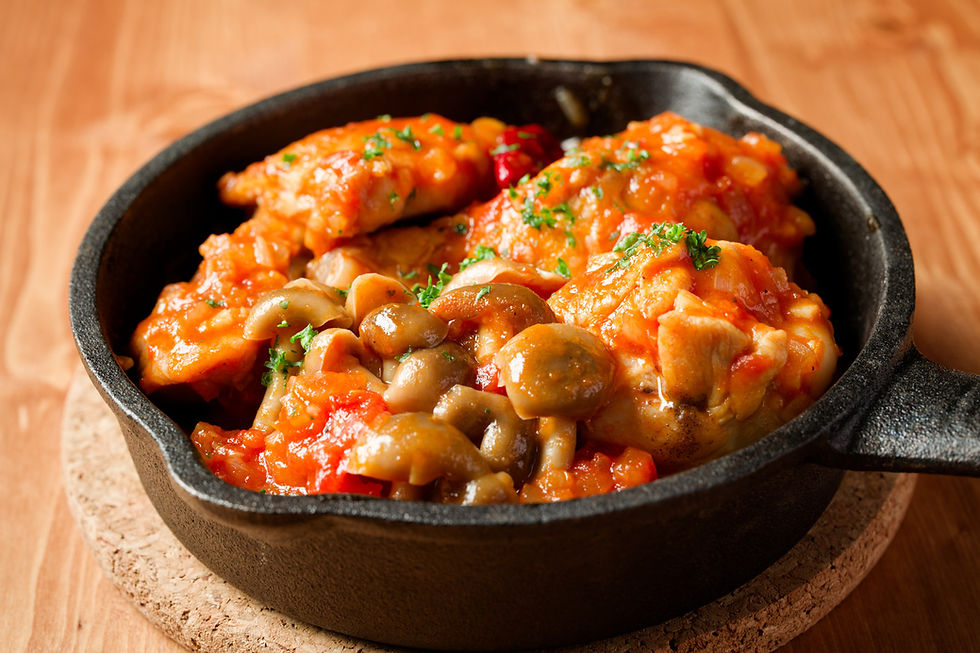
Serve chicken in a warm shallow platter with sauce spooned around the meat, keeping some skin exposed. Each portion should include enough sauce and vegetables without appearing submerged.
Professional Technique
Brown skin is part of the flavor base. Wet chicken and crowding create steam, so work in batches even if it adds a few minutes. The fond left after browning dissolves into wine and becomes the backbone of the sauce.
Remove breast meat early when necessary. Cacciatora benefits from tender leg joints, but that does not justify drying the breast. Managing pieces separately is the professional solution to a whole chicken cut into parts.
Professional Kitchen Notes
Tomato acidity softens with time and reduction. If the sauce tastes sharp after only ten minutes, keep cooking rather than adding sugar. The onion and carrot already provide natural sweetness.
Olives belong near the end so they remain identifiable and do not make the braising liquid excessively salty. Taste the specific olives before deciding whether they need rinsing.
For advance preparation, complete the braise but leave sauce slightly loose. Refrigerate overnight and perform the final uncovered reduction during reheating; cacciatora often tastes more integrated the next day.
Chicken piece size matters more than the label “breast” or “thigh.” A large bone-in breast from a five-pound bird may need noticeably more time than a small thigh. Start checking individual pieces after twenty minutes of braising and use both temperature and tenderness. The breast is done when safely cooked and still juicy; the thigh benefits from a little extra time for connective tissue to soften around the joint.
The soffritto should remain visible in the sauce without becoming a coarse vegetable stew. Dice carrot and celery finely enough that they soften into the tomato, but slice onion slightly larger so it provides texture. This difference in cut lets each vegetable contribute differently. Cooking the soffritto slowly before wine is added also reduces the temptation to sweeten an acidic tomato sauce later.
If using canned tomatoes, crush them by hand or choose a smooth passata depending on the texture you want. Large whole chunks can sit separately from the chicken instead of forming a cohesive braise. After the uncovered reduction, the sauce should cling to a spoon and leave a clean trail across the bottom of the pan for a second before flowing back. That visual cue is more useful than a prescribed final volume.
Olives must be added late enough to keep their character. If simmered from the beginning, they can release so much salt that the sauce becomes difficult to balance. Rinse very salty cured olives, add them during the final five to ten minutes and taste after they have warmed. This is the proper moment for the last salt adjustment, not earlier.
For advance preparation, cool chicken and sauce quickly and store together overnight. The next day, remove any solidified excess fat from the surface before reheating. Heat gently until the chicken is safe and hot, remove the pieces, then perform the final sauce reduction. This method often gives even deeper flavor while still protecting the meat from a second long simmer.
The amount of skin fat left in the casserole should be controlled before the tomato stage. After browning the chicken, pour off excessive clear fat but keep the brown fond. Leaving all rendered fat can make the finished sauce separate into an orange oil layer; removing all of it makes the sauce taste thin. A film of fat across the pan is enough to cook the soffritto and carry the rosemary aroma.
At the end of cooking, let the casserole stand for five minutes before serving and observe the sauce. If free oil rises in large pools, skim it with a spoon. If the sauce tightens too much during the rest, loosen it with one or two tablespoons of hot stock and shake the pan gently. The ideal cacciatora sauce is glossy and cohesive, with enough body to cling to the chicken but no heavy grease on the plate.
Chef Tips
Dry chicken before browning.
Reduce wine before tomato.
Use a gentle braise.
Remove breast pieces when done.
Add olives near the end.
Reduce sauce with chicken out of the pan if necessary.
Common Mistakes
Crowding chicken and steaming the skin.
Using raw wine and tomato at the same time.
Boiling aggressively.
Overcooking breast while waiting for legs.
Adding sugar to correct tomato before allowing sufficient cooking time.
Serving and Presentation
Serve with rustic bread, polenta or roasted potatoes and a bitter green. A shallow platter is better than a deep casserole at the table because browned surfaces stay visible.
Keep garnish simple: parsley and perhaps one rosemary tip are enough. The sauce and olives already provide color and texture.
Wine Pairing
Moscato d’Asti DOCG — aromatic sweetness and fresh acidity match the dessert without making the finish heavy.
Vin Santo del Chianti Classico DOC — oxidative complexity and balanced sweetness complement baked, nutty and pastry flavors.
Brachetto d’Acqui DOCG — red-fruit perfume and gentle sparkle refresh the palate between sweet bites.
Storage and Reheating
Refrigerate chicken in sauce for up to 3 days. Freeze portions for up to 2 months.
Reheat covered over low heat with a splash of stock until chicken reaches 165°F (74°C), then uncover to restore sauce concentration.
Nutrition per Serving
Approximate per serving: 475 calories; Protein 47 g; Carbohydrates 12 g; Fat 25 g; Saturated Fat 6 g; Fiber 3 g; Sugars 7 g; Sodium 760 mg; Cholesterol 155 mg.
Final Note
Cacciatora is a dish of sequence: brown, reduce wine, braise, remove pieces as ready, then concentrate. When those steps are respected, simple ingredients acquire depth without heaviness.
The finished chicken should remain juicy under a sauce that clings, with clear rosemary, tomato and olive notes and no raw wine or watery broth.



Comments