
Italian Treviso Radicchio Risotto | Risotto al Radicchio di Treviso
Updated: 3 days ago
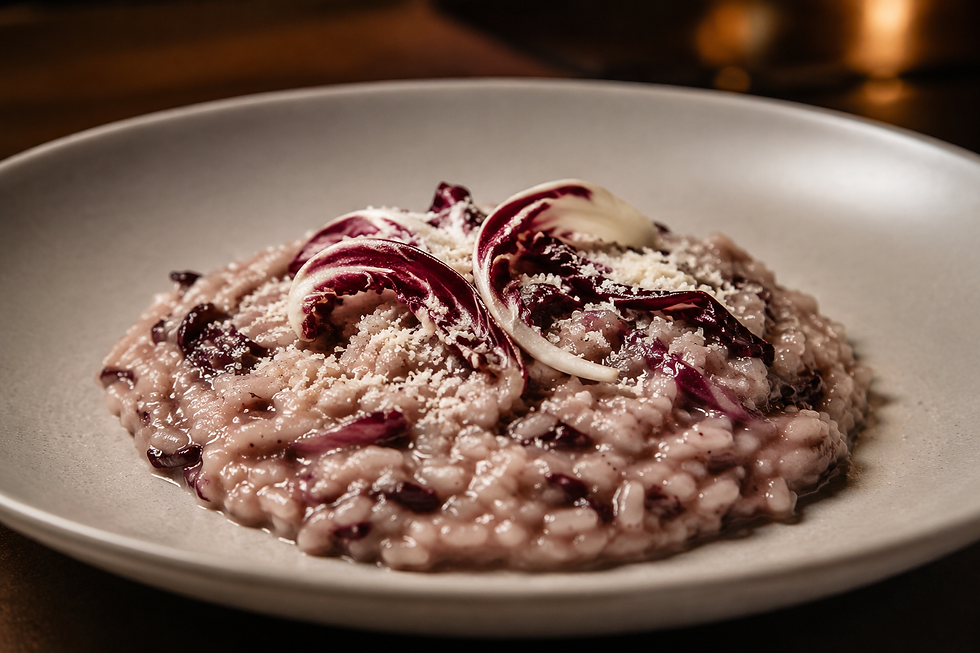
Risotto al Radicchio di Treviso belongs to Veneto, shaped by Venice, the Adriatic, fertile plains, rice, polenta, radicchio and a long culture of sweet sour and gently spiced cooking. It is the kind of preparation that makes sense only when technique and local ingredients are treated with equal respect. Regional Italian cooking is rarely about adding more; it is about extracting more flavor from a short list of ingredients through correct heat, timing, seasoning and texture.
In its traditional context, this dish would be understood not as a restaurant invention but as part of a larger food culture: seasonal shopping, preservation, family meals and the use of ingredients naturally available in the territory. For a modern kitchen, the goal is to preserve that identity while applying tighter control over temperature, moisture and finishing. The result should taste unmistakably regional, yet feel clean and precise on the plate.
This version follows that principle. The recipe is written for a serious home cook or professional minded reader: quantities are given in U.S. and metric measurements, critical texture cues are explained, and the finishing steps are designed to prevent the most common errors. Traditional food should never taste heavy simply because it is old; balance remains the final measure of quality.
Story and History
Risotto al Radicchio di Treviso belongs to the practical tradition of Italian first courses, where the identity of the principal starch and the regional seasoning matter more than unnecessary complication. The presentation may evolve, but the core logic remains Italian: build flavor in stages, preserve texture, and finish only when all components read as one dish.
Ingredients
• Carnaroli or Vialone Nano rice: 1 1/2 cups (300 g)
• hot unsalted stock: 5 to 6 cups (1.2 to 1.4 L)
• dry white wine: 1/2 cup (120 ml)
• finely minced onion or shallot: 1/2 cup (75 g)
• unsalted butter: 5 tbsp (70 g)
• Parmigiano Reggiano: 3/4 cup (75 g), finely grated
• extra virgin olive oil: 1 tbsp (15 ml)
• fine sea salt and black pepper: to taste
• Treviso radicchio: 10 oz (285 g), sliced
Ingredient Notes
Ingredient quality matters because Risotto al Radicchio di Treviso leaves little room to hide imbalance. Prepare the principal ingredients before the final cooking stage, grate cheese close to service, keep herbs fresh, and judge moisture as carefully as salt. Naturally salty ingredients should be incorporated before the final seasoning adjustment.
Preparation
1. Keep the stock at a bare simmer. Prepare the principal regional ingredient separately if it needs blanching, sautéing or softening before it meets the rice.
2. Sweat the onion or shallot in olive oil over medium low heat until translucent. Add the rice and toast for 2 to 3 minutes until the grains are hot and slightly translucent at the edges.
3. Add the wine and reduce almost completely. Begin adding hot stock one ladle at a time, stirring regularly but not continuously. Add more stock only as the previous addition is nearly absorbed.
4. Introduce the main regional ingredient at the stage that protects its character. Cook until the rice is al dente, generally 16 to 18 minutes depending on the variety and pan.
5. Remove from the heat, wait 30 seconds, then perform mantecatura with cold butter and grated cheese. Adjust with a final spoonful of stock so the risotto flows in a soft wave rather than standing stiffly.
Technical Explanation
Understanding the Ingredients
The ingredient logic of Risotto al Radicchio di Treviso follows a distinctly Veneto idea of balance. The primary ingredient must remain recognizable, while fat, acidity, salt and aroma work as supporting elements. Choose ingredients for flavor rather than appearance alone: vegetables should smell fresh and feel dense, herbs should be vivid, cheese freshly cut, and meat or seafood clean smelling and firm. When a protected regional product is named, use the authentic product when practical because its salt level, fat structure and aging profile often affect the recipe itself.
For professional consistency, weigh the principal ingredients instead of relying only on volume. Italian regional recipes were historically flexible because cooks knew their raw materials intimately; a written modern recipe has to recreate that judgment through measurable cues. Keep finishing ingredients separate until the last stage, taste stocks and cured products before adding salt, and use extra virgin olive oil as a flavoring ingredient rather than an automatic heavy pour.
Texture is equally important. Every component should have a purpose: something provides structure, something carries aroma, and something supplies moisture or contrast. If one element dominates until the others disappear, the dish loses its regional character. This is why the method emphasizes gradual seasoning, controlled reduction and a final tasting before service.
Professional Technique
The decisive professional step is mantecatura off the heat. The rice must still contain enough free starch and moisture for cold butter and cheese to emulsify. If the rice is dry before mantecatura, extra butter cannot recreate the correct flowing texture.
Treat the radicchio in two stages to balance flavor and color. Sweat the firmer white ribs with the onion so they soften and lose their raw edge, then add most of the purple leaves after the rice has toasted. Reserve a small portion of finely sliced leaves for the final minutes. This keeps the vegetable recognizable and prevents prolonged cooking from turning every leaf brown. Radicchio’s bitterness varies by season, so taste it raw and adjust the proportion rather than masking it with sugar.
For a true all’onda finish, maintain the stock at a gentle simmer and add it in modest increments, allowing the rice to move freely without swimming. Stir enough to encourage starch release but do not beat the grains. Stop cooking while the center remains firm and the risotto is slightly looser than the desired serving texture. Off the heat, rest for one minute, then emulsify cold butter and finely grated cheese with decisive circular movements. The final risotto should spread when the plate is tapped, remain glossy, and show distinct grains rather than sitting in a stiff mound.
Professional Mise en Place
Complete the mise en place before the main cooking stage reaches its final minutes. Prepare sauce components, fillings, cheese, herbs, and garnishes in advance and keep any reserved cooking liquid within reach. This prevents overcooking and makes immediate service possible.
Chef Tips
• Season progressively, especially when cheese, cured meat, stock or preserved fish is involved. These ingredients can add substantial salt late in the process.
• Use the best regional ingredient you can reasonably obtain, but prioritize correct technique over expensive substitutions. A carefully cooked accessible ingredient is better than a premium ingredient handled badly.
• Keep the final plating warm for hot savory dishes and properly chilled or room temperature for desserts. Serving temperature changes aroma, salt perception and texture.
• If preparing ahead, separate components whenever possible and combine them close to service. This preserves contrast and prevents sauces, crusts and garnishes from becoming dull.
Common Mistakes
• Rushing the initial flavor base and leaving aromatics raw or burned.
• Adding cold stock or flooding the rice, which interrupts cooking and weakens texture.
• Overseasoning early when later reduction, cured products or cheese will intensify saltiness.
• Holding the finished dish too long before service, which damages texture and aroma.
Plating
Timing, Plating and Service
Serve Risotto al Radicchio di Treviso at the moment when its defining texture is at its best. Use warmed plates for hot savory dishes and cool or room temperature plates for desserts as appropriate. Portion with restraint; regional food may appear rustic, but professional presentation depends on clean edges, intentional sauce placement and a clear visual focus on the principal ingredient. Avoid decorative garnishes that do not belong to the flavor profile.
Before service, taste one complete bite that includes sauce, garnish and main component together. This is the only reliable way to judge final salt, acidity and richness. If the dish feels heavy, correct with measured acidity or a fresher finishing element rather than simply adding more salt. If it feels thin, concentrate the sauce or reinforce the appropriate cheese, stock or cooking juices.
Risotto should spread gently when the plate is tapped; a mound that remains rigid indicates insufficient final moisture.
Wine Pairing
Light body, bright red fruit and modest tannin suit vegetables, risotto, poultry and dishes that would be overwhelmed by a heavier red. With Risotto al Radicchio di Treviso (Italian Treviso Radicchio Risotto), the objective is to balance the defining ingredient, cooking fat and seasoning while allowing the dish—not the wine—to remain the center of the pairing.
Barbera d’Asti DOCG — Bright acidity refreshes the palate after each creamy spoonful, while red-fruit and subtle spice notes complement radicchio’s bittersweet character without overwhelming it.
Its added body and dried-fruit depth support pork, duck, mushrooms and concentrated northern sauces. With Risotto al Radicchio di Treviso (Italian Treviso Radicchio Risotto), the objective is to balance the defining ingredient, cooking fat and seasoning while allowing the dish—not the wine—to remain the center of the pairing.
Concentration and alcoholic warmth belong only with the richest roasted or braised meat, where the dish can absorb the wine’s power. With Risotto al Radicchio di Treviso (Italian Treviso Radicchio Risotto), the objective is to balance the defining ingredient, cooking fat and seasoning while allowing the dish—not the wine—to remain the center of the pairing.
Storage & Reheating
Serve immediately for best texture. Refrigerate leftovers for up to 2 days and reheat gently with a small amount of stock or water. Expect a softer texture than the freshly finished dish.
Nutrition per Serving
Nutrition
Calories: about 540
Protein: 16 g
Carbohydrates: 68 g
Fat: 21 g
Saturated Fat: 12 g
Fiber: 3 g
Sugars: 5 g
Sodium: 690 mg
Cholesterol: 55 mg
Nutrition values are estimates and vary with ingredient brands, portion size and finishing fat.
Final Note
The success of Risotto al Radicchio di Treviso comes from timing and balance rather than unnecessary complexity. Respect the texture of the principal ingredient, build seasoning gradually, and make the final adjustment only after all components are together.
Spaghetti alla Carbonara demonstrates one of the most important principles of Italian cooking: simplicity does not mean lack of technique. There are very few ingredients in this dish, which means every decision becomes visible. The guanciale must be rendered correctly. The Pecorino must be finely grated. The pasta must remain al dente. The pasta water must be preserved. Most importantly, the temperature must be controlled when the eggs meet the spaghetti. Master those details and there is no need for cream, butter, or additional ingredients. The richness comes from the ingredients. The creaminess comes from technique. Chef Gianluca


Comments