
Italian Aosta Valley Fontina Risotto | Risotto alla Fontina Valdostana

Risotto alla Fontina Valdostana is what the Aosta Valley does with a grain it does not grow. The rice comes up from the Piedmont plain, the Fontina comes from the pasture above the house, and the two meet in a pan with almost nothing between them: butter, a splash of wine, a light broth. No onion, no tomato, no stock cube depth. The dish lives or dies on the cheese, which means it lives or dies on how the cheese goes in at the very end.
Yield: 4 servings. Prep: 20 minutes. Cook: 25 minutes. Rest: 2 minutes. Total: about 50 minutes. Difficulty: intermediate. Course: primo piatto. Region: Aosta Valley, the Dora Baltea valley and the Valpelline.
The Story
The Aosta Valley is the smallest region in Italy and it grows no rice at all. Its own grains were rye and barley, sown high and harvested late, and its bread was baked once or twice a year and dried hard for keeping. Rice arrived from outside, carried up from the paddies of Vercelli and Novara along the Dora Baltea on the road that has moved goods between the Po plain and the Great Saint Bernard pass since the Romans founded Augusta Praetoria. Risotto in this valley is therefore a borrowed form filled with local content. The method is Piedmontese. Everything that gives the plate its flavour is alpine, and the cheese is the part nobody had to import.
Fontina is made nowhere else. It comes from the raw whole milk of the Valdostana breed, and it is made twice a day, one wheel per milking, so the milk never has time to cool between the udder and the copper vat. The summer wheels are made up in the mayen, the seasonal huts between roughly 5,900 and 8,200 ft (1,800 and 2,500 m), and they taste of that pasture in a way the winter wheels made down in the stable never quite do. Ageing happens on spruce boards in cold, saturated rock cellars, the largest of them the abandoned mine galleries at Valpelline, where the wheels sit near 50°F (10°C) and are brushed and turned for months. A growers cooperative has organised that ageing since the middle of the twentieth century, which is why a good wheel is traceable to a single alp.
The risotto itself is household cooking rather than restaurant invention. It was a way of using the cheese that was too young, too soft or too oddly shaped to sell as a whole wheel, and a way of getting butter and fat into people who spent the day walking uphill. That is also why the proportions look extravagant to a lowland cook: the cheese is not a seasoning here, it is most of the sauce. On a menu in this valley the words alla valdostana are a promise that Fontina is coming, and in the case of a risotto they are a promise that it is coming in quantity, folded in raw off the heat, never cooked into the grain.
Ingredients
Serves 4. Fontina DOP is not interchangeable in this dish. A young supple wheel melts down into a sauce, a very old one goes grainy and greasy, and a generic alpine cheese gives you stringiness with no flavour behind it. Buy a wedge cut from a wheel rather than an industrial vacuum packed block, and take it out of the refrigerator half an hour before you start.
For the light mountain broth
Water, 6 cups (1.4 L)
Leek, white part only, 1
Celery stalk, 1
Carrot, small, 1
Parsley stems, 4
Black peppercorns, 5
Fine sea salt, 1/4 tsp (1.5 g), no more
For the risotto
Carnaroli rice, 1 1/2 cups (330 g)
Unsalted butter, cold, 5 tbsp (70 g)
Dry white wine, 1/3 cup (80 ml)
Fontina DOP, rind removed, cut in 1/3 inch (8 mm) cubes, 7 oz (200 g)
Parmigiano Reggiano, finely grated, 1 oz (30 g)
Freshly grated nutmeg, 1 small pinch
Fine sea salt, to taste, added only at the end
Freshly ground black pepper, to taste
For finishing
Unsalted butter, cold, 1 tbsp (14 g)
Fontina DOP, shaved, 1/2 oz (15 g)
Chives or wild thyme leaves, chopped, 1 tsp
Freshly ground black pepper, to taste
Preparation
Simmer a deliberately light broth
Put the water, leek, celery, carrot, parsley stems and peppercorns in a saucepan, bring to a bare simmer and hold it there for 25 minutes. Add only the quarter teaspoon of salt. This broth should taste underseasoned: it carries water and a little vegetable sweetness into the rice, nothing more, and the salt arrives later from the Fontina. Hold it at a steady simmer beside the risotto pan: cold broth stops the cooking dead.
Cube the Fontina and let it come up to temperature
Cut the rind off and discard it, then cube the cheese at about 1/3 inch (8 mm). Spread the cubes on a plate and leave them at room temperature while the broth simmers. Cold cubes drop the pan temperature so far that they never disperse: you get lumps of soft cheese in a loose risotto instead of one glossy sauce. Grate the Parmigiano now and keep the butter refrigerated until the final minute.
Toast the rice dry, then in butter
Set a wide heavy pan over medium heat with nothing in it, add the dry rice and stir constantly for about 90 seconds, until the grains are hot to the touch and smell of bread crust. There is no onion in this pan and none is wanted. Only then add 2 tbsp (28 g) of the butter and stir another minute, until the tips have turned translucent while the centres stay chalky white. Do not let the butter brown.
Deglaze with the white wine
Pour in the wine and keep the heat at medium. Stir until the smell of alcohol has gone and the pan is almost dry, about a minute. The wine is here for acidity, not depth: it is the only sharp element in a dish made of butter, starch and cheese. Skip it and the risotto tastes heavy long before the bowl is empty.
Add the broth and work the rice
Add the simmering broth a ladle at a time, enough to just cover the rice, and stir often without beating it. Keep the pan at a lively simmer. Total cooking time from the wine is 16 to 18 minutes for Carnaroli. Taste the grain from minute 13: it should give under the tooth with a firm line still in the centre. Stop adding broth a minute short of done, with the pan looser than you want it to finish.
Mantecare off the heat with Fontina and cold butter
Take the pan off the burner completely and wait 30 seconds, the single most important pause in the recipe. Add the Fontina cubes, the remaining 3 tbsp (42 g) of cold butter and the Parmigiano, then stir hard and continuously for 60 to 90 seconds. The cheese should disappear into a thick, shining sauce that coats every grain. If a cube resists, keep stirring off the heat rather than returning the pan to the burner: heat makes Fontina break and weep fat.
Rest, taste, then adjust the salt
Grate the nutmeg over, cover the pan and let it stand for 2 minutes. Only now taste for salt, and taste twice: the Fontina and the Parmigiano have added a great deal and the broth added almost none. Usually a small pinch is all the pan needs and sometimes it needs nothing. Add pepper, then loosen with a spoonful of hot broth if the rice has tightened during the rest. It should slide, not stand.
Plating
Warm the plates. The sauce is a butter and cheese emulsion and it seizes the instant it loses heat, so use wide shallow bowls heated to about 140°F (60°C), no hotter, or the risotto keeps cooking in front of the guest.
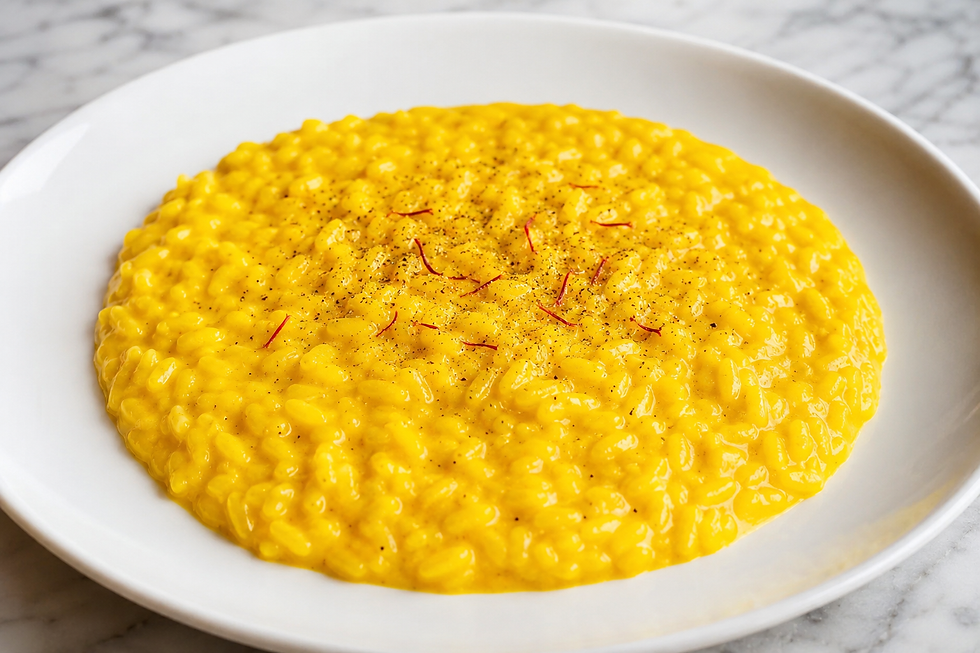
Spoon the risotto into the centre and give the base of the bowl one sharp tap. The rice should spread into an even layer and stop moving a second later, with a faint wave at the edge. Do not push it flat with a spoon: that smears the starch and dulls the surface. Finish with the shaved Fontina, which will slump but not melt, a few chives or thyme leaves and a turn of pepper. No oil, no cream, no cheese crisp. Carry it to the table at once: this plate is at its best for about 4 minutes.
Professional Technique
This is a mountain risotto, and the first thing that separates it from every risotto cooked in the plain below is that there is no soffritto. No onion, no shallot, no garlic, no oil. The rice is stirred into a dry hot pan and toasted naked for a minute and a half before any fat touches it. Onion cooked in fat contributes sugar and a rounded sweetness that would sit on top of the Fontina and make the plate taste vaguely of soup. Dry toasting does the opposite: it sets the outside of the grain, firms the surface starch so the rice survives 18 minutes of stirring, and leaves a clean toasted note underneath the cheese instead of a sweet one over it.
The rest of the technique is salt arithmetic, and it is where most cooks lose this dish. Seven ounces of Fontina and an ounce of Parmigiano carry a serious amount of salt and of milk fat, and all of it arrives in the last 90 seconds, off the heat, when the rice has already absorbed everything it is going to absorb. So the broth is built weak on purpose and the rice cooks through in a liquid that tastes almost of nothing. Season that broth the way you would for a risotto alla milanese and the rice reaches the mantecatura already correctly salted, then takes a second full dose from the cheese. Nothing can be done about it at that point.
So the order is fixed: weak broth, cheese in off the heat, salt judged last with the pan resting. Taste before the rest and you taste the broth. Taste after it and you taste the dish.
Texture and Moisture Control
The target is all'onda, the wave: tilt the pan and the surface should move in one slow fold and settle flat. Carnaroli gets you there because it carries more amylopectin in its outer layers than Arborio and releases it gradually. The grain must stay whole: chalky white at the centre means undercooked, and grains split along their length mean you stirred too hard on direct heat.
Moisture is controlled at two points. You stop feeding broth a minute early and leave the pan visibly loose, because the cheese and butter are both fat and both thicken the mass considerably as they emulsify. A risotto that looks correct before mantecatura will be stiff on the plate. During the 2 minute rest the grains keep drinking, so any last correction is made with hot broth by the spoonful, after the rest and never before.
Temperature governs the emulsion. Fontina releases its fat cleanly between roughly 130 and 150°F (55 and 65°C), which is where a pan sits 30 seconds after leaving the burner. Above about 175°F (80°C) the proteins tighten, the fat separates and the surface turns oily over a stringy mass. That is why cold butter goes in with the cheese: it pulls the pan temperature down and buys the window in which the sauce forms.
Professional Mise en Place
Equipment and tools
A wide heavy saucepan or a low sided rondeau of about 11 inches (28 cm), broad enough that the rice sits in a shallow layer. A second saucepan for the broth with a ladle in it. A wooden spoon for the toasting, a flat ended spatula for the mantecatura, a fine grater, a bench scraper for the cheese cubes and an instant read thermometer if you want to see the emulsion window rather than guess it.
Prepared ahead
The broth can be made in the morning, strained and refrigerated, then brought back to a simmer at service. The cheese can be cubed up to 2 hours ahead and left covered at room temperature. Grate the Parmigiano and measure the wine before you light the burner.
Service setup
Everything else is a la minute, and the timing is not negotiable: 18 minutes of cooking, 90 seconds of stirring, 2 minutes of rest, then plates. Have the bowls already warm. Do not start the rice until the guests are seated.
Chef Tips
Weigh the cheese instead of guessing it. Fontina at 7 oz (200 g) for 1 1/2 cups (330 g) of rice is the line between a sauce and a fondue, and eyeballing a wedge is how people cross it.
Keep a cup of the broth back and hold it hot until the plates are out. It is the only thing that will save a risotto that has tightened during the rest.
If you can find a summer wheel, ask the cheesemonger for it by asking which alp it came from. Those wheels carry the herbal note that makes this plate taste of altitude rather than simply of dairy.
Stir with a flat ended spatula during the mantecatura, not a round spoon. It keeps the grains moving across the base of the pan where the emulsion forms, instead of pushing them around in a circle.
Common Mistakes
Starting with a soffritto of onion or butter. The rice goes into a dry hot pan first. Fat before the grains are hot means the surface starch never sets, and onion sugar flattens the cheese.
Salting the broth properly. It sounds like good practice and it ruins this dish. The Fontina and the Parmigiano bring the salt, and they bring it at the end, when nothing can be removed.
Adding the cheese with the pan still on the burner. Above about 175°F (80°C) Fontina splits, the fat pools on the surface and the rest goes ropey. Off the heat, wait 30 seconds, then stir.
Cooking the rice until it looks right in the pan. It has to look too loose at that moment, because the butter and cheese thicken it, and the rest thickens it again. Stop a minute early every time.
Plating on cold bowls. The emulsion seizes on contact, the wave disappears and the surface goes matt before the plate reaches the table.
Wine Pairing
Valle d'Aosta Petite Arvine: The valley's own white and the sharpest tool for the job. Its acidity is high and linear and it cuts straight through the butter and the melted cheese without help, while the saline, faintly grapefruit finish resets the palate between spoonfuls. A ripe bottling also has the body to stand up to the weight of the sauce rather than vanishing under it.
Valle d'Aosta Prie Blanc: Grown on ungrafted vines above Morgex at the foot of Mont Blanc, this is the most local answer possible and the leanest. Low alcohol, piercing acidity and a stony alpine herb austerity make it a contrast pairing rather than a complementary one: it strips the fat away instead of matching it. Serve it cold and pour small measures, since its delicacy is easily buried.
Valle d'Aosta Mayolet: For anyone who wants a red with a primo, this is the right shape of one. Mayolet is pale, low in tannin and built on red berry fruit and violet, with acidity doing the work tannin normally does. Soft tannin never clashes with the milk proteins in the Fontina, which is what makes a structured red taste metallic against cheese. Serve it at 57°F (14°C).
Valle d'Aosta Petite Rouge: The backbone of Enfer d'Arvier and Torrette, and a half step firmer than Mayolet. It brings light but real tannin, a peppery, dried herb character and good acidity, and that touch of grip works if you have been generous with the black pepper at the finish. Keep to a young unoaked bottling: oak and Fontina are a poor conversation.
Storage & Reheating
Risotto is service food and this one holds worse than most, because the sauce is a butter and cheese emulsion that has already been taken to its limit. Refrigerated in a shallow airtight container it keeps 2 days. Do not freeze it: the starch goes watery and the emulsion separates on thawing, and no amount of stirring brings it back.
To reheat, put the cold risotto in a pan with 2 tbsp (30 ml) of hot broth or water per portion, set it over low heat and stir until it loosens, then take it off and add a knob of cold butter. Never use the microwave, which overheats the fat and splits it. The better option is the Milanese one: press the leftovers 1/2 inch (12 mm) thick, cut squares and fry them in butter until a crust forms on both sides. The cheese inside goes soft again and the dish arrives as something new.
Nutrition
Per serving, based on 4 portions:
Calories: 720 kcal
Total Fat: 38 g
Saturated Fat: 23 g
Trans Fat: 0.8 g
Unsaturated Fat: 12 g
Cholesterol: 105 mg
Sodium: 780 mg
Total Carbohydrates: 70 g
Fiber: 1.5 g
Total Sugars: 2 g
Added Sugars: 0 g
Protein: 25 g
Lactose: 1.2 g
Principal micronutrients: calcium, phosphorus, vitamin A, vitamin B12, zinc, selenium
These figures are estimates. Sodium depends almost entirely on the wheel of Fontina, since the broth contributes very little.




Comments