
Italian Milanese Saffron Risotto | Risotto alla Milanese
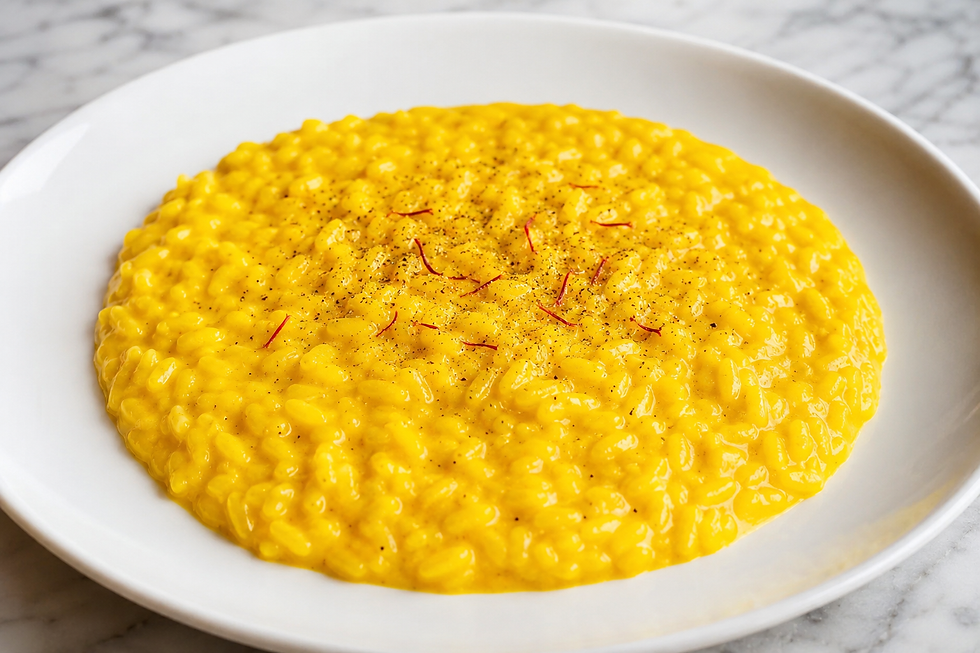
Risotto alla Milanese is the shortest ingredient list in the Lombard repertoire and the least forgiving. Rice, onion, marrow, butter, stock, saffron and Parmigiano. There is nothing to hide behind: no sauce, no garnish, no second flavour to cover a grain cooked two minutes too long or a broth that was seasoned too heavily at the start. Everything the diner tastes is a consequence of technique.
The saffron is the part everyone notices and the part most often handled badly. It is not a colouring agent dropped into the pan at the end. Saffron releases its pigment and its aroma into warm liquid over several minutes, and the difference between threads infused properly and powder shaken in late is the difference between a deep amber risotto that smells of hay and honey and a flat yellow one that smells of nothing.
The other point of contention is the marrow. Many modern versions leave it out, and the dish still works, but it is the ingredient that gives Milanese risotto its particular weight on the palate, a savoury depth that butter alone cannot supply. Used in the quantity given here it is barely detectable as itself and completely obvious by its absence.
Yield: 4 servings. Prep: 15 minutes. Cook: 25 minutes. Total: about 40 minutes. Difficulty: intermediate. Course: primo piatto, or the traditional accompaniment to ossobuco. Region: Lombardy, Milan.
The Story
The story Milan tells about this dish begins inside the Duomo rather than in a kitchen. In the second half of the sixteenth century a Flemish master glazier, Valerio di Fiandra, was at work on the cathedral windows, and one of his assistants was known to everyone as Zafferano, because he reached for saffron whenever he wanted a warmer yellow in his pigments. On the eighth of September 1574, at the wedding feast for the master daughter, the apprentice is said to have tipped saffron into the rice as a joke. The golden risotto alarmed the table and then delighted it.
None of that can be documented, but the thing underneath it can. Saffron really was a painter and glassmaker material in Lombardy, used for yellow lakes and for tinting manuscript gold, and it sat in Milanese apothecary drawers as a costly medicine long before it sat in a pan. The recipe itself surfaces in print much later: Felice Luraschi set down a riso giallo in padella in his Nuovo cuoco milanese economico of 1829, with saffron, butter, marrow and cheese already in place, and Pellegrino Artusi gave three Milanese versions at the end of the century.
What the city did with it afterwards matters as much. In Milan this is the one case in Italian cooking where rice is served beside a main course rather than before it, because ossobuco alla milanese is considered incomplete without it. It also became the test piece of the modern Italian kitchen when Gualtiero Marchesi laid a square of beaten gold leaf on a plate of it in 1981.
Ingredients
For the risotto
Carnaroli rice, 1 1/2 cups (320 g)
Beef bone marrow, diced small, 1 1/2 oz (40 g)
Unsalted butter, 2 tbsp (30 g)
Yellow onion, very finely chopped, 1 small, about 2 oz (60 g)
Dry white wine, 1/3 cup (80 ml)
Light beef stock, 5 1/4 cups (1.25 liters)
Fine sea salt, to taste
For the saffron infusion
Saffron threads, 1/2 tsp (0.3 g), roughly 60 threads
Hot stock, taken from the pan, 1/4 cup (60 ml)
For the mantecatura
Cold unsalted butter, cubed, 3 tbsp (45 g)
Parmigiano Reggiano aged 24 months, finely grated, 2/3 cup (60 g)
Freshly ground white pepper, to taste
For finishing
Parmigiano Reggiano, a small extra piece for the table
Beef marrow, poached and diced, 1 tbsp, optional
Preparation
Set the stock and season it lightly
Bring the beef stock to a bare simmer beside the rice and hold it there throughout. Season it only faintly, because the rice absorbs nearly all of it and 60 g of Parmigiano is still to come. Risotto oversalted halfway through cannot be rescued, since none of the liquid is ever poured away.
Infuse the saffron threads
Crush the threads lightly between your fingers into a small bowl, pour over 1/4 cup (60 ml) of hot stock and leave them at least 20 minutes while you prepare everything else. The liquid should turn deep orange red, not pale yellow. This one step separates a fragrant risotto from a merely coloured one.
Render the marrow
Put the diced marrow into the cold pan with 1 tablespoon of the butter over low heat. It melts into a clear fat within 2 or 3 minutes, leaving a few solid fragments behind. Do not let it sizzle or brown: marrow fat scorches at a low temperature and turns acrid.
Sweat the onion without colour
Add the remaining tablespoon of butter and the finely chopped onion with a pinch of salt, and sweat it over medium low heat for 6 to 7 minutes until completely soft and translucent. Any colour at all is a fault: browned onion brings a sweetness that competes with the saffron.
Toast the rice until the grains turn glassy
Raise the heat, tip in the dry rice and stir 2 to 3 minutes until the outer layer of each grain turns translucent while an opaque white core stays visible. The rice should be hot enough that you would not want to hold a handful. This tostatura is what lets the grain absorb liquid for eighteen minutes without collapsing.
Deglaze with the white wine
Pour in the wine all at once and keep stirring until the sharp smell of alcohol has gone and the pan is almost dry, about 2 minutes. The acidity balances the fat arriving later and starts pulling starch off the grains. Use something dry and unoaked that you would be willing to drink.
Feed the stock in stages
Ladle in the hot stock about 3/4 cup (180 ml) at a time, just enough to cover the rice. Hold a lively simmer rather than a hard boil, and stir regularly instead of constantly. Let each addition be nearly absorbed before the next. Count 16 to 18 minutes from the first ladle for Carnaroli, and start tasting at 14.
Add the saffron infusion late
Pour in the saffron liquid and its threads at about 12 minutes, with the rice three quarters cooked. Added at the start, the volatile aromatics are driven off by the remaining simmering and only the colour survives. Added here, both reach the plate. The pan turns from pale straw to deep amber within seconds.
Mantecare off the heat and rest
Judge the rice first: a grain bitten in half should be tender through except for a fine white thread at the centre, and that thread should still be there when the pan leaves the flame. Take the pan off, wait 30 seconds, then beat in the cold cubed butter and the grated Parmigiano until the risotto turns glossy. Cover, rest 2 minutes, check the salt and white pepper.
Plating
Warm the plates gently, to hand hot and no further. A cold plate kills the flow within a minute, but a plate from a hot cupboard goes on cooking the rice and turns the mantecatura oily. Wide flat rimmed plates are the Milanese choice, never a deep bowl.
Spoon a generous ladle into the centre and then knock the underside of the plate once against the heel of your hand. Risotto that has been mantecato properly settles into an even round by itself. If it stays in a mound it wanted more stock, more beating, or both.
Finish with almost nothing. A little extra Parmigiano at the table, a turn of white pepper, and the optional spoonful of poached marrow in the centre. No parsley, no oil, no saffron threads scattered on top for effect. Alongside ossobuco, the meat sits beside the rice rather than on it, so the gremolata does not bleed into it.
Professional Technique
The controlling technique is saffron extraction, because the compounds involved behave differently. Crocin, which carries the colour, is water soluble and comes out readily in warm liquid. Picrocrocin and safranal, which carry the bitter edge and the aroma, are volatile, and prolonged boiling drives them off. A long infusion in warm stock followed by a late addition takes the colour fully and keeps the smell.
The second is the choice of fat and when each arrives. Marrow is almost entirely monounsaturated fat with a very low melting point, so it renders early and coats the grains before the stock, adding savoury weight without dairy flavour. The butter is split deliberately: a little at the start for the onion, the rest cold and cubed at the end, where its emulsifying proteins meet the released starch.
The third is the mantecatura itself, which is a genuine emulsion and not simply stirring. Beaten into rice that has dropped below boiling, cold butter and finely grated Parmigiano disperse into the starch and water already in the pan and hold there. Do it over a live flame and the emulsion breaks, leaving visible fat on the surface. Waiting half a minute before starting is not fussiness, it is the difference between glossy and greasy.
Texture and Moisture Control
The target has a name in Italian, all onda, meaning the risotto moves in a slow wave when the plate is tipped. It comes from the balance between free liquid, released starch and the fat beaten in at the close. Too much liquid and the grains swim, too little starch and no amount of butter will bind it.
Starch release is controlled by the pan and the stirring, not by the recipe. Use a wide heavy pan where the rice sits two or three grains deep, so every grain meets the same hot liquid and the friction of the spoon works evenly. In a tall narrow pan the base overcooks before the top has softened. Stir regularly enough to keep the grains moving against one another, which is where the amylopectin comes off, but not so constantly that you break them.
Finish looser than you want to serve, because risotto tightens quickly between pan and table. The rice goes on absorbing during the rest and again on the warm plate. If it has gone too far, a small ladle of hot stock beaten in just before plating brings it back. Cream never will, and it is not in this dish.
Professional Mise en Place
Risotto cannot be held, so everything that can be done in advance must be. The saffron infusion is the one item that genuinely has to be started early.
Equipment and tools
Wide heavy pan of about 11 in (28 cm) with an even base
Second saucepan holding the stock at a bare simmer
Small bowl for the saffron infusion, covered
Wooden spoon and a 3/4 cup (180 ml) ladle
Fine grater for the Parmigiano, sharp knife for the onion
Prepared ahead
Beef stock made and strained, up to 3 days ahead, refrigerated
Saffron infused in hot stock, at least 20 minutes and up to 2 hours
Marrow pushed out of the bones and diced, up to 1 day ahead
Onion chopped very fine, up to 4 hours ahead, kept covered
Parmigiano grated on the day, never bought ready grated
Service setup
Stock at a bare simmer within reach, lid off, tasted once
Butter cubed and cold in the refrigerator until the last moment
Saffron infusion beside the pan, ready at the twelve minute mark
Plates warming gently, hand hot only
Nothing else on the stove needing attention
Chef Tips
Buy saffron in threads and never in powder. Powder is the easiest spice in the world to adulterate, commonly with safflower or turmeric, and you cannot see it once ground. Threads should be deep red with paler orange tips.
Ask the butcher to split the marrow bones lengthways, which makes the marrow far easier to push out whole. Soak them in cold salted water for an hour first and it comes out pale rather than bloody. What you do not use freezes for two months.
Make the stock light rather than strong. A heavy reduced beef stock overwhelms saffron, and after eighteen minutes of concentration it can taste like gravy. A clear broth from beef bones with onion, carrot and celery, skimmed and barely salted, is what Milanese cooks use.
If you cannot find marrow, do not substitute more butter, which changes the balance. Use 1 tablespoon of rendered beef fat, or simply leave it out and accept a lighter, cleaner risotto. It is an honest version of the dish and a great deal better than a heavy one made with too much dairy.
Common Mistakes
Dropping dry saffron straight into the pan. Without an infusion the threads give up colour unevenly and their aroma never develops. Twenty minutes in warm stock is the minimum, and the liquid should be deep orange before it reaches the rice.
Using cold stock. Every cold ladle drops the pan temperature and interrupts the simmer that drives starch out of the grain. The rice then cooks unevenly and never binds properly.
Browning the onion. Colour on the onion brings caramel sweetness that argues with the saffron and muddies the clean savoury line the dish depends on. Sweat it slowly in the marrow fat and no further.
Skipping the tostatura. Rice tipped straight into liquid loses its structure and the result is porridge with no individual grains. Two or three minutes of toasting is not optional.
Mantecare over the heat. Butter and cheese beaten into a pan still on the flame will split, and the fat rises instead of binding with the starch. Take the pan off, wait half a minute, then beat hard.
Cooking the rice past al dente. A grain with no white thread left when the pan comes off will be pasty at the table, because the rest and the warm plate go on cooking it.
Wine Pairing
Franciacorta DOCG: The Lombard answer and the most reliable match here. A classic method sparkling wine from the hills above Brescia, its fine bead and firm acidity scour the butter and marrow off the palate, and the bread and hazelnut notes from lees ageing run alongside the toasted rice.
Lugana DOC: Turbiana grown on the clay soils at the southern end of Lake Garda, and the still white that handles this dish best. It has more body and a slower finish than most northern Italian whites, enough to sit under the Parmigiano, and a faint bitter almond close that answers the saffron.
Valtellina Superiore DOCG: The bottle to open when the risotto is going beside ossobuco rather than out on its own. Nebbiolo grown on the terraced Alpine slopes north of Sondrio gives a lighter and more floral wine than its Piedmontese relatives, with fine tannin that meets the meat without trampling the rice.
Alto Adige DOC Pinot Nero: A red for anyone who wants one with the risotto alone. Pinot Nero from Mazzon and the slopes around Egna is pale and red fruited, with acidity high enough to cut the fat and almost no tannin to clash with the dairy. Serve it at 57°F (14°C).
Soave Superiore DOCG: The choice when you want more aromatic lift than Lugana. Garganega from the volcanic hills east of Verona brings white flowers and yellow stone fruit over a saline finish, and that floral register picks up the honeyed side of saffron directly.
Storage & Reheating
Risotto is made to be eaten the minute it leaves the pan and nothing fully restores it. Spread any leftovers thin on a cold tray so they lose heat fast, then seal them in a container and refrigerate within two hours. They keep 2 days. Do not freeze it: the starch structure ruptures and the emulsion separates on thawing.
To reheat, put the rice in a wide pan with 3 or 4 tablespoons (45 to 60 ml) of stock per portion, cover, and warm over low heat for 4 to 5 minutes, breaking the mass up gently. Take it off the moment it flows again and beat in a knob of butter and fresh Parmigiano. Never use a microwave, which heats in pockets and leaves the grains chalky.
The best use for leftovers is the dish Milan invented for exactly this purpose. Risotto al salto is cold risotto pressed into a thin cake in a buttered nonstick pan and cooked over medium heat until both faces are deep golden and crisp while the centre stays soft. It is served flat, with nothing on it, and a great many Milanese prefer it to the risotto it came from.
Nutrition
Per serving, based on 4 servings:
Calories: 590 kcal
Total Fat: 24 g
Saturated Fat: 14 g
Trans Fat: 0.6 g
Unsaturated Fat: 8 g
Cholesterol: 60 mg
Sodium: 720 mg
Total Carbohydrates: 71 g
Fiber: 2 g
Total Sugars: 2 g
Added Sugars: 0 g
Protein: 17 g
Lactose: 0.4 g
Principal micronutrients: calcium, phosphorus, selenium, manganese, vitamin A, vitamin B12
These figures are estimates. The sodium line moves most, since it follows how firmly the beef stock was salted and how generous the cheese is at the table. Leaving the marrow out takes about 40 kcal off each portion.


Comments