
Italian Venetian Pumpkin Risotto | Risotto alla Zucca

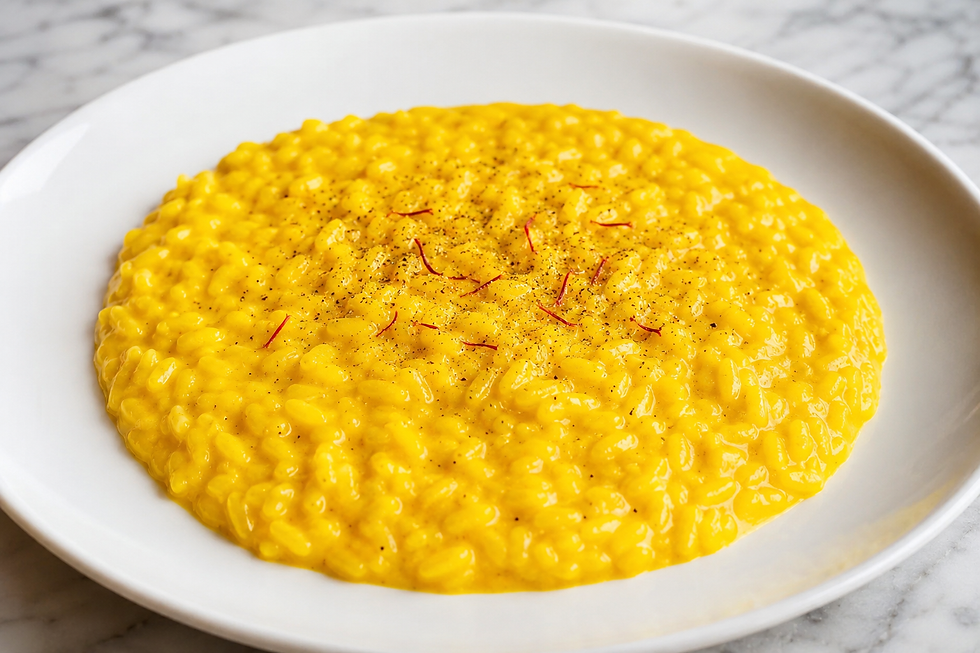
A Venetian risotto is wetter than any other risotto in Italy, and that is not carelessness. It is served all'onda, in a wave, loose enough to spread by itself across a flat plate and be eaten with a spoon. Chioggia, the fishing and market gardening town at the southern mouth of the lagoon, grows the squash that belongs in it, and the two together have nothing to do with the thick buttery pumpkin risotti served further west.
The squash is the zucca marina di Chioggia, a heavy warty grey green globe that Venetians call suca baruca. Its flesh is very dry, deep orange and faintly chestnut like, closer in behaviour to a roasted chestnut than to the watery orange pumpkins sold elsewhere. That dryness is exactly what allows the loose Venetian finish: the squash can be added generously without turning the rice to soup.
The rice is Vialone Nano Veronese, a short semifino grain from the spring fed paddies of the Veneto plain and the only rice a Venetian cook would use here. It drinks a great deal of liquid, releases starch quickly and cooks in fifteen minutes. Butter infused with rosemary, a light mantecatura and a generous hand with aged Grana Padano do the rest. No cream, no sage, no sweetness beyond the squash itself.
Yield: 4 main course servings. Prep: 20 minutes. Roasting: 40 minutes. Risotto: 15 minutes. Total: about 1 hour 15 minutes. Difficulty: intermediate. Course: primo piatto. Region: Veneto, Chioggia and the southern lagoon.
The Story
Chioggia has fed Venice for centuries, and not only with fish. The reclaimed sandy land around Sant'Anna and Brondolo, between the lagoon and the mouth of the Brenta, is some of the most productive market garden soil in northern Italy, and the boats that carried its produce to the Rialto shaped what Venetians ate. The marina di Chioggia squash was selected there in the eighteenth century and has been grown in the same fields ever since.
In Venice itself the squash was street food long before it was a restaurant ingredient. Wedges of suca baruca were baked and sold warm from stalls in the campi through the autumn, particularly around the feast of San Martino on 11 November. It was poor food, cheap, filling and sweet without sugar, and it was eaten standing up.
Rice arrived from the other direction. The Venetian Republic encouraged rice growing in the Veronese lowlands and the Polesine from the sixteenth century, and risotto became the ceremonial first course of the city, most famously the risi e bisi served to the Doge every 25 April for the feast of San Marco. Putting lagoon squash and mainland rice in one pan was the obvious move, and the loose all'onda consistency Venice imposed on all its risotti is what makes this version Venetian rather than Lombard.
Ingredients
For the squash
Zucca marina di Chioggia or another dense dry winter squash, 2 lb 4 oz (1 kg) whole weight
Extra virgin olive oil, 1 tbsp (15 ml)
Fine sea salt, 3/4 tsp (4.5 g)
Freshly ground black pepper, to taste
For the rosemary butter
Unsalted butter, 3 tbsp (42 g)
Rosemary sprig, 1, about 4 inches (10 cm)
For the risotto
Vialone Nano Veronese rice, 1 3/4 cups (330 g)
Light vegetable broth, 7 cups (1.65 litres), kept hot
White onion, very finely chopped, 1/3 cup (50 g)
Dry white wine, 1/3 cup (80 ml)
Fine sea salt, to taste
For finishing
Cold unsalted butter, cubed, 2 tbsp (28 g)
Grana Padano Riserva, finely grated, 1 cup (90 g)
Flat leaf parsley, finely chopped, 1 tbsp
Freshly ground black pepper, to taste
Preparation
Roast the squash in its skin
Heat the oven to 375°F (190°C). Cut the squash into wedges, scrape out the seeds and fibres and leave the skin on. Rub the cut faces with the oil, season with the salt and pepper and lay the wedges skin side down on a tray. Roast 35 to 40 minutes, until a knife goes through without resistance and the cut edges have taken colour. Roasting in the skin stops flesh that is already low in water drying into a fibrous mass.
Separate the flesh into purée and dice
Let the wedges cool for ten minutes, then scoop the flesh from the skin and weigh out about 1 lb 5 oz (600 g). Crush two thirds with a fork into a rough purée, which is all this dry flesh needs, and cut the rest into 1/2 inch (1 cm) pieces. Keep them apart. A blender gives a gluey result with this variety.
Infuse the butter with rosemary
Melt the butter in a small pan over very low heat, add the rosemary sprig and leave it 5 minutes without letting the butter colour or bubble, then lift the sprig out and discard it. The rosemary must not go into the risotto: whole or chopped it dominates the squash within minutes, while five minutes in warm butter gives the resinous note and nothing more.
Toast the rice dry, then add the onion
Put the dry rice into the wide pan over medium heat with no fat at all and stir for 2 minutes, until the grains are hot to the touch and smell faintly of toasted bread. This tostatura a secco is the Veneto method and it firms the grain without adding fat this early. Pour in the rosemary butter, add the onion and cook 3 minutes over lower heat until it is soft and colourless.
Deglaze with the white wine
Add the wine and stir until it has completely evaporated, about 1 minute, scraping anything stuck from the base. The pan should be dry and the smell of alcohol gone before the first broth goes in. A Soave or a Custoza, the wines poured at the table, do this better than anything oaked.
Cook with the broth and add the purée at the halfway point
Add hot broth a ladle at a time, keeping the rice barely covered, and stir steadily. Vialone Nano drinks more than Carnaroli does, so expect to use most of the 7 cups. At minute 7 stir in all the crushed squash and carry on. Because this flesh is dry and already roasted it thickens the rice rather than loosening it, so the broth from here has to be more generous than instinct suggests.
Judge the point and keep it loose
Vialone Nano is ready in 14 to 15 minutes, faster than a superfino. Bite a grain at 13: tender, with the faintest firmness at the centre and no chalk. Add one extra ladle of broth beyond what looks right, so it is frankly wet when the heat goes off. Fold in the diced squash, take the pan off the flame and let it stand a minute.
Mantecare lightly and check the wave
Add the cold cubed butter and the grated Grana Padano Riserva off the heat and stir them through with a spoon rather than beating hard. The Venetian mantecatura is lighter than the Lombard one because the aim is not a dense glossy cream but a fluid risotto. Add the parsley and a turn of black pepper, then tilt the pan: it should run like slow lava.
Plating
Use flat plates, not bowls, warmed to about 140°F (60°C). That is the detail separating a Venetian risotto from every other kind at the table. Spoon it into the middle and let it find its own level: it should settle roughly 1/2 inch (1 cm) deep and reach almost to the rim without being pushed. If you have to spread it with a spoon, it was too dry and needed another ladle.
Serve it immediately and in one movement. A risotto all'onda has about two minutes on the plate before the starch sets and the wave disappears, which is why Venetian kitchens plate it last and carry it out at once.
Finish with a little more grated Grana Padano, black pepper and nothing else. The diced squash should be visible through the surface rather than arranged on top. No oil drizzle, no seeds, no herb sprig: the plate is deliberately plain and the colour does all the work.
Professional Technique
The technique that defines this version is the tostatura a secco, toasting the rice in a dry pan before any fat goes in. Heat applied directly to the grain firms the outer layer and starts a light Maillard reaction on the surface starch, which is why the rice smells of toast after two minutes. Without butter nothing browns or burns while you wait, and the butter that follows stays fresh instead of cooking for a quarter of an hour.
The second is the rosemary infusion, in and then out. Its oils are extracted very quickly by warm fat, so five minutes at low temperature transfers the aroma while leaving the bitter woody compounds in the sprig. Chopped rosemary left in the pan keeps extracting for the whole cook and ends up tasting medicinal against a sweet squash.
The third is the restraint of the mantecatura. Vialone Nano releases a great deal of amylopectin early, so it arrives already creamy and needs far less butter than a superfino rice to bind. Stirring gently keeps that starch suspended and fluid, while beating it hard, as you would a Milanese risotto, tightens it into the dense texture the Venetian style exists to avoid.
Texture and Moisture Control
The dish is a balance between a very dry squash and a very thirsty rice, and both pull the same way. Vialone Nano absorbs close to three times its weight in liquid and the roasted squash takes a little more, so this risotto needs more broth than the quantity of rice suggests. Keep a cup in reserve beyond the 7 listed. Running out of hot broth at minute 12 is the commonest way it fails.
All'onda is a measurable thing, not a matter of opinion. Draw a spoon through the risotto in the pan: the channel should close behind it within two or three seconds. If it stays open, add broth. If the risotto runs across the pan instantly and pools at the edge, it has gone too far and needs thirty seconds more over gentle heat before the butter goes in.
Temperature holds the texture together. Keep the broth at a bare simmer so the pan never drops below cooking heat, plate onto warm flat plates, and accept that this risotto cannot wait. It tightens within two minutes of leaving the pan, and no amount of butter brings the wave back once the starch has set.
Professional Mise en Place
Everything is prepared before the rice goes into the pan, because from that point there are fifteen unbroken minutes at the stove.
Equipment and tools
Wide low sided pan, 11 inches (28 cm), heavy based
Saucepan holding the broth at a bare simmer, with its own ladle
Small pan for the rosemary butter
Roasting tray, fork for crushing, microplane grater
Flat plates warmed to about 140°F (60°C)
Prepared ahead
Squash roasted, crushed and diced, up to 1 day ahead
Vegetable broth made and strained, up to 2 days ahead
Rosemary butter infused, strained and kept cool, up to 2 days ahead
Onion chopped fine, cheese grated, parsley chopped at the last minute
Service setup
Broth simmering on the next burner with extra held in reserve
Crushed squash warm, diced squash at room temperature
Cold butter and grated cheese together beside the stove
Plates warm and cleared, since the risotto cannot wait for them
Chef Tips
Choose the squash by its skin. A true marina di Chioggia is heavy, deeply warted and dull grey green, and one that feels light for its size has dried out in storage. A kabocha behaves almost identically. What will not work is a large orange field pumpkin, which carries far too much water for a risotto finished this loose.
Do not substitute Carnaroli or Arborio without changing the method. They take three or four minutes longer, drink less broth and hold their starch differently, and a Vialone Nano timing applied to them gives a chalky centre. If you only have Carnaroli, cook it for 17 minutes and use a cup less broth.
Save the roasted skins. Scraped clean and simmered for twenty minutes in the vegetable broth, then strained out, they push the squash flavour of the finished dish noticeably further without adding a single ingredient. This is standard practice in Veneto kitchens and it costs nothing.
Grate the Grana Padano Riserva on the day. Cheese grated in advance dries and disperses badly, leaving grains that never melt. A Riserva aged over 20 months also brings more salt than a young wheel, so taste before adding any salt at the end.
Common Mistakes
Serving it as thick as a Lombard risotto. A Venetian risotto that stands up in a mound is simply undercooked in liquid. It should spread by itself across a flat plate and close behind a spoon within three seconds. Add another ladle of broth and stop worrying about it looking loose.
Leaving the rosemary in the pan. Given fifteen minutes in a hot wet pan the sprig keeps releasing resinous and bitter compounds, and the risotto ends up tasting of a cleaning product rather than of squash. Infuse the butter for 5 minutes, then take the rosemary out.
Blending the squash. Marina di Chioggia is dry and starchy, and a high speed blade turns it gluey and pale. Crushing it with a fork gives a better texture and keeps the colour, and the rice does the rest of the work during cooking.
Running out of hot broth. This rice and this squash together drink more liquid than any other combination in the risotto repertoire, and topping up with water or cold stock at minute 12 dilutes everything. Make a full extra cup and keep it simmering.
Beating the mantecatura hard. Vialone Nano is already creamy from its own starch, and vigorous beating with cold butter tightens it into the dense texture the Venetian style exists to avoid. Stir the butter and cheese through gently and stop as soon as they have gone.
Wine Pairing
Soave Superiore DOCG: The Veneto white that belongs on this table. Garganega grown on the volcanic hills east of Verona gives white flowers, yellow apple and a stony finish, with enough body from the Superiore ageing to sit beside a risotto bound with butter and Grana Padano. Its faintly bitter almond close is the natural counterweight to the sweetness of the roasted squash.
Bianco di Custoza DOC: From the moraine hills just south of Lake Garda, and a softer, more aromatic answer than Soave. The blend of Garganega, Trebbiano and Cortese gives a rounder palate with pear and a light herbal lift that picks up the rosemary in the butter. Its gentler acidity suits the loose creamy texture without cutting through it too aggressively.
Conegliano Valdobbiadene Prosecco Superiore DOCG: Choose the Brut, which is genuinely dry, and it becomes a serious partner rather than an aperitivo. The bubble lifts the butter and the cheese off the palate between spoonfuls, and the green apple acidity of Glera keeps the squash tasting fresh through a whole plate. Serve it at 46°F (8°C) in a white wine glass rather than a flute.
Bardolino DOC: The lightest serious red in the Veneto and one of the few that will not flatten a vegetable risotto. Corvina gives sour cherry, a peppery edge and very little tannin, so there is nothing to clash with the sweetness of the squash. Serve it at 57°F (14°C), cool enough for the acidity to do the work the bubbles do in the wine above.
Valpolicella Classico DOC: The step up in weight, and the choice if the risotto is finished with a heavy hand of aged cheese and pepper. Young unripasso Valpolicella keeps its bright cherry fruit and modest tannin, which meets the savoury depth of the Grana Padano Riserva rather than the squash. Avoid anything from a ripasso or Amarone house, which will overwhelm the plate.
Storage & Reheating
An all'onda risotto is the least storable risotto there is, because the quality it is judged on disappears within minutes. Leftovers keep in an airtight container in the refrigerator for up to 2 days, cooled quickly in a shallow layer. What you reheat will be a different dish, good in its own right but no longer loose.
To reheat, work in a wide pan over medium low heat with 4 tablespoons of hot broth per portion, stirring until the grains separate and move again, then take it off and stir in a small cube of cold butter. Do not boil it and do not use a microwave, which cooks the outside of each grain a second time and leaves the middle cold.
Do not freeze the finished risotto: the starch retrogrades and the grains go mealy on thawing. The crushed roasted squash freezes well for up to 3 months and is the part worth making in quantity. Leftovers are the correct base for a risotto al salto, pressed thin into a hot buttered pan and fried until a crust forms on both sides, the one preparation that improves on the second day.
Nutrition
Per serving, based on 4 main course portions:
Calories: 590 kcal
Total Fat: 20 g
Saturated Fat: 12 g
Trans Fat: 0.6 g
Unsaturated Fat: 7 g
Cholesterol: 52 mg
Sodium: 820 mg
Total Carbohydrates: 84 g
Fiber: 5 g
Total Sugars: 8 g
Added Sugars: 0 g
Protein: 18 g
Lactose: 0.9 g
Principal micronutrients: vitamin A as beta carotene, vitamin C, potassium, calcium, phosphorus, folate
These figures are estimates. The main variables are the Grana Padano Riserva, which carries most of the sodium, and the butter in the final mantecatura.




Comments