
Italian Veal Meatballs with Artichokes | Polpette di Vitello con Carciofi, Guanciale Croccante e Pecorino Romano

Rome has no famous meatball, but it has three ingredients that belong together so completely that a polpetta built on them tastes Roman before you finish the first bite. Artichoke, guanciale and Pecorino Romano are the spine here, and the real work happens inside the mixture rather than in a sauce around it.
The artichoke is the hinge. Globe artichokes are stewed with garlic, white wine and mentuccia until completely tender, then cooked further until the pan goes dry. Most of that stew is chopped into ground veal, where it does the job soaked bread normally does, carrying moisture into the interior and releasing it slowly.
Guanciale supplies what lean veal lacks. Cured pork jowl is rendered until crisp, and a spoonful of its fat goes into the mixture while the crisp pieces wait for the finish. The meatballs are browned in a heavy pan and completed in a shallow fondo of white wine, artichoke liquid and stock, mounted with cold butter.
Yield: 4 servings, about 14 polpette. Prep: 45 minutes. Rest: 30 minutes. Cook: 40 minutes. Difficulty: intermediate to advanced. Course: main course. Region: Lazio, Rome and the Agro Romano.
The Story
The artichoke that matters here is the carciofo romanesco, round and purple tinged, almost without a choke, grown on the coastal strip either side of the city. Ladispoli holds a sagra for it every April, Sezze and Velletri grow it in quantity, and Campo de Fiori sells it already turned and sitting in lemon water. Rome braises it flat with mentuccia or fries it open like a bronze flower, and both versions cook it to complete surrender.
Guanciale comes down from the Sabina hills and the villages around Amatrice, where the jowl was cured with salt and pepper because it was too fatty to eat fresh. That one cut carries four of the most famous dishes in the city. Pecorino Romano is older still: sheep grazed the Agro Romano for centuries, and the cheese was salted hard enough to travel with armies, which is why it is saline rather than mellow.
Veal polpette belong to the domestic side of Roman cooking rather than the trattoria. Testaccio grew around the old slaughterhouse and gave the city its habit of wasting nothing, and the same thinking put meatballs on the table from whatever the butcher had ground. What makes this version Roman is the combination itself, not an old written recipe.
Ingredients
For the stewed artichokes
Globe artichokes, large, 4, about 2 1/4 lb (1 kg) untrimmed
Lemon, 1, for the acidulated water
Extra virgin olive oil, 3 tbsp (45 ml)
Garlic cloves, crushed, 2
Dry white wine, 1/2 cup (120 ml)
Light chicken stock, 1/2 cup (120 ml)
Mentuccia or spearmint, chopped, 1 tbsp (3 g)
Flat leaf parsley, chopped, 2 tbsp (6 g)
Fine sea salt, 1/2 tsp (3 g)
For the guanciale
Guanciale, cut into small dice, 4 oz (115 g)
For the meatballs
Ground veal shoulder, 1 1/2 lb (680 g)
Stale white bread, crusts removed, 2 oz (55 g)
Whole milk, 1/3 cup (80 ml)
Pecorino Romano, finely grated, 2 1/2 oz (70 g)
Whole egg, 1, plus 1 egg yolk
Rendered guanciale fat, 1 1/2 tbsp (22 ml)
Grated lemon zest, from 1 lemon
Garlic clove, grated to a paste, 1 small
Fine sea salt, 1 tsp (6 g)
Freshly ground black pepper, 1/2 tsp (1 g)
For the pan and the fondo
Extra virgin olive oil, 2 tbsp (30 ml)
Dry white wine, 1/2 cup (120 ml)
Reserved artichoke cooking liquid, 1/3 cup (80 ml)
Light chicken stock, 1/2 cup (120 ml)
Unsalted butter, cold, cubed, 1 tbsp (14 g)
For finishing
Crisp guanciale pieces, reserved from above
Pecorino Romano, shaved, 1/2 oz (15 g)
Reserved artichoke wedges, 8 to 12
Mentuccia leaves, small, 12
Extra virgin olive oil, a few drops per plate
Preparation
Step 1
Turn the artichokes. Squeeze the lemon into a bowl of cold water. Snap the outer leaves back until they break at the base, working round to the pale tender ones. Cut away the top third, peel stem and base, split each artichoke into six or eight wedges and scrape out the choke. Drop every piece into the lemon water as you go.
Step 2
Stew them until they collapse. Warm the oil and crushed garlic over medium low heat until fragrant but not coloured. Add the drained artichokes and the salt, turn them for 3 minutes, add the wine and let it evaporate, then pour in the stock, cover and cook 20 to 25 minutes.
Step 3
Dry the pan and split the batch. Lift out 8 to 12 of the best wedges for the plate and strain the liquid, keeping 1/3 cup (80 ml) for the fondo. Cook the rest uncovered over medium heat until the pan is nearly dry and the pieces start to catch. Wet artichoke folded into veal will not hold a shape.
Step 4
Chop and cool the base. Discard the garlic and chop the dried artichokes to a coarse mince about the size of a lentil. Do not blend them: a purée vanishes into the meat, while visible fragments hold pockets of moisture. Fold in the parsley and mentuccia, grind over pepper and cool completely.
Step 5
Render the guanciale. Put the dice into a cold dry pan and bring it slowly to medium low heat, which draws the fat out cleanly instead of scorching it. After 8 to 10 minutes the lean streaks are crisp and deep amber. Lift them onto paper, measure 1 1/2 tbsp (22 ml) of fat to cool, and keep the crisp pieces uncovered.
Step 6
Mix the meatballs. Soak the torn bread in the milk for 10 minutes, squeeze it hard and shred it. In a wide cold bowl combine veal, bread, cooled artichoke, Pecorino, egg and yolk, guanciale fat, lemon zest, garlic, salt and pepper. Mix with your fingertips, lifting rather than pressing, and stop the moment it is even.
Step 7
Shape and chill. With wet hands roll 14 balls of about 2 oz (55 g), firmly enough to hold and no more. Refrigerate them on a lined tray for at least 30 minutes so the fat firms and the bread finishes absorbing. Fry a teaspoon of the raw mixture, taste it and correct the salt before you cook the rest.
Step 8
Brown them properly. Heat the oil in a heavy pan over medium high heat until it shimmers. Add the meatballs with real space between them, in two batches if needed, and leave them alone for 2 to 3 minutes before turning. Crowding drops the temperature and they stew instead of colouring. Turn until the crust is even.
Step 9
Build the fondo and finish. Pour off excess fat, add the wine and scrape the browned residue from the base. Reduce by half, add the reserved artichoke liquid and the stock and bring to a bare simmer. Return the meatballs, cover partly and cook 10 to 12 minutes, basting, until the centre reads 160°F (71°C). Add the wedges for the last 3 minutes, then swirl in the cold butter off the heat.
Plating
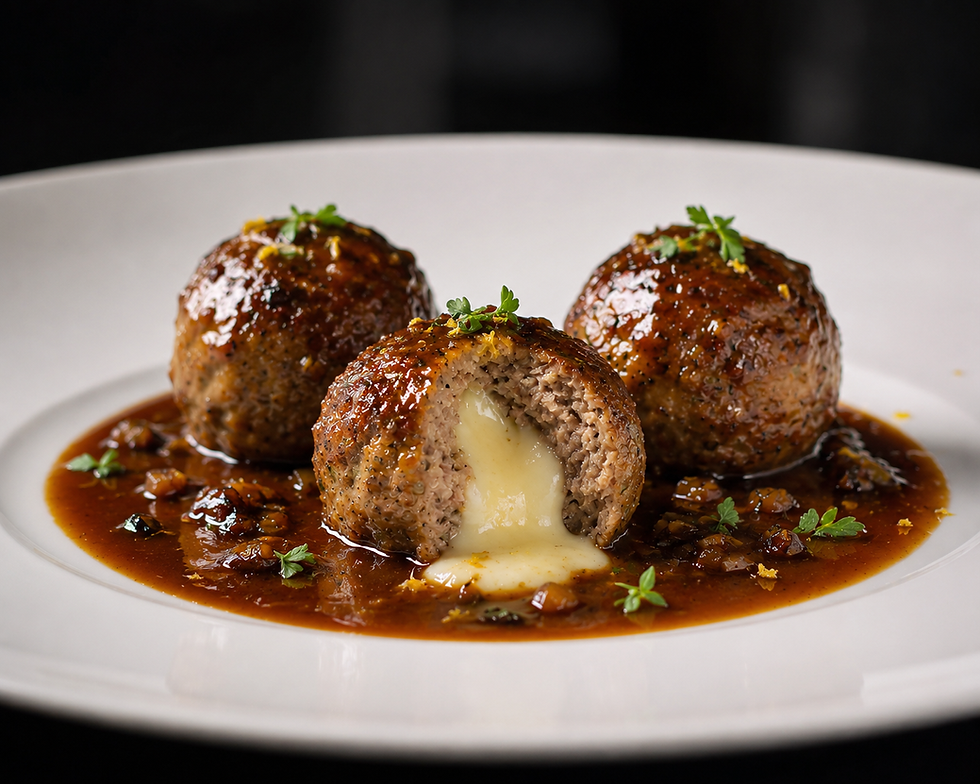
This is a hot dish and the plates must be hot with it. Warm wide shallow bowls to about 140°F (60°C), because the fondo is a thin buttered liquid that a cold plate turns into a dull film within seconds. Rest the meatballs 2 or 3 minutes while you finish the sauce, then spoon a small pool into the centre of each plate and set three or four polpette into it so their browned sides stay above the liquid.
Tuck two or three reserved artichoke wedges between them, standing upright where possible so the layered leaves show. Scatter the crisp guanciale at the very last moment, since it softens within a minute of meeting the fondo and contrast is its whole purpose. Shave the Pecorino with a peeler so it falls in curls rather than dust, add a few mentuccia leaves and a thread of raw oil. No lemon juice at the table.
Professional Technique
The governing technique is using a cooked vegetable as the internal moisture source of a lean meatball. Ground veal runs 5 to 10 percent fat, far below the 20 percent that makes a beef meatball forgiving, so it needs something inside that gives up water slowly. Once fully softened, the pectin rich cell walls of artichoke hold water in a gel that releases across the whole cooking time.
The second technique is splitting the guanciale into two products from one pan. Rendering from cold yields clear pork fat and, separately, crisp lean pieces. The fat is stirred into the raw mixture, solid when cold and melting during cooking, lubricating the veal from inside. The crisp pieces never touch the mixture, because anything crisp folded into a wet meatball is soft within minutes.
The third is browning and then braising, which is not the same as cooking meatballs in sauce. The sear is short and exists only to build a crust and leave a fond on the pan. The liquid that follows is deliberately shallow, about half the height of the meatballs, so the tops keep their crust. Cold butter whisked in off the heat binds fat and liquid without flour or cream.
Texture and Moisture Control
Three temperatures matter. The mixture stays below 50°F (10°C) from the moment the guanciale fat goes in until the meatballs hit the pan, so the fat stays solid and dispersed rather than smearing. The pan surface must be at least 350°F (175°C) or they release water before they colour. The centre must reach 160°F (71°C) and stop there, because veal held higher squeezes out its juices and turns chalky.
Moisture inside comes from four sources arriving at different moments. The milk soaked bread gives up water early and stops the interior setting hard. The chopped artichoke releases slowly across the whole braise. The guanciale fat melts at around 95°F (35°C) and coats the fibres as the protein contracts. The egg yolk emulsifies all of it and holds it in place.
Outside, the crust is easiest to lose. It is built in the first seven minutes and partly given up in the braise, which is why the liquid stays shallow and the pan only half covered. If the fondo turns sticky, add a spoonful of stock. If it stays thin, reduce it alone before mounting the butter, and never let it boil afterwards.
Professional Mise en Place
Everything except the final browning can be done hours ahead, and in a professional kitchen it always is, because turning artichokes cannot be rushed during service.
Equipment and tools
Small paring knife and a bowl of lemon water for the artichokes
Wide lidded saucepan and a fine mesh sieve for the cooking liquid
Heavy frying pan, cast iron or thick steel, wide enough for two batches
Instant read thermometer, slotted spoon, wooden spoon for deglazing
Tray lined with baking paper for shaping and chilling
Prepared ahead
Artichokes stewed, dried, chopped and cooled, up to 1 day ahead
Garnish wedges reserved separately in a covered container
Artichoke cooking liquid strained and reserved, up to 2 days ahead
Guanciale rendered, fat measured, crisp pieces kept dry and uncovered
Meatballs mixed, rolled and chilled on their tray, up to 6 hours ahead
Service setup
Meatballs cold on the tray, brought out one portion at a time
Wine, artichoke liquid and stock measured into jugs by the stove
Cold butter cubed and kept refrigerated until the last second
Pecorino, mentuccia and crisp guanciale lined up on the pass
Plates warmed to about 140°F (60°C) and held warm
Chef Tips
Buy more artichokes than you think you need. Four large globes give roughly 12 oz (340 g) of usable heart and stem once leaves, tops and choke are gone. If yours are small, use six. The stems are the best part and most people throw them away, so peel them to the pale core.
Taste the Pecorino Romano before you weigh it. Brands vary enormously in salt, and an aggressive one at 2 1/2 oz (70 g) can push the mixture past the point where the guanciale still works. If yours is very sharp, drop to 2 oz (55 g) and keep the difference for shaving over the plate.
Always fry a teaspoon of the raw mixture before rolling fourteen meatballs. It is the only honest way to judge salt in a mixture holding three salty components. Do it after chilling, since cold mutes salt perception slightly.
If fresh artichokes are out of season, use hearts preserved in brine rather than oil, rinse them well and give them 10 minutes with the garlic and wine before drying them down. Frozen quarters work too but hold more water, so allow an extra 5 minutes.
Common Mistakes
Adding the artichokes while they are still wet. Folded into lean veal, the stew gives a mixture that will not roll, spreads in the pan and breaks apart in the braise. Dry the pan almost completely and cool the artichoke before it meets the meat.
Leaving the artichokes with a bite. Firm artichoke stays firm through everything that follows, and a resistant fragment inside a tender meatball is unpleasant. A knife tip should meet no resistance before it comes off the heat.
Working the veal like a dough. Kneading develops the myosin and turns a tender polpetta into a bouncy one. Mix with your fingertips and stop as soon as the ingredients are evenly spread, even if the mixture still looks ragged.
Folding the crisp guanciale into the mixture. Inside a moist meatball it loses its crispness in under a minute and adds nothing the rendered fat has not already added. Keep the fat inside and the crisp pieces on top.
Crowding the pan. Fourteen meatballs in one pan drop the surface temperature below the point where browning happens, and instead of a crust you get grey meat sitting in its own liquid.
Drowning them in the fondo. The liquid should come no more than halfway up the meatballs so the browned tops stay clear, and the finished sauce should coat a spoon rather than pool around the plate.
Wine Pairing
Frascati Superiore DOCG: The wine of the hills immediately south of Rome and the most honest match for a Roman plate. Artichoke is hostile to wine, since cynarin makes whatever follows it taste sweeter, so the answer is a white with clean acidity and no aromatic ambition. Its light almond bitterness runs alongside the vegetable instead of arguing with it.
Cesanese del Piglio DOCG: The only significant red of Lazio and a genuine partner for veal cooked in a pan rather than a sauce. Its tannin is fine and low, so it does not collide with the artichoke, and it brings dark cherry and dried rose with a peppery edge that picks up the black pepper in the guanciale. Serve it at around 59°F (15°C).
Offida Pecorino DOCG: A white with more structure than most, from the Marche, and the choice when the guanciale is generous. The Pecorino grape gives body and a saline finish that meets the cheese of the same name without either flattening the other, and its acidity cuts rendered pork fat between mouthfuls.
Cerasuolo d'Abruzzo DOC: A dry rosato from Montepulciano, deeper and more substantial than the pale rosati of the north. It bridges the two halves of the plate, with enough red fruit and grip for the browned crust and enough cool acidity for the artichoke. At 54°F (12°C) it refreshes without being slight and handles the salt of the Pecorino.
Trento DOC: Metodo classico from the mountains, the bottle for when you want the fat cut rather than matched. The bead scrubs the palate between bites, the acidity of Chardonnay grown at altitude handles both pork fat and sheep cheese, and the lees ageing leaves a bread crust note that echoes the seared meat.
Storage & Reheating
Cooked polpette keep refrigerated for up to 3 days in an airtight container and are better on the second day, once the artichoke and the Pecorino have moved through the veal. Store them in the fondo rather than dry, with the crisp guanciale in a separate sealed jar at room temperature.
Reheat gently in a covered pan over low heat with a splash of stock, turning every couple of minutes until hot through, about 8 minutes from cold. Never use a microwave, which drives water out of lean veal faster than anything else. Add a fresh cube of cold butter at the end to bring the gloss back.
For the freezer the raw shaped meatballs are the better candidate. Freeze them apart on a tray, bag them for up to 2 months and brown them from frozen, adding 5 minutes to the braise. Do not freeze the fondo with the butter already in it, or the garnish wedges, which turn watery and grey.
Nutrition
Per serving, based on 4 servings of 3 or 4 polpette each with the fondo and garnishes:
Calories: 610 kcal
Total Fat: 40 g
Saturated Fat: 15 g
Trans Fat: 0.4 g
Unsaturated Fat: 23 g
Cholesterol: 235 mg
Sodium: 1150 mg
Total Carbohydrates: 18 g
Fiber: 6 g
Total Sugars: 3 g
Added Sugars: 0 g
Protein: 44 g
Lactose: 1.8 g
Principal micronutrients: vitamin B12, zinc, selenium, phosphorus, calcium, folate
These figures are estimates. Sodium moves the most, since guanciale and Pecorino Romano are both heavily salted and brands differ widely.


Comments