Vegan White Mushroom Ragù with Soft Polenta, Reinterpreted | Ragù Bianco di Funghi con Polenta Rivisitato

A ragù does not need tomato. The classic ragù bianco is made with minced pork, beef or veal, and in the Alpine valleys polenta with mushrooms is finished with butter and Grana Padano; this recipe is a vegan reinterpretation of that classic. This white ragù is built from mixed mushrooms chopped by hand to the size of a coarse mince, browned in batches until deeply golden, then simmered with a fine soffritto, dried porcini, dry white wine and thyme until the sauce is dense, savory and glossy. Spooned over soft, stone-ground polenta, it becomes a complete main course in the spirit of the mountain kitchens of northern Italy. Every element is plant-based: the depth comes from the browning of the mushrooms, the porcini and their soaking liquid, and a final spoon of plant butter gives the sauce its shine.
Yield: 4 servings. Prep: 30 minutes. Cook: 1 hour. Rest: 5 minutes. Course: secondo piatto or piatto unico. Region: inspired by the Alpine regions of northern Italy.
The Story
Ragù bianco, a ragù without tomato, is in a sense the older form of the Italian slow sauce. Tomatoes reached Europe from the Americas in the sixteenth century, but they became a common base for pasta sauces in Italy only much later, largely in the nineteenth century. Before that, and still today in many families of central and northern Italy, sauces were slowly cooked with wine, broth and aromatic vegetables alone. Without the acidity and color of tomato, the flavor of the main ingredient comes forward, and that is exactly why a white sauce suits mushrooms so well.
Polenta has a longer story than its corn. Long before maize, the peasants of the north cooked porridges of farro, millet, barley and, in the Alps, buckwheat. Maize arrived from the Americas in the sixteenth century and, over the following two centuries, spread through the fields of the Veneto, Lombardy and Friuli, where it fed whole populations. Yellow polenta became so central to the diet of the poor that, in the nineteenth century, a disease linked to a diet of almost nothing but corn, pellagra, spread in the northern countryside. Today polenta is a celebrated dish, and in Valtellina the mix of corn and buckwheat called polenta taragna recalls the older grains.
Mushrooms are a passion of the Italian mountains. In autumn, families in Trentino, Piedmont, Lombardy and the Apennines go into the woods for porcini, chanterelles and other wild species, and many regions regulate the harvest with permits and daily limits. In the Apennines between Emilia-Romagna and Tuscany, the porcini of the Borgotaro area are protected as Fungo di Borgotaro IGP. Polenta with mushrooms, served from a wooden board in the middle of the table, is one of the classic autumn meals of the Alpine valleys.
This recipe is a modern composition and a vegan reinterpretation, not a codified regional dish. The classic ragù bianco of central and northern Italy is minced pork, beef or veal slowly cooked with wine, broth and aromatic vegetables. In many traditional mountain recipes the polenta is finished with butter and Grana Padano or Fontina, and mushroom sauces are often enriched with heavy cream. Here the polenta is cooked in salted water and finished with olive oil, and the ragù gets its body from slow browning, porcini and reduction, with a spoon of plant butter at the end. The method keeps what matters in the tradition, patience and good mushrooms, and adds precision to browning, liquid ratios and timing.
Ingredients
Use a mix of at least three mushrooms for depth and texture: cremini give body, oyster mushrooms give a tender, slightly chewy bite, and shiitake caps add a meaty, savory note. Choose firm, dry mushrooms with closed caps; wet, slimy mushrooms cannot brown. Dried porcini should be large, pale slices with a strong aroma. For the polenta, buy coarse, stone-ground cornmeal labeled for polenta, from a recent milling; instant polenta cooks fast but never develops the same sweetness and texture.
For the white mushroom ragù
Cremini mushrooms, 1 lb (450 g)
Oyster mushrooms, 8 oz (225 g)
Shiitake mushrooms, stems removed, 6 oz (170 g)
Dried porcini, 3/4 oz (20 g)
Warm water, for the porcini, 1 1/2 cups (360 ml)
Extra virgin olive oil, 1/4 cup (60 ml), divided
Shallots, finely diced, 2 medium, 3 oz (85 g)
Carrot, finely diced, 1 small, 2 oz (60 g)
Celery, finely diced, 1 small stalk, 1 1/2 oz (40 g)
Garlic, 2 cloves, finely chopped
Fresh thyme leaves, 2 tsp (2 g), plus sprigs for the garnish
Dry white wine, 2/3 cup (160 ml)
Vegetable stock, hot, 1 cup (240 ml), plus more as needed
Plant butter, 2 tbsp (28 g)
Fine sea salt, about 1 1/4 tsp (7 g), to taste
Black pepper, freshly ground, 1/2 tsp
Flat-leaf parsley, finely chopped, 2 tbsp (8 g)
For the soft polenta
Coarse stone-ground cornmeal for polenta, 1 1/3 cups (220 g)
Water, 6 cups (1.4 l)
Fine sea salt, 2 tsp (12 g)
Extra virgin olive oil, 3 tbsp (45 ml)
For the finish
Toasted hazelnuts, roughly chopped, 1/4 cup (35 g)
Peppery extra virgin olive oil, to finish
Flaky sea salt, 1 pinch
Preparation
Step 1

Soak the porcini and start the polenta. Cover the dried porcini with the warm water and leave them for 20 minutes. Meanwhile, bring 6 cups (1.4 l) of water to a boil in a heavy pot with the salt, then pour in the cornmeal in a thin rain, whisking constantly to prevent lumps. Lower the heat to the minimum, switch to a wooden spoon and cook for 45 to 50 minutes, stirring every 5 minutes and scraping the bottom. Slow cooking lets the starch of the corn swell completely, so the polenta loses its raw, grainy taste and becomes creamy and sweet.
Step 2

Chop the mushrooms by hand. Clean the mushrooms with a damp cloth or a soft brush, never under running water, and trim the stems. Cut them first into slices, then chop them with a large knife to pieces about 1/4 inch (6 mm), the size of a coarse mince. Lift the porcini from their water, rinse them briefly, chop them finely, and filter the soaking liquid through a paper towel to remove any grit. A hand cut keeps distinct pieces with texture; a food processor bruises the mushrooms and turns them into a wet paste that steams instead of browning.
Step 3

Brown the mushrooms in batches. Heat 1 tbsp (15 ml) of olive oil in a wide skillet over high heat until it shimmers, add one third of the fresh mushrooms in a single layer and leave them undisturbed for 2 minutes, then stir and cook for 3 to 4 minutes more, until deeply golden and their liquid has evaporated. Salt them lightly only at the end, transfer them to a bowl and repeat with the rest. Mushrooms are about 90 percent water; crowding the pan traps the steam and they boil in their juices. In a single layer over high heat the water escapes fast and the surface browns, which creates the savory flavors that replace meat in the sauce.
Step 4

Cook the soffritto. Lower the heat to medium low, add the remaining olive oil to the same skillet and cook the shallots, carrot and celery with a pinch of salt for 8 to 10 minutes, until soft and lightly golden. Add the garlic, the chopped porcini and the thyme for the last 2 minutes, stirring so the garlic does not color. Cooking the soffritto in the pan where the mushrooms browned dissolves the brown layer left on the bottom into the vegetables, so none of that flavor is lost.
Step 5

Deglaze and simmer. Return the browned mushrooms to the pan, raise the heat to medium high and pour in the white wine. Scrape the bottom and let the wine reduce until almost dry, about 4 minutes. Add the filtered porcini water and the hot stock, bring to a gentle simmer and cook uncovered for 20 to 25 minutes, stirring now and then, until the liquid has reduced to a thick, glossy sauce that coats the mushrooms. Add a little more stock if it dries too quickly. The wine brings acidity, which in a white ragù takes the place of tomato and balances the earthiness of the mushrooms.
Step 6

Finish the ragù. Take the pan off the heat and add the plant butter, the pepper and the parsley, then stir vigorously for 30 seconds until the sauce turns glossy and slightly creamy. Taste and adjust the salt. Adding the fat off the heat lets it emulsify with the reduced liquid instead of separating, which gives the ragù its shine and a rounder texture on the palate.
Step 7

Finish the polenta and rest. When the polenta pulls away from the sides of the pot and a spoon stands briefly upright in it, stir in 3 tbsp (45 ml) of olive oil and taste for salt. It should be soft and pourable, like a thick cream; if it is too firm, stir in hot water a few tablespoons at a time. Cover the pot and let it rest for 5 minutes off the heat. During the rest the starch settles and the texture becomes smooth and even.
Plating
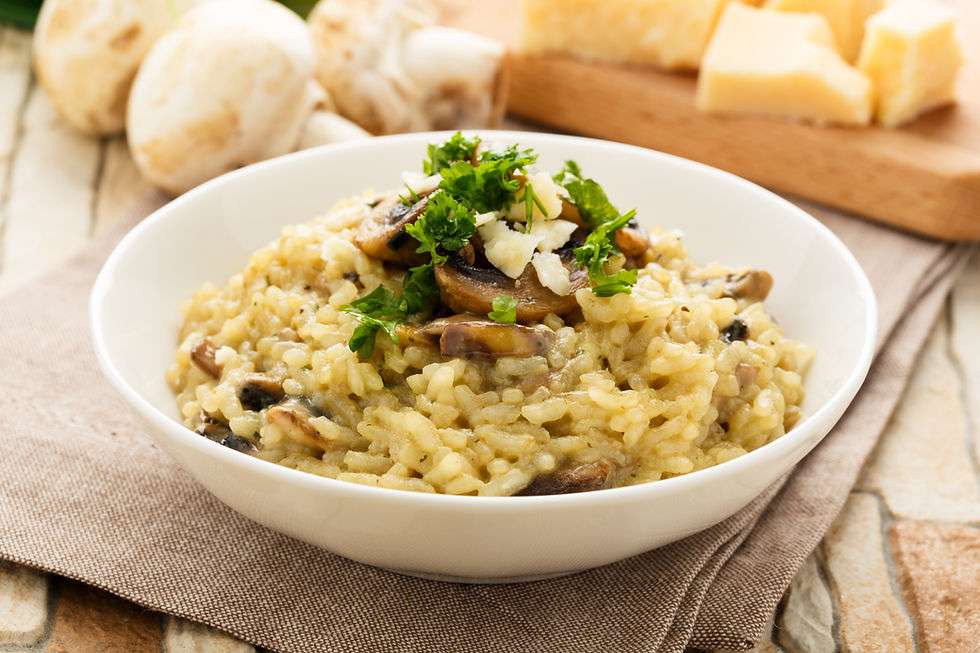
Serve in warm, wide, shallow bowls, heated to about 140°F (60°C), because polenta sets as it cools. Pour a generous ladle of soft polenta into the center of each bowl and tap the bowl on a folded towel so it spreads into an even, smooth disc. With the back of the spoon, make a wide hollow in the middle.
Spoon the mushroom ragù into the hollow, letting a little sauce run over the edge of the polenta. Scatter the toasted hazelnuts, a few thyme leaves and a pinch of flaky salt, and finish with a thread of peppery olive oil. In the mountains polenta is often poured onto a wooden board in the center of the table, with the sauce in the middle, and guests serve themselves: for a convivial meal, serve it that way.
Professional Technique
The key ratio is the polenta. For soft polenta use about 4 1/2 parts water to 1 part cornmeal by volume, here 6 cups (1.4 l) of water to 1 1/3 cups (220 g) of cornmeal; for firm polenta to cool and grill, about 3 1/2 to 1. Measure the water before you start and add any extra hot, never cold, at the end.
The hidden variable is the moisture of the mushrooms. Mushrooms that have been washed or stored in plastic carry extra water and need more time in the pan to brown; mushrooms kept in a paper bag in the refrigerator are drier and brown faster. Judge by sight and sound: when the hissing of the steam stops and the mushrooms begin to sizzle and smell nutty, they are browning.
The doneness test for the ragù is the coating. Draw a spoon through the pan: the sauce should cling to the mushrooms and leave a clear trail on the bottom that fills slowly. If liquid runs in at once, reduce it further; if the pan is dry and the mushrooms look matte, add a few spoonfuls of stock.
Browning and Umami Control
The flavor of this ragù depends on browning. When the surface of the mushrooms reaches high temperatures, sugars and amino acids react and form the brown color and roasted aromas known as the Maillard reaction. This happens only once the surface water has evaporated, which is why the pan must be hot and the mushrooms spread out. Each batch should be deep golden, not pale and soft.
Mushrooms are naturally rich in glutamates, the compounds that give the savory taste called umami, and dried porcini are especially concentrated. Their soaking water carries much of that flavor into the sauce, so never discard it. Filter it carefully, because the sand that settles at the bottom of the bowl would ruin the texture of the ragù.
Salt must be added at the end of each batch, not at the start. Salt added to raw mushrooms draws out their water at once and they stew instead of browning. Season lightly in the pan and adjust the final salt after the reduction, because the porcini liquid and the stock concentrate as they cook.
Professional Mise en Place
The ragù can be finished up to two days ahead and reheated gently; the polenta, however, is best cooked just before service, or held hot in a covered pot for up to 1 hour with a film of water on its surface.
Equipment and tools
Heavy pot of at least 4 quarts (3.8 l) for the polenta, whisk and long wooden spoon
Wide skillet of at least 12 inches (30 cm), heavy and well heated
Large chef's knife and cutting board, soft mushroom brush
Small bowl and paper towel for filtering the porcini water, ladle
Prepared ahead
Mushrooms cleaned and chopped, up to 4 hours ahead, refrigerated uncovered on a tray
Soffritto vegetables diced, up to 4 hours ahead
Mushroom ragù finished, cooled and refrigerated, up to 2 days ahead
Hazelnuts toasted and chopped, up to 3 days ahead, in a jar
Service setup
Polenta hot and covered, a kettle of hot water to adjust it
Ragù hot in a small pan, stock beside it
Bowls warmed to about 140°F (60°C)
Hazelnuts, thyme, flaky salt and peppery oil on the pass
Chef Tips
Save the mushroom trimmings and the shiitake stems. Simmered for 30 minutes with an onion, a carrot and a bay leaf, they make a quick mushroom stock that can replace the vegetable stock in the ragù and intensifies its flavor.
Cook extra polenta and pour it, while hot, into an oiled tray to a depth of 3/4 inch (2 cm). Once cold and firm, cut it into squares and grill or pan-fry them until crisp: they make an excellent base for leftover ragù the next day.
A few drops of good balsamic vinegar of Modena, or a squeeze of lemon, stirred into the ragù at the very end, lift the earthy flavors. Use very little: the goal is brightness, not acidity.
In autumn, replace part of the cremini with wild mushrooms you know and trust, such as chanterelles or fresh porcini, bought from a reliable source. Cook them in the same way, but give fresh porcini only a short browning, because their texture is delicate.
Common Mistakes
Washing the mushrooms under water. Washed mushrooms absorb water and refuse to brown. Clean them with a damp cloth or a soft brush.
Crowding the pan. Too many mushrooms at once steam in their own liquid and turn gray and rubbery. Brown them in batches over high heat.
Salting too early. Salt on raw mushrooms pulls out their juices before they brown. Season at the end of each batch.
Discarding the porcini water. The soaking liquid is the most concentrated flavor in the dish. Filter it and add it to the ragù.
Using instant polenta. Quick polenta is ready in minutes but tastes flat and sets into a paste. Use coarse stone-ground cornmeal and give it time.
Adding cold water to the polenta. Cold water stops the cooking and creates lumps. Add only hot water when you need to loosen it.
Serving on cold plates. Polenta sets within minutes on a cold surface. Warm the bowls and serve at once.
Wine Pairing
Teroldego Rotaliano DOC: The red of the Rotaliana plain in Trentino, from the native Teroldego grape. Dark berry fruit, a gentle spice and soft tannins match the earthy mushrooms and the sweetness of the corn, while its freshness lifts the dish. Serve it at about 60°F (16°C).
Alto Adige Pinot Nero DOC: Pinot Noir from the mountain vineyards of South Tyrol, with red berries, a light forest-floor note and fine tannins. Its delicacy and acidity are a classic partner for mushrooms and never cover the porcini. Serve it at about 58 to 60°F (14 to 16°C).
Valtellina Superiore DOCG: Nebbiolo grown on the steep terraces of Valtellina in Lombardy, the valley of polenta taragna. Its red fruit, dried herbs and firm but elegant tannins suit the depth of the browned mushrooms. Serve it at about 62°F (17°C), after 30 minutes in the glass.
Soave Superiore DOCG: For a white, the Garganega of the hills east of Verona, with almond, white flowers and a mineral finish. Its texture matches the creamy polenta, and its acidity echoes the white wine in the ragù. Serve it at about 50 to 52°F (10 to 11°C).
Storage & Reheating
Refrigerator: keep the mushroom ragù in an airtight container for up to 3 days. Leftover polenta sets firm in the refrigerator and keeps for 3 days, covered. Freezer: the ragù freezes well for up to 2 months, although the oyster mushrooms soften slightly; soft polenta does not freeze well, because it turns grainy and watery when thawed. Cool both at room temperature for no more than 1 hour before refrigerating.
Reheat the ragù in a pan over medium low heat with 2 tbsp of stock or water per portion, stirring until hot and glossy, about 4 minutes. To bring leftover polenta back to softness, break it into pieces in a pot with hot water, about 1/4 cup (60 ml) per portion, and whisk over low heat for 5 minutes until creamy, or slice the firm polenta and grill it until crisp on both sides.
Nutrition
Per serving, based on 4 servings:
Calories: 540 kcal
Total Fat: 29 g
Saturated Fat: 5 g
Trans Fat: 0 g
Unsaturated Fat: 23 g
Cholesterol: 0 mg
Sodium: 1,050 mg
Total Carbohydrates: 58 g
Fiber: 8 g
Total Sugars: 8 g
Added Sugars: 0 g
Protein: 12 g
Principal micronutrients: B vitamins (riboflavin, niacin, pantothenic acid), potassium, copper, selenium, vitamin E, vitamin D2 (if the mushrooms were exposed to UV light)
These figures are estimates, calculated on the quantities listed and rounded to the nearest whole number. They vary with the mushrooms used, the stock, the plant butter and the amount of oil added to finish.




Comments