
Italian Mushroom Risotto | Risotto ai Funghi
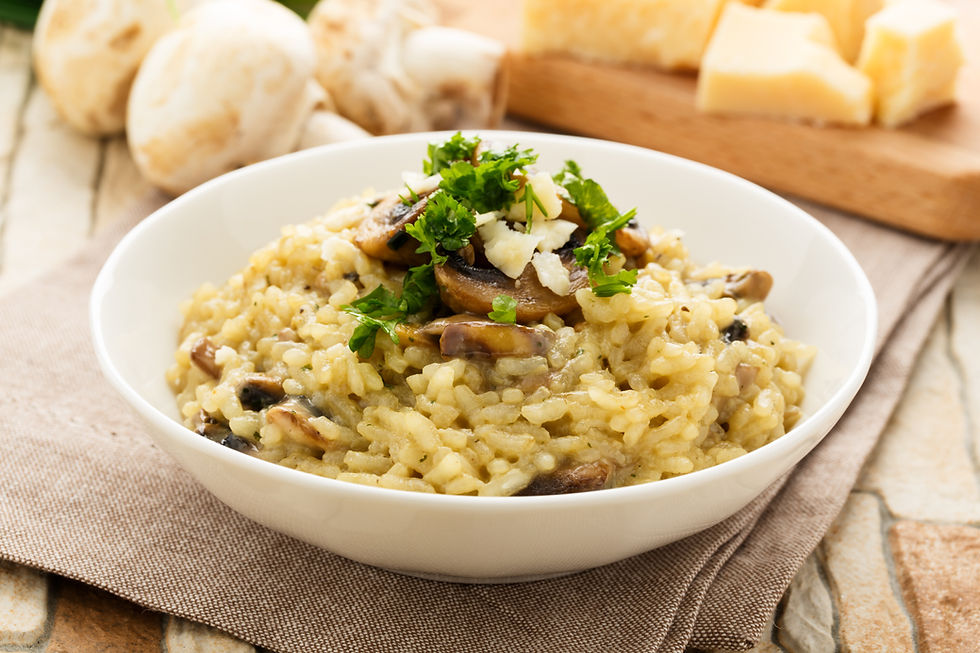
Risotto ai funghi is what the rice plain cooks for itself in autumn, and most versions served outside Italy miss the point. The flavour does not come from the mushrooms sitting on top. It comes from the water dried porcini have soaked in, a dark amber liquid with more concentrated forest character than any fresh mushroom, used as part of the stock instead of being poured away.
The second thing that separates a good plate from a dull one is that the mushrooms are cooked apart from the rice and added in two stages. Half goes in early and dissolves into the body of the risotto. Half goes in at the end and still has bite and browned edges. Stir raw mushrooms into rice at the start and they release water, stall the toasting and finish uniformly grey.
Everything else is discipline: a dry toasting of the grain, hot stock a ladle at a time, and a mantecatura done off the heat with cold butter and Parmigiano Reggiano. No cream appears anywhere. The creaminess is starch, water and fat forced into an emulsion.
Yield: 4 servings. Prep: 30 minutes. Soak: 30 minutes. Cook: 35 minutes. Total: about 1 hour 20 minutes. Difficulty: intermediate. Course: primo piatto. Region: Lombardy and eastern Piedmont, the rice paddies of the Lomellina and the Vercellese.
The Story
Rice arrived in the Po valley in the fifteenth century, planted on the flat wet ground between Novara, Vercelli and Pavia that grew almost nothing else well. The Sforza dukes pushed the crop because the land was otherwise a malarial waste, and within two centuries the plain was the largest rice growing region in Europe, which it still is. Risotto is a local answer to a local surplus, a technique invented where the grain was cheap and had to be eaten several times a week.
The mushroom version belongs to the weeks between September and early November, when the woods of the Ossola valleys and the prealps north of the paddies give up porcini. Fresh porcini were never an everyday ingredient even there. They were expensive, they lasted two days, and the sensible thing to do with a good haul was to slice most of it thin and dry it on racks in the attic.
That is why the household recipe is built on dried porcini plus whatever cultivated mushroom is at hand, and why the soaking water matters. Nothing that carried flavour was thrown away in a farmhouse kitchen, and the amber liquid left after rehydrating a handful of caps was treated as a second stock. The habit survives in Lombard professional kitchens because it works: the risotto tastes of porcini all the way through the grain.
Ingredients
For the mushrooms
Dried porcini, 3/4 oz (20 g)
Warm water for soaking, 1 1/4 cups (300 ml)
Cremini mushrooms, cleaned and sliced 1/4 inch thick, 12 oz (340 g)
Extra virgin olive oil, 2 tbsp (30 ml)
Unsalted butter, 1 tbsp (14 g)
Garlic clove, peeled and lightly crushed, 1
Fresh thyme sprigs, 2
Fine sea salt, 1/2 tsp (3 g)
Freshly ground black pepper, to taste
For the risotto
Carnaroli rice, 1 1/2 cups (320 g)
Light chicken or vegetable stock, hot, 4 cups (950 ml), plus more as needed
Yellow onion, very finely diced, 1 small, about 3 oz (85 g)
Unsalted butter for the soffritto, 1 tbsp (14 g)
Dry white wine, 1/2 cup (120 ml)
Fine sea salt, about 1 tsp (6 g), adjusted to the stock
For the mantecatura and finishing
Unsalted butter, cold and diced, 3 tbsp (42 g)
Parmigiano Reggiano, finely grated, 2 1/2 oz (70 g)
Flat leaf parsley, finely chopped, 1 tbsp (4 g)
Extra virgin olive oil, a few drops per plate
Freshly ground black pepper, to taste
Preparation
Rehydrate the porcini and keep the water
Cover the dried porcini with warm water, not boiling water, and leave them 30 minutes. Lift the pieces out with your fingers rather than tipping the bowl, because grit settles at the bottom. Squeeze them back over the bowl and chop them coarsely. Strain the liquid through a coffee filter into a jug, about 1 cup (240 ml) of dark amber stock.
Blend the mushroom water into the stock
Pour the strained porcini liquid into the hot stock and hold it all at a bare simmer on a back burner with a ladle in it. Cold stock drops the pan temperature and stops the grain cooking evenly. Taste the combined liquid and salt it lightly, since everything you add from here carries that seasoning into the rice.
Cook the cremini hard and fast, in two batches
Heat the olive oil and the tablespoon of butter in a wide saute pan over high heat. Add half the cremini in a single uncrowded layer with the garlic and thyme and leave them two minutes before stirring. You want colour and a nutty smell, not stewing. Season, tip them out and repeat. A crowded pan boils the mushrooms in their own water.
Split the mushrooms into two piles
Combine the browned cremini with the chopped porcini and divide the mixture in half. One half goes into the rice at the two thirds point, where it softens and gives its flavour to the pan. The other is folded in after the mantecatura so it keeps its texture. Discard the garlic and thyme, which turn harsh over the length of the risotto.
Sweat the onion, then toast the rice dry
Melt the tablespoon of butter in a heavy wide pan over medium low heat and sweat the onion with a pinch of salt for 6 to 8 minutes, until translucent and completely without colour. Raise the heat, add the rice and toast it 2 to 3 minutes, stirring, until the grains are hot to the touch and glassy at the edge while the centre stays chalky.
Deglaze with wine and let it disappear
Pour in the white wine and stir until the pan is almost dry and the sharp alcohol smell has gone. Wine left in the pan keeps working on the grain for the whole cooking time and makes the risotto taste thin and sour. The rice should drag against the base before the first ladle of stock.
Cook the rice with hot stock, a ladle at a time
Add a ladle of the porcini stock, enough to just cover the rice, and stir with a wooden spoon in slow deliberate movements. When the pan is nearly dry, add the next. Keep that rhythm 16 to 18 minutes for Carnaroli. Stirring rubs the grains together and releases the amylopectin that becomes the sauce. Add half the mushrooms at minute 12 and taste from minute 14.
Judge the grain, then mantecare off the heat
The rice is ready when the bite is firm and no chalk is left in the centre. Bite a grain in half: a white dot means another minute, a fully translucent cross section means you are late. Off the heat, beat in the cold butter, then the Parmigiano in two additions. Cold butter melts slowly enough to emulsify with the starch instead of separating. Fold in the reserved mushrooms and parsley and loosen with hot stock if needed.
Plating
Risotto is served on a warm flat plate, never in a bowl and never on a cold one. A wide shallow plate at around 140°F (60°C) lets it spread into a thin even layer, which is what the Italian test asks for: spoon it into the centre, tap the rim once with the flat of your hand and watch it settle outward on its own. That movement is all'onda, the wave, and the only reliable proof the emulsion is right.
Do not build a dome and do not use a ring mould. Both trap heat in the centre and both signal a risotto too stiff to spread. Once the layer has settled, scatter the reserved mushrooms so a few browned faces show, then add the parsley, a little Parmigiano, a few drops of olive oil and black pepper ground at the table.
Serve it immediately. Risotto has a window of about two minutes before the starch sets and the surface dulls, which is why a good Italian kitchen will not hold it for a late table.
Professional Technique
The technical spine of this risotto is keeping the mushrooms out of the rice for the first two thirds of the cooking. Mushrooms are roughly ninety percent water, and any raw mushroom added to a pan of toasting rice dumps that water at once. The tostatura stops, the grains take on liquid before their surface is sealed, and the batch drifts toward porridge. Browning them separately drives the water off and builds Maillard flavour that simmering never produces.
The second technique is treating the porcini soaking liquid as part of the stock rather than a splash of flavouring. Drying concentrates the glutamate and guanylate compounds in porcini enormously, and rehydration pulls much of that back into the water. Added ladle by ladle, the flavour enters the grain at every stage of absorption instead of sitting on the surface. Straining it is not optional: the grit off dried porcini is fine and instantly obvious on the tooth.
The third is the two stage addition of the mushrooms, which most recipes omit. Cooked mushroom that spends six minutes in a moving pan of rice loses its structure and gives its flavour to the sauce, which is what you want from half of it. Folded in after the heat is off, it keeps shape and chew, which is what you want from the rest. Do only one and you get either a uniform brown risotto or mushrooms sitting on plain rice.
Texture and Moisture Control
The creaminess of a correct risotto is an emulsion, not an addition. Carnaroli carries a high proportion of amylopectin in the outer layers of the grain, and stirring in a shallow pan abrades those layers so the starch enters the liquid. That starch, the fat from butter and cheese, and the water from the stock are beaten together during the mantecatura into a suspension that coats every grain. Cream adds fat without starch and flattens the mushroom flavour under dairy.
Moisture is controlled by rhythm rather than measurement, which is why the stock quantity is approximate. Each ladle should be absorbed until the pan is nearly dry before the next goes in, so the grain always works at the same concentration. Flooding the pan boils the rice instead of cooking it by absorption and disperses the starch. A tall narrow pot does the same, since depth prevents evaporation.
The final consistency is set in the last ninety seconds and needs to be aimed slightly wide. Take the pan off the heat while the risotto still moves freely, because the mantecatura tightens it, residual heat tightens it again and the plate takes more. If it has gone too far, beat in a ladle of hot stock. If it is too loose, do not reduce it over heat, which overcooks the grain.
Professional Mise en Place
Risotto punishes bad organisation, because once the first ladle of stock goes in you cannot leave the pan. Everything below is in place before the rice is toasted.
Equipment and tools
Wide heavy low sided pan, about 11 inches (28 cm), never a tall pot
Separate wide saute pan for browning the mushrooms
Small saucepan holding the stock at a bare simmer
Coffee filter or doubled muslin for straining the porcini water
Wooden spoon, fine grater for the Parmigiano, warm flat plates
Prepared ahead
Porcini soaked and chopped, liquid strained, up to 1 day ahead
Cremini browned in two batches and cooled, up to 6 hours ahead
Onion diced very fine and the rice weighed out
Parmigiano grated, butter diced and kept cold until the mantecatura
Stock combined with the porcini water and seasoned lightly
Service setup
Stock at a bare simmer within arm's reach of the risotto pan
Mushrooms split into two bowls, early and late, beside the stove
Cold butter and Parmigiano together on a tray for the mantecatura
Plates warming at about 140°F (60°C), parsley chopped at the last minute
A jug of extra hot stock for loosening the finished risotto
Chef Tips
Buy dried porcini in whole slices rather than fragments or powder. Whole slices let you see the quality of the cap, they hold less grit, and the soaking liquid comes out cleaner. A bag that is mostly dust has been sitting in a warehouse and gives a muddy stock with a stale edge.
Use Carnaroli and do not treat Arborio as the same thing. Carnaroli has a firmer core and stays al dente a minute or two longer, which matters when you judge the finish by eye. Vialone Nano is the other honest choice, though it cooks faster and needs checking from minute 12.
Never wash the rice. The dish depends on the surface starch rinsing removes, and a washed grain will not make a sauce however hard you stir.
Clean the cremini with a damp cloth or a soft brush, not under the tap. Mushrooms soak up water like a sponge and a rinsed batch steams rather than browns.
Common Mistakes
Throwing away the porcini soaking water. That amber liquid carries more mushroom flavour than anything else in the recipe, and pouring it away leaves a plain rice dish with mushrooms in it. Strain it into the stock.
Adding cold stock to the pan. Every cold ladle interrupts absorption and gives grains blown out on the outside and chalky in the middle. Keep the stock at a bare simmer on the next burner.
Putting raw mushrooms in with the rice. They release water into the pan, stall the toasting and finish uniformly grey. Brown them separately and add them in two stages.
Doing the mantecatura over the heat. Butter added to a hot pan separates instead of emulsifying, and the risotto turns oily on top and grainy underneath. Take the pan off the flame, wait a moment, then beat in cold butter and cheese.
Cooking the rice all the way through in the pan. Residual heat, the mantecatura and the warm plate all carry the cooking further. Stop while the bite is firm and the risotto still moves freely.
Wine Pairing
Gattinara DOCG: The most geographically exact bottle here, grown on volcanic soils in the hills behind the Vercelli rice paddies. Nebbiolo from Gattinara is leaner and more mineral than its Langhe cousins, with a dried rose and tar aromatic that runs alongside dried porcini. Its firm acidity handles the butter and the Parmigiano without seeming heavy on a first course.
Lugana DOC: A white with real weight, made from Turbiana on the clay banks at the southern end of Lake Garda. It has more texture than most Italian whites, which is what a risotto finished with butter and cheese needs, and a saline almond finish that sits next to browned cremini. Serve it at 54°F (12°C) so the body shows.
Collio Friulano DOC: Friulano from the Collio hills brings a savoury, faintly bitter almond character few other Italian whites offer, and that bitterness is why it works. It meets the earthiness of the porcini head on instead of refreshing against it, and a good bottle stands up to the mantecatura.
Dolcetto d'Alba DOC: The easy red of the Piedmontese table, the one actually poured with mushroom dishes on a weekday. Low acidity, soft tannin and a dark plum profile mean it accompanies the risotto without commenting on it. Serve it around 57°F (14°C) and it refreshes between spoonfuls.
Oltrepò Pavese Metodo Classico DOCG: The Lombard sparkling wine from the hills south of the Pavia rice country, built on Pinot Nero and aged on its lees. The bubble and acidity cut through the fat of the emulsion, while the bready autolytic character picks up the toasted note in the rice itself. Open this if the risotto starts a longer meal.
Storage & Reheating
Risotto does not store well and should be cooked for the number of people at the table. If you have leftovers, spread them thin on a tray so they cool quickly rather than leaving them in the hot pan, then refrigerate in an airtight container for up to 2 days. Cooling fast is a food safety matter, not a texture question.
To reheat, put the cold risotto in a wide pan with a few tablespoons of hot stock per portion and warm it over medium low heat, stirring and adding liquid until it moves freely again. Finish with a knob of cold butter off the heat to rebuild the emulsion. Never microwave it on full power.
The better use for leftovers is to stop pretending they are still risotto. Chilled overnight, the mixture is firm enough to roll around a cube of mozzarella and fry as arancini, or to press into a pan and fry as riso al salto, which is what the Milanese have always done. Do not freeze it, since the starch structure collapses on thawing.
Nutrition
Per serving, based on 4 servings:
Calories: 620 kcal
Total Fat: 27 g
Saturated Fat: 15 g
Trans Fat: 0.6 g
Unsaturated Fat: 10 g
Cholesterol: 62 mg
Sodium: 780 mg
Total Carbohydrates: 74 g
Fiber: 4 g
Total Sugars: 4 g
Added Sugars: 0 g
Protein: 19 g
Principal micronutrients: selenium, copper, potassium, phosphorus, calcium, riboflavin, niacin, vitamin D
These figures are estimates. The sodium depends almost entirely on how the stock was salted, and a commercial stock cube can double the figure on its own.




Comments