
Italian Mascarpone Cake | Torta al Mascarpone

The torta al mascarpone is a plain Lombard cake that behaves badly if you treat it like a plain cake. Half a pound of a dairy product that is roughly half fat and half water goes into a batter that would otherwise be a simple sponge, and that one substitution changes the leavening, the oven temperature and the way the cake cools.
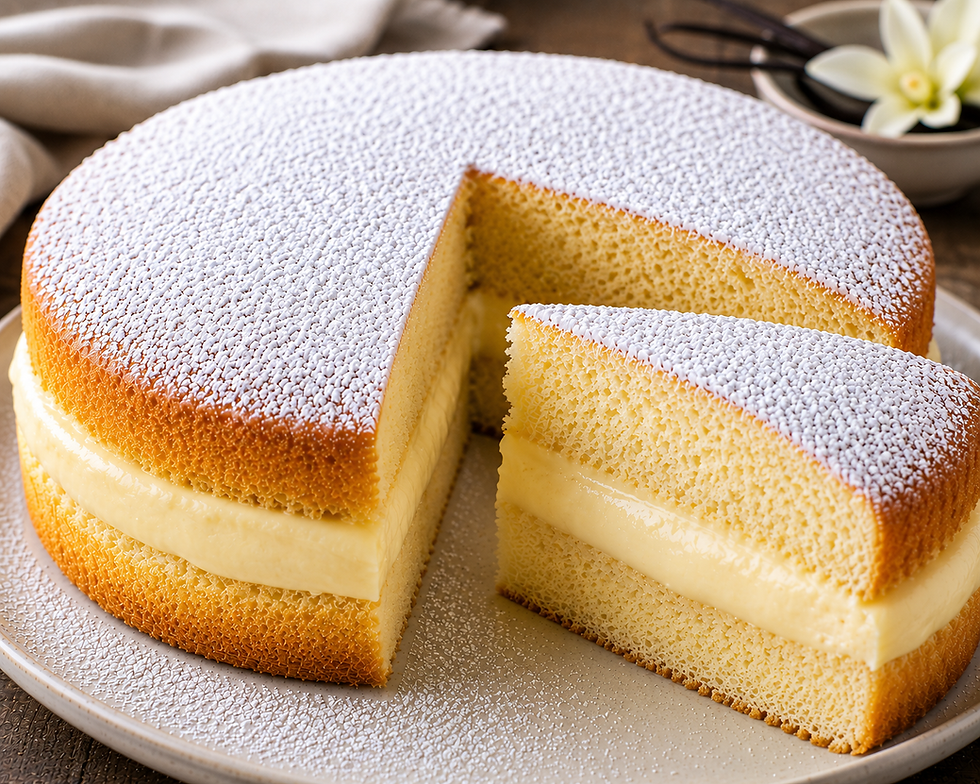
The reward is a close, damp crumb that stays soft for three days, with a quiet milky flavour lifted by lemon. There is no filling and no frosting, only a veil of powdered sugar, so every step has to be right.
Yield: one 9 inch (23 cm) cake, 12 slices. Prep: 30 minutes. Bake: 50 to 60 minutes. Cool: 2 hours. Difficulty: intermediate.
The Story
Lombardy has a long habit of building cakes out of whatever the dairy produced in quantity, and the torta al mascarpone belongs to that habit rather than to any grand pastry tradition. It has no protected name, no confraternity defending one recipe and no feast day. It is a torta da credenza, a sideboard cake, the category Italians reserve for plain keeping cakes that sit under a dome and get cut for breakfast, for merenda at four in the afternoon, and again after dinner with a small glass of something sweet.
Its spread followed the spread of mascarpone itself. Until the middle of the twentieth century mascarpone was a winter product of the countryside around Lodi and Abbiategrasso, made in small quantities and sold locally because it kept so badly. Refrigeration changed that, and the huge popularity of tiramisu from the 1970s onwards put a tub of mascarpone in nearly every Italian kitchen. Cooks who had bought it for one dessert began putting the leftovers into cake batter, and the cake in its current form is largely a product of that period.
It sits in the same family as the torta paradiso of Pavia, invented in the 1870s at the Vigoni pasticceria and built on potato starch and a great deal of butter. Like it, the torta al mascarpone is judged by its crumb rather than by anything done to the outside. Lombard bakers describe both cakes with the same word, morbida, soft, and it is the only quality that matters. A torta al mascarpone that comes out dry has failed, whatever else is right about it.
The lemon is not an accident either. Lombard cooks have always balanced rich dairy with acidity, and the lemon groves on the western shore of Lake Garda, in the province of Brescia, are among the northernmost in the world, grown under old stone terraces and covered against the winter cold. Zest and juice cut the fat of the mascarpone and keep the cake tasting fresh instead of heavy.
In Lombard homes the cake is still a Sunday habit. It is baked on Saturday, left under the dome, and cut in thin slices for whoever arrives in the afternoon, with coffee for the adults and a glass of milk for the children. Nobody frosts it, nobody fills it, and nobody ever needs a recipe card, because the proportions are handed down from one kitchen to the next like a family word.
Ingredients
For the batter
All purpose flour, 1 3/4 cups (215 g), spooned and levelled or weighed
Baking powder, double acting, 2 tsp (8 g)
Baking soda, 1/4 tsp (1.5 g)
Fine sea salt, 1/4 tsp (1.5 g)
Eggs, large, 3, at room temperature
Granulated sugar, 3/4 cup plus 2 tbsp (175 g)
Unwaxed lemon, finely grated zest of 1 lemon
Full fat mascarpone, 8 oz (225 g), at cellar temperature, 60°F (16°C)
Whole milk, 1/3 cup (80 ml), at room temperature
Fresh lemon juice, 1 tbsp (15 ml)
Pure vanilla extract, 1 tsp (5 ml)
Unsalted butter, melted and cooled, 1/4 cup (55 g)
For the pan
Softened butter for greasing, 1 tbsp (14 g)
All purpose flour for dusting, 1 tbsp (8 g)
Parchment round, 9 inch (23 cm)
For finishing
Powdered sugar, 2 tbsp (15 g)
Optional glaze: powdered sugar, 1/2 cup (60 g), and lemon juice, 2 tsp (10 ml)
For serving
Fresh raspberries or sliced ripe peaches, 1 cup (150 g)
Unsweetened whipped cream, 1/2 cup (120 ml), chilled
Fresh mint leaves, small, 8 to 12, optional
Preparation
Step 1
Set the oven low and prepare the pan. Heat the oven to 325°F (165°C) with a rack in the lower third and let it stabilise for 20 minutes. Butter a 9 inch (23 cm) springform, line the base with parchment, butter the paper, dust the interior with flour and knock out the excess.
Step 2
Sift the dry ingredients three times. Put the flour, baking powder, baking soda and salt through a sieve, tip them back and repeat twice. Two teaspoons of baking powder is a heavy dose, and any that fails to disperse leaves a soapy patch and a coarse hole in the crumb.
Step 3
Rub the zest into the sugar. Work the lemon zest into the sugar with your fingertips for a full minute, until it is damp, pale yellow and strongly fragrant. The crystals tear open the oil cells in the peel and release far more aroma than stirring zest into a finished batter.
Step 4
Whip the eggs to the ribbon. Add the eggs to the lemon sugar and whip on medium high for 5 to 6 minutes, until the mixture triples, turns the colour of clotted cream and falls from the whisk in a ribbon that holds for three seconds. This foam is the main lift in the cake, and the baking powder only supports it, so do not cut the whipping short. Eggs that are cold will never reach the same volume.
Step 5
Loosen the mascarpone by hand. In a separate bowl stir the mascarpone with a spatula for about 20 seconds, then add the milk, lemon juice and vanilla a little at a time until it is smooth and pourable, like thick cream. Keep every stroke gentle and never reach for the machine, because this is the only moment you can still see what the mascarpone is doing and correct a lump.
Step 6
Fold in the mascarpone in two additions. Stir a third of the mascarpone mixture into the foam to bring the densities together, then fold in the rest with a wide spatula, cutting down the centre and sweeping the bottom. Stop the moment no white streaks remain.
Step 7
Add the flour and butter. Fold in the sifted dry ingredients in three additions, stopping while the batter still looks faintly streaky. Pour the cooled melted butter in a thin stream around the rim and fold it in with two strokes. Scrape the batter into the pan, level it and rap the pan once.
Step 8
Bake slowly. Set the pan in the lower third of the oven. Bake for 50 to 60 minutes and keep the door shut for the first 35. The top will dome and probably crack, which is correct. The cake is done when a skewer halfway between centre and rim comes out with two or three moist crumbs and a probe reads 205°F (96°C). If the top browns fast at 40 minutes, tent it with foil.
Step 9
Cool in two stages, then finish. Rest the cake in the pan for exactly 10 minutes, run a knife around the rim, release the collar and cool it completely on a rack for 2 hours. Sift the powdered sugar over it no more than 10 minutes before serving, or slake the glaze sugar with the lemon juice and pour it over the dome.
Plating
Serve at room temperature, never straight from the refrigerator, where the mascarpone fat is hard and the crumb tastes dull. Slide the cooled cake onto a flat plate and cut it with a long thin knife wiped clean between slices, so the damp crumb does not smear.
Cut wedges about 1 1/2 inches (4 cm) wide at the rim, twelve from one cake, and lift each one out with a thin offset spatula. Add a spoonful of fresh berries or a few slices of macerated peach beside each slice, and nothing else. A cold spoon of unsweetened whipped cream is welcome, but it should stay off the cake itself. Add a single mint leaf if you want colour, and keep the plate pale, so the eye reads the crumb first.
Professional Technique
The whole technique of this cake rests on one fact: the mascarpone arrives in the batter as an emulsion that has already been made. Water and butterfat are held together in fine droplets, in balance, and that balance is what gives the finished cake its damp, close crumb. Everything you do after the mascarpone enters the bowl either preserves that emulsion or destroys it, which is why the batter tolerates almost no handling once it is in.
This is the reason the mascarpone goes in by hand and in two additions. The first third lightens the foam and brings the densities close, so the second fold needs only a few sweeping strokes. An electric whisk, even on its lowest setting, shears the droplets, and the emulsion breaks. The fat separates as liquid butter, pools in the batter, and in the oven it fries the crumb around it, leaving greasy, coarse pockets and a dense base instead of a tender, even texture.
Temperature decides how well the emulsion survives. Mascarpone straight from the refrigerator, around 38°F (3°C), is stiff, with its fat semi solid. It will not blend into the foam without extra stirring, and every extra stroke costs air and risks the break. Warmed too far, above about 68°F (20°C), the fat softens and the cream turns loose and oily. Cellar temperature, 60°F (16°C), is the window in which it is soft enough to fold in gently and still cold enough to hold together. Take it out an hour before you begin, and check that it is smooth before you start.
Texture and Moisture Control
The crumb of this cake depends on water staying inside it. The eggs and the baking powder give lift, but it is the mascarpone that supplies the moisture, and everything after the oven door closes is about keeping it there. A 325°F (165°C) oven sets the structure before the surface dries, and a cake that bakes 5 minutes too long loses far more moisture than the same cake pulled early.
The sugar does quiet work too. At 175 g in this quantity it tenderises the flour proteins and holds water, which is why the cake stays soft for three days. Cutting the sugar to make it less sweet produces a firmer, drier slice.
Cooling is part of the baking. While the cake is warm the butterfat is liquid and the crumb feels faintly greasy and fragile. Below about 68°F (20°C) it recrystallises and the slice cuts clean and moist. Leaving the cake in the pan for exactly 10 minutes avoids the condensation ring that steam leaves against hot metal.
Powdered sugar draws water out of a moist surface, so it goes on late. Sifted 10 minutes before serving it stays white and fine, and sifted an hour ahead it dissolves into wet grey patches.
Professional Mise en Place
Most of this cake is decided before the oven is switched on, and once it is baked the only real work is waiting. Lay everything out in the order below, and the bake becomes almost automatic.
Equipment and tools
9 inch (23 cm) springform pan and parchment
Stand mixer or hand mixer, used for the eggs only
Fine sieve, wide silicone spatula and a probe thermometer
Wire rack and a long thin serrated knife
Prepared ahead
Mascarpone, milk and eggs out of the refrigerator one hour before
Dry ingredients sifted three times and butter melted and cooled
Pan buttered, lined and floured, oven heated 20 minutes ahead
Baked cake cooled, wrapped and held up to 3 days, which is why this is a cake for the day before
Whipped cream made no more than 2 hours ahead and kept cold
Service setup
Sugar sifted and glaze mixed within 10 minutes of serving
Fresh berries or macerated peaches chilled in a bowl
Plates at room temperature and a knife with a jug of hot water
Slices cut just before the plates leave the kitchen
Chef Tips
Use the full fat mascarpone sold in tubs, with 40 percent or more butterfat. Lower fat versions add water without richness and give a rubbery crumb, so check the label, not just the name. A good tub is thick enough to hold a spoon upright.
Weigh the flour and the sugar. A cup of scooped flour can be 20 percent heavier than a spooned one, and too much flour is the fastest way to a dry cake. Weighing also keeps your results the same from one bake to the next.
Use a probe thermometer. The centre should read 205°F (96°C), a more reliable signal than a skewer, which can look clean in a cake that is still wet.
Bake it the day before. The flavour of the lemon rounds out overnight, the crumb settles, and a cold slice cuts more cleanly than a warm one. Sift the sugar only when it is time to serve.
Common Mistakes
Cold mascarpone. Straight from the refrigerator it stays in lumps that leave white streaks in the crumb. Let it sit for an hour until it is cool and supple.
Overmixing after the flour. Every extra fold builds gluten and knocks out air. Stop while a faint streak remains, and the oven will finish the job.
Opening the oven early. A cold rush of air in the first 35 minutes collapses the dome and leaves a dense, wet band near the base. Watch through the glass and trust the timer.
Using baking powder that is old. Weak leavening leaves a low, heavy cake with a gummy centre. Test a pinch in hot water, and if it does not fizz, replace it.
Overbaking. Past 205°F (96°C) at the centre the cake dries quickly. Take it out when the skewer still shows moist crumbs.
Skipping the parchment. The sugar and butterfat caramelise against a bare base and the cake sticks to the metal. Butter and line the pan, then butter the paper as well.
Cutting it warm. The butterfat is still liquid and the slice tears and smears. Wait the full 2 hours, even if the smell is tempting.
Wine Pairing
Moscato d'Asti DOCG: The lightest and most natural match. Its gentle bubbles and low alcohol lift the milky richness of the mascarpone, while the peach and orange blossom aromas echo the lemon zest. The sweetness stays below that of the cake, so the wine refreshes instead of cloying, and its low alcohol keeps the afternoon light. Serve it well chilled, at about 43°F (6°C).
Vin Santo del Chianti Classico DOC: A deeper, nuttier pairing for the end of a long meal. Years in small barrels give it dried apricot, hazelnut and caramel notes that suit the browned top of the cake. Its bright acidity cuts through the butterfat, and a small glass is enough. In Tuscany it is served at room temperature with biscuits, and it deserves the same treatment with a slice of this cake.
Ramandolo DOCG: A Friulian sweet wine from Verduzzo grapes, with honey, dried fruit and a faintly tannic finish. That grip and the fresh acidity balance the fat in the crumb, and the honeyed aromas bring out the vanilla without covering the lemon. Serve it lightly cooled, around 50°F (10°C), in a small tulip glass.
Malvasia delle Lipari DOC: A golden wine from the volcanic islands, full of apricot, orange peel and Mediterranean herbs. Its aromatic intensity stands up to the lemon, and its saline mineral edge keeps the sweetness from feeling heavy against the soft, close crumb. It is the choice for a formal dessert course, poured in small measures.
Storage & Reheating
Store the uncut cake at cool room temperature under a dome or wrapped in foil for up to 3 days. Because the crumb is so moist, a cut cake keeps best with a piece of parchment pressed against the exposed face, which prevents it from drying.
In the refrigerator it keeps for 5 days in an airtight container, but the butterfat firms up and the flavour turns muted. Bring slices to room temperature for 30 minutes before serving.
To freeze, wrap the unfinished cake or individual slices in two layers of plastic and one of foil for up to 2 months. Thaw overnight in the refrigerator, then at room temperature for an hour. Refresh a slice for 8 minutes in a 300°F (150°C) oven if you like it slightly warm, and add the powdered sugar after.
Nutrition
Per slice, based on 12 slices:
Calories: 265 kcal
Total Fat: 14 g
Saturated Fat: 8 g
Trans Fat: 0 g
Unsaturated Fat: 5 g
Cholesterol: 75 mg
Sodium: 170 mg
Total Carbohydrates: 30 g
Fiber: 0.6 g
Total Sugars: 15 g
Added Sugars: 14 g
Protein: 5 g
Lactose: 1.2 g
Principal micronutrients: calcium, vitamin A, riboflavin, phosphorus
These figures are estimates and will vary with the brand of mascarpone, the size of the eggs and the exact slice.



Comments