
Italian Sicilian Arancini with Ragù, Peas and Cheese | Arancini Siciliani al ragù, piselli e formaggio
Updated: Aug 31

Sicilian arancini require dry, well-seasoned rice, a concentrated ragù, a protected cheese center and a crisp coating that seals the filling during frying.
The Story
The history of arancini is tied to Sicily’s long relationship with rice, saffron and Arab-influenced food traditions. Rice became increasingly important on the island during the Middle Ages, and over generations seasoned rice preparations developed into portable filled forms. The breadcrumb coating and frying technique came later, eventually creating one of the island’s most recognizable foods.
Regional language and shape vary. In Palermo, arancina is common and round versions are widely seen; in eastern Sicily, especially around Catania, arancino is common and cone-shaped versions are strongly associated with the local tradition. The name refers to arancia, orange, because the fried exterior resembles a small golden orange.
Ingredients
For the saffron rice
2 cups (480 ml) Arborio or Carnaroli rice (about 400 g)5 cups (1200 ml) chicken or vegetable broth (1.2 L)1/2 tsp (3 ml) saffron threads (about 0.25 g)2 tbsp (30 ml) unsalted butter (28 g)1/2 cup (120 ml) finely grated Parmigiano Reggiano (about 50 g)2 large egg yolks1 tsp (5 ml) kosher salt, or as neededFreshly ground black pepper
For the ragù filling
2 tbsp (30 ml) extra virgin olive oil (30 ml)1/2 small yellow onion, finely diced (about 75 g)1/2 small carrot, finely diced (about 50 g)1/2 celery stalk, finely diced (about 30 g)8 oz (227 g) ground beef (225 g)4 oz (113 g) ground pork (115 g)1/3 cup (80 ml) dry red wine (80 ml)1 cup (240 ml) tomato passata or crushed tomatoes (240 ml)1/2 cup (120 ml) frozen peas (about 70 g)1/2 tsp (3 ml) kosher saltFreshly ground black pepper
For the cheese center
4 oz (113 g) caciocavallo, provola or low-moisture mozzarella, cut into small cubes (115 g)
For the batter and coating
1 cup (240 ml) all-purpose flour (125 g)1 1/4 cups (300 ml) water (300 ml)Pinch of salt2 cups (480 ml) fine plain breadcrumbs (about 200 g)Neutral frying oil, such as peanut, sunflower or vegetable oil
Preparing the Saffron Rice
s developed into portable filled forms. The breadcrumb coating and frying technique came later, eventually creating one of the island’s most recognizable foods.
Regional language and shape vary. In Palermo, arancina is common and round versions are widely seen; in eastern Sicily, especially around Catania, arancino is common and cone-shaped versions are strongly associated with the local tradition. The name refers to arancia, orange, because the fried exterior resembles a small golden orange.
Ingredients
For the saffron rice
2 cups Arborio or Carnaroli rice (about 400 g)5 cups chicken or vegetable broth (1.2 L)1/2 tsp saffron threads (about 0.25 g)2 tbsp unsalted butter (28 g)1/2 cup finely grated Parmigiano Reggiano (about 50 g)2 large egg yolks1 tsp kosher salt, or as neededFreshly ground black pepper
Preparing the Ragù
For the ragù filling
2 tbsp extra virgin olive oil (30 ml)1/2 small yellow onion, finely diced (about 75 g)1/2 small carrot, finely diced (about 50 g)1/2 celery stalk, finely diced (about 30 g)8 oz ground beef (225 g)4 oz ground pork (115 g)1/3 cup dry red wine (80 ml)1 cup tomato passata or crushed tomatoes (240 ml)1/2 cup frozen peas (about 70 g)1/2 tsp kosher saltFreshly ground black pepper
For the cheese center
4 oz caciocavallo, provola or low-moisture mozzarella, cut into small cubes (115 g)
For the batter and coating
1 cup all-purpose flour (125 g)1 1/4 cups water (300 ml)Pinch of salt2 cups fine plain breadcrumbs (about 200 g)Neutral frying oil, such as peanut, sunflower or vegetable oil
Preparing the Saffron Rice
Warm a small amount of the broth and steep the saffron for about 10 minutes. Cook the rice with the remaining broth and saffron infusion until completely cooked but relatively dry. Remove from the heat, add butter and Parmigiano, season, cool briefly, then mix in the egg yolks. Spread the rice in a thin layer on a sheet pan and refrigerate for at least 2 hours.
Preparing the Cheese Center
Preparing the Ragù
Cook onion, carrot and celery gently in olive oil until soft. Add the beef and pork and brown lightly, breaking the meat into small pieces. Deglaze with red wine and reduce almost completely. Add the tomato, season and simmer uncovered for 25–30 minutes until the ragù is thick. Add the peas during the final 5 minutes, then cool completely.
Shaping the Arancini
Wet your hands lightly. Flatten about 1/3 cup of chilled rice in your palm, place a small spoonful of cold ragù and one cube of cheese in the center, then close with additional rice. Seal completely and shape into a round or cone. Keep the wall of rice even and avoid overfilling.
Coating the Arancini
Whisk flour, water and salt into a thin fluid batter. Dip each arancino, allow excess batter to drip away and coat evenly with breadcrumbs. Rest the breaded arancini in the refrigerator for 20–30 minutes so the exterior stabilizes before frying.
Shaping the Arancini
Frying
Heat the oil to about 350°F (175°C). Fry only two or three arancini at a time for approximately 4–5 minutes, turning as needed, until evenly golden. Drain on a wire rack rather than leaving them directly on paper towels. Allow them to rest for several minutes before serving because the center will be extremely hot.
Plating
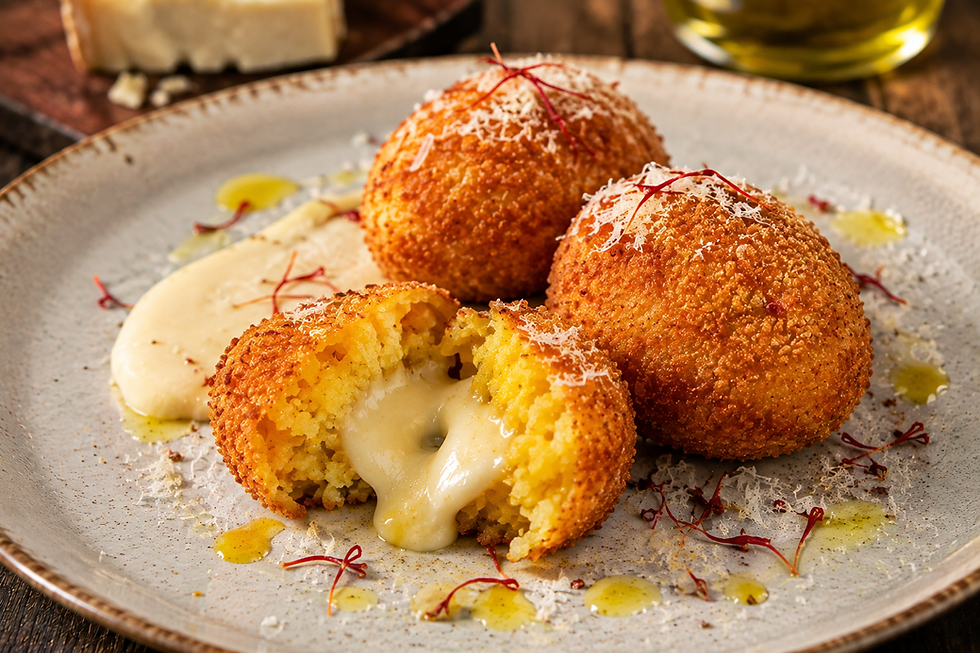
Serve arancini hot but not straight from the fryer. They do not need to sit in tomato sauce. For a restaurant presentation, cut one in half to show the ragù and melted cheese while leaving another whole. The crisp crust should remain dry and clearly visible.
Professional Technique
Arancini should be built intentionally, not treated simply as leftover risotto. The rice must be cooked specifically to hold shape, the ragù must be reduced specifically for filling, and the cheese must melt without releasing excessive water. Stable frying temperature is essential to crisp the shell without greasiness.
Coating the Arancini
Texture and Moisture Control
Cold rice is firmer and easier to seal. A wet ragù creates steam and pressure during frying, which can split the rice shell. Low-moisture cheese prevents the center from becoming watery. The finished arancino should have a thin crisp coating, defined rice grains, concentrated ragù and a molten cheese center without a large hollow cavity.
Professional Mise en Place
Prepare the rice and ragù a day ahead if desired. Chill both completely before assembly. Breaded arancini can be held refrigerated for several hours. They can also be frozen before frying; for best texture, thaw slowly in the refrigerator before cooking. Keep the frying station organized with a thermometer, spider and wire rack ready.
Frying the Arancini
Complete this stage carefully, using the visual and texture cues described in the recipe before moving to the next step.
Plating
Serve arancini hot but not straight from the fryer. They do not need to sit in tomato sauce. For a restaurant presentation, cut one in half to show the ragù and melted cheese while leaving another whole. The crisp crust should remain dry and clearly visible.
Professional Technique
Arancini should be built intentionally, not treated simply as leftover risotto. The rice must be cooked specifically to hold shape, the ragù must be reduced specifically for filling, and the cheese must melt without releasing excessive water. Stable frying temperature is essential to crisp the shell without greasiness.
For the saffron rice. 2 cups Arborio or Carnaroli rice (about 400 g)5 cups chicken or vegetable broth (1.2 L)1/2 tsp saffron threads (about 0.25 g)2 tbsp unsalted butter (28 g)1/2 cup finely grated Parmigiano Reggiano (about 50 g)2 large egg yolks1 tsp kosher salt, or as neededFreshly ground black pepper
For the ragù filling. 2 tbsp extra virgin olive oil (30 ml)1/2 small yellow onion, finely diced (about 75 g)1/2 small carrot, finely diced (about 50 g)1/2 celery stalk, finely diced (about 30 g)8 oz ground beef (225 g)4 oz ground pork (115 g)1/3 cup dry red wine (80 ml)1 cup tomato passata or crushed tomatoes (240 ml)1/2 cup frozen peas (about 70 g)1/2 tsp kosher saltFreshly ground black pepper
For the cheese center. 4 oz caciocavallo, provola or low-moisture mozzarella, cut into small cubes (115 g)
Texture and Moisture Control. Cold rice is firmer and easier to seal. A wet ragù creates steam and pressure during frying, which can split the rice shell. Low-moisture cheese prevents the center from becoming watery. The finished arancino should have a thin crisp coating, defined rice grains, concentrated ragù and a molten cheese center without a large hollow cavity.
Professional Mise en Place. Prepare the rice and ragù a day ahead if desired. Chill both completely before assembly. Breaded arancini can be held refrigerated for several hours. They can also be frozen before frying; for best texture, thaw slowly in the refrigerator before cooking. Keep the frying station organized with a thermometer, spider and wire rack ready.
Professional execution depends on sequencing the six preparation stages without rushing transitions. The rice must be cool and firm enough to shape without becoming pasty. The coating should be complete but not heavy, and frying temperature must stay stable so the exterior crisps before excess oil can penetrate. Taste and adjust only after the principal texture is correct; seasoning cannot compensate for poor moisture or temperature control.
For consistent results, repeat the same preparation order every time. Keep heat stable, work with measured portions, and use visual doneness cues rather than increasing temperature to save time. Allow resting, cooling or emulsification stages to finish fully before moving forward. These details are especially important in this recipe because the final texture depends on controlled moisture and temperature throughout the entire process.
Texture and Moisture Control
The rice must be cool and firm enough to shape without becoming pasty. The coating should be complete but not heavy, and frying temperature must stay stable so the exterior crisps before excess oil can penetrate.
Professional Mise en Place
Prepare the rice and ragù a day ahead if desired. Chill both completely before assembly. Breaded arancini can be held refrigerated for several hours. They can also be frozen before frying; for best texture, thaw slowly in the refrigerator before cooking. Keep the frying station organized with a thermometer, spider and wire rack ready.
Chef Tips
Keep rice and ragù completely cold. Make every arancino the same size. Wet your hands lightly rather than compressing the rice. Use low-moisture cheese. Rest after breading. Fry in small batches and monitor the oil temperature continuously.
Common Mistakes
Do not use loose risotto. Do not fill warm rice with hot ragù. Do not leave the ragù watery. Do not overfill the center. Do not make the batter or breadcrumb layer too thick. Do not fry at low temperature or overload the pot, and do not serve immediately without letting the center settle.
Wine Pairing
Storage
The rice can be refrigerated for 1 day and the ragù for up to 2 days before assembly. Breaded arancini may be refrigerated for several hours before frying. Cooked arancini are best the same day; reheat in a hot oven or air circulation rather than a microwave to restore the crust. Freezing is best done before frying.
Nutrition
Estimated per serving based on the ingredients used in this recipe.
Calories: approximately 540 kcal
Protein: approximately 18 g
Carbohydrates: approximately 72 g
Sugars: approximately 5 g
Fat: approximately 20 g
Saturated Fat: approximately 8 g
Fiber: approximately 4 g
Sodium: approximately 620 mg
Actual values vary with ingredient brands, exact quantities and serving size.


Comments