
Traditional Italian Palermo Saffron Rice Arancine with Meat Ragù | Arancine Palermitane alla Carne
Updated: Sep 13

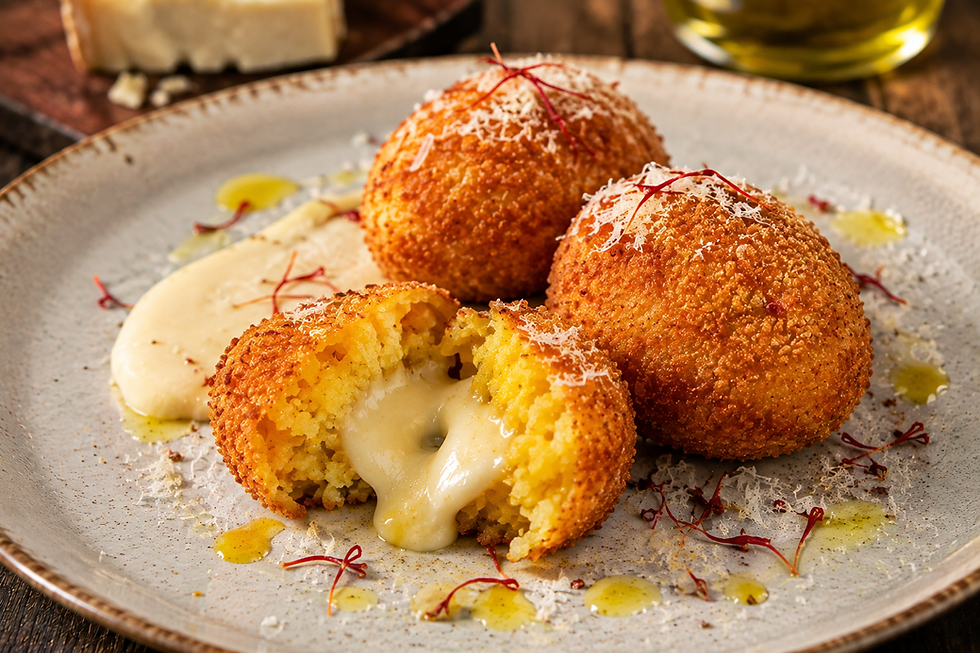
Palermo-style saffron rice arancine filled with rich meat ragù and fried until deeply golden.
Story of the Dish
Arancine are among Palermo’s most recognizable street foods, but the best versions are much more than fried rice balls. In western Sicily, the round arancina is traditionally built around saffron-scented rice and a rich meat ragù, often with peas, then breaded and fried until the shell becomes crisp while the center stays creamy and deeply savory. The contrast is the point: a dry, crunchy exterior protecting moist rice and a concentrated filling.
The dish belongs to Sicily’s long history of layered culinary influences. Rice and saffron arrived through Arab rule, while later court and aristocratic cooking helped shape filled rice preparations into the elaborate street food known today. Palermo claims the feminine form arancina, while eastern Sicily often uses arancino. The recipe below follows the Palermo tradition and treats each component with restaurant-level precision while keeping the soul of the street-food original.
The rice must be seasoned enough to taste good on its own, but it cannot be loose like risotto. It needs to cool into a cohesive mass that can be shaped without becoming heavy. The ragù must be reduced until almost spoon-standing; excess liquid is the fastest way to split an arancina during frying. Proper resting, compact shaping, and a thin but complete breading are what make the final result elegant rather than greasy.
Recipe Information
Difficulty: Advanced
Region / Origin: Palermo, Sicily
Servings: 8 large arancine
Preparation Time: 45 minutes
Cooking Time: 1 hour 20 minutes
Resting Time: 2 hours
Total Time: about 4 hours
Ingredients
For the saffron rice: 2 cups Arborio or Carnaroli rice; 5 cups low-sodium chicken stock; 1/2 tsp saffron threads; 3 tbsp unsalted butter; 3/4 cup finely grated Parmigiano Reggiano; 2 large egg yolks; 1 tsp kosher salt, plus more to taste.
For the meat ragù: 1 tbsp extra-virgin olive oil; 8 oz ground beef; 6 oz ground pork; 1 small yellow onion, finely diced; 1 small carrot, finely diced; 1 celery stalk, finely diced; 2 tbsp tomato paste; 1/2 cup dry red wine; 1 cup crushed tomatoes; 1/2 cup green peas; 1 small bay leaf; kosher salt and freshly ground black pepper.
For shaping and frying: 4 oz low-moisture mozzarella or caciocavallo, cut into small cubes; 1 cup all-purpose flour; 3 large eggs beaten with 2 tbsp water; 2 1/2 cups fine plain breadcrumbs; neutral frying oil, enough for 3 inches in a heavy pot.
Preparation
1. Prepare the ragù first. Heat the olive oil over medium heat. Add onion, carrot, and celery with a pinch of salt and cook slowly until completely soft but not browned, about 8 minutes. Add the beef and pork, breaking the meat into very small pieces. Cook until the raw color disappears and the meat begins to caramelize lightly.
2. Stir in the tomato paste and cook for 2 minutes until it darkens slightly. Add the red wine and reduce until nearly dry. Add crushed tomatoes and bay leaf, lower the heat, and simmer uncovered for 35 to 45 minutes. The ragù should end thick enough that a spoon dragged across the pan leaves a clean path. Fold in the peas during the final 5 minutes. Cool completely.
3. For the rice, bring the stock to a simmer and infuse the saffron in 1/2 cup of the hot stock for 10 minutes. Add the rice to a wide saucepan, then add the stock in measured additions while cooking at a controlled simmer. Unlike risotto, do not constantly beat the rice; stir enough to prevent sticking while allowing the grains to absorb the liquid evenly.
4. When the rice is fully cooked and very thick, remove it from the heat. Stir in saffron liquid, butter, Parmigiano, and salt. Spread the rice in a thin layer on a sheet pan. When warm rather than hot, mix in the egg yolks. Refrigerate until completely cold and firm, at least 90 minutes.
5. Divide the cold rice into eight equal portions. Wet your hands lightly. Flatten one portion in your palm into a cup with a thicker base and thinner edges. Add a generous spoonful of cold ragù and one cube of cheese. Close the rice around the filling and compress firmly so no seam remains. Shape into a smooth round Palermo-style arancina.
6. Bread each arancina in flour, then egg wash, then breadcrumbs. Press the breadcrumbs on firmly but avoid building a thick crust. Rest the breaded arancine in the refrigerator for 30 minutes so the coating bonds to the rice.
7. Heat frying oil to 350°F in a deep heavy pot. Fry no more than two at a time so the oil temperature stays stable. Cook for 5 to 6 minutes, turning as needed, until evenly deep golden. Drain on a rack rather than paper towels so the bottoms remain crisp. Rest 5 minutes before serving.
Professional Technique
The professional key is water management. The ragù, rice, cheese, and breading all contain moisture, and every stage must be controlled. A reduced ragù prevents internal steam pockets, chilled rice keeps the shell structurally sound, and 350°F oil seals the breading before the filling can force its way out. A rack after frying protects the crust from trapped steam.
Chef Tips
Use a scale to portion the rice so every arancina fries at the same rate.
If the rice feels sticky but loose, chill it longer instead of adding breadcrumbs to the rice.
Caciocavallo gives a more Sicilian flavor than mozzarella and melts with less water.
A thermometer is essential; oil below 340°F makes the crust greasy, while oil above 365°F darkens the coating before the center is hot.
Common Mistakes
Using warm ragù or warm rice during shaping.
Leaving the filling wet or saucy.
Making the breading excessively thick.
Crowding the fryer and dropping the oil temperature.
Serving immediately from the oil without a brief resting period.
The rice must be fully cooked yet dry enough to compact cleanly around the filling. Spread it in a thin layer after cooking so steam escapes quickly; trapped moisture makes shaping difficult and weakens the crust. The ragù should be reduced until spoonable rather than saucy, because excess liquid can split the rice shell during frying. Chill both rice and filling before assembly. Form each arancina with even walls, press the filling into the center without overloading it, and seal carefully before breading. Fry at a steady 350°F (175°C), in small batches, until the exterior is deeply golden and crisp.
Use saffron in the rice with restraint: it should perfume and color the grains without dominating the meat ragù. A small cube of firm cheese can be added to the center if desired, but it must be well chilled. Keep your hands lightly damp while shaping to prevent sticking. After breading, refrigerate the arancine for 20 to 30 minutes so the coating adheres more securely and the shape firms before frying.
Do not use freshly hot rice for shaping, do not leave the ragù loose, and do not fry too many pieces at once. Oil temperature that drops too far produces a greasy crust, while oil that is too hot browns the outside before the center is heated. Avoid oversized arancine unless you increase frying time carefully; the Palermo style should remain balanced between rice, filling, and crust.
History and Regional Context
Palermo’s arancine are inseparable from Sicilian street-food culture. Their saffron-colored rice and generous meat filling reflect the island’s long history of grain, spice, and festive frying. Traditionally prepared for celebrations as well as everyday rosticceria service, they are designed to be substantial enough to satisfy yet compact enough to eat by hand. The classic Palermo form is round, distinguishing it visually from the conical shapes commonly associated with eastern Sicily.
Storage & Reheating
Cooked arancine are best eaten the day they are fried. If necessary, cool them completely and refrigerate in a covered container for up to 2 days. Reheat on a rack in a 375°F (190°C) oven until the crust is crisp and the center is hot. Avoid microwaving whenever possible because steam softens the breading and makes the rice shell gummy. Unfried, breaded arancine can be chilled for several hours before frying.
Wine Pairing
Cerasuolo di Vittoria DOCG — Bright red fruit and acidity suit saffron rice and meat ragù.
Etna Rosso DOC — Fine tannin and volcanic freshness handle the fried crust without heaviness.
Grillo Sicilia DOC — A dry Sicilian white gives a crisp regional contrast.
Etna Bianco DOC — Minerality and citrus refresh the palate between bites.
Cirò Classico DOCG — Savory red fruit stands up to the ragù while remaining food-friendly.
Nutrition
Estimated per serving based on the ingredients and quantities used in this recipe. Actual values vary with ingredient brands, exact quantities and serving size.
Chef Gianluca Deiana Abis


Comments