
Italian Sardinian Fregola with Cuttlefish and Peas | Fregola con Seppie e Piselli
Updated: Sep 13
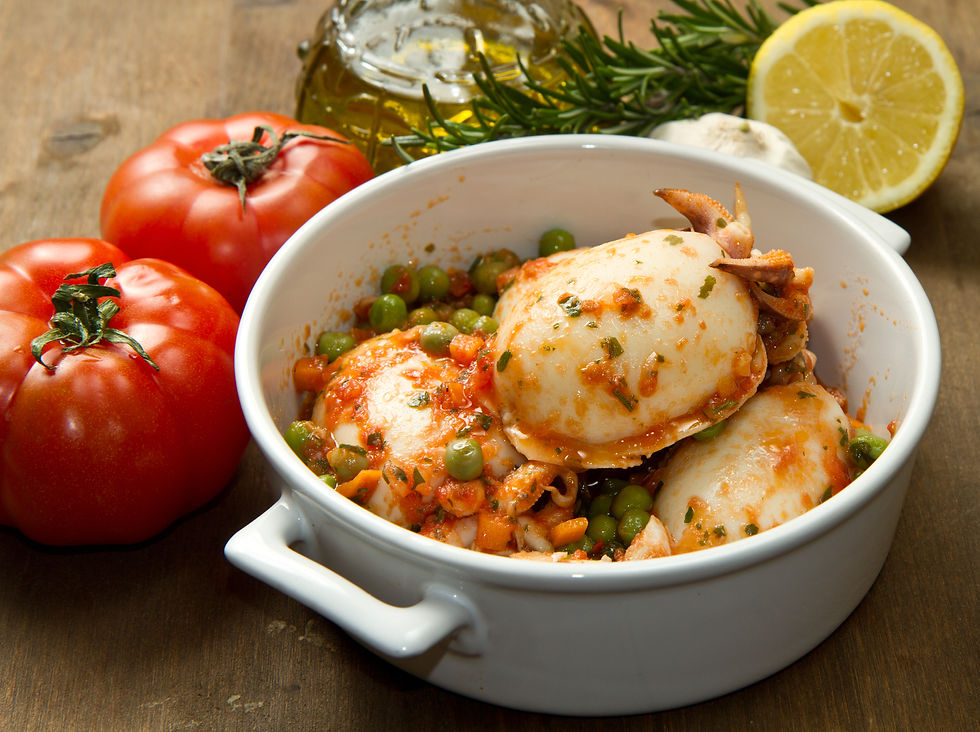
Fregola con seppie e piselli brings together toasted Sardinian semolina pasta, tender cuttlefish and sweet peas in a lightly brothy first course. The fregola absorbs the seafood stock while releasing enough starch to bind the cooking liquid without turning the dish heavy.
The essential controls are cuttlefish tenderness and liquid management. Cuttlefish should cook gently before the pasta is added, and the fregola should finish moist and flowing because it continues absorbing stock after leaving the heat.
Recipe Information
Servings: 4
Prep Time: 25 minutes
Cook Time: 40 minutes
Total Time: 1 hour 5 minutes
Region: Sardinia, Italy
Difficulty: Intermediate
Ingredients
14 oz (400 g) Sardinian fregola
1.1 lb (500 g) cleaned cuttlefish, body and tentacles cut into bite-size pieces
7 oz (200 g) fresh or frozen peas
1 medium yellow onion, about 6 oz (170 g), finely chopped
2 garlic cloves, about 1/4 oz (7 g), finely minced
1 cup (240 ml) dry white wine
4 cups (960 ml) light fish stock, kept hot, plus more as needed
4 tablespoons (60 ml) extra-virgin olive oil, divided
1/4 cup (15 g) flat-leaf parsley leaves, finely chopped
1 teaspoon (6 g) fine sea salt, adjusted to the stock
1/2 teaspoon (1 g) freshly ground black pepper
1/4 teaspoon (0.5 g) red pepper flakes, optional
1 teaspoon (5 ml) fresh lemon juice, optional, for final balance
Preparation
Pat the cleaned cuttlefish dry and cut the body into 1/2-inch (1.25 cm) strips or small squares. Cut the tentacles into similar bite-size pieces so everything cooks evenly.
Warm the fish stock in a separate saucepan and keep it at a gentle simmer. It must remain hot when added to the fregola.
Heat 3 tablespoons (45 ml) olive oil in a wide sauté pan over medium-low heat. Add the onion and cook for 6–8 minutes until soft and translucent. Add the garlic and optional red pepper flakes and cook for 30 seconds without browning.
Increase the heat to medium. Add the cuttlefish and cook for 4–5 minutes, stirring until the pieces turn opaque and release some of their liquid. Season lightly with pepper.
Add the white wine and simmer until reduced by about two-thirds, 4–5 minutes. The sharp alcohol aroma should disappear before the pasta is introduced.
Add the fregola and stir for 1 minute so every grain is coated with the aromatic cooking liquid. Pour in 3 cups (720 ml) hot fish stock and bring to a controlled simmer.
Cook for about 10 minutes, stirring regularly and adding the remaining stock in small amounts as the fregola absorbs it. Do not let the pan become dry.
Add the peas and continue cooking for 4–6 minutes, until the fregola is al dente and the cuttlefish is tender. Add more hot stock whenever the mixture tightens before the pasta is ready.
Remove from the heat while the consistency is still slightly brothy. Fold in the remaining 1 tablespoon (15 ml) olive oil and most of the parsley. Taste and adjust salt, pepper and optional lemon juice.
Rest for 2 minutes, then spoon into warm shallow bowls. Finish with the remaining parsley and serve immediately.
Professional Technique
Cuttlefish can be tender when cooked very briefly or after longer gentle cooking, but it becomes firm in the middle range. In this one-pan method, the initial sauté and subsequent simmer with fregola provide enough time for the connective tissue to relax. Keep the liquid simmering rather than boiling aggressively.
Fregola varies in size and toast level, so package timing is only a guide. Judge doneness by tasting several grains. They should retain a small, firm center while the exterior releases starch into the stock.
Treat the dish like a loose risotto. Add hot stock progressively and stir enough to prevent sticking without crushing the pasta. Stop with more liquid than seems necessary because fregola continues to absorb it during the rest and on the way to the table.
Season late. Fish stock may already contain salt, and reduction concentrates it. Taste only after the peas and final stock addition are incorporated.
Regional Context
Fregola is a traditional Sardinian pasta made by rubbing durum-wheat semolina with water into irregular pearls, then drying and often toasting them. The toasted character distinguishes it from smoother pearl-shaped pastas and gives the finished dish a warm, nutty aroma.
Sardinian coastal cooking frequently combines fregola with shellfish, cephalopods or fish broth. Peas bring sweetness and color, balancing the marine savoriness of cuttlefish without masking it.
Ingredient Notes
Choose true Sardinian fregola when possible. The uneven grains create varied texture, and the toasted surface contributes flavor before any seafood is added.
Fresh cuttlefish should smell clean and marine. Ask the fishmonger to remove the cuttlebone, skin, eyes and beak, or clean it carefully at home. Squid can be cooked similarly, but its flavor and texture are not identical.
Use a light fish stock made from non-oily fish bones and mild aromatics. A dark or heavily reduced stock can overpower the peas and make the pasta unnecessarily salty.
Frozen peas work well when added directly near the end. Fresh mature peas may require a few extra minutes, while very small spring peas need less time.
Chef Tips
Dry the cuttlefish thoroughly so it sautés instead of steaming immediately.
Keep a small saucepan of extra hot stock available; fregola absorption varies significantly by producer.
Add peas late enough to preserve their color and sweetness.
Finish with olive oil off the heat to give the cooking liquid a clean sheen and round texture.
Use lemon juice only if the final dish needs brightness. It should sharpen the broth, not make the pasta taste citrusy.
Common Mistakes
Do not boil the cuttlefish aggressively. High heat tightens the flesh and clouds the stock.
Do not add cold stock. It interrupts cooking and makes the fregola absorb unevenly.
Do not cook the peas from the beginning; they lose color and become dull and starchy.
Do not reduce the dish until dry. Proper fregola con seppie e piselli should remain moist and spoonable.
Do not salt heavily before the fish stock has reduced.
Serving & Presentation
Serve in warm shallow bowls with enough broth to settle around the fregola without becoming soup. Keep several pieces of cuttlefish and peas visible on the surface.
Finish with parsley and a narrow thread of extra-virgin olive oil. Avoid grated cheese, which covers the seafood flavor and changes the regional balance.
Crusty bread can accompany the dish, but the fregola itself should provide the main starch and texture.
Wine Pairing
Vermentino di Sardegna DOC — citrus freshness, Mediterranean herbs and saline character mirror the coastal profile while cleansing the palate.
Nuragus di Cagliari DOC — a light Sardinian white with restrained fruit and fresh acidity supports the cuttlefish without overpowering the peas.
Vernaccia di Oristano DOC — a dry, savory expression offers almond and oxidative complexity for a deeper pairing with toasted fregola.
Storage & Reheating
Cool leftovers promptly and refrigerate in an airtight container for up to 2 days. The fregola will continue absorbing liquid, so store a small amount of fish stock separately if possible.
Reheat gently in a saucepan with 1/4–1/2 cup (60–120 ml) hot stock per portion. Stir over low heat just until the cuttlefish is warm; prolonged reheating makes it firm.
Freezing is not recommended because the peas soften, the cuttlefish texture deteriorates and the fregola loses definition.
Nutrition
Approximate nutrition per serving: 620 calories, 34 g protein, 78 g carbohydrates, 18 g fat, 3 g saturated fat, 7 g fiber, 8 g sugars and 780 mg sodium. Values vary with the fish stock, cuttlefish and amount of oil retained.
Summary
Fregola con Seppie e Piselli is a Sardinian first course combining toasted semolina pasta, cuttlefish, peas and light fish stock. The finished consistency should be moist and flowing, with al dente fregola and tender seafood.
Sauté the aromatics gently, reduce the wine, simmer the cuttlefish with the fregola and add hot stock progressively. Add the peas near the end and finish with parsley and olive oil away from the heat.
Serve immediately because fregola keeps absorbing liquid. Refrigerate leftovers for no more than 2 days and restore moisture with hot stock during gentle reheating.


Comments