Vegan Salt-Crust Roasted Beets with Balsamic and Walnuts | Barbabietole al Sale con Aceto Balsamico e Noci Vegane

Barbabietole al sale are whole beets baked inside a crust of coarse salt, then peeled, cut into thick wedges and glazed in a pan with balsamic vinegar of Modena until every piece shines. The salt crust works like a small oven around each root: the beets cook in their own steam, their sugars concentrate and their flesh turns dense, silky and evenly seasoned from the skin to the center. Toasted walnuts, a bright parsley oil and a few drops of aged balsamic complete a side dish that is entirely plant based and has the depth of a much longer preparation. This version controls every step, from the size of the roots to the internal temperature, so the result is identical every time.
Yield: 6 servings. Prep: 30 minutes. Cook: 1 hour 30 minutes. Rest: 15 minutes. Course: contorno. Region: Northern Italy, with balsamic vinegar of Modena.
The Story
The beet is a Mediterranean plant. Its wild ancestor, the sea beet, still grows along the coasts of Italy, on sand and rocks close to the water, and for centuries it was the leaves, not the root, that people ate. The Romans knew several kinds of beta, and the collection of recipes that goes under the name of Apicius includes beets dressed with oil, vinegar and spices. The fleshy red root we cook today is the result of a long selection, which gave the plant a swollen, sweet taproot that stores the sugar the leaves produce over the summer.
In northern Italy the red beet, called barbabietola or, in many dialects of Lombardy and Veneto, rapa rossa, became a familiar winter vegetable. It keeps for months in a cool cellar, it grows well in the deep soils of the Po Valley, and it gives color to a season when the market offers mostly roots and cabbages. Anyone who walks through a market in Milan or Verona in autumn will still find beets sold already cooked, baked slowly in their skins and wrapped in paper, ready to be sliced and dressed at home with oil, vinegar and salt.
Salt baking is an old method of the Italian kitchen. Whole potatoes, onions and roots are buried in coarse salt and set in the oven, so that the crust holds the moisture inside and spreads the heat evenly. The salt never penetrates the food in large amounts, because the skin and the crust itself act as a barrier; what it does is season the surface lightly and protect the flesh from the dry air of the oven. For beets, which lose color and sweetness when boiled, it is one of the best methods there is.
Balsamic vinegar of Modena is the natural partner of the beet. The protected name covers two very different products: Aceto Balsamico di Modena IGP, made from grape must and wine vinegar, and Aceto Balsamico Tradizionale di Modena DOP, made only from cooked grape must and aged for at least twelve years in a series of wooden barrels. Both are plant based. This recipe uses the first for the glaze and a few drops of the second, when available, at the table. It keeps the simplicity of the market beets of northern Italy and adds precision where it changes the result: the crust, the temperature, the glaze and the contrast of crunchy walnuts.
Ingredients
Choose beets of the same size, about 3 inches (7.5 cm) across and 7 to 9 oz (200 to 250 g) each, so they cook in the same time. They should be heavy for their size, with smooth, tight skin and no soft spots; if the leaves are still attached, they should look fresh, which is a sign of a recent harvest. Use coarse sea salt for the crust, never fine salt, which packs too tightly and seasons the beets too much. For the glaze, choose an Aceto Balsamico di Modena IGP with a dense texture and grape must high on the label. Buy walnuts from the new harvest, in autumn, and taste one before you start: old walnuts turn rancid and bitter.
For the salt-crust beets
Red beets, whole, same size, 6, about 3 lb (1.4 kg)
Coarse sea salt, 3 lb (1.4 kg)
All-purpose flour, 1 cup (125 g)
Cold water, about 3/4 cup (180 ml)
Fresh thyme, 6 sprigs
Bay leaves, 4
Black peppercorns, 1 tsp (3 g)
For the balsamic glaze
Aceto Balsamico di Modena IGP, 1/2 cup (120 ml)
Extra virgin olive oil, 2 tbsp (30 ml)
Shallot, finely minced, 1 medium (40 g)
Raw cane sugar, 1 tsp (4 g), only if the vinegar is sharp
Fine sea salt, 1 pinch
Freshly ground black pepper, to taste
For the parsley oil and the finish
Flat-leaf parsley leaves, 1 cup loosely packed (30 g)
Extra virgin olive oil, mild, 1/3 cup (80 ml)
Walnut halves, 3/4 cup (75 g)
Orange zest, finely grated, 1 tsp (2 g)
Flaky sea salt, 1 pinch
Aceto Balsamico Tradizionale di Modena DOP, a few drops, optional
Preparation
Step 1

Prepare the beets and the oven. Heat the oven to 375°F (190°C), with the rack in the center. Cut the leaves off the beets, leaving about 1 inch (2.5 cm) of stem, and do not trim the root tip. Wash the beets under cold running water with a soft brush to remove all the soil, without breaking the skin. Dry them well. An intact skin is what keeps the red juice inside: every cut or scratch becomes an exit for color and sugar during the long cooking, and the beet comes out paler and drier.
Step 2

Make the salt crust. In a large bowl, mix the coarse salt with the flour, the thyme leaves stripped from 3 sprigs and the crushed peppercorns. Add the cold water gradually, mixing with your hands, until the salt feels like wet sand and holds its shape when you squeeze it. Spread a layer about 1/2 inch (1.3 cm) thick on a baking sheet lined with parchment, place the beets on top with space between them, tuck the remaining thyme sprigs and the bay leaves around them, and cover each beet completely with the rest of the salt, pressing firmly so there are no cracks. The flour binds the salt into a firm shell that does not crumble in the oven.
Step 3

Bake in the crust. Bake the beets for 75 to 90 minutes, depending on their size. The crust will harden and turn pale gold at the edges. To test doneness, push a thin skewer through the crust into the largest beet: it should slide to the center with almost no resistance. The internal temperature, measured with an instant-read thermometer, should be about 205°F (96°C). At this point the pectin in the cell walls has softened and the starch has turned to sugar, so the flesh is tender and dense at the same time.
Step 4

Rest and peel. Take the sheet out of the oven and leave the beets in their crust for 15 minutes. The residual heat finishes the cooking evenly and the steam inside loosens the skin. Crack the crust with the back of a heavy spoon, lift out the beets and brush off any salt. Wearing gloves, rub the skin away with a paper towel; it should slip off in large pieces. Cut each beet into six wedges with a sharp knife. Discard the salt crust: it has absorbed the juices and cannot be used again.
Step 5

Prepare the parsley oil. Blanch the parsley leaves in boiling water for 10 seconds, then plunge them into ice water to fix the green color. Squeeze them very dry in a towel and blend them with 1/3 cup (80 ml) of mild olive oil for 2 minutes, until the oil turns bright green and warm to the touch. Pour it through a fine strainer lined with a coffee filter and let it drip for 20 minutes without pressing. Blanching deactivates the enzymes that turn chlorophyll brown, and straining without pressure keeps the oil clear.
Step 6

Toast the walnuts. Spread the walnut halves on a small tray and toast them in the oven, still at 375°F (190°C), for 6 to 8 minutes, until the kernels smell nutty and turn light gold inside when broken. Rub them in a towel while warm to remove part of the papery skin, which carries most of the bitterness, then chop them coarsely. Toasting dries the nuts and develops the aromas of the oils inside them, so they stay crunchy against the soft beets.
Step 7

Glaze the beets. In a wide skillet, warm 2 tbsp (30 ml) of olive oil over medium heat and cook the shallot for 2 minutes, until translucent. Pour in the balsamic vinegar and let it bubble for 2 to 3 minutes, until it has reduced by half and coats a spoon. Taste it: if it is sharp, add the sugar. Add the beet wedges, a pinch of salt and some pepper, and turn them gently in the glaze for 2 to 3 minutes, until every piece is lacquered. The glaze must be reduced before the beets go in; if they cook too long in thin vinegar, they release water and the sauce never thickens.
Plating
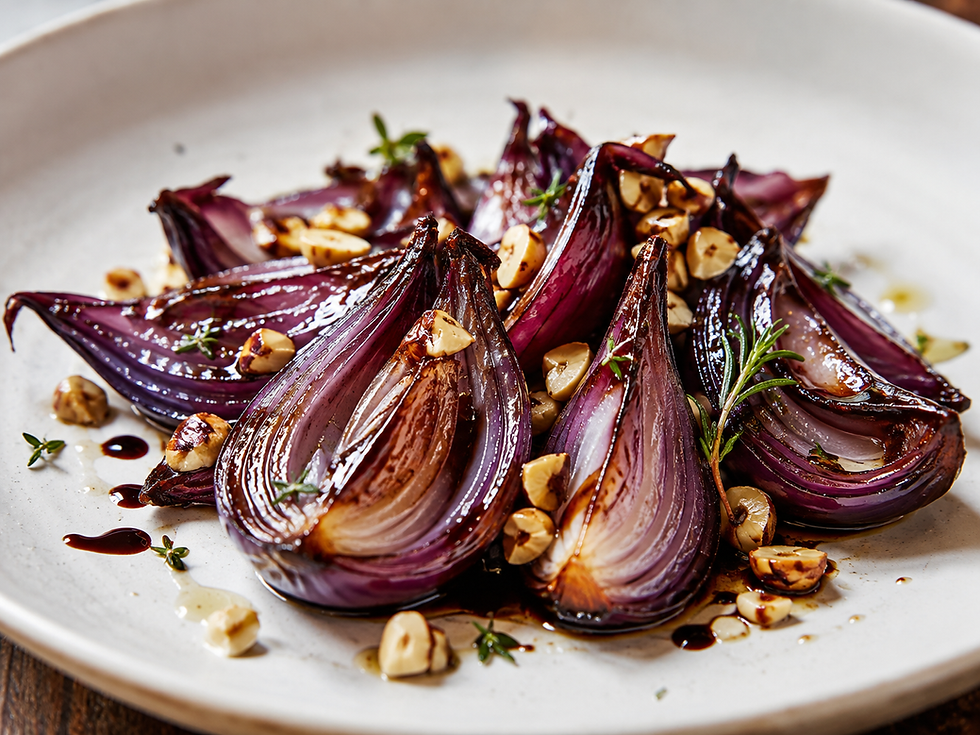
Serve the beets warm, not hot, at about 120°F (50°C), on a warm platter or on individual plates at room temperature. At this temperature the sweetness and the acidity of the glaze are both clearly perceived, while a very hot beet tastes only sweet. Arrange the wedges in a loose circle or a low pile, cut sides facing in different directions so the light catches the glaze, and spoon the remaining glaze from the pan over them.
Scatter the toasted walnuts over the beets, add a few drops of parsley oil around the edge of the plate, a little orange zest and a few flakes of sea salt. If you have aged Aceto Balsamico Tradizionale, add three or four drops at the last moment, directly on the beets. The guest eats with a fork and knife, and every bite should combine the soft, sweet beet, the acidity of the glaze, the crunch of the walnut and the green note of the oil.
Professional Technique
The key number is the internal temperature. Beets are done between 200 and 205°F (93 and 96°C) at the center. Below 195°F (90°C) the core stays firm and slightly fibrous; well above 205°F (96°C), after a very long bake, the flesh starts to dry near the skin. Choosing beets of the same size is what makes the temperature uniform across the tray, which is why size matters more than any timing given in a recipe.
The hidden variable is the crust. A crust that is too thin or cracked lets steam escape, and the beets roast instead of steaming, with a tougher surface. A crust that is too wet sticks to the skin and seasons the flesh too much. The right mixture holds its shape when squeezed, does not drip and covers each beet by at least 1/2 inch (1.3 cm). Flour makes the difference between a shell that holds and loose salt that slides off.
The doneness test is simple and reliable. A thin skewer pushed through the crust into the largest beet should meet almost no resistance, as if going into a ripe pear. If you feel a hard core, return the tray to the oven for 10 minutes and test again. The skin should then slip off with light pressure; a skin that sticks is the clearest sign of undercooked beets.
Glaze and Acidity Control
The glaze is a balance between sugar and acid. Beets are naturally sweet, with roughly 7 to 9 percent sugar, and balsamic vinegar adds both acidity and the sweetness of the cooked grape must. Reduced by half, the vinegar becomes thick enough to coat the beets in a thin, shiny layer. Reduced further, it turns sticky and bitter, because the sugars start to caramelize and burn at the edges of the pan.
Acidity also protects the color. The red pigments of the beet, the betalains, are most stable in a slightly acidic environment, which is why beets dressed with vinegar keep their deep ruby tone, while beets left in water or in alkaline conditions fade toward brown. Glazing them in balsamic vinegar is therefore a matter of both taste and appearance.
Heat must stay moderate during glazing. On high heat the vinegar evaporates too fast and its aroma turns harsh, while the outside of the beets dries out. On medium heat, in a wide pan, the glaze clings evenly. Take the pan off the heat as soon as the beets are coated; they will hold their shine for at least 20 minutes, the time needed to serve.
Professional Mise en Place
The beets can be baked, peeled and cut up to two days ahead, so the service requires only a few minutes of glazing. Organize the work so the parsley oil and the walnuts are ready before the beets come out of the crust.
Equipment and tools
Large bowl for the crust, rimmed baking sheet, parchment paper
Thin metal skewer and instant-read thermometer
Disposable gloves, sharp chef's knife, cutting board that does not stain
Blender, fine strainer, coffee filter, wide skillet
Prepared ahead
Beets baked, peeled and cut into wedges, up to 2 days ahead, refrigerated in a covered container
Parsley oil strained, up to 2 days ahead, refrigerated in a small bottle
Walnuts toasted and chopped, up to 3 days ahead, in an airtight jar
Shallot minced, within 2 hours of service
Service setup
Balsamic vinegar measured, skillet on the stove
Warm platter or plates at room temperature
Parsley oil in a squeeze bottle, walnuts, orange zest and flaky salt on the pass
Aged balsamic in a small dropper bottle, optional
Chef Tips
Use beets of different colors for a more striking plate. Golden and Chioggia beets, the variety with pink and white rings named after the town in the Venetian lagoon, bake in the same time. Bake each color in a separate part of the crust and glaze them separately, so the red does not stain the others.
Keep the beet leaves. Wash them well, cut the stems into short pieces and cook them in a pan with olive oil, garlic and a pinch of chili for 4 to 5 minutes, as you would chard. They make a second side dish at no cost and complete the plate with a slightly bitter green.
Wear gloves and use a plastic or stone cutting board. Beet juice stains wood and skin for hours. If your hands do get stained, rub them with lemon juice and coarse salt before washing them with soap.
For a more substantial dish, serve the glazed beets on a spoonful of cashew ricotta whipped with lemon zest and salt, or on a bed of cooked farro dressed with olive oil. The neutral, creamy or grainy base softens the acidity and turns the side dish into a light main course.
Common Mistakes
Boiling the beets. Boiling washes away color, sugar and flavor into the water and leaves the flesh watery. Bake them in the salt crust, where they cook in their own steam.
Peeling or cutting before baking. Peeled or cut beets bleed their juice in the oven and come out pale and dry. Bake them whole, with the skin, the root tip and a short stem.
Mixing sizes. Small beets overcook while large ones stay hard. Buy roots of the same size, or bake the large ones for 15 minutes before adding the small ones.
Using fine salt for the crust. Fine salt packs into a dense mass that dissolves into the skin and oversalts the beets. Use coarse sea salt bound with a little flour.
Glazing with unreduced vinegar. Beets cooked in thin vinegar release water and the sauce stays runny and sharp. Reduce the vinegar by half before adding them.
Burning the glaze. On high heat the sugars of the balsamic scorch in seconds and turn bitter. Keep the heat medium and take the pan off as soon as the beets are coated.
Serving them too hot. Very hot beets taste only sweet and the glaze runs off. Let them cool to about 120°F (50°C) before serving.
Wine Pairing
Lambrusco di Sorbara DOC: The palest and most fragrant Lambrusco, from the plain north of Modena, with violet and wild strawberry aromas and a sharp, dry acidity. It comes from the same land as the balsamic vinegar, and its bubbles and freshness cleanse the palate after the sweet, dense beets. Serve it at about 50°F (10°C).
Lambrusco Grasparossa di Castelvetro DOC: From the hills south of Modena, a deep purple, fuller Lambrusco with ripe dark fruit and a light tannic grip. Its fruit matches the color and earthiness of the beets, and its tannins stand up to the glaze. Serve it at about 54°F (12°C).
Romagna Sangiovese DOC: A medium-bodied red from the hills of Romagna, with cherry, violet and a savory finish. Its bright acidity mirrors the vinegar, and its moderate structure suits a vegetable dish without overpowering it. Serve it at about 60°F (16°C).
Colli Bolognesi Pignoletto DOCG: A white from the hills around Bologna, made mainly from the Grechetto Gentile grape, with notes of apple, almond and white flowers. Its gentle bitterness at the finish echoes the walnuts and balances the sweetness of the beets. Serve it at about 48°F (9°C).
Storage & Reheating
Refrigerator: baked and peeled beets, not yet glazed, keep in an airtight container for up to 4 days. Glazed beets keep for 2 days, but the walnuts lose their crunch, so store them separately. Freezer: not recommended; ice crystals break the cell walls and the beets turn soft and watery after thawing. Refrigerate the beets within 1 hour of cooking.
Reheat glazed beets in a skillet over medium low heat with 1 tbsp (15 ml) of water, turning them for 3 to 4 minutes until warm. In the microwave, cover them and heat at 50 percent power for 1 to 2 minutes. Plain baked beets can be glazed straight from the refrigerator: give them 2 minutes more in the pan. Add the walnuts, the parsley oil and the zest only at the moment of serving.
Nutrition
Per serving, based on 6 servings:
Calories: 250 kcal
Total Fat: 17 g
Saturated Fat: 2 g
Trans Fat: 0 g
Unsaturated Fat: 15 g
Cholesterol: 0 mg
Sodium: 420 mg
Total Carbohydrates: 22 g
Fiber: 5 g
Total Sugars: 16 g
Added Sugars: 1 g
Protein: 4 g
Principal micronutrients: folate, manganese, potassium, vitamin C, vitamin E, copper
These figures are estimates, calculated on the quantities listed and rounded to the nearest whole number, assuming that only a small part of the salt crust passes into the beets. They vary with the size of the beets and the amount of glaze and oil served.



Comments