Beer Pairing: Baladin Sud

Sud di Baladin is the beer that Birrificio Baladin, the brewery founded by Teo Musso in Piozzo, in the province of Cuneo, dedicates to the South of Italy. Musso calls it an Italian Mediterranean Ale. It was conceived as a limited edition to thank the lands of the South for their ingredients, drawing on the memories of his travels there, and it was launched in 2020 in cans. Its recipe is a journey from north to south: water from the Maritime Alps, barley from Basilicata and Puglia, citrus from Sicily, Calabria, Campania and Puglia. At 4.5% alcohol, it is a light, fresh beer for the Mediterranean table.
What It Is
Sud is a wheat beer in the family of the witbier, or blanche: pale, hazy, seasoned with citrus peel and spice, with very little bitterness. The brewery lists it as a witbier and describes it as a Mediterranean ale. The technical sheet gives 4.5% alcohol, an original gravity of 12.7 degrees Plato, a color of 6–8 EBC and a bitterness of 10–12 IBU. It is sold in 33 cl cans and in 24-liter kegs.
The numbers describe a beer of freshness. Low alcohol and a light body leave room for delicate food; low bitterness never fights salt, iodine or citrus; the haze and the wheat give a soft texture. Compared with Isaac, the Baladin blanche, Sud is slightly lighter in alcohol and has its own citrus identity, built on the fruit of the South. ZAFFERANO & CO. reads Sud as a gastronomic profile made for raw fish, grilled fish, white meat and dishes dressed with citrus.
The Brewery and Its Territory
Teo Musso opened the pub Le Baladin in Piozzo in 1986 and turned it into a brewpub in 1996, when Italian craft brewing barely existed. Production later moved to a larger site in nearby Farigliano, and the company became Birrificio Baladin Società Agricola, an agricultural brewery that grows much of its own barley and part of its hops. Its project "From the Earth to Beer" promotes craft beer made entirely with Italian agricultural raw materials, and the cans of Sud carry the logo of a craft beer made with Italian agricultural products.
Sud reverses the usual direction of a Piedmontese brewery. The brewery is in the North, but the beer looks to the South: Basilicata and Puglia, where Baladin's barley is grown; Calabria, Sicily and Campania, lands of bergamot, lemon and orange. The brewery presents the beer as a tribute to the agricultural supply chain of the South of Italy, a thank-you in liquid form.
Ingredients and Style
The ingredients declared by Baladin are water, barley malt, wheat malt, wheat, hops, a mix of spices and citrus peel in variable proportions, and yeast. The brewery details their origin: water from the Maritime Alps; barley malt from its own fields in Basilicata and Puglia; hops from its fields in Piozzo and Busca, in Piedmont; spices from the regions of central and southern Italy; yeast cultivated in the brewery at Piozzo. The citrus is lemon, orange, tangerine and bergamot from Sicily, Calabria, Campania and Puglia. Baladin defines the beer as 100% Italian.
Each ingredient has a function. The barley malt gives a pale color and a clean cereal base; the wheat, malted and unmalted, gives protein, a silky texture and the haze of the style. The hops are used with restraint and add fresh green notes without bitterness. The citrus peel and the spices build the aromatic frame, with tangerine and coriander in the lead. The house yeast contributes fruit and, as the brewery notes, enhances a note of toasted orange peel.
Brewing
A witbier is brewed as an ale: the wort of barley and wheat is boiled with few hops, citrus peel and spices are added so their aromas are preserved, and the beer ferments warm with a top-fermenting yeast. The yeast is decisive here, because its fruity compounds complete the citrus and give the beer its lively, soft mouthfeel.
The haze is part of the style, not a defect: it comes from the wheat proteins and the yeast. The can protects the beer from light, which is a real advantage for a pale, aromatic beer, and keeps the citrus aromas intact. As the brewery notes, Sud grows more aromatic as it warms, until it releases surprising notes of orange blossom honey.
Tasting Profile
Sud pours an opalescent yellow, with a white head. On the nose it shows marked cereal notes, citrus aromas of tangerine and coriander, and fresh hop notes. On the palate the citrus returns, well balanced with the cereal, and blends with delicate notes of toasted orange peel brought out by the Baladin yeast.
The overall impression is that of a fresh beer, easy to drink but with character. The body is light, the carbonation lively, the bitterness very low, and the finish clean. As the beer warms, orange blossom honey appears. Structure explains the pairings: the citrus works like a squeeze of lemon on fish; the low bitterness respects raw shellfish and iodine; the carbonation cleans light frying and fresh cheese; the light body never covers delicate flavors.
ZAFFERANO & CO. Technical Score
Style Fidelity: 87/100 · Italian Identity: 95/100 · Food-Pairing Versatility: 91/100 · Complexity: 80/100 · Balance: 90/100. These are ZAFFERANO & CO. editorial technical scores and are separate from third-party ratings.
The score evaluates fidelity to the style, Italian identity, the range of dishes a beer can serve, aromatic depth and structural coherence. Sud scores highest for Italian identity, with ingredients traced region by region and citrus from four southern regions, and for versatility with fish and white meat. Complexity is limited by design: a 4.5% Mediterranean ale should be light and readable, not layered like a strong ale.
Third-Party Ratings and ZAFFERANO & CO. Rating
We found no third-party rating or award for Sud di Baladin that we could verify with its source and year, so we quote none. ZAFFERANO & CO. Rating: 88/100.
Our rating is kept separate from third-party opinions, as with our wine pages. It judges Sud as a gastronomic beer, by how it performs with Italian food, and refers to the beer fresh and well served.
Serving Temperature, Glassware, Pouring
Serve Sud at 46–50°F (8–10°C), the range indicated by the brewery. Colder, the citrus and the coriander close and the beer tastes empty; warmer than about 54°F (12°C), it loses freshness, although its honeyed side emerges. Pour it into a glass rather than drinking from the can: a tulip glass or a wide tumbler releases the aroma that the can keeps closed. Never use a frosted glass.
Pour slowly, with the glass tilted, then straighten it to build a white head. With a wheat beer the haze belongs in the glass: pour the last part of the can as well. Store cans cool and drink them young.
Italian Food Pairings
Baladin suggests Sud as an aperitif and with white meat, grilled fish, carpaccio of white fish such as sea bass, sea bream and amberjack, and raw shellfish; with light first courses such as lemon risotto or tagliolini with herbs; and with light frying and fresh cheeses with citrus preserves and orange blossom honey. These are the ZAFFERANO & CO. recipes where it performs best.
Tartare di Ricciola, Avocado e Finger Lime: Raw amberjack, one of the fish named by the brewery. The beer's citrus meets the finger lime, its low bitterness respects the delicate flesh and the caviar, and its light body leaves the fish in the lead.
Gambero Rosso di Mazara agli Agrumi: Sicilian red prawns with citrus, a dish of the South for a beer of the South. Raw shellfish ask for no bitterness and some acidity; Sud gives freshness, tangerine and fine bubbles that clean the aioli.
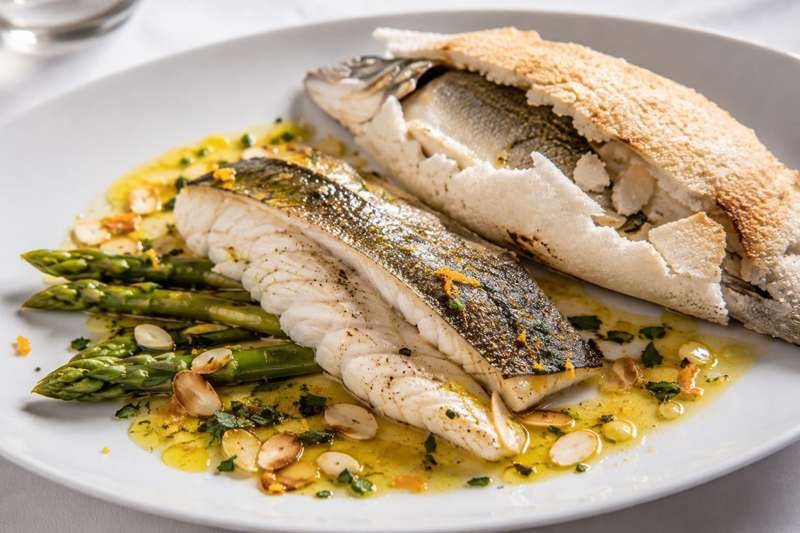
Spigola al Sale con Agrumi: Sea bass baked in salt and dressed with citrus. The beer repeats the citrus of the dish, the wheat texture follows the moist flesh, and the herbal hop notes accompany the asparagus.
Grigliata di Gamberoni, Polpo e Cozze: Grilled seafood, the brewery's own indication. The light toasting of the grill meets the cereal of the malt and the toasted orange peel, while the carbonation refreshes the palate between bites.
Chicken Piccata: White meat with lemon, capers and butter. The citrus of the beer answers the lemon of the sauce, and the bubbles lighten the butter; the moderate alcohol never covers the delicacy of the chicken.
Fiori di Zucca Ripieni: Light frying and fresh cheese, two more families on Baladin's list. The carbonation cuts the batter, the wheat meets the creamy filling, and the citrus keeps the palate clean.
What to Avoid
Sud loses against weight and depth. Braised red meats, slow ragù, game and aged cheeses cover its citrus and make it taste thin; they need a stronger beer or a red wine. Rich cream sauces and heavy baked pasta also overpower it.
Very sweet desserts and chocolate make it taste sour. Strongly smoked or charred preparations and bitter vegetables flatten its citrus and spice. The problem is never quality, only proportion.
Price and Availability
Sud di Baladin has been sold in cans since its launch in 2020, in the 33 cl format, and on draft in 24-liter kegs. In Italy it is found in specialty beer shops and at the brewery's pubs.
Outside Italy, availability depends on importers and local distribution; prices vary by state, format and retailer, so we print no reference price. In the United States, look for it in shops and restaurants specializing in Italian or imported craft beer, and drink it young: citrus is the first aroma to fade.
The Beer Across a Meal
In an Italian menu, Sud belongs at the beginning: with the aperitivo, crudo and carpaccio of fish, raw shellfish, light frying and the lighter fish and white-meat courses, where a young white wine or a sparkling wine would normally be poured. It can carry a whole summer meal of fish, then leave room for wine if a red-meat course follows.
In the glass the beer evolves as it warms. At 46°F (8°C) tangerine, coriander and fresh hops lead; as it reaches 50°F (10°C) and beyond, toasted orange peel and orange blossom honey emerge. Serving it cold and letting it warm through a course of crudo is the best way to taste the journey from the Alps to the South that the brewery put into the recipe.


Comments