
Pan Seared Branzino with Silky Potato Purée | Branzino in Padella con Purè di Patate
Updated: 7 days ago

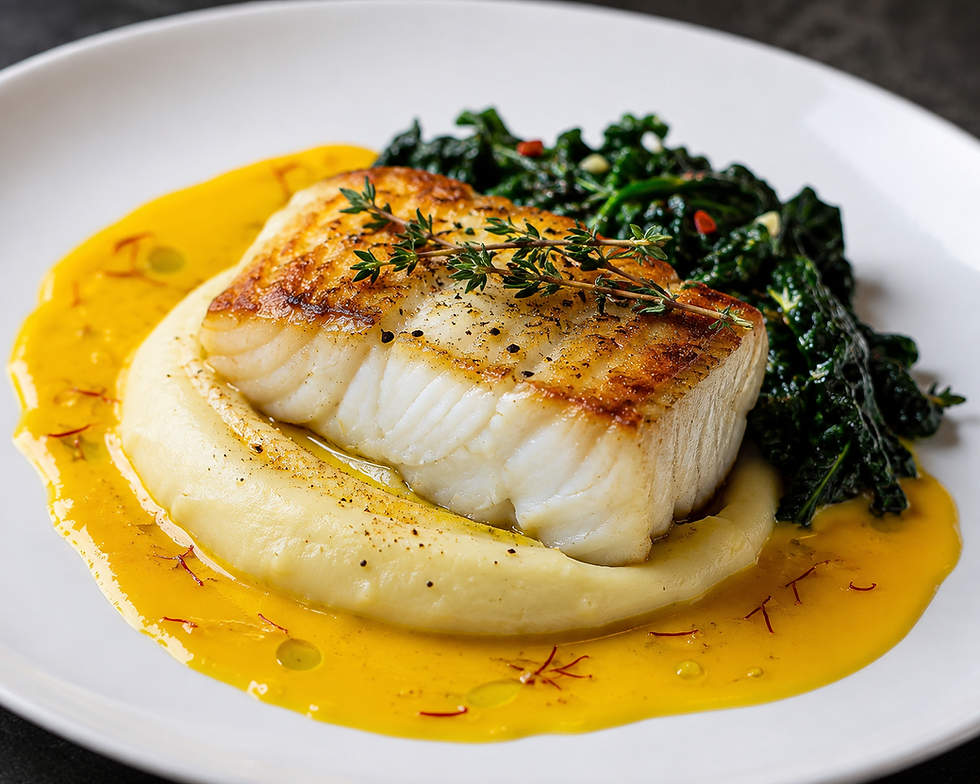
Branzino in Padella con Purée di Patate Serves 4 This is a restaurant level preparation built around three precise elements: perfectly crisp branzino skin, an exceptionally smooth potato purée, and a restrained lemon beurre blanc. The purée must be prepared while the potatoes are still hot, passed through a fine sieve, and emulsified without overworking the starch. Ingredients For the branzino 4 branzino fillets with skin, approximately 170 to 6.35 oz each Fine sea salt White pepper 0.88 oz clarified butter 0.71 oz unsalted butter 1 garlic clove, lightly crushed 2 thyme sprigs Finely grated lemon zest For the potato purée 2.2 lb Ratte potatoes or Yukon Gold potatoes, similar in size 7.76 oz cold unsalted cultured butter, cut into small cubes 6.09 fl oz whole milk 0.71 oz clarified butter, warm Fine sea salt A small pinch of freshly grated nutmeg, optional For the lemon beurre blanc 1 small shallot, very finely sliced 4.06 fl oz dry white wine 0.68 fl oz white wine vinegar 4.06 fl oz light fish stock 1.01 fl oz heavy cream 4.23 oz cold unsalted butter, cut into cubes 0.34 fl oz fresh lemon juice Fine sea salt White pepper Preparing the Potatoes Wash the potatoes carefully without peeling them. Cooking them in their skins limits water absorption and protects the natural starch structure. Place the potatoes in a saucepan and cover them with cold water by approximately 1.18 in. Add enough sea salt for the water to taste properly seasoned. Bring the water slowly to a gentle simmer. Maintain the temperature between 194°F and 203°F. Do not allow the water to boil aggressively because the exterior will break down before the center is cooked. Cook for approximately 30 to 40 minutes, depending on size. The potatoes are ready when a thin knife enters the center without resistance. Drain immediately. Return them to the warm saucepan for 1 minute so that the residual surface moisture evaporates. Peel the potatoes while they are still very hot. Producing a Perfectly Smooth Purée Pass the hot potato flesh through a potato ricer directly into a wide saucepan. Place the saucepan over low heat. Stir gently with a heat resistant spatula for approximately 2 minutes. This removes excess moisture and concentrates the potato flavor. Meanwhile, heat the milk to approximately 167°F. It must be hot but never boiling. Remove the potatoes from the heat. Incorporate the cold cultured butter gradually, a few cubes at a time, mixing gently until each addition has completely emulsified. Add the hot milk in three additions. Fold gently until the purée becomes smooth, glossy, and supple. Pass the finished purée through a very fine chinois or tamis using a flexible plastic scraper. Work quickly and apply only the pressure necessary to push the purée through the mesh. Excessive pressure or repeated sieving will rupture the starch and create a sticky texture. Return the purée to a clean saucepan. Fold in the warm clarified butter for additional gloss and a more refined finish. Adjust the salt and, if desired, add an almost imperceptible amount of nutmeg. The final consistency should flow slowly from the spoon while still holding a clean, soft shape on the plate. Cover the surface directly with parchment paper and hold at approximately 149°F. Never allow the purée to boil after the butter has been incorporated. Preparing the Lemon Beurre Blanc Combine the shallot, white wine, vinegar, and fish stock in a small saucepan. Reduce slowly until approximately 1.69 fl oz of liquid remains. Add the cream and simmer gently for 1 minute. The cream stabilizes the emulsion without making the sauce taste heavy. Lower the heat completely. Incorporate the cold butter gradually, whisking continuously. The sauce should remain between 131°F and 140°F. If it becomes too hot, the butter will separate. Pass the sauce through a fine chinois. Season with salt, white pepper, and fresh lemon juice. Keep warm without boiling. Preparing the Branzino Inspect the fillets carefully and remove every pin bone. Check that the skin has been completely scaled. Dry the fish thoroughly with paper towels. Moisture is the enemy of crisp skin. Season the flesh and skin lightly with fine sea salt. Leave the fillets uncovered for 10 minutes, then dry the skin once more. Heat a heavy stainless steel or carbon steel pan over medium heat. Add the clarified butter. Place the fillets in the pan with the skin facing downward. During the first 20 seconds, press each fillet gently with a fish spatula so the entire skin remains in contact with the pan. Release the pressure and continue cooking almost entirely on the skin side. Control the heat carefully. The butter should remain hot without smoking. When the flesh has become opaque approximately three quarters of the way through, add the unsalted butter, garlic, and thyme. Turn the fillets and baste the flesh for approximately 20 to 30 seconds. Remove the fish when the center reaches approximately 122°F. Rest for 2 minutes. The final temperature should reach approximately 126°F to 129°F, leaving the flesh moist, tender, and delicately pearlescent. Restaurant Plating Warm the plates to approximately 131°F. Place approximately 3.53 oz of potato purée slightly off center. Shape it into a smooth oval using the back of a warm spoon. Position the branzino over the purée with the crisp skin facing upward. Spoon the lemon beurre blanc around the purée, never over the skin. The skin must remain completely dry and crisp. Finish with a very small amount of finely grated lemon zest. Avoid unnecessary garnishes. The contrast between the white purée, golden fish skin, and pale beurre blanc should remain clean and elegant. Chef Gianluca’s Recommendation Clarified butter is ideal for cooking the branzino because it tolerates higher temperatures and produces a cleaner, crisper skin. For the purée, however, cultured whole butter remains essential because its water and milk solids help create a complete emulsion. Clarified butter should be used only as the final finishing fat, never as the sole butter in a classical potato purée.
The Story
Branzino in Padella con Purée di Patate Serves 4 This is a restaurant level preparation built around three precise elements: perfectly crisp branzino skin, an exceptionally smooth potato purée, and a restrained lemon beurre blanc. The purée must be prepared while the potatoes are still hot, passed through a fine sieve, and emulsified without overworking the starch. Ingredients For the branzino 4 branzino fillets with skin, approximately 170 to 6.35 oz each Fine sea salt White pepper 0.88 oz clarified butter 0.71 oz unsalted butter 1 garlic clove, lightly crushed 2 thyme sprigs Finely grated lemon zest For the potato purée 2.2 lb Ratte potatoes or Yukon Gold potatoes, similar in size 7.76 oz cold unsalted cultured butter, cut into small cubes 6.09 fl oz whole milk 0.71 oz clarified butter, warm Fine sea salt A small pinch of freshly grated nutmeg, optional For the lemon beurre blanc 1 small shallot, very finely sliced 4.06 fl oz dry white wine 0.68 fl oz white wine vinegar 4.06 fl oz light fish stock 1.01 fl oz heavy cream 4.23 oz cold unsalted butter, cut into cubes 0.34 fl oz fresh lemon juice Fine sea salt White pepper Preparing the Potatoes Wash the potatoes carefully without peeling them. Cooking them in their skins limits water absorption and protects the natural starch structure. Place the potatoes in a saucepan and cover them with cold water by approximately 1.18 in. Add enough sea salt for the water to taste properly seasoned. Bring the water slowly to a gentle simmer. Maintain the temperature between 194°F and 203°F. Do not allow the water to boil aggressively because the exterior will break down before the center is cooked. Cook for approximately 30 to 40 minutes, depending on size. The potatoes are ready when a thin knife enters the center without resistance. Drain immediately. Return them to the warm saucepan for 1 minute so that the residual surface moisture evaporates. Peel the potatoes while they are still very hot. Producing a Perfectly Smooth Purée Pass the hot potato flesh through a potato ricer directly into a wide saucepan. Place the saucepan over low heat. Stir gently with a heat resistant spatula for approximately 2 minutes. This removes excess moisture and concentrates the potato flavor. Meanwhile, heat the milk to approximately 167°F. It must be hot but never boiling. Remove the potatoes from the heat. Incorporate the cold cultured butter gradually, a few cubes at a time, mixing gently until each addition has completely emulsified. Add the hot milk in three additions. Fold gently until the purée becomes smooth, glossy, and supple. Pass the finished purée through a very fine chinois or tamis using a flexible plastic scraper. Work quickly and apply only the pressure necessary to push the purée through the mesh. Excessive pressure or repeated sieving will rupture the starch and create a sticky texture. Return the purée to a clean saucepan. Fold in the warm clarified butter for additional gloss and a more refined finish. Adjust the salt and, if desired, add an almost imperceptible amount of nutmeg. The final consistency should flow slowly from the spoon while still holding a clean, soft shape on the plate. Cover the surface directly with parchment paper and hold at approximately 149°F. Never allow the purée to boil after the butter has been incorporated. Preparing the Lemon Beurre Blanc Combine the shallot, white wine, vinegar, and fish stock in a small saucepan. Reduce slowly until approximately 1.69 fl oz of liquid remains. Add the cream and simmer gently for 1 minute. The cream stabilizes the emulsion without making the sauce taste heavy. Lower the heat completely. Incorporate the cold butter gradually, whisking continuously. The sauce should remain between 131°F and 140°F. If it becomes too hot, the butter will separate. Pass the sauce through a fine chinois. Season with salt, white pepper, and fresh lemon juice. Keep warm without boiling. Preparing the Branzino Inspect the fillets carefully and remove every pin bone. Check that the skin has been completely scaled. Dry the fish thoroughly with paper towels. Moisture is the enemy of crisp skin. Season the flesh and skin lightly with fine sea salt. Leave the fillets uncovered for 10 minutes, then dry the skin once more. Heat a heavy stainless steel or carbon steel pan over medium heat. Add the clarified butter. Place the fillets in the pan with the skin facing downward. During the first 20 seconds, press each fillet gently with a fish spatula so the entire skin remains in contact with the pan. Release the pressure and continue cooking almost entirely on the skin side. Control the heat carefully. The butter should remain hot without smoking. When the flesh has become opaque approximately three quarters of the way through, add the unsalted butter, garlic, and thyme. Turn the fillets and baste the flesh for approximately 20 to 30 seconds. Remove the fish when the center reaches approximately 122°F. Rest for 2 minutes. The final temperature should reach approximately 126°F to 129°F, leaving the flesh moist, tender, and delicately pearlescent. Restaurant Plating Warm the plates to approximately 131°F. Place approximately 3.53 oz of potato purée slightly off center. Shape it into a smooth oval using the back of a warm spoon. Position the branzino over the purée with the crisp skin facing upward. Spoon the lemon beurre blanc around the purée, never over the skin. The skin must remain completely dry and crisp. Finish with a very small amount of finely grated lemon zest. Avoid unnecessary garnishes. The contrast between the white purée, golden fish skin, and pale beurre blanc should remain clean and elegant. Chef Gianluca’s Recommendation Clarified butter is ideal for cooking the branzino because it tolerates higher temperatures and produces a cleaner, crisper skin. For the purée, however, cultured whole butter remains essential because its water and milk solids help create a complete emulsion. Clarified butter should be used only as the final finishing fat, never as the sole butter in a classical potato purée.
Ingredients
For the recipe
Use the ingredients and quantities specified in the original recipe, measured and prepared before cooking.
Preparing the Seafood
Branzino in Padella con Purée di Patate Serves 4 This is a restaurant level preparation built around three precise elements: perfectly crisp branzino skin, an exceptionally smooth potato purée, and a restrained lemon beurre blanc. The purée must be prepared while the potatoes are still hot, passed through a fine sieve, and emulsified without overworking the starch. Ingredients For the branzino 4 branzino fillets with skin, approximately 170 to 6.35 oz each Fine sea salt White pepper 0.88 oz clarified butter 0.71 oz unsalted butter 1 garlic clove, lightly crushed 2 thyme sprigs Finely grated lemon zest For the potato purée 2.2 lb Ratte potatoes or Yukon Gold potatoes, similar in size 7.76 oz cold unsalted cultured butter, cut into small cubes 6.09 fl oz whole milk 0.71 oz clarified butter, warm
Preparing the Aromatic Base
Fine sea salt A small pinch of freshly grated nutmeg, optional For the lemon beurre blanc 1 small shallot, very finely sliced 4.06 fl oz dry white wine 0.68 fl oz white wine vinegar 4.06 fl oz light fish stock 1.01 fl oz heavy cream 4.23 oz cold unsalted butter, cut into cubes 0.34 fl oz fresh lemon juice Fine sea salt White pepper Preparing the Potatoes Wash the potatoes carefully without peeling them. Cooking them in their skins limits water absorption and protects the natural starch structure. Place the potatoes in a saucepan and cover them with cold water by approximately 1.18 in. Add enough sea salt for the water to taste properly seasoned. Bring the water slowly to a gentle simmer.
Cooking the Seafood
Maintain the temperature between 194°F and 203°F. Do not allow the water to boil aggressively because the exterior will break down before the center is cooked. Cook for approximately 30 to 40 minutes, depending on size. The potatoes are ready when a thin knife enters the center without resistance. Drain immediately. Return them to the warm saucepan for 1 minute so that the residual surface moisture evaporates. Peel the potatoes while they are still very hot. Producing a Perfectly Smooth Purée Pass the hot potato flesh through a potato ricer directly into a wide saucepan. Place the saucepan over low heat. Stir gently with a heat resistant spatula for approximately 2 minutes. This removes excess moisture and concentrates the potato flavor. Meanwhile, heat the milk to approximately 167°F. It must be hot but never boiling. Remove the potatoes from the heat. Incorporate the cold cultured butter gradually, a few cubes at a time, mixing gently until each addition has completely emulsified. Add the hot milk in three additions. Fold gently until the purée becomes smooth, glossy, and supple.
Preparing the Accompaniments
Pass the finished purée through a very fine chinois or tamis using a flexible plastic scraper. Work quickly and apply only the pressure necessary to push the purée through the mesh. Excessive pressure or repeated sieving will rupture the starch and create a sticky texture. Return the purée to a clean saucepan. Fold in the warm clarified butter for additional gloss and a more refined finish. Adjust the salt and, if desired, add an almost imperceptible amount of nutmeg. The final consistency should flow slowly from the spoon while still holding a clean, soft shape on the plate. Cover the surface directly with parchment paper and hold at approximately 149°F. Never allow the purée to boil after the butter has been incorporated. Preparing the Lemon Beurre Blanc Combine the shallot, white wine, vinegar, and fish stock in a small saucepan. Reduce slowly until approximately 1.69 fl oz of liquid remains. Add the cream and simmer gently for 1 minute. The cream stabilizes the emulsion without making the sauce taste heavy. Lower the heat completely. Incorporate the cold butter gradually, whisking continuously. The sauce should remain between 131°F and 140°F. If it becomes too hot, the butter will separate.
Combining the Components
Pass the sauce through a fine chinois. Season with salt, white pepper, and fresh lemon juice. Keep warm without boiling. Preparing the Branzino Inspect the fillets carefully and remove every pin bone. Check that the skin has been completely scaled. Dry the fish thoroughly with paper towels. Moisture is the enemy of crisp skin. Season the flesh and skin lightly with fine sea salt. Leave the fillets uncovered for 10 minutes, then dry the skin once more. Heat a heavy stainless steel or carbon steel pan over medium heat. Add the clarified butter. Place the fillets in the pan with the skin facing downward. During the first 20 seconds, press each fillet gently with a fish spatula so the entire skin remains in contact with the pan. Release the pressure and continue cooking almost entirely on the skin side. Control the heat carefully. The butter should remain hot without smoking. When the flesh has become opaque approximately three quarters of the way through, add the unsalted butter, garlic, and thyme.
Finishing the Dish
Turn the fillets and baste the flesh for approximately 20 to 30 seconds. Remove the fish when the center reaches approximately 122°F. Rest for 2 minutes. The final temperature should reach approximately 126°F to 129°F, leaving the flesh moist, tender, and delicately pearlescent. Restaurant Plating Warm the plates to approximately 131°F. Place approximately 3.53 oz of potato purée slightly off center. Shape it into a smooth oval using the back of a warm spoon. Position the branzino over the purée with the crisp skin facing upward. Spoon the lemon beurre blanc around the purée, never over the skin. The skin must remain completely dry and crisp. Finish with a very small amount of finely grated lemon zest. Avoid unnecessary garnishes. The contrast between the white purée, golden fish skin, and pale beurre blanc should remain clean and elegant. Chef Gianluca’s Recommendation Clarified butter is ideal for cooking the branzino because it tolerates higher temperatures and produces a cleaner, crisper skin. For the purée, however, cultured whole butter remains essential because its water and milk solids help create a complete emulsion. Clarified butter should be used only as the final finishing fat, never as the sole butter in a classical potato purée.
Plating
Approximate nutrition per serving: 460 calories, 1.2 oz protein, 0.99 oz carbohydrates, 0.78 oz fat, 0.18 oz saturated fat, 0.14 oz fiber, 0.18 oz sugars, 720 mg sodium, and 105 mg cholesterol. Values vary with the fish, sauce, and portion size.
Professional Technique
Professional execution depends on temperature control, sequencing, and visual cues. Keep the work area organized and move to the next stage only when the current component has reached the correct texture.
Texture and Moisture Control
Control moisture deliberately. Excess liquid weakens flavor and structure, while excessive heat or reduction can dry the main ingredient. Adjust gradually and allow each addition to integrate before making another correction.
Professional Mise en Place
Complete the mise en place before cooking begins. Measure ingredients, prepare garnishes and finishing elements, organize pans and utensils, and keep temperature-sensitive ingredients refrigerated until needed.
Chef Tips
Use the best ingredients available, season progressively, and rely on texture and aroma as doneness cues. Serve promptly once the preparation reaches its intended consistency.
Common Mistakes
Avoid rushing the preparation, overcrowding pans, adding excess liquid, overcooking the main ingredient, or making large seasoning corrections at the end.
Wine Pairing
Vermentino di Gallura DOCG — A balanced pairing chosen to support the structure, richness, acidity, and aromatic profile of the dish.
Fiano di Avellino DOCG — A balanced pairing chosen to support the structure, richness, acidity, and aromatic profile of the dish.
Etna Bianco DOC — A balanced pairing chosen to support the structure, richness, acidity, and aromatic profile of the dish.
Grillo Sicilia DOC — A balanced pairing chosen to support the structure, richness, acidity, and aromatic profile of the dish.
Nuragus di Cagliari DOC — A balanced pairing chosen to support the structure, richness, acidity, and aromatic profile of the dish.
Storage
Cool leftovers promptly and refrigerate in an airtight container for up to 3 days. Reheat gently with a small amount of stock, water, or sauce as appropriate. Avoid repeated reheating because it damages texture and can dry proteins or overcook starches. Chef Gianluca
Nutrition
Approximate nutrition per serving: 460 calories, 1.2 oz protein, 0.99 oz carbohydrates, 0.78 oz fat, 0.18 oz saturated fat, 0.14 oz fiber, 0.18 oz sugars, 720 mg sodium, and 105 mg cholesterol. Values vary with the fish, sauce, and portion size.



Comments