
Italian Piedmont Cardoon Gratin | Cardi Gratinati alla Piemontese
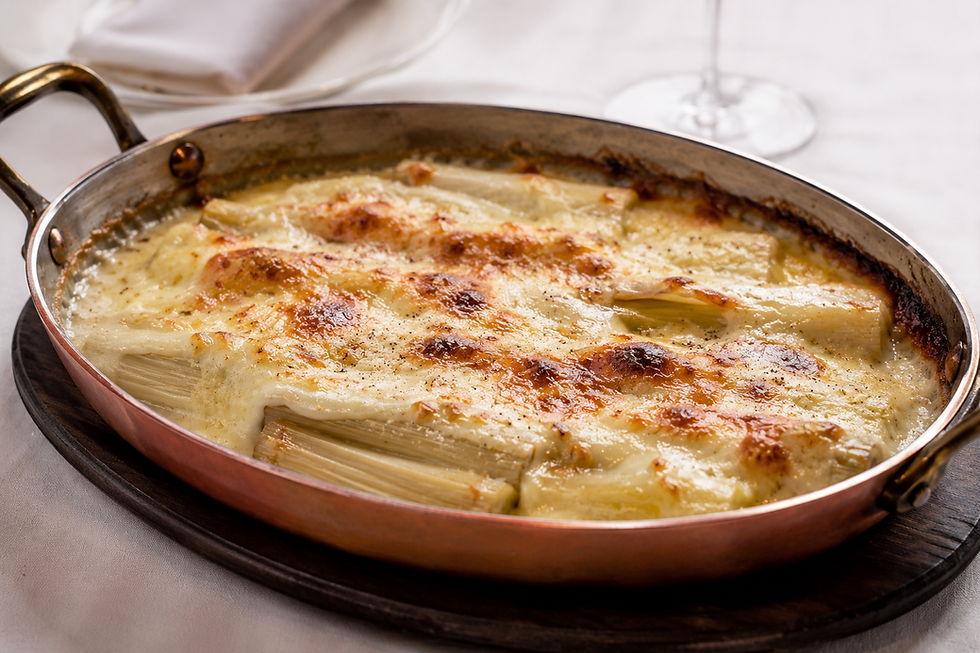
In Piedmont the cardoon is not a vegetable you improvise with. It arrives in the markets of Asti and Alessandria after the first frost, sold by the whole head wrapped in paper, and everybody who buys one already knows what they will do with it. Most of it goes raw into bagna cauda. What is left, the outer ribs too fibrous to dip, goes into the oven with anchovy, garlic and cheese, and that is this dish.
The Piedmontese gratin therefore tastes of the bagna cauda table rather than of a French white sauce. Anchovies are melted into butter until they disappear, garlic is tamed in milk before it meets the heat, and only then does the bechamel go on. Cardoon carries that salty pungent base better than any other vegetable, because its own flavour is bitter and mineral and needs something aggressive to push against. Fontina softens it and Parmigiano gives the crust.
Yield: 6 side dish servings. Prep: 40 minutes. Cook: 1 hour 10 minutes. Rest: 10 minutes. Total: about 2 hours. Difficulty: intermediate. Course: contorno. Region: Piedmont, the Monferrato hills around Nizza Monferrato.
The Story
The cardoon that matters here is the cardo gobbo di Nizza Monferrato, the hunchback cardoon, and it is the only one in Italy that is bent rather than tied. In September the growers dig a trench beside each plant, fold the whole head sideways into it and bury it in earth. The plant spends six to eight weeks trying to grow back toward the light and curves into the hook that gives it its name. Buried, it cannot photosynthesise, so it loses its chlorophyll, its green turns ivory, and its ribs lose the coarse fibre that makes ordinary cardoons a chore.
That single agricultural trick is why Nizza Monferrato is the one place in Italy where cardoon is eaten raw. Everywhere else it must be strung, soaked and boiled for most of an hour before it is edible. The gobbo goes straight from the market to the bagna cauda pot, and the whole ritual of the Monferrato winter table, the terracotta fujot with its candle underneath, the anchovies, the garlic, the oil, exists because of it. The variety has been a Slow Food presidio since the 1990s, when the growers were down to a handful of families.
The gratin is the second life of the same head. A cardoon of two or three kilos yields perhaps half its weight in ribs tender enough for the raw dip, and the rest is blanched and baked. The seasoning does not change, because in Monferrato anchovy and garlic go with cardoon in every register: raw, fried in batter, in soup, and here under cheese. It appears at Christmas Eve and all through January, and never in summer, because there is no cardoon to make it with.
Ingredients
For the cardoons
Cardoons, preferably cardo gobbo, 3 1/2 lb (1.6 kg) whole heads
Lemons, halved, 2
Water for the blanc, 4 qt (3.8 l)
All purpose flour for the blanc, 1/4 cup (32 g)
White wine vinegar, 2 tbsp (30 ml)
Coarse sea salt, 2 tbsp (36 g)
For the anchovy and garlic butter
Garlic cloves, peeled and halved, 6
Whole milk for soaking the garlic, 1/2 cup (120 ml)
Salted anchovy fillets, rinsed and dried, 8
Unsalted butter, 4 tbsp (57 g)
Extra virgin olive oil, 2 tbsp (30 ml)
For the bechamel
Unsalted butter, 2 tbsp (28 g)
All purpose flour, 3 tbsp (24 g)
Whole milk, 1 3/4 cups (420 ml)
Bay leaf, 1
Freshly ground black pepper, to taste
For the gratin
Fontina, rind removed, cut into thin slices, 5 oz (140 g)
Parmigiano Reggiano, finely grated, 2 1/2 oz (70 g)
Fine dry breadcrumbs, 2 tbsp (14 g)
Unsalted butter for the dish and the top, 1 1/2 tbsp (21 g)
Flat leaf parsley, chopped, 1 tbsp
Preparation
Step 1
Break down the heads and string the ribs. Cut the head at the base and separate the ribs, discarding the hollow outer ones that snap without bending. Trim the leafy tops and the spines, then run a vegetable peeler down the outside of each rib to lift the long tough strings, as you would with celery but with more force. Cut into lengths of about 3 inches (8 cm). Cardoon blackens within a minute of being cut, so keep a bowl of water and the juice of one lemon on the board and drop each piece in as you go.
Step 2
Blanch in a blanc, not in plain water. Whisk the flour into a cup of cold water until smooth, then stir it into the 4 quarts with the vinegar, the salt and the juice of the second lemon. Bring to a boil, add the drained cardoon and simmer steadily for 30 to 40 minutes. The flour and acid bath is what keeps the ribs ivory rather than grey, and the long cooking is what takes out the bitterness. A knife tip should pass through with almost no resistance, because cardoon does not soften further in the oven.
Step 3
Drain and dry the ribs. Lift the cardoon out with a spider, spread it on a towel lined tray and drain 15 minutes, then blot the pieces. The blanc leaves a faint starchy film, and if that goes into the dish wet it dilutes the sauce and dulls the anchovy. Taste a piece now. If it is still noticeably bitter, give the batch another 5 minutes in the pot and dry it again.
Step 4
Soften the garlic in milk. Put the halved cloves in a small pan with the milk, bring to a bare simmer and cook gently for 10 minutes, until a knife goes through a clove without pressure. Drain and discard the milk, which has taken the harshness with it. The cloves come out sweet and mild, and can be used in quantity without shouting over the cardoon.
Step 5
Melt the anchovies into the butter. Warm the butter and the olive oil in a small heavy pan over the lowest heat available. Add the softened garlic and crush it with a fork against the base of the pan, then add the anchovy fillets and keep stirring. Over 6 to 8 minutes they break down completely and the fat turns cloudy and tan. Never let this sizzle: anchovy that fries becomes acrid and garlic that browns becomes bitter.
Step 6
Make the bechamel on the anchovy base. Warm the milk with the bay leaf and hold it below a simmer. Add the 2 tablespoons of butter and the flour to the anchovy pan and cook the roux over medium low heat for 2 minutes, stirring, so the flour takes up the anchovy and garlic fat rather than sitting on top of it. Remove the bay leaf, add the hot milk in three additions and whisk smooth each time. Cook 5 minutes more and season with black pepper only. Add no salt: the anchovies and the cheeses carry it.
Step 7
Assemble the gratin. Heat the oven to 400°F (200°C) with a rack in the upper third and butter a shallow dish of about 11 by 8 inches (28 by 20 cm). Spread three tablespoons of sauce on the base, lay half the cardoon in a close single layer, cover with half the Fontina, half the remaining sauce and a third of the Parmigiano, then repeat. Keep the ribs flat and parallel rather than piled, so each piece meets sauce on both faces.
Step 8
Bake and rest. Mix the last of the Parmigiano with the breadcrumbs, scatter it over the surface and dot with the remaining butter. Bake 25 to 30 minutes, until the edges bubble and the top is deep gold with darker ridges where the cardoon lies underneath. There is no covered stage, because the cardoon is already cooked. Rest 10 minutes, scatter the parsley and bring it to the table.
Plating
Serve it from the dish, hot, with a wide spatula rather than a spoon, cutting down in squares so each portion keeps its ribs lying in the same direction. Cardoon served as a heap looks like a mistake, while a cut square shows the layers and the ivory of the ribs against the gold crust. Warm the plates to about 120°F (50°C).
In Monferrato this goes beside boiled meats, roast guinea fowl, or beef braised in Barbera, and at Christmas it sits on the table with the bagna cauda itself. It needs no garnish beyond the parsley. To serve it as a small first course, bake it in individual dishes for 18 minutes and lay a single anchovy fillet across each one as it comes out of the oven.
Professional Technique
The defining technique here is the blanc, the flour and acid blanching liquid, and it is not optional with cardoon. Cardoon flesh is rich in polyphenol oxidase, the enzyme that browns an artichoke, and it oxidises faster than almost any vegetable in the kitchen. The acid slows the enzyme and the suspended flour keeps oxygen off the cut surfaces through a cooking time long enough that plain water would turn the ribs dull grey brown. The same 30 to 40 minutes leaches out the bitter sesquiterpene lactones that make a raw outer rib unpleasant. A short blanch fixes neither problem.
The second technique is building the bechamel directly on the melted anchovy rather than beside it. Anchovy flavour lives in fat soluble compounds, so once the fillets dissolve into butter and oil those compounds are already suspended in fat, and cooking the roux in that same fat carries them through the whole sauce. Whisk a finished bechamel into a separate anchovy butter and the result is patchy, salty in pockets and bland elsewhere. The milk soak works on the same principle in reverse: allicin is water soluble, so the milk takes the harsh garlic compounds out and leaves the sweetness.
Texture and Moisture Control
Cardoon behaves nothing like fennel or chard in the oven. It is fibrous rather than watery and releases almost no liquid during the bake, which is why this gratin bakes uncovered from the start and why the bechamel is made at normal thickness rather than deliberately loose. The problem runs the other way: cardoon that goes in underblanched stays stringy however long the dish bakes, because the oven cannot break down cellulose that boiling water did not. All the tenderising happens in the pot.
The starchy film left by the blanc is the one thing that needs managing. Left wet it thins the sauce and makes the base slippery, so the 15 minutes on the towel and the blot matter. The crust is simple by comparison: at 400°F (200°C) uncovered, breadcrumbs mixed into the Parmigiano brown in 25 minutes without a broiler flash, and the ridges of cardoon underneath lift the surface so the browning is uneven in a way that looks right. The 10 minute rest lets the sauce grip the ribs instead of sliding off them.
Professional Mise en Place
The long part of this recipe is the cleaning and the blanching, and both can happen a day ahead. Once the cardoon is cooked and dried, the gratin goes together in ten minutes.
Equipment and tools
Shallow baking dish, about 11 by 8 inches (28 by 20 cm)
Large pot for the blanc and a spider skimmer
Vegetable peeler for stringing the ribs, small paring knife
Small heavy pan for the garlic and the anchovy butter
Balloon whisk and a Microplane for the Parmigiano
Prepared ahead
Cardoon cleaned, strung, blanched, dried and refrigerated, up to 1 day ahead
Garlic softened in milk and drained, up to 2 days ahead
Anchovy butter made and refrigerated, up to 3 days ahead
Bechamel cooled with a film pressed on the surface, up to 2 days ahead
Breadcrumb and Parmigiano topping mixed, kept dry in a sealed jar
Service setup
Oven at 400°F (200°C), rack in the upper third
Gratin assembled cold, then 30 minutes at room temperature before baking
Bechamel rewarmed low and loosened with a little milk if it has set
Parsley chopped at the last minute, never in advance
Plates warm at about 120°F (50°C), wide spatula on the pass
Chef Tips
Buy the whole head, never the trimmed packs. A head that has been cut down and wrapped has been exposed to air for days and the ribs are already turning grey at the edges. Look for heads that are heavy, pale and tightly closed, and if you find the genuine gobbo, use the inner ribs raw for bagna cauda and the outer ones here.
Use salted anchovies rather than fillets in oil. Rinse them under cold water, split them along the spine and lift the bone out with your fingers. They dissolve into butter more readily than oil packed fillets and they taste of fish rather than of the oil they sat in.
Taste the sauce before you add any salt, then taste it again, then do not add any. Eight anchovies, 5 ounces of Fontina and 2 1/2 ounces of Parmigiano carry more sodium than the dish needs. The commonest way to ruin this gratin is to season the bechamel out of habit.
If cardoon is out of season, the closest substitute is the pale inner ribs of a head of celery treated the same way, blanched for only 8 minutes. It is a different dish, and worth saying so, because celery lacks the bitterness the anchovy is there to answer.
Common Mistakes
Blanching in plain water. Without flour and acid the ribs oxidise during the long cooking and come out grey brown instead of ivory. The blanc costs nothing and makes the whole difference.
Cutting the blanching short. Cardoon does not tenderise in the oven, so a rib still firm out of the pot stays stringy on the plate. Cook until a knife passes through with almost no resistance.
Skipping the stringing. The long fibres along the outside of each rib survive any amount of boiling and end up between the teeth. A peeler run down the outer face takes them off in seconds.
Frying the anchovies. Above a gentle warmth anchovy turns acrid and garlic turns bitter, and both faults run through the gratin. Keep the pan on the lowest heat and stir until the fillets disappear.
Salting the bechamel. Anchovies, Fontina and Parmigiano supply all the salt this dish can carry. Season with black pepper only and taste at the end.
Piling the ribs instead of laying them flat. Stacked cardoon steams in the middle and the sauce cannot reach both faces. Lay the ribs parallel in close single layers.
Wine Pairing
Ruchè di Castagnole Monferrato DOCG: Grown in seven villages a few miles from the cardoon fields, so the match is local before it is technical. Its rose and black pepper perfume is unusual in a red and lifts the anchovy instead of colliding with it, while the light tannin and faintly bitter finish track the cardoon own bitterness. Serve at 59°F (15°C).
Barbera d'Asti DOCG: The everyday red of the Monferrato table and the bottle actually opened alongside bagna cauda. Barbera has very high acidity and almost no tannin, which is what a dish this rich in butter and melted cheese needs: the acid cuts the fat and nothing clashes with the salt of the anchovies.
Gavi DOCG: From the Cortese vineyards in the south of the province of Alessandria, still Monferrato country. Dry, taut and mineral with a green apple and white almond finish, it refreshes between forkfuls without adding flavour of its own. Choose it when the gratin accompanies something lighter than braised beef.
Roero Arneis DOCG: A rounder Piedmontese white with pear and white flower aromatics and a soft texture that sits comfortably under the Fontina. Its gentle bitter almond finish answers the cardoon directly, and it has enough body not to vanish beneath the anchovy butter.
Nebbiolo d'Alba DOC: The choice when the gratin accompanies roast meat rather than standing alone. Younger and softer than Barolo, it still carries the tar and dried rose signature of the grape and a fine tannin that handles the Parmigiano crust. Serve at 61°F (16°C).
Storage & Reheating
The baked gratin keeps refrigerated for up to 3 days in an airtight container, once completely cold. Cardoon stores far better than most vegetables because it is fibrous rather than watery, so unlike a chard or fennel gratin it does not weep overnight and the second day portion is genuinely good.
Reheat at 375°F (190°C) for 15 minutes, uncovered throughout, which crisps the crust again without drying the ribs. A microwave is the wrong tool: it softens the crust and turns the Fontina slightly grainy. For a single portion, cut a square out cold and reheat it in a small dish rather than warming the whole thing twice.
Blanched cardoon freezes well on its own for up to 3 months, which is worth knowing, since the season lasts about ten weeks. Drain it, dry it, freeze it flat on a tray and then bag it, and build the gratin straight from frozen with an extra 10 minutes in the oven. The assembled baked gratin does not freeze: the bechamel separates and the crust turns to paste.
Nutrition
Per serving, based on 6 side dish portions:
Calories: 290 kcal
Total Fat: 21 g
Saturated Fat: 12 g
Trans Fat: 0.5 g
Unsaturated Fat: 8 g
Cholesterol: 58 mg
Sodium: 690 mg
Total Carbohydrates: 12 g
Fiber: 3 g
Total Sugars: 4 g
Added Sugars: 0 g
Protein: 14 g
Lactose: 2 g
Principal micronutrients: calcium, potassium, magnesium, vitamin K, vitamin B12, phosphorus
These figures are estimates. Sodium is the number to watch, since it comes almost entirely from the anchovies and the cheeses and drops sharply if you use six fillets instead of eight.


Comments