
Italian Calabrian Cauliflower Gratin | Cavolfiore Gratinato al Caciocavallo Silano

A cauliflower gratin is only as good as the cheese that holds it together, and in the mountains of Calabria that cheese is Caciocavallo Silano. It is a stretched curd cheese, a pasta filata, which behaves in the oven in a way grating cheeses do not: it softens into long elastic threads and stays whole instead of breaking and weeping oil. That property is why this gratin needs so little else.
The method here is deliberately dry at the start. The florets are roasted rather than boiled, which drives off water, concentrates the sugars and gives the cauliflower a toasted edge before it ever meets a sauce. Then comes a light bechamel, thinner than a French one and loosened with the roasting juices, the caciocavallo folded through it off the heat, and a top of coarse mollica toasted with olive oil and a little Calabrian chilli.
What you get is a gratin with three layers of flavour: roasted brassica underneath, a creamy savoury middle that pulls into threads on the spoon, and a crisp spiced crumb on top. It belongs to the winter table of the Sila villages, built for days when meat was off the menu.
Yield: 6 side servings. Prep: 25 minutes. Roast: 25 minutes. Bake: 20 minutes. Rest: 10 minutes. Total: about 1 hour 20 minutes. Difficulty: intermediate. Course: contorno. Region: Calabria, the Sila plateau and the interior villages of Cosenza and Crotone.
The Story
The Sila is a granite plateau over a thousand metres up in the middle of Calabria, pine forest and open pasture, cold enough in winter to surprise anyone who thinks of the region as purely Mediterranean. Cattle have been grazed on it for centuries, among them the Podolica, a lean grey breed that gives little milk but gives it with extraordinary aroma when it feeds on mountain herbage. Caciocavallo Silano, a DOP since 1993, is what that milk became.
The name has nothing to do with horses and everything to do with storage. The finished cheeses are tied in pairs by a cord and hung a cavallo, astride a wooden pole, where they dry and ripen in the air of a cool room. The curd is heated and stretched by hand in hot water until it turns glossy and plastic, then shaped, brined and aged from two months upward. Young, it is sweet and milky. At six months or more it turns firm and piquant, and that is the age this dish wants.
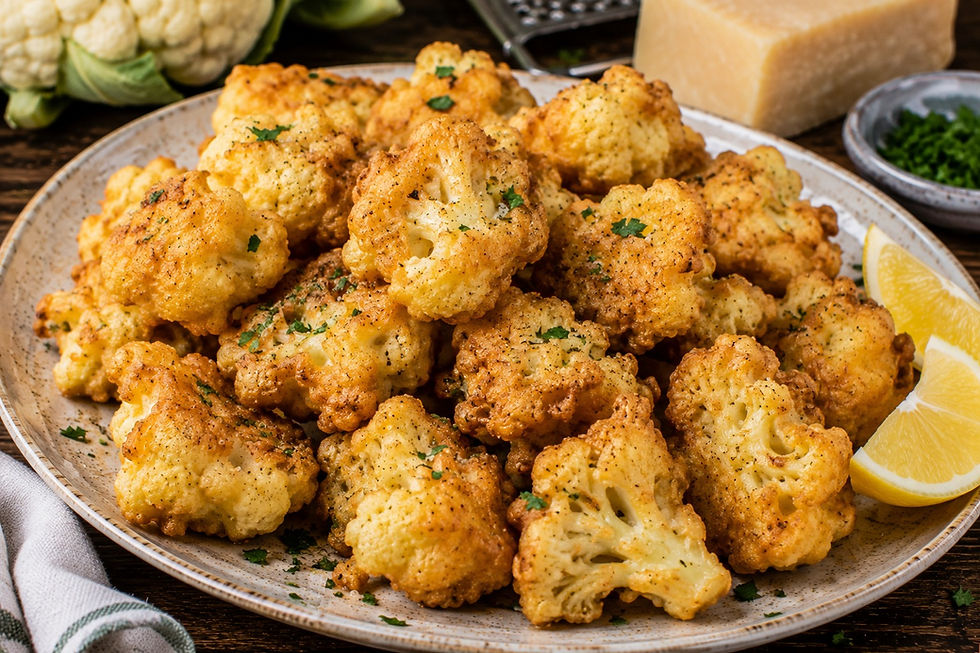
The cauliflower belongs to the same winter. It is one of the few vegetables that thrives in the cold of the Calabrian interior, and it carried the weight of the giorni di magro, the lean days when meat was forbidden, including the vigilia on Christmas Eve. On those days it appeared fried in batter, dressed with oil and olives, or baked like this with whatever cheese hung in the house. A dish that had to satisfy without meat was built to be rich.
Ingredients
For the cauliflower
Cauliflower, 1 large head, about 2 1/2 lb (1.1 kg) untrimmed
Extra virgin olive oil, Calabrian, 3 tbsp (45 ml)
Fine sea salt, 3/4 tsp (4.5 g)
Freshly ground black pepper, to taste
Garlic cloves, unpeeled and lightly crushed, 2
For the light bechamel
Whole milk, 1 1/2 cups (360 ml)
Unsalted butter, 2 tbsp (28 g)
All purpose flour, 2 tbsp (16 g)
Bay leaf, 1
Freshly grated nutmeg, 1/8 tsp
Fine sea salt, 1/2 tsp (3 g)
White pepper, to taste
For the cheese
Caciocavallo Silano, aged 6 months or more, coarsely grated, 6 oz (170 g)
Caciocavallo Silano, thinly sliced, 1 1/2 oz (45 g), for the top layer
For the crumb topping
Coarse mollica, fresh breadcrumb from a country loaf, 3/4 cup (45 g)
Extra virgin olive oil, 1 1/2 tbsp (22 ml)
Dried Calabrian chilli, crushed, 1/4 tsp (0.5 g)
Flat leaf parsley, finely chopped, 1 tbsp (4 g)
Salted anchovy fillet, finely chopped, 1, optional
Preparation
Breaking down the cauliflower
Pull off the outer leaves, cut out the core and break the head into florets of roughly equal size, about 1 1/2 inches (4 cm) across, cutting the larger ones through the stem so every piece has a flat face. Do not chop them small. Peel the thick core, slice it into coins and roast it with the rest: it is the sweetest part of the vegetable.
Roasting instead of boiling
Toss the florets with the olive oil, salt, pepper and the crushed garlic, then spread them in a single layer on a heavy tray, flat faces down. Roast at 425°F (220°C) for 22 to 25 minutes, turning once, until the flat faces are well browned and the stems give to a knife with a little resistance left. Stop at about eighty percent cooked. They will finish in the oven under the sauce, and fully tender florets now become mush later.
Steaming off the last water
Slide the roasted florets onto a cool tray in one layer and leave them uncovered for 5 minutes. Cauliflower holds a surprising amount of water and much of it leaves as steam now. Piling hot florets into a bowl traps that steam, it condenses on the pieces, and the sauce is diluted before it reaches the oven. Discard the garlic skins and keep any juices from the tray.
Making the light bechamel
Warm the milk with the bay leaf until it is just below a simmer, then set it aside to infuse. Melt the butter in a small heavy saucepan, stir in the flour and cook the roux over medium low heat for 2 minutes, until it smells biscuity but has taken no colour. Pour in the strained hot milk in three additions, whisking hard after each, and simmer gently for 4 minutes. Season with nutmeg, salt and white pepper.
Keeping the sauce deliberately thin
The finished bechamel should coat a spoon and then run off it, noticeably looser than a sauce you would use for lasagne. Whisk in the reserved roasting juices and, if it has tightened, a tablespoon or two more milk. It thickens twice after this point, once when the cheese goes in and once in the oven, and a sauce that is correct in the pan will be stiff and pasty on the plate.
Folding in the caciocavallo
Take the pan completely off the heat and let it stand for a minute, then add the grated Caciocavallo Silano in three handfuls, stirring each in until it disappears before adding the next. The sauce should turn glossy and pull slightly against the spoon. Never let it boil again once the cheese is in: a hard boil breaks the fat out of pasta filata and leaves a greasy film.
Assembling the dish
Butter a shallow baking dish, about 11 by 8 inches (28 by 20 cm). Spread a thin layer of sauce on the base, arrange half the florets browned side up, cover with half the remaining sauce, then repeat with the rest. Lay the sliced caciocavallo over the surface in a loose scatter rather than a solid sheet. Mix the mollica with its oil, the crushed chilli, the parsley and the chopped anchovy if you are using it, and scatter it over the top.
Baking and resting
Bake at 400°F (200°C) for 18 to 22 minutes, until the crumb is deep gold, the edges are bubbling and the sliced cheese has pulled into shiny pools. If the top is pale at the end, give it 90 seconds under the grill and watch it throughout. Then rest the dish for 10 minutes. Straight from the oven the sauce is still liquid and runs away from the spoon.
Plating
Serve it in the dish it was baked in, the way it is served in the Sila, and cut portions with a spoon rather than scooping them, so the layers stay stacked and each serving shows crumb on top and browned floret underneath.
The gratin should reach the table hot but not molten, around 150°F (65°C), because the cheese threads best in that range and the chilli is sharper when it is not scalding. Warm the plates. Add nothing at the table except perhaps a turn of black pepper: lemon, extra oil or more cheese all blur what the caciocavallo is doing. It sits beside roast pork, sausages or a plain grilled fish, and it will happily be a light supper with bread and a green salad.
Professional Technique
The technical heart of this dish is the behaviour of stretched curd cheese in a hot sauce. In making pasta filata the curd is acidified to a narrow pH window and then worked in hot water, which aligns the casein into long fibres and leaves the fat trapped between them. When that structure is warmed again the fibres soften and slide, so the cheese stretches into threads instead of separating. It also means the melting window is narrow: gentle heat gives you the threads, aggressive heat snaps the fibres and releases the fat as a slick.
The second technique is roasting the cauliflower dry before saucing it. Boiling leaves the florets waterlogged and tasting flatly of sulphur, and that water later thins the bechamel from inside the dish. Dry heat at 425°F (220°C) does the opposite: it drives moisture off, browns the cut faces and converts starch into sugar, so the vegetable arrives at the sauce already sweet and toasted.
The third is building a bechamel engineered to be too loose. Most home gratins fail because the sauce is judged in the saucepan rather than at the table. Adding cheese raises viscosity immediately, evaporation in the oven raises it again, and the starch keeps setting as the dish rests. A sauce that already coats thickly in the pan will be paste by the time it is served.
Texture and Moisture Control
The enemy here is water, and the cauliflower supplies most of it. A head is about ninety percent water by weight, and any of it that stays in the florets ends up in the sauce. The roast removes a good share, the five minutes of open steaming removes more, and leaving the dish uncovered in the oven lets the rest evaporate instead of collecting at the bottom as a grey pool.
Fat control is the other half. Caciocavallo Silano is rich and the bechamel carries butter of its own, so the temperature discipline is not fussiness. Fold the cheese into the sauce off the heat, bake at a moderate 400°F (200°C) rather than a fierce one, and keep the sliced cheese on the surface in a scatter so it melts into distinct pools rather than one sealed layer that traps steam beneath it.
The crumb follows the same logic. Fresh mollica rubbed with oil crisps quickly because oil conducts heat and fresh crumb holds air, while the gaps between the cheese slices let steam out through the top. Add the crumb only as the dish goes into the oven, and never press it flat onto the sauce.
Professional Mise en Place
This is an easy dish to stage, because everything except the final bake can be done hours ahead and the assembly takes four minutes.
Equipment and tools
Heavy roasting tray large enough for the florets in one layer
Small heavy saucepan and a balloon whisk for the bechamel
Shallow baking dish, about 11 by 8 inches (28 by 20 cm)
Coarse side of a box grater, plus a knife for the slices
Prepared ahead
Cauliflower broken down and cored, 1 day ahead, refrigerated in a covered box
Florets roasted and cooled, 6 hours ahead, kept uncovered at room temperature
Bechamel made without the cheese, 1 day ahead, surface filmed and refrigerated
Caciocavallo grated and sliced, kept cold and separate until needed
Service setup
Oven at 400°F (200°C) with the shelf in the middle
Bechamel warmed gently and the cheese folded in only when the dish is being built
Mollica mixed with its oil and chilli at the last moment
Plates warm, and a timer set for the ten minute rest
Chef Tips
Buy Caciocavallo Silano aged at least six months and grate it from cold. A young cheese is pleasant on its own but bland inside a bechamel, and a warm one smears on the grater instead of shredding. If you cannot find it, provola or aged scamorza are the right family. A grating cheese is not a substitute, because the point is the stretch.
Use fresh mollica rather than dried breadcrumb. Torn from the inside of a day old loaf and rubbed with oil, it crisps into irregular flakes with real crunch, while dried crumb absorbs the sauce and turns sandy.
Respect the chilli quantity. Calabrian peperoncino is there to lift the fat of the cheese, not to announce itself, and a quarter teaspoon crushed over a dish for six is enough to feel warm at the back of the palate. If you want more heat, serve olio santo at the table and let people decide for themselves.
The anchovy is optional but it is the local instinct. A single fillet, chopped small and mixed into the crumb, dissolves entirely in the oven and leaves no fishiness at all, only a deeper savoury base under the cheese.
Common Mistakes
Boiling the cauliflower first. Boiled florets arrive waterlogged, taste sulphurous and release their water into the sauce in the oven. Roasting is not a refinement here, it is what makes the dish work.
Roasting the florets to full tenderness. They still have a second bake to come. Take them out at about eighty percent, when the stem still resists slightly, or the finished gratin will be a puree.
Adding the cheese to a simmering sauce. Pasta filata breaks when it is boiled: the fibres snap, the fat separates and a greasy film rises to the surface. Take the pan off the heat first and let it cool for a minute.
Making the bechamel the right thickness. It has to be wrong on purpose. The cheese, the oven and the resting time all thicken it further, so a sauce that looks correct in the pan sets into paste on the plate.
Covering the dish with foil. Steam has nowhere to go, the crumb goes soft and the sauce stays thin. This gratin bakes uncovered from start to finish.
Serving it straight from the oven. The sauce has not set, the portions collapse and the cheese is too hot to thread properly. Ten minutes of rest is part of the recipe.
Wine Pairing
Cirò Bianco DOC: The everyday white of the Ionian side of Calabria, made from Greco Bianco on sandy clay near the coast. It is dry, moderately structured and faintly nutty, with the sort of citrus acidity that cuts a cheese sauce without stripping it. The gentle bitterness on its finish is a natural answer to the brassica.
Melissa Bianco DOC: From the hills just north of Cirò, a blend built on Greco Bianco with Trebbiano and Malvasia softening it. Rounder and less austere than its neighbour, it has the weight to sit under the caciocavallo without being flattened, and a faint saline edge that plays against the anchovy and the salt in the aged cheese. Serve it at 50°F (10°C).
Bivongi Bianco DOC: A little known appellation on the slopes of the Stilaro valley in the south of Calabria, where Greco and Guardavalle grow at altitude. The height gives it sharper acidity and a more herbal, almost wild fennel aroma than the coastal whites, and that lift is exactly what a dish heavy with melted cheese and cream needs between mouthfuls.
Cirò Rosso Classico DOC: Gaglioppo at its most typical: pale garnet, dry, savoury, with fine grained tannin and more grip than its light colour suggests. It has enough tannic structure to scour the fat of the caciocavallo yet not enough weight to bury a vegetable dish, and its dried herb and sour cherry character sits comfortably beside the roasted florets. Serve it at 59°F (15°C).
Etna Bianco DOC: The one bottle here from outside Calabria, worth crossing the strait for. Carricante grown on volcanic soil gives a piercing, almost citric acidity and a smoky mineral finish that meets the toasted crumb and the chilli head on. It is the wine on this list that best resets the palate.
Storage & Reheating
Baked, the gratin keeps covered in the refrigerator for up to 3 days. Unlike most cheese sauces it reheats well, because the starch in the bechamel holds the emulsion stable through a second heating. Bring it out half an hour beforehand so the centre is not still cold when the top is already browning.
Reheat uncovered at 350°F (175°C) for 15 to 18 minutes, or single portions for 10. A microwave is the wrong tool: it heats the sauce faster than the vegetable, the cheese overheats locally and breaks, and the crumb goes limp. Refresh the top with a spoonful of fresh mollica and a few drops of oil before it goes in.
Assembled but unbaked, the dish keeps refrigerated for 24 hours without the crumb, which goes on dry just before baking, and needs about 8 extra minutes from cold. Freezing is not recommended once the cheese is in the sauce: thawing splits the emulsion and the cauliflower collapses. Roasted florets on their own freeze perfectly for 2 months.
Nutrition
Per serving, based on 6 side portions:
Calories: 310 kcal
Total Fat: 22 g
Saturated Fat: 10 g
Trans Fat: 0 g
Unsaturated Fat: 11 g
Cholesterol: 45 mg
Sodium: 520 mg
Total Carbohydrates: 15 g
Fiber: 3.5 g
Total Sugars: 6 g
Added Sugars: 0 g
Protein: 14 g
Lactose: 3 g
Principal micronutrients: calcium, vitamin C, vitamin K, folate, phosphorus, vitamin B12, potassium
These figures are estimates. The sodium in particular moves a long way depending on how aged the caciocavallo is and whether the anchovy is included.




Comments