Vegan Calabrian Roasted Tropea Onions in Agrodolce | Cipolle di Tropea Arrosto in Agrodolce
Updated: 8 hours ago

Cipolle di Tropea in agrodolce are one of the clearest expressions of the Calabrian kitchen: the sweet red onion of the Tyrrhenian coast, cooked in olive oil until soft, then sharpened with vinegar and rounded with a little sugar. This version roasts the onions first, in wedges held together by their root, so the edges caramelize and the centers turn tender and juicy, and only then glazes them in a reduced sweet and sour syrup with wild oregano and a touch of Calabrian chili. The dish is plant based by nature, with nothing to replace: onion, oil, vinegar, sugar and herbs. It is served warm or at room temperature as a contorno, and it improves after a few hours, when the glaze has soaked into every layer.
Yield: 4 servings. Prep: 20 minutes. Cook: 55 minutes. Rest: 15 minutes. Course: contorno. Region: Calabria.
The Story
The red onion of Tropea grows on a narrow strip of the Tyrrhenian coast of Calabria, from the area around Tropea and Capo Vaticano toward the plains of Nicotera, Pizzo and the coast of the provinces of Cosenza and Catanzaro. Local tradition credits the Phoenicians or the Greeks with bringing onions to this coast, and whatever its exact origin, the onion has been grown here for centuries in light, sandy soils close to the sea. Today it is protected in the European Union as Cipolla Rossa di Tropea Calabria IGP, a protection that covers the production area, the varieties and the way the onions are grown.
What makes this onion special is its balance. The mild winters, the sea air and the loose soils produce an onion with tender, juicy layers, a bright red-purple skin and a low pungency, so it can be eaten raw in salads without the sharp burn of common storage onions. The IGP recognizes three forms: the early cipollotto, harvested young with its green stem; the onion for fresh consumption, sold in spring and early summer; and the storage onion, dried to keep through autumn. For roasting, the fresh or storage onion is the right choice, because it holds its shape and has the sugar that turns to caramel in the oven.
Agrodolce, the balance of sour and sweet, has deep roots in southern Italy. Vinegar and sugar were a way to preserve vegetables and to give flavor to cooking that had little meat, and Calabrian families still prepare onions, peppers and eggplant this way for the pantry and for the table. Cipolle in agrodolce are cooked at home, in trattorias and at village feasts, served next to grilled vegetables, potatoes and bread, and kept in jars under oil or vinegar through the winter.
Within Calabria's food culture, the Tropea onion is a symbol of the coast in the same way that chili is a symbol of the whole region. It appears in frittatas, in sauces, in salads with tomatoes and cucumbers, and on its own as a side dish. This recipe keeps the traditional flavors of the agrodolce, onion, olive oil, red wine vinegar, sugar and oregano, and adds precision to the method: roasting at controlled heat for color and sweetness, a separate syrup reduced to the right density, and a final glazing that coats the onions without making them soggy.
Ingredients
Look for firm, heavy Tropea onions with tight, glossy skins and no soft spots or sprouting at the neck. The storage onions, round or slightly elongated, are ideal; outside Italy, choose the smallest, sweetest red onions you can find, about 5 oz (140 g) each. Use a good red wine vinegar with a clean, fruity acidity rather than an aggressive one, and a Calabrian extra virgin olive oil, such as the Lametia DOP or Bruzio DOP, for its green, slightly bitter notes. Dried wild oregano from southern Italy, sold on the branch, has far more aroma than ground oregano in a jar.
For the roasted onions
Tropea red onions, medium, 6, about 2 lb (900 g) in total
Extra virgin olive oil, 3 tbsp (45 ml)
Fine sea salt, 1 tsp (6 g)
Freshly ground black pepper, 1/4 tsp (0.5 g)
Fresh thyme, 4 sprigs
Bay leaves, 2
For the agrodolce glaze
Red wine vinegar, 1/2 cup (120 ml)
Water, 1/4 cup (60 ml)
Raw cane sugar, 3 tbsp (38 g)
Extra virgin olive oil, 1 tbsp (15 ml)
Dried Calabrian chili, crumbled, 1/4 tsp (0.5 g), or to taste
Fine sea salt, 1 pinch
For the finish
Dried wild oregano on the branch, crumbled, 1 tsp (1 g)
Extra virgin olive oil, peppery, 2 tbsp (30 ml)
Flat-leaf parsley, leaves only, 1 tbsp (4 g)
Toasted pine nuts, 2 tbsp (18 g), optional
Flaky sea salt, 1 pinch
Preparation
Step 1

Cut the onions into wedges. Trim the top of each onion and shave only the hairy roots from the base, leaving the root plate intact. Peel off the dry outer skin and the first layer if it is papery or bruised. Stand each onion on its base and cut it into 6 wedges from top to bottom, cutting straight through the root, so each wedge keeps a small piece of the root plate that holds its layers together. Uniform wedges, about 1 inch (2.5 cm) thick at the outer edge, cook at the same speed. A wedge without its root falls apart in the oven and the thin layers burn before the thick ones soften.
Step 2

Season and arrange. Heat the oven to 400°F (200°C) with the rack in the middle. Put the wedges in a large bowl, add 3 tbsp (45 ml) of olive oil, the salt and the pepper, and turn them gently with your hands so every surface is coated without separating the layers. Line a heavy rimmed baking sheet with parchment and arrange the wedges cut side down, at least 1/2 inch (1 cm) apart, with the thyme sprigs and the bay leaves between them. Space matters: crowded onions release water that cannot evaporate, and they steam instead of roasting, with no color and a dull taste.
Step 3

Roast for color and tenderness. Roast for 20 minutes, until the cut faces touching the pan are deep golden brown. Turn each wedge onto its other cut side with a thin spatula and roast for 15 to 20 minutes more, until a skewer slides into the thickest part with no resistance and the edges are caramelized. The total time depends on the size and the water content of the onions, so judge by the skewer and by the color, not the clock. At this temperature the natural sugars of the onion brown through caramelization and the Maillard reaction, while the inside cooks in its own steam and turns soft and juicy.
Step 4

Reduce the agrodolce syrup. While the onions roast, combine the vinegar, the water, the sugar, the chili and a pinch of salt in a small, wide saucepan. Bring it to a simmer over medium heat, stirring until the sugar dissolves, then let it reduce without stirring for 6 to 8 minutes, until it has lost about half of its volume and coats the back of a spoon in a thin, glossy film. Take it off the heat and stir in 1 tbsp (15 ml) of olive oil. The syrup must be reduced before it meets the onions: a raw mixture of vinegar and sugar would boil on the hot pan, soften the caramelized surface and leave the onions sharp and wet.
Step 5

Glaze the onions. Take the baking sheet out of the oven and discard the thyme stems and the bay leaves. Transfer the onions to a wide sauté pan, in one layer, and set it over medium heat. Pour the warm syrup over them and cook for 3 to 4 minutes, tilting the pan and spooning the syrup over the wedges, until it bubbles, thickens further and clings to every layer like a lacquer. Do not stir with a spoon, which breaks the wedges; shake the pan instead. The glaze is ready when it leaves a clear trail on the bottom of the pan that closes slowly.
Step 6

Rest and season. Take the pan off the heat and sprinkle the crumbled oregano over the onions. Leave them to rest for at least 15 minutes. During the rest the onions cool slightly and absorb part of the glaze between their layers, and the sharp edge of the vinegar softens into a rounder, balanced sourness. Taste one wedge: the first impression must be sweet, then the acidity, then the warmth of the chili. If it is too sharp, add a few drops of syrup made with a pinch of sugar and a teaspoon of water; if it is too sweet, add a few drops of vinegar.
Step 7

Finish before serving. Just before serving, chop the parsley finely and toast the pine nuts, if using, in a dry pan over medium low heat for 3 to 4 minutes, shaking often, until golden and fragrant. Drizzle the onions with 2 tbsp (30 ml) of peppery olive oil, scatter over the parsley and the pine nuts and finish with a few flakes of sea salt. The raw oil and the fresh parsley add a green, bitter note that keeps the sweetness of the agrodolce in check.
Plating
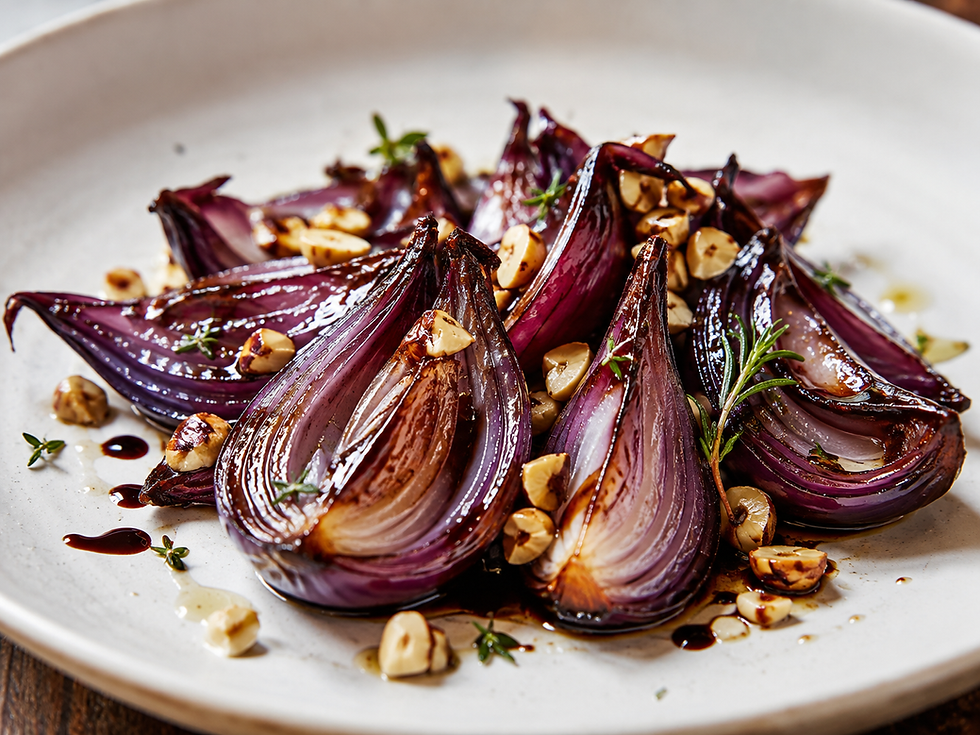
Serve the onions warm, at about 100°F (38°C), or at room temperature, on a wide, slightly warmed platter or on individual plates heated to about 120°F (50°C). Arrange the wedges in a loose fan or a circle, cut sides up so the caramelized faces and the red and white layers show, and spoon the glaze left in the pan over them in a thin layer, without flooding the plate.
As a contorno, they belong next to roasted potatoes, grilled vegetables, bean dishes and crusty bread; as an antipasto, place three wedges on a slice of grilled country bread. The guest eats them with a fork and knife, cutting through the root end, and each bite should carry the soft onion, a film of glaze and a few grains of oregano.
Professional Technique
The key ratio is the glaze. For 2 lb (900 g) of onions, 1/2 cup (120 ml) of vinegar and 3 tbsp (38 g) of sugar give a balanced agrodolce, about 3 parts vinegar to 1 part sugar by weight. Reduced by half, this syrup has enough body to coat the onions and enough acidity to cut through their natural sweetness. More sugar turns the dish into a jam; less leaves the vinegar raw and aggressive.
The hidden variable is the water in the onions. Fresh onions in spring contain more water and less sugar than storage onions in autumn, so they need more time in the oven to concentrate and brown. If the onions release liquid on the pan during roasting, pour it off after the first 20 minutes and keep roasting: that liquid would otherwise boil around them and stop the browning.
The doneness test is double. The onion must be tender to the center, with a skewer sliding through the root end without force, because the glaze will not cook it further. The glaze must be thick enough to stay on the onion when you lift a wedge with a fork, falling in slow drops rather than running off.
Caramelization and Acidity Control
Color is flavor in this dish. The cut surfaces of the onion must reach a deep golden brown, not black. Below about 300°F (150°C) at the surface, the sugars do not brown and the onion simply softens; above about 400°F (200°C) in a crowded or dark pan, the thin outer layers burn and turn bitter. A heavy, light-colored baking sheet, parchment and enough space between the wedges keep the browning even.
Acidity must be cooked, not raw. Vinegar contains acetic acid, which is volatile: reducing it with the sugar drives off part of the sharpest vapors and leaves a rounder sourness, while the sugar balances what remains. Adding vinegar directly to the hot onions without reducing it gives a pungent smell and a thin, watery glaze. If the finished dish tastes sharp, the syrup was not reduced enough.
Temperature changes the balance. Hot from the pan, the agrodolce tastes more acidic; at room temperature, the sweetness of the onion comes forward. Always taste and correct the seasoning after the rest, at the temperature you will serve the dish, and remember that cold from the refrigerator it will taste flatter and needs a few minutes on the counter before serving.
Professional Mise en Place
The onions can be roasted and glazed up to two days ahead, and they are often better the next day. Organize the work so the syrup is reduced while the onions roast, and the glazing happens immediately after they come out of the oven, while their surface is still hot and absorbent.
Equipment and tools
Sharp chef's knife and cutting board
Heavy rimmed baking sheet, parchment paper
Small, wide saucepan for the syrup
Wide sauté pan for glazing, thin metal spatula, metal skewer
Small dry pan for the pine nuts, instant-read thermometer
Prepared ahead
Onions cut into wedges, up to 4 hours ahead, covered and refrigerated
Agrodolce syrup reduced, up to 3 days ahead, refrigerated and warmed before use
Onions roasted and glazed, up to 2 days ahead, refrigerated in their glaze
Pine nuts toasted, up to 1 day ahead, in an airtight jar
Service setup
Onions at room temperature or warmed, on the pass
Platter or plates warmed to about 120°F (50°C)
Peppery olive oil in a small jug, flaky salt, chopped parsley
Dried oregano on the branch for a last crumble at the table
Chef Tips
Make a double batch and keep part of it in a clean jar covered with its glaze and a thin layer of olive oil. The onions keep for a week in the refrigerator and become a ready contorno, a topping for bruschetta or a sweet and sour note in a salad of beans or farro.
Use the cipollotto of Tropea in spring. Cut the young onions in half lengthwise with part of the green stem attached and reduce the roasting time to about 20 minutes in total: they are more tender and less sweet, and the glaze gives them a lighter, fresher character.
For a darker, more complex glaze, replace 2 tbsp (30 ml) of the red wine vinegar with vincotto, the cooked grape must of southern Italy, and reduce the sugar by 1 tbsp (12 g). The result has notes of dried fruit and a deeper color while staying fully plant based.
A few raisins and toasted pine nuts turn the dish into a richer agrodolce in the southern style. Soak 2 tbsp (20 g) of raisins in warm water for 10 minutes, drain them and add them to the syrup during the last 2 minutes of reduction, so they plump and take on the sweet and sour flavor.
Common Mistakes
Removing the root. Without the root plate the wedges fall apart into loose rings that burn on the pan. Shave the hairy roots only and keep the base intact.
Crowding the baking sheet. Onions packed together steam in their own water and never brown. Leave space between the wedges, and use two sheets if needed.
Roasting too cold. At a low temperature the onions soften but stay pale and taste boiled. Roast at 400°F (200°C) and turn them once, so both cut faces caramelize.
Adding raw vinegar. Vinegar poured directly onto the onions stays harsh and makes the glaze thin. Reduce it with the sugar first, until it coats a spoon.
Over-reducing the syrup. A syrup reduced too far turns into hard caramel as soon as it cools. Stop when it has lost about half its volume and still flows freely.
Stirring the glazed onions. A spoon breaks the soft wedges into a mush. Shake the pan and spoon the glaze over them instead.
Serving straight from the refrigerator. Cold onions taste flat and the glaze turns stiff. Leave them at room temperature for 30 minutes, or warm them gently, before serving.
Wine Pairing
Cirò Bianco DOC: The white of Cirò, on the Ionian coast of Calabria, made mainly from Greco Bianco. Its citrus and white flower aromas and its fresh acidity meet the sourness of the glaze, while a faint bitter almond finish echoes the caramelized edges of the onion. Serve it at about 50°F (10°C).
Melissa Bianco DOC: Another Calabrian white from the province of Crotone, based on Greco Bianco with a Mediterranean, slightly savory profile. Its body is enough to stand up to the sweetness of the onions, and its salinity balances the sugar of the agrodolce. Serve it at about 50°F (10°C).
Bivongi Bianco DOC: From the hills behind the Ionian coast near Reggio Calabria, a white with ripe yellow fruit and herbal notes. Its gentle aromatic character suits the oregano and the thyme, and its acidity refreshes the palate between bites. Serve it at about 52°F (11°C).
Cirò Classico DOCG: The historic red of Calabria, from the Gaglioppo grape, with red fruit, spice and a firm structure. Served slightly cool, it pairs with the onions when they accompany a bean stew or roasted vegetables, its fruit meeting the sweetness and its tannins the caramelized notes. Serve it at about 60°F (16°C).
Storage & Reheating
Refrigerator: keep the glazed onions in an airtight glass container, covered with their glaze, for up to 5 days. The acidity of the vinegar and the sugar help them keep well, and the flavor improves after the first day as the glaze penetrates the layers. Freezer: not recommended, because freezing breaks the cell walls of the onion and the wedges turn soft and watery on thawing.
Serve them at room temperature after 30 minutes on the counter, or reheat them gently in a covered pan over low heat with 1 tbsp (15 ml) of water for 4 to 5 minutes, until warm to the center. In the oven, warm them at 325°F (160°C) for 10 minutes in a covered dish. Finish with fresh olive oil, parsley and a pinch of oregano, which restore the aroma lost in the refrigerator.
Nutrition
Per serving, based on 4 servings:
Calories: 260 kcal
Total Fat: 18 g
Saturated Fat: 2.5 g
Trans Fat: 0 g
Unsaturated Fat: 15 g
Cholesterol: 0 mg
Sodium: 620 mg
Total Carbohydrates: 25 g
Fiber: 4 g
Total Sugars: 18 g
Added Sugars: 9 g
Protein: 3 g
Principal micronutrients: vitamin C, vitamin B6, folate, potassium, manganese, quercetin and other flavonoids
These figures are estimates, calculated on the quantities listed and rounded to the nearest whole number, without the optional pine nuts. They vary with the size and water content of the onions and the amount of glaze served with each portion.



Comments