
7 Must-See Attractions for Discovering Sardinia's Rich History and Culture
Updated: Aug 30

Discovering Sardinia: From the Blue Zone to Stunning Beaches and Must-Visit Attractions
Sardinia is not simply a Mediterranean island with beautiful beaches. It is one of Europe’s most distinctive cultural territories: an island shaped by prehistoric civilizations, Phoenician and Roman settlement, medieval kingdoms, Catalan influence, pastoral communities, maritime trade, isolated mountain villages and an extraordinary relationship between landscape and food. To understand Sardinia seriously, the traveler has to move beyond the coastline and read the island as a collection of different worlds.
The island is the second largest in the Mediterranean, but size alone does not explain its diversity. Granite dominates parts of the northeast, limestone cliffs define sections of the eastern coast, broad plains open around Campidano, wetlands surround Oristano and Cabras, while the central mountains of Barbagia and the Gennargentu preserve a very different rhythm of life. Distances that look modest on a map can produce dramatic changes in architecture, dialect, food, wine and social customs.
This guide approaches Sardinia as a place to understand rather than simply photograph. Its beaches are exceptional, but so are its archaeological landscapes, inland villages, food traditions, wines, festivals, craft cultures and historical layers. The real reward comes when these elements are experienced together.
An Island Older Than the Tourist Image
Long before modern resorts appeared along the Costa Smeralda, Sardinia had already accumulated thousands of years of human history. Evidence of prehistoric settlement is widespread, but the Nuragic civilization remains the island’s most powerful archaeological signature. From roughly the Bronze Age onward, Sardinian communities constructed thousands of nuraghi: massive stone towers whose exact functions varied and are still studied by archaeologists.
These structures are not isolated curiosities. They belong to larger systems that can include villages, sacred wells, tombs and meeting areas. The density of Nuragic remains across Sardinia makes the island feel less like a destination with a few archaeological attractions and more like an archaeological landscape in itself.
Su Nuraxi at Barumini. The best-known Nuragic complex is Su Nuraxi, near Barumini. Its central stone tower and surrounding settlement provide one of the clearest introductions to the sophistication of Nuragic construction. A visit here changes the way Sardinia is perceived: the island’s history does not begin with Rome, medieval Europe or modern Italy.
Sacred wells and ritual architecture. Sites such as Santa Cristina reveal another side of Nuragic engineering. The geometry and precision of sacred wells demonstrate that water, ritual and astronomy may have played important roles in the spiritual life of ancient communities.
Later, Phoenician and Carthaginian settlements connected Sardinia to wider Mediterranean trading networks. Tharros, on the Sinis Peninsula, remains one of the most evocative places to see these layers. Roman influence followed, adding roads, towns, baths, amphitheaters and administrative systems. In Cagliari, the Roman amphitheater is one visible reminder that the island was deeply integrated into the ancient Mediterranean world.
The Medieval Judicates and a Sardinia of Its Own
One of the most important chapters in Sardinian history is often poorly understood outside the island: the period of the giudicati. During the Middle Ages, Sardinia was divided into autonomous political entities traditionally known as the Judicates of Cagliari, Arborea, Torres and Gallura. They were not simply provincial courts; they functioned as independent states with their own institutions and territorial organization.
The figure of Eleonora d’Arborea remains central to Sardinian historical memory. Associated with the Carta de Logu, one of medieval Europe’s notable legal codes, she represents a period when Sardinia developed institutions that cannot be reduced to the political history of mainland Italy.
Later Aragonese and Spanish domination left profound traces, particularly in language, architecture, religious traditions and urban culture. Alghero is the clearest example. Its historic center preserves a Catalan identity still visible today, making it one of the most culturally distinctive towns in Italy.
Cagliari: The Southern Gateway
Cagliari deserves more than a quick arrival and departure through the airport. The Sardinian capital is built across hills facing the Gulf of Angels and combines archaeology, medieval streets, markets, wetlands, beaches and one of the island’s strongest urban food cultures.
The historic Castello district rises above the city with narrow streets, defensive walls and panoramic terraces. Below it, districts such as Marina and Stampace reveal other layers of Cagliari’s history. The archaeological museum is particularly valuable for travelers who want context before visiting Nuragic sites elsewhere on the island.
San Benedetto Market provides a different kind of education. Fish, shellfish, bottarga, cheeses, vegetables, bread and regional products show how the capital functions as a meeting point between Sardinia’s inland and maritime economies. Nearby Poetto beach demonstrates another Cagliari characteristic: urban life and the sea are not separate realities.
The Molentargius wetlands, where flamingos can be observed close to the city, add an environmental dimension often missed by visitors who think only in terms of beaches. Cagliari works best when treated as a living Mediterranean capital, not just a base for southern excursions.
Alghero and the Catalan Northwest
Alghero is one of Sardinia’s most immediately recognizable towns. Its walls face the sea, the old center is compact and atmospheric, and Catalan influence remains part of its identity. The local variety of Catalan is not a decorative tourist invention; it reflects centuries of historical connection.
Walking the bastions at sunset is one of the classic experiences of northern Sardinia, but the area becomes more interesting when connected to its broader geography. Capo Caccia rises dramatically from the sea, and Neptune’s Grotto introduces visitors to the limestone geology that shapes this coastline.
The surrounding territory also has a serious agricultural and wine identity. The northwest produces Vermentino, Cannonau and other wines, while the culinary culture combines seafood, Catalan-influenced preparations, local olive oil, bread and pastoral products from the interior.
Barbagia: The Sardinia That the Coast Cannot Explain
To understand the island beyond tourism, travel inland. Barbagia occupies a central place in Sardinian identity because mountain geography helped preserve languages, customs, pastoral traditions and strong village cultures. Towns such as Orgosolo, Mamoiada, Oliena, Gavoi, Fonni and others offer very different experiences from coastal resorts.
Orgosolo is internationally known for its murals, but reducing the village to street art misses the point. The murals are part of a larger social history involving politics, work, resistance and community identity. Mamoiada, meanwhile, is associated with the Mamuthones and Issohadores, masked figures whose winter rituals are among the island’s most powerful cultural traditions.
Oliena is surrounded by limestone mountains and is closely associated with Nepente di Oliena, a local expression of Cannonau. The area also provides access to hiking and to landscapes that reveal how pastoral communities historically moved through the territory.
Autumn is an especially strong time to explore inland Sardinia. The Autunno in Barbagia circuit opens courtyards, workshops, cellars and historic houses across a sequence of villages. Bread, cheese, wine, sweets, cured meats and crafts are presented within the communities that produce them. For travelers interested in food culture, this can be more revealing than a restaurant-focused itinerary.
The Blue Zone: Longevity Without the Mythology
Sardinia became internationally famous as one of the world’s so-called Blue Zones, areas associated with unusual concentrations of long-lived people. The strongest Sardinian longevity clusters have historically been identified in parts of the mountainous interior, particularly central-eastern communities rather than the island as a whole.
The phenomenon should not be reduced to one miracle food. Researchers have examined genetics, physical activity, social structure, traditional diet, family networks, rural lifestyles and other factors. Historically, many inland Sardinians lived active lives involving walking, farming and shepherding across difficult terrain. Daily movement was built into life rather than scheduled as exercise.
Traditional food patterns also differed from the abundance associated with modern tourism. Legumes, vegetables, bread, grains, potatoes, seasonal produce, sheep and goat dairy, modest portions of meat and local wine could all appear within a relatively simple food system. The important point is the pattern, not a single ingredient marketed as a longevity cure.
Social ties matter as well. Multigenerational families, strong village networks and continued participation of older residents in community life have all been discussed in relation to healthy aging. Sardinia’s longevity story is therefore most useful when understood as an interaction between place, movement, food, genetics and social structure.
The Coast: Beautiful, but Never One Single Sardinia
Sardinia has hundreds of beaches, but they belong to very different coastal environments. Choosing where to go depends on the type of landscape and experience desired.
Costa Smeralda and Gallura. The northeast is known for granite formations, transparent water and coves framed by Mediterranean vegetation. Porto Cervo and the Costa Smeralda created an international luxury image, but Gallura is larger and culturally richer than its resorts. Inland towns, cork production, Vermentino and rustic food traditions provide a strong counterpoint to the coast.
La Maddalena Archipelago. The islands and channels north of Palau contain some of Sardinia’s most extraordinary marine landscapes. Boat access reveals coves and granite formations difficult to appreciate from land. Environmental protection is essential here because the beauty of the archipelago is inseparable from its ecological fragility.
La Pelosa and Stintino. La Pelosa is famous for shallow turquoise water and pale sand. Its popularity means that visiting responsibly, respecting access controls and avoiding peak crowding can dramatically improve the experience.
Golfo di Orosei. The eastern coast between high limestone cliffs and the sea contains Cala Goloritzé, Cala Mariolu, Cala Luna and other celebrated coves. Some are reached by boat, others by demanding hikes. This is one of the clearest places to see the relationship between Sardinia’s mountains and its coastline.
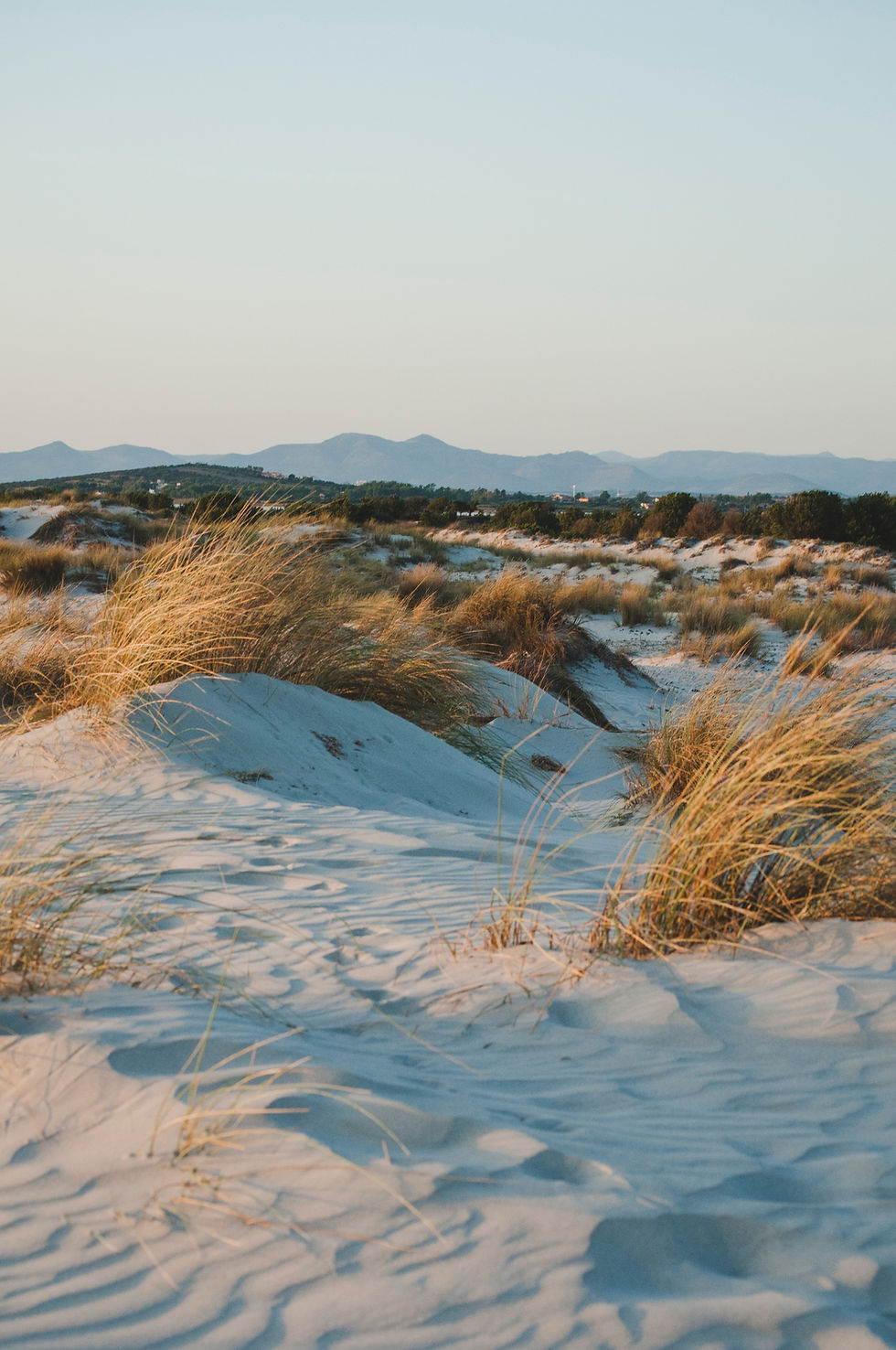
Chia and the southwest. Southern beaches such as Chia and Tuerredda combine clear water, dunes, headlands and a less urbanized landscape. The southwest can also be combined with archaeological sites, mining heritage and small coastal towns.
The Sinis Peninsula, Cabras and Western Sardinia
The west coast is sometimes overlooked by first-time visitors, yet the Sinis Peninsula offers one of Sardinia’s strongest combinations of archaeology, wetlands, food and coastline. Tharros stands directly above the sea, creating an extraordinary intersection of ancient ruins and Mediterranean landscape.
Cabras is central to the local fishing economy and is particularly associated with mullet bottarga. Here bottarga is not simply a fashionable ingredient grated over pasta. It belongs to a system of lagoon fishing, salting, pressing and drying developed around the resources of the territory.
The nearby archaeological discoveries of the Giants of Mont’e Prama added another remarkable chapter to the understanding of Nuragic Sardinia. Their scale and sculptural presence challenge simplistic ideas about prehistoric island societies.
Food: Sardinia Is a Continent in Miniature
Sardinian cuisine changes dramatically from coast to interior and from one subregion to another. The idea of a single standard Sardinian menu is misleading. Bread alone demonstrates the complexity: pane carasau, pistoccu, civraxiu and ceremonial breads belong to different functions, textures and local traditions.
Pastoral culture produced exceptional sheep’s-milk cheeses, with Pecorino Sardo among the best-known examples. Fresh and aged cheeses appear alongside ricotta, cured meats and roast preparations. Porceddu, the celebrated Sardinian roast suckling pig, depends on technique and controlled roasting rather than elaborate seasoning.
Pasta traditions are equally regional. Culurgiones, particularly associated with Ogliastra, combine handmade dough with fillings commonly based on potato, cheese and herbs, though recipes vary by place and family. Malloreddus, often called Sardinian gnocchi, are small semolina pasta shapes frequently served with robust sauces. Fregola consists of toasted semolina pearls that can be cooked with seafood, broth or other ingredients.
Along the coast, tuna, mullet, lobster, clams and other seafood create completely different culinary landscapes. Carloforte on San Pietro Island preserves a Tabarchino culture with strong tuna traditions, while Alghero has its own Catalan-Sardinian seafood identity. In Cabras, bottarga and lagoon fish dominate another distinct system.
Desserts and sweets often combine almonds, honey, citrus, cheese and pastry. Seadas, filled with cheese and finished with honey, are among the most recognizable, but village pastry traditions are far broader. Tonara’s torrone demonstrates the importance of honey and nut craftsmanship in the mountain interior.
Wine: Cannonau, Vermentino and Much More
Sardinian wine deserves to be understood by territory rather than by one or two famous labels. Cannonau is the island’s best-known red grape and can produce very different wines depending on altitude, soil, exposure and winemaking. Expressions from areas such as Jerzu, Oliena and Mamoiada can differ significantly in structure and aromatic profile.
Vermentino is particularly important in Gallura, where granitic soils and the northern landscape contribute to one of Italy’s most recognizable white-wine identities. Vernaccia di Oristano belongs to a very different tradition, capable of producing oxidative, complex wines with remarkable gastronomic character.
Carignano del Sulcis connects the grape to the sandy soils and coastal conditions of southwestern Sardinia, while Monica, Bovale, Nuragus, Malvasia and other varieties remind us that Sardinian viticulture is far more diverse than the international market often suggests.
Festivals, Masks and Living Tradition
Sardinia’s calendar is filled with religious festivals, agricultural celebrations, food sagre, horse events and masked rituals. These are not interchangeable tourist performances. Many are deeply rooted in village identity and should be approached with respect.
The Sartiglia in Oristano combines horsemanship, ceremony and historic urban tradition. Sant’Efisio in Cagliari is one of Sardinia’s most important religious processions, bringing together communities, traditional dress, horses and devotional culture. Mamoiada’s masked traditions reveal a very different symbolic world, while food festivals celebrating artichokes, citrus, torrone, tuna, bottarga, bread and wine demonstrate the continuing connection between agricultural production and public celebration.
For travelers, these events are valuable because they reveal the island when local communities are presenting themselves to one another, not only to visitors.
Crafts, Textiles and the Material Culture of Sardinia
Sardinian identity can also be read through objects. Textiles, baskets, knives, ceramics, woodwork, jewelry and cork products preserve regional styles and practical knowledge. Traditional rugs from towns such as Samugheo, filigree jewelry, woven baskets and the characteristic resolza knife belong to cultural systems with local variations.
Buying directly from artisans matters. It allows travelers to distinguish living craft from generic souvenir production and keeps more economic value within the communities where the skills originated.
How to Travel Sardinia Properly
Sardinia rewards slower travel. Trying to cover Cagliari, Alghero, Costa Smeralda, Barbagia and the Golfo di Orosei in a few days turns the island into a sequence of roads and checklists. A better strategy is to choose one or two geographic zones and understand them properly.
For a first trip. Combine one major city, one inland area and one coastal zone. For example, Cagliari with Barumini and the southern coast; or Alghero with the northwest and an inland excursion; or Olbia with Gallura and the Maddalena area.
For food-focused travel. Prioritize autumn and spring, when agricultural festivals, wine events and inland village life are easier to experience without extreme summer congestion.
For hiking and archaeology. Avoid assuming that every path is easy because it ends at a beach. Some routes in the Supramonte and Golfo di Orosei are demanding and require appropriate footwear, water, weather awareness and realistic planning.
For beaches. Respect reservation systems, protected dunes, marine regulations and local access rules. Sardinia’s coastline remains beautiful precisely because many communities and protected areas are trying to control the pressure created by mass tourism.
The Best Time to Visit
July and August offer warm seas and a full summer atmosphere, but they also bring the highest prices, traffic and pressure on famous beaches. June and September are often excellent for combining swimming with easier travel. Spring brings wildflowers, green landscapes, agricultural festivals and good conditions for archaeology and walking. Autumn is particularly strong for food, wine and inland culture.
Winter is quieter and reveals a Sardinia that has very little to do with beach tourism. Some coastal businesses reduce operations, but cities and inland communities continue their normal lives. Travelers interested in culture rather than resort services may find this period unexpectedly rewarding.
Why Sardinia Is Different
Sardinia’s distinctiveness is not based on isolation alone. The island has always participated in Mediterranean history, but it repeatedly transformed outside influences into local forms. Nuragic civilization, Phoenician trade, Roman infrastructure, medieval Judicates, Catalan Alghero, pastoral Barbagia and modern coastal tourism all coexist within the same territory.
The result is an island that resists simplification. Luxury resorts exist beside shepherding communities. International beach tourism exists beside villages where seasonal festivals still organize social life. Modern restaurants work with ingredients whose production remains tied to ancient landscapes. Archaeological monuments stand close to vineyards, lagoons and grazing land that continue to be economically productive.
That tension between continuity and change is what makes Sardinia extraordinary. The island is not valuable because it remained frozen in the past; it is valuable because many older systems still interact with contemporary life.
A Final Perspective
The first visit to Sardinia often begins with the sea. The second should go further. Walk through a Nuragic site before the heat rises. Spend time in a market. Drive into Barbagia. Taste Cannonau in the landscape where it grows. Eat bottarga near the lagoons of Cabras. Watch artisans work. Learn why a village festival matters to the people who live there. Notice how quickly language, architecture and food change as you cross the island.
Sardinia becomes more impressive, not less, when the postcard is replaced by context. Its beaches are among the Mediterranean’s great natural attractions, but they are only the visible edge of a much older, deeper and more complicated island.
To discover Sardinia properly is to recognize that coast, mountain, archaeology, food, wine, ritual and community are not separate attractions. They are parts of the same story.




Comments