Italian Fresh Spaghetti alla Chitarra with Red Prawns, Lemon and Zucchini | Spaghetti alla Chitarra Freschi con Gamberi Rossi, Limone e Zucchine
Updated: Oct 24

Raw red prawns have a sweetness that no cooking improves, only damages, and that single fact decides every choice on this plate. They are shelled, held cold, and folded into the pan for barely longer than it takes to turn them once, so the flesh warms through while the centre stays translucent.
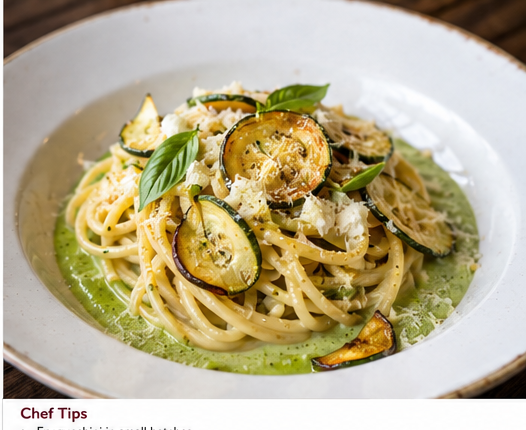
The pasta carries the weight instead. Spaghetti alla chitarra cut fresh from an egg and semola sheet has square edges and a rough porous surface that holds a light vegetable sauce. Zucchini do the binding rather than cream: half cooked into a loose green puree, half sliced into coins and kept firm, so the vegetable arrives twice with two textures. The puree coats, the coins interrupt, and no cream is needed anywhere.
Lemon is the last decision and the easiest to get wrong. Juice squeezed over hot prawns cooks them further and turns the zucchini dull. Zest grated over the finished bowl sharpens the sweetness without touching the texture. Two teaspoons of juice go into the sauce, not a drop more.
Yield: 4 servings. Prep: 45 minutes. Dough rest: 45 minutes. Cook: 25 minutes. Total: about 2 hours. Difficulty: intermediate. Course: primo piatto. Region: Abruzzo, the Adriatic coast between Giulianova and Vasto.
The Story
The chitarra is one of the very few pasta shapes in Italy named after the tool that makes it rather than after what it looks like. That tool is a beechwood frame strung with parallel steel wires, tuned tight enough to ring when you brush them, and the resemblance to a guitar was close enough that nobody in Abruzzo invented a second name. A sheet of egg dough goes across the wires and is pushed through with a rolling pin. The wires slice, the strands fall into the tray, and the job takes four seconds.
What comes out is unlike anything an extruder can produce. The wire cuts a clean vertical face while the pin flattens the top, so each strand is square in cross section. Industrial spaghetti is round and sealed by a die. A chitarra strand has edges that catch, and the difference is obvious the first time a sauce clings instead of sliding off.
The frame belongs to the inland provinces, Teramo and Chieti above all, where it was ordinary household equipment and often part of a dowry. This version comes from the coast. Between Giulianova and Vasto the Adriatic fleets land prawns, cuttlefish and small fish daily, and the cooking there has always pulled the mountain pasta down to the water. Red prawns are a deep water catch from a few hundred metres down and reach these kitchens as a luxury. Zucchini and lemon are the cheap local counterweight that keeps the dish honest.
Ingredients
For the spaghetti alla chitarra
Durum wheat semola rimacinata, 2 cups (300 g)
Type 00 flour, 1/2 cup (60 g)
Large eggs, 4, at room temperature
Fine sea salt, 1/2 tsp (3 g)
Extra virgin olive oil, 1 tsp (5 ml)
Semola for dusting the tray, 1/4 cup (40 g)
For the red prawns
Whole raw red prawns, gamberi rossi, 1 1/4 lb (570 g), about 12 large
Extra virgin olive oil, 2 tbsp (30 ml)
Garlic clove, lightly crushed and left whole, 1
Dry white wine, 1/4 cup (60 ml)
Water, 1 cup (240 ml), for the head stock
Fine sea salt, to taste
For the zucchini
Small firm zucchini, 1 lb (450 g), about 4
Extra virgin olive oil, 3 tbsp (45 ml)
Spring onion, white part only, finely sliced, 1
Fine sea salt, 1/2 tsp (3 g)
Prawn head stock or water, 1/2 cup (120 ml)
For finishing
Unwaxed lemon, 1, zest only, finely grated
Fresh lemon juice, 2 tsp (10 ml)
Extra virgin olive oil, 2 tbsp (30 ml)
Flat leaf parsley, finely chopped, 1 tbsp (4 g)
Freshly ground white pepper, to taste
Coarse sea salt for the pasta water, 2 tbsp (30 g) per 4 quarts (3.8 l)
Preparation
Mix and rest the chitarra dough
Tip the semola and the type 00 flour onto a board, make a well, and break in the eggs with the salt and the oil. Work the eggs outwards with a fork, then use your hands once the mass holds. Knead a full 10 minutes. Chitarra dough is deliberately stiffer than tagliatelle dough, because a soft sheet sags between the wires instead of being cut. Wrap it tightly and rest it at room temperature for 45 minutes.
Roll the sheets to the depth of the wires
Cut the dough into four pieces and keep three covered. Pass the first through the widest setting three or four times, folding each time, then step down setting by setting. Stop at about 1/16 in (2 mm). This is the measurement that matters: the sheet must be as thick as the gap between the wires is wide, or the strands come out rectangular. Trim it to the frame width and leave it uncovered 2 minutes.
Cut the strands on the chitarra
Lay the sheet across the wires and press once, firmly, with a heavy rolling pin, in a single stroke from end to end. Go back with two or three lighter passes until every strand drops into the tray. Dust the spaghetti with semola and coil it into loose nests. Without a chitarra, flour the sheet well, fold it loosely and cut by hand into strands 1/16 in (2 mm) wide.
Clean the prawns and build a quick head stock
Twist the heads off the prawns. Peel the tails, lift out the dark intestinal thread, and keep them covered on a cold plate. Warm 1 tablespoon of oil in a small pan, add the heads and shells, and press them hard with a wooden spoon for 2 minutes to release the orange juices inside. Add the wine, let it evaporate, add the water, simmer 10 minutes and strain. You want about 1/2 cup (120 ml).
Cook the zucchini in two ways
Slice half the zucchini into thin coins and cut the rest into chunks. Warm 2 tablespoons of oil in a wide pan and soften the spring onion over low heat without colour for 3 minutes. Add the chunks and the salt, pour in the prawn stock, cover and cook 12 minutes until tender, then blend smooth and keep warm. Wipe the pan, raise the heat, add the last oil and saute the coins 2 minutes only, so they stay green and firm.
Salt the water and cook the pasta
Bring 4 quarts (3.8 l) of water to a rolling boil and salt it with 2 tablespoons (30 g) of coarse sea salt. Fresh chitarra sheds a great deal of surface starch, so do not use less. Shake the excess semola off the nests first, or that flour thickens the water into paste. Cook 2 to 3 minutes, tasting from 2. The strand is ready while the centre still shows the faintest resistance, since it keeps cooking in the pan.
Mantecare the pasta with the zucchini cream
Ladle about 1/2 cup (120 ml) of pasta water into the wide pan with the coins, add the warm puree and bring it to a simmer. Lift the pasta from the pot with tongs, dripping, and toss it hard over medium heat for 1 minute. Add the finishing oil in a thin stream while the pan moves. The starch and the oil emulsify into the puree and turn it glossy. Add cooking water a spoon at a time if the pan tightens.
Add the prawns and the lemon at the last second
Pull the pan off the heat. Season the cold prawn tails with salt, scatter them over the pasta and toss twice, no more. The residual heat warms them through in about 30 seconds while leaving the centre translucent. Add the lemon juice, the white pepper and the parsley, toss once and serve. Grate the zest over the plated bowls, not into the pan, where heat drives off the aromatic oils in seconds.
Plating
Serve in wide shallow bowls warmed to just above body temperature, not hot. Red prawns on a plate out of a warming drawer keep cooking from underneath, and by the third mouthful the texture you protected is gone. A bowl rinsed with hot water and dried is right.
Twist the pasta into a tall loose nest with a carving fork and a ladle, lifting from the pan so the zucchini coins come up with the strands. Set three prawn tails around the nest at different heights, one leaning against the pasta, one on top, one on the bowl beside it, so the diner sees them rather than hunts for them. Spoon the sauce left in the pan around the base of the nest.
Finish with zest grated from a height, a few drops of raw oil, nothing else. No parsley sprigs, no chilli, no cheese. Grated cheese on red prawns is the one addition that would flatten the whole dish.
Professional Technique
The controlling technique here is thermal separation: the pasta and the sauce are hot, the prawns are cold, and they meet for thirty seconds without the pan going back on the flame. Red prawn flesh begins to set at around 120°F (50°C) and turns from translucent to chalky in a narrow band above that. By loading all the heat into the pasta and the zucchini and then killing the heat source, you get a falling temperature curve instead of a rising one, and the prawns land inside the window.
The second technique is using the head stock as the cooking liquid for the zucchini rather than as a sauce in its own right. Prawn heads hold the concentrated orange fat that carries almost all the flavour, and it is fat soluble, so it needs something to dissolve into. Cooking the chunks in that liquid and blending them locks prawn flavour into the puree, so the sauce tastes of prawn even in mouthfuls that contain none.
Texture and Moisture Control
Fresh chitarra behaves nothing like dried spaghetti in water. It is already hydrated, so it absorbs little and sheds surface starch fast, which is what you want for the emulsion and what ruins the dish if the pot is small. Four quarts keeps the water moving and the starch workable. The two to three minute window is not a guideline, it is the entire margin: at four minutes the square edges soften and the strand goes limp.
The emulsion is built from three things, none of which is cream: the starch in the cooking water, the pectin released by the blended zucchini, and the olive oil added in a stream while the pan is in motion. Tossing hard is not showmanship, it is agitation that breaks the oil into droplets small enough to stay suspended. If the sauce looks thin, add a spoon of cooking water and keep tossing rather than adding oil, which past a point will split and pool.
Professional Mise en Place
Pasta, stock and zucchini are all made ahead. The last four minutes contain the boiling, the emulsion and the prawns. Organise around that.
Equipment and tools
Chitarra frame, or a long sharp knife and a well floured board
Pasta machine or a long rolling pin, plus a heavy pin for the sheets
Large stockpot for the pasta, wide saute pan for the mantecatura
Hand blender and a fine mesh sieve for the head stock
Tongs or a carving fork and ladle for plating the nests
Prepared ahead
Chitarra cut into semola dusted nests, up to 4 hours ahead
Prawn head stock strained and chilled, up to 1 day ahead
Zucchini puree cooked and blended, up to 1 day ahead
Prawn tails peeled and deveined, kept very cold, on the day only
Lemon zested to order, never in advance, since the oils fade within an hour
Service setup
Pasta water at a rolling boil and correctly salted before anything starts
Zucchini puree warm, coins sauteed and held in the wide pan off the heat
Prawn tails on a cold plate within arm's reach of the stove
Finishing oil, lemon, parsley and pepper lined up in order of use
Bowls warm but not hot, and a ladle of reserved cooking water held back
Chef Tips
Buy the prawns whole with the heads firmly attached. A loose head, or black staining where head meets tail, means the enzymes have started working and the flesh will be soft. The heads are also the stock, so peeled tails cost you the best part of the dish twice over.
Keep the dough stiff even when it fights you. The instinct after 5 minutes of kneading is to add water, and for chitarra that instinct is wrong: a soft sheet drapes over the wires and comes away as ribbons. If it will not come together, wet your hands rather than the dough.
Choose zucchini that are small, heavy for their size and glossy. Large ones carry a watery seeded core that dilutes the puree and will not hold colour. If only large ones are available, split them lengthways and scrape the seed channel out before cooking.
Taste the pasta water before the pasta goes in, and the puree before it meets the pan. Prawn stock is saline and the pasta arrives carrying salt of its own, so the dish is seasoned three times from three directions. Season each stage lightly and correct at the end, because salt cannot be taken out of an emulsified sauce.
Common Mistakes
Cooking the prawns in the pan. Two minutes over heat turns red prawns from sweet and yielding to dry and cottony, and the flavour goes with the texture. They go in off the heat, at the end, and are warmed rather than cooked.
Rolling the pasta sheet too thin. A sheet thinner than the gap between the wires produces flat ribbons, not square spaghetti, and the reason for owning a chitarra disappears. Stop at 1/16 in (2 mm) and check a strand after the first cut.
Using lemon juice in place of zest. Acid poured over warm prawns keeps firming the flesh and strips the zucchini of colour within a minute. Two teaspoons of juice in the sauce, the rest of the lemon delivered as zest.
Skipping the head stock. Water in place of prawn stock leaves the puree tasting of zucchini and nothing else, and the dish becomes a vegetable pasta with prawns on top.
Finishing with grated cheese. Parmigiano over red prawns buries their sweetness under salt and lactic sharpness. This dish is finished with oil, zest and pepper, and that is the whole list.
Wine Pairing
Offida Pecorino DOCG: The regional answer and the best one. Pecorino ripens with real acidity and a concentration that gives body without weight, and its aniseed and white flower aromatics run straight alongside the lemon zest. There is structure to sit under the puree and enough cut to reset the palate between mouthfuls of sweet prawn.
Cerasuolo d'Abruzzo DOC: A dry rosato of real substance, pressed from Montepulciano grapes with a few hours of skin contact and deeper in colour than most Italian roses. Its red berry fruit picks up the iodine sweetness of the prawns in a way no white can, while the tannin is too slight to collide with shellfish. Serve at 50°F (10°C).
Vermentino di Gallura DOCG: Grown on decomposed granite, this carries a saline grip and a firm citrus backbone that meets raw prawn directly. The bitter almond note on the finish is the useful part: it echoes the vegetal edge of the sauteed coins instead of smoothing it away.
Greco di Tufo DOCG: The most structured white on this list, with a waxy texture and a smoky mineral note from the volcanic soils around Tufo. That texture matters because the sauce is emulsified and coating, and a lighter wine would be swallowed by it. The stone fruit weight also carries the raw olive oil.
Etna Bianco DOC: Carricante grown at altitude on black volcanic sand gives searing acidity and a flinty austerity, the opposite of the dish and exactly why it works. Where the prawns are sweet and the puree soft, the wine is lean and chiselled, and that contrast keeps a rich plate feeling light.
Storage & Reheating
The dressed pasta does not keep, since reheating cooks the prawns a second time. The components do. Uncooked chitarra holds in semola dusted nests for 4 hours at room temperature, 2 days refrigerated under a cloth, or 2 months frozen: freeze the nests apart on a tray, then bag them, and cook from frozen with 1 extra minute.
The zucchini puree keeps refrigerated in an airtight container for 2 days and loses colour after that, though the flavour holds. The head stock keeps 2 days refrigerated and 3 months frozen, and an ice cube tray is the most useful form. Peeled raw tails must be used the same day.
If you do have dressed pasta left, refrigerate it no more than 1 day and reheat it in a wide pan over medium heat with 2 tablespoons of water or stock, tossing constantly for 90 seconds, only until hot. Never use a microwave, which drives water out of the prawns, and never add oil, which splits a chilled emulsion. Pick the prawns out first and return them off the heat.
Nutrition
Per serving, based on 4 servings:
Calories: 640 kcal
Total Fat: 25 g
Saturated Fat: 4.5 g
Trans Fat: 0 g
Unsaturated Fat: 19 g
Cholesterol: 290 mg
Sodium: 720 mg
Total Carbohydrates: 71 g
Fiber: 4 g
Total Sugars: 5 g
Added Sugars: 0 g
Protein: 35 g
Principal micronutrients: selenium, iodine, vitamin B12, phosphorus, potassium, vitamin C, folate
These figures are estimates. Most of the salt in the pasta water is discarded rather than eaten, and the sodium depends on how heavily the prawns are seasoned.


Comments