
Liquor & Spirits: Ratafià Abruzzese (Homemade Italian Sour Cherry Liqueur)
Updated: Aug 26
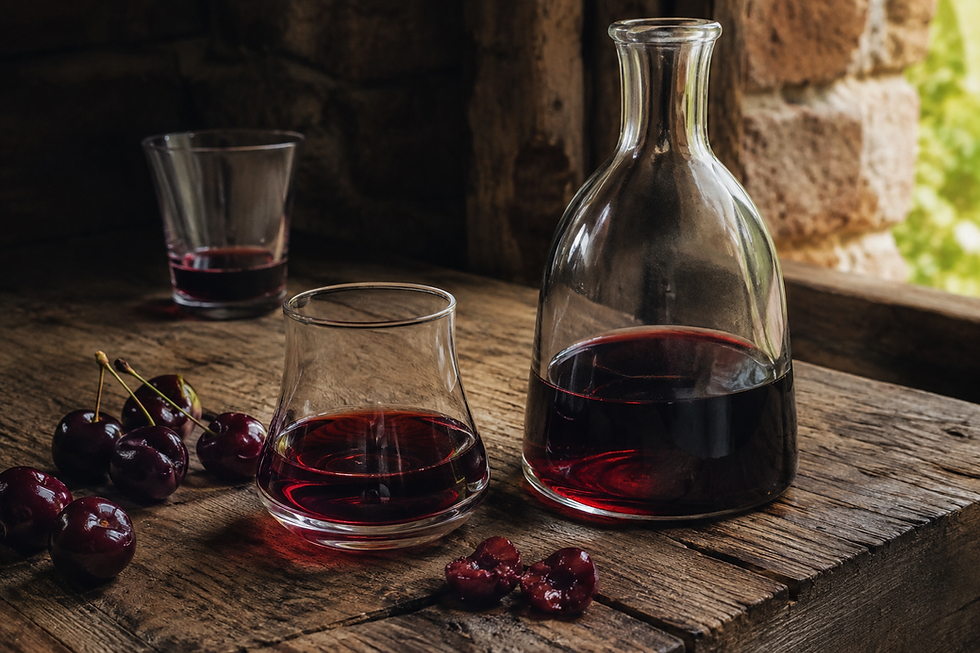
Ratafià Abruzzese joins two agricultural traditions that define the region: sour cherries and red wine. Ripe visciole are combined with sugar and wine, then the flavored liquid is filtered and commonly strengthened with alcohol. The finished drink should retain the vivid sweet-tart identity of the fruit while carrying the structure, color, and vinous depth of its base. It is richer than a simple cherry infusion and more concentrated than a flavored wine, which is why it is normally served in small portions.
There is no single household formula that represents every Abruzzese family. Proportions, resting time, whether the cherries are left whole or lightly crushed, the style of red wine, and the amount of fortifying spirit all vary. That variation is part of the tradition, but it must be described honestly. The practical recipe below is a transparent home formula, not a legal specification. It preserves the customary sequence of fruit with sugar, red wine, filtration, fortification, and rest while giving the cook measurable starting quantities.
What It Is
Ratafià Abruzzese is a cherry-based liqueur associated with Abruzzo and traditionally built with visciole, sugar, and red wine. Visciole are sour cherries prized less for dessert-table sweetness than for their bright acidity, deep color, and aromatic skin. During maceration, the fruit releases juice and perfume into the sugar; wine then expands that fruit concentrate into a drink with tannin and savory depth. A measured addition of food-grade alcohol stabilizes and strengthens the filtered liquid.
The sensory target is balance. Sour cherry should be recognizable before raw sugar, and wine should provide length without turning the drink into an ordinary sweet red. A well-made ratafià can show black cherry, red berries, gentle almond-like nuance from intact stones, and a lightly tannic finish. The aroma must remain clean and fresh, never vinegary, moldy, or cooked. Because home batches differ, service temperature and portion should be adjusted after tasting rather than copied automatically from another bottle.
Origin & Denominations
Ratafià is recorded among Abruzzo's traditional agri-food products. In regional practice, the name is linked to the meeting of sour cherries and local red wine, with Montepulciano d'Abruzzo commonly used as the wine component. That association gives the drink a clear Abruzzese identity, but it does not turn every homemade bottle into a protected wine denomination. The denomination on a wine label applies to the wine itself under its rules; once that wine becomes an ingredient in a homemade liqueur, the finished preparation should be described accurately and separately.
The word ratafià appears in other European drinks, sometimes with very different ingredients and methods, so the regional qualifier matters. Ratafià Abruzzese is not interchangeable with a neutral-spirit cherry cordial, a French ratafia made from grape must, or a commercial cherry brandy. When presenting a homemade bottle, identify the sour cherry variety if known, name the wine used, record the vintage or batch date, and avoid claims that the finished liqueur has a protected designation unless that status is specifically documented for that product.
Production & Quality
Start with sound, fully ripe sour cherries. Reject fruit with mold, fermentation damage, insect activity, or split areas that smell unpleasant. Wash gently, drain thoroughly, and allow surface water to dry before maceration. Keep the stones intact unless a verified family method directs otherwise; broken cherry stones are unnecessary for this formula and can contribute excessive bitterness. Use a clean glass vessel large enough to hold fruit, released juice, sugar, and wine without overflowing during mixing.
Wine quality is equally visible in the final result. Choose a dry, sound red with good acidity and no cork taint, oxidation, volatile acidity, or heavy oak flavor. Montepulciano d'Abruzzo is a natural regional choice because its fruit and structure support the cherries, but the label must be read carefully: the liqueur will not correct a damaged wine. A very sweet wine can make dosage difficult, while an extremely tannic wine can harden the finish after fortification.
Use only potable food-grade spirit. Sanitize tools, work with clean hands, and label every stage. Traditional accounts commonly describe an initial period with cherries and sugar followed by a further rest with red wine, often around thirty days for each stage or longer according to the household. Slow extraction protects perfume better than heating the fruit into a jam. Filtration should be gentle; pressing hard through sediment can cloud the liqueur and release coarse flavors.
Practical Household Formula
For a manageable home batch, use 1 kilogram of ripe visciole or other true sour cherries, 600 grams of granulated sugar, 1 liter of dry Montepulciano d'Abruzzo, and 250 milliliters of 95% food-grade neutral alcohol. This is a practical editorial formula, not an official specification. It produces a generous fruit concentration and leaves room to adjust sweetness after maturation. If a lower-proof potable spirit is substituted, the final alcoholic strength and dilution change; do not pretend the result is mathematically identical.
Wash, sort, and dry the cherries. Leave the stones intact and remove the stems. Place fruit and sugar in a clean glass jar, close it, and keep it in a cool area away from uncontrolled heat, turning the jar gently once a day. After about thirty days, when the sugar has drawn abundant juice and the cherries have softened, add the red wine. Close again and rest for another thirty days or longer, gently mixing from time to time so the extraction remains even.
Strain first through a clean sieve, then through a finer filter once the larger particles are removed. Add the measured food-grade alcohol to the filtered cherry-wine liquid and mix thoroughly in a vessel with enough headspace. Bottle in clean glass, close tightly, and rest at least two to three months before judging balance. Longer maturation can integrate the wine, cherry, sugar, and alcohol. Record actual yield; fruit absorption means the bottled volume will be lower than the sum of the starting liquids.
How to Choose & Buy
For homemade ratafià, buy sour cherries from a grower who can identify the fruit and harvesting condition. Sweet table cherries can make an enjoyable infusion, but they do not provide the same acidity or regional profile as visciole. Fresh fruit should be fragrant, deeply colored, and firm enough to sort without collapsing. If fresh visciole are unavailable, do not silently replace them and continue calling the recipe traditional; identify the substitution in the batch notes and on any gift label.
When buying a finished bottle, look for a clear ingredient list, alcoholic strength, producer, origin, and lot information. A dark red color is attractive but proves little by itself. Seek a clean cherry aroma, enough acidity to keep the sweetness alive, and wine character that supports rather than obscures the fruit. Artificial candy-like perfume, sticky one-dimensional sweetness, or oxidized wine notes indicate a different style from the balanced Abruzzese model described here.
How to Store
During maceration, protect the jar from excessive heat and rapid temperature changes. A clean, cool storage area gives the fruit time to release juice without encouraging uncontrolled fermentation. Inspect the batch regularly without introducing dirty utensils. If you observe mold, strong gas pressure, ropiness, or a clearly spoiled odor, discard the preparation. Adding alcohol later does not make spoiled fruit safe or restore a clean flavor.
After filtration and fortification, use clean bottles with sound closures. Store them upright in a dark cabinet, labeled with fruit, wine, alcohol, sugar, and dates. A small amount of sediment can settle naturally and may be removed by decanting or a second filtration. Once opened, keep the bottle tightly closed and avoid leaving it warm on a sunny bar. Chilling is optional for service, not a substitute for clean production and stable storage.
How to Cook or Use
Serve ratafià in a small glass slightly cool, not frozen. Moderate chilling sharpens the cherry acidity and keeps sweetness precise; very low temperature can mute wine aroma. It also works as a cocktail modifier with brandy, bourbon, aged rum, dry vermouth, or sparkling wine, but begin with a small measure. The liqueur already contains wine, sugar, fruit, and spirit, so it can replace several ingredients at once and quickly unbalance a drink if overpoured.
In the kitchen, use it to macerate cherries, perfume a chocolate cake, brush sponge layers, flavor a ricotta cream, or finish a red-fruit sauce. Add it to a reduced pan sauce for duck or pork only in small amounts and balance its sweetness with stock and acidity. For gelato, semifreddo, or granita, remember that alcohol changes freezing behavior. In a warm dessert sauce, add part of the liqueur after cooking if the goal is to preserve the freshest cherry aroma.
Pairings
Ratafià has a natural affinity with dark chocolate, cocoa, ricotta, mascarpone, vanilla, almonds, amaretti, hazelnuts, and red fruits. It can accompany a not-too-sweet chocolate tart or a simple biscuit better than a dessert already saturated with cherry syrup. Blue cheese and aged pecorino may create an appealing sweet-savory contrast, but the liqueur should be poured sparingly so alcohol and sugar do not overwhelm the cheese.
For a regional-style finish, offer it after dinner with a dry cookie, roasted nuts, or a restrained ricotta dessert. Fresh strawberries and raspberries echo its acidity; orange peel can brighten its darker fruit. Avoid pairing it with delicate white fish, raw shellfish, or very subtle custards where the wine and sour cherry dominate. Water at the table and a small serving size keep the experience focused and balanced.
Troubleshooting & Final Quality Check
If the liqueur tastes too sweet immediately after blending, let it rest before changing the formula. Wine tannin, cherry acidity, and alcohol often become clearer as the components integrate. If it remains heavy after maturation, serve a smaller portion or use it as a culinary accent rather than diluting the whole batch without calculation. If it is too austere, test a measured sugar syrup addition on a 100-milliliter sample, record the quantity, and scale only after tasting the rested sample again.
Before bottling gifts or serving guests, verify a clean aroma, stable closure, legible batch label, and absence of spoilage. Ratafià should taste like sour cherry carried by red wine, not like anonymous red sweetness. The most useful tool for improving the next batch is a notebook: record cherry weight, sugar, wine, spirit proof, stage dates, yield, and tasting notes. Honest documentation protects the regional identity while allowing a household style to evolve.
Related Recipes
Chef Lyuba Vitelli


Comments