
Italian Pasta and Peas | Pasta e Piselli alla Napoletana
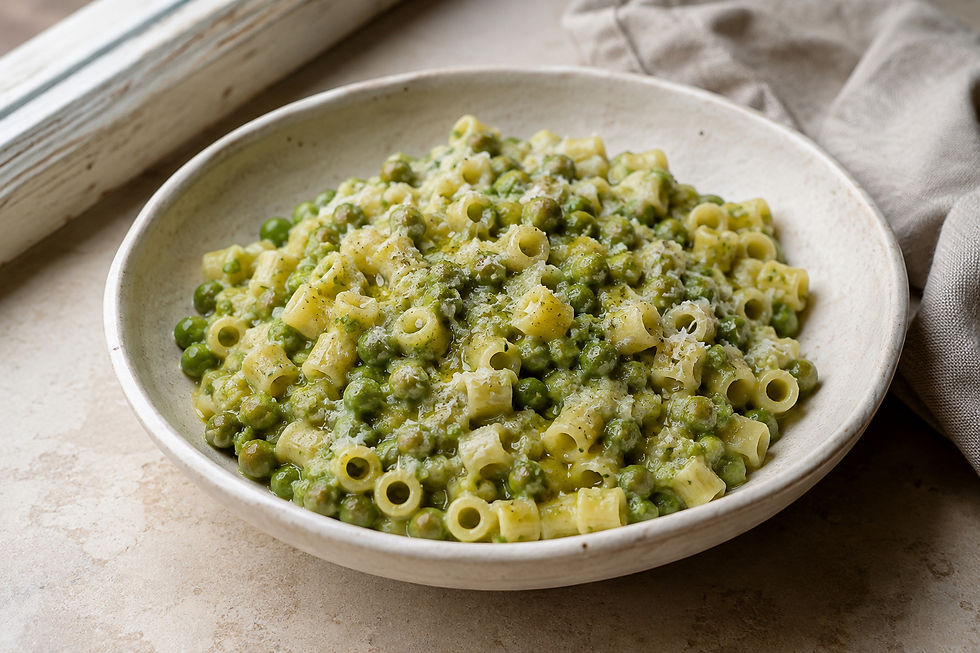
Pasta e piselli is what a Neapolitan kitchen makes when there is almost nothing in it, and it is also one of the dishes that kitchen is judged on. Small pasta and peas go into one pot with a little fat, an onion and hot water. What comes out is thick, cohesive and faintly sweet, bound by starch alone.
The method matters more than the shopping list. The pasta is never boiled separately and drained. It cooks in a measured quantity of liquid that it absorbs as it goes, the way rice is cooked for a risotto, so every gram of starch it releases stays in the pot. The dish fails in exactly two ways, too much water or too much heat at the end.
Yield: 4 servings. Prep: 15 minutes. Cook: 40 minutes. Total: about 55 minutes. Difficulty: easy to intermediate. Course: primo. Region: Campania, Naples and the Agro Nocerino Sarnese.
The Story
Naples has a family of dishes built on one grammar: pasta e fagioli, pasta e ceci, pasta e lenticchie, pasta e patate and pasta e piselli. The city calls them minestre even when nothing about them is soupy, and they share one rule, that the pasta finishes cooking in the same pot and in a controlled quantity of liquid. The pea version is the quickest of the group and needs neither soaking nor a long simmer, which is why it became the weekday dish and, in most households, the first of the family a child is given.
The pea is more local than visitors expect. The Agro Nocerino Sarnese, the volcanic plain between Vesuvio and the Monti Lattari that also produces the San Marzano tomato, has grown peas for the city markets since the eighteenth century. When the canning industry took root around Nocera Inferiore and Angri in the later nineteenth century, a crop that had lasted six weeks in spring became available all year. Naples had peas in tins long before most of Europe, and the dish travelled outward with the tin.
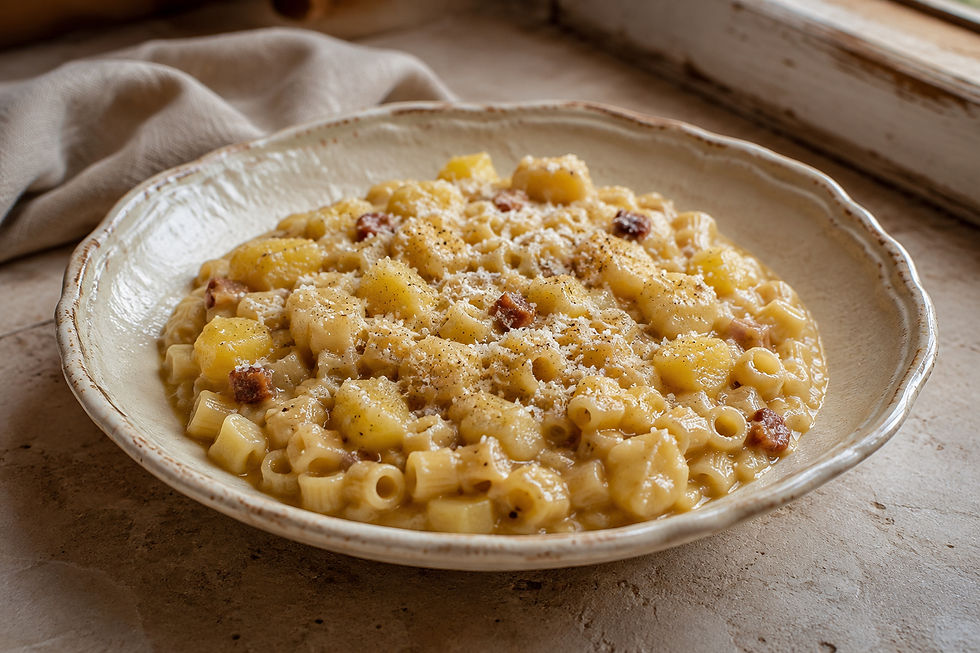
What the city argues about is fat and cheese. One school begins with nothing but oil and onion and finishes with Parmigiano. A second renders pancetta, or the trimmings from the end of a prosciutto, before the onion goes in. A third, from the trattorie of the Vomero after the war, melts diced smoked provola into the pot at the end. All three use the same absorption method. The recipe below builds the pancetta version and says where the provola goes.
Ingredients
For the soffritto and the base
Extra virgin olive oil, 3 tbsp (45 ml)
Pancetta or guanciale, cut into small dice, 3 oz (85 g)
Yellow onion, finely chopped, 1 medium, 5 oz (140 g)
Garlic clove, left whole and lightly crushed, 1
Flat leaf parsley, chopped, 2 tbsp (6 g)
Canned peeled tomatoes, crushed by hand, 2 tbsp (30 g), optional
Parmigiano Reggiano rind, scraped clean, 1 piece about 2 in (5 cm)
For the pasta and peas
Fresh shelled peas or good quality frozen peas, 1 lb 2 oz (500 g)
Pasta mista or ditalini, 10 oz (280 g)
Hot water or light vegetable broth, 4 cups (950 ml), plus more as needed
Fine sea salt, 1 tsp (6 g), plus more to taste
Basil sprig, 1
For finishing
Parmigiano Reggiano, finely grated, 1/3 cup (35 g)
Pecorino Romano, finely grated, 2 tbsp (12 g)
Extra virgin olive oil, 1 tbsp (15 ml)
Freshly ground black pepper, to taste
Smoked provola, cut into small dice, 3 oz (85 g), optional
Preparation
Sort the peas and get the liquid hot
Shell fresh peas and keep the smallest separate from the larger starchy ones, since the two cook at different speeds and you want both textures. Frozen peas go in straight from the bag. Put the water or broth on in a separate saucepan and hold it at a bare simmer throughout. Cold liquid added later stalls the starch, and that is the commonest cause of a watery result.
Render the pancetta and build a soffritto without colour
Warm the oil in a heavy pot over low heat, add the pancetta and render it for 4 to 5 minutes until the fat has run and the edges are just golden. Add the onion, the crushed garlic and half the parsley, and cook gently for 8 to 10 minutes, stirring often. The onion must go soft and translucent without browning, since a browned soffritto tastes toasted and sits on top of the peas.
Coat the peas in the fat and cook them until half collapse
Turn the heat to medium, tip in the peas and stir for 2 minutes until every one is glossed with the rendered fat. Add the crushed tomatoes if you are using them, then the scraped cheese rind and the basil. Pour in about 2 cups (475 ml) of hot liquid, just enough to cover, and simmer uncovered for 10 to 12 minutes with fresh peas or 6 to 8 with frozen, without salt. You want half the peas soft enough to crush against the side of the pot while the rest keep their shape, since those crushed ones thicken the liquid and replace cream.
Add the pasta and begin the absorption
Add the remaining hot liquid, bring the pot back to a lively simmer and tip in the dry pasta. Stir at once, then every thirty seconds for the first two minutes, because small shapes sink and catch on the bottom. From here the pot behaves like a risotto: liquid is absorbed rather than drained. Keep the surface moving without ever reaching a hard boil.
Salt late and add liquid a ladle at a time
Season with the fine sea salt only now, once the pasta is in and the liquid has begun to reduce, then taste again. Salt added at the start concentrates as the pot reduces and leaves the dish sharp. Add hot liquid one small ladle at a time whenever the surface looks dry, never more than the pot can absorb in two minutes. The skill is adding less than you think you need.
Judge the point where the starch binds
Begin tasting about two minutes before the time on the packet. The pasta should come off the tooth with a faint resistance at the core while the liquid has turned opaque and creamy. Drag the spoon across the bottom: the track should close slowly, over two or three seconds. If it closes instantly, reduce another minute. If it does not close, add a ladle of hot liquid.
Rest the pot and finish off the heat
Take the pot off the heat, remove the cheese rind and the basil, and let it stand uncovered for 2 minutes. That rest lets the starch set and the temperature fall far enough for cheese to go in without seizing. Add the Parmigiano, the Pecorino, the parsley, the last tablespoon of oil and a grinding of pepper, and stir hard for twenty seconds until the pot turns glossy. For the provola version, fold the cheese in now.
Plating
This is a dish for a bowl, not a plate, and it is served hot. Warm the bowls to around 140°F (60°C), because a cold bowl pulls heat out of a starchy pot within seconds and the surface tightens into a skin. Deep bowls with a wide flat base work better than narrow ones, since the dish should sit in a low mound.
Spoon it, never tip it from the pot, so you control the proportion of whole peas to sauce in each bowl. The surface should settle into a gentle dome and hold a moment before relaxing: if it runs flat the pot was too loose, if it holds a sharp edge it was too tight. Finish at the table with raw olive oil, black pepper and a dusting of Pecorino.
Professional Technique
The technique that defines this recipe is the double starch bind. The first source is the amylose released by the pasta as it cooks, which stays in the liquid because the pasta is never drained. The second is the starch and pectin inside the peas, released when roughly half of them cook past the point of holding together. Neither alone gives the consistency the dish is known for. Together they make a sauce that behaves like an emulsion without any dairy fat beyond the cheese at the end.
The absorption cooking Neapolitans apply to this family of dishes is closer to risotto than to pasta. Liquid goes in hot, in small quantities, and only once the previous addition has been taken up. The pot stays at a steady simmer rather than a boil, because violent movement breaks the shapes apart and turns the released starch into a cloudy suspension instead of a smooth bind.
The third element is heat management at the finish, where most versions are lost. Grated hard cheese added to a pot still over a flame will seize: the proteins tighten, squeeze out their fat and leave stringy knots in a greasy sauce. Two minutes off the heat drops the temperature into the range where casein relaxes into the starch, and the same pause lets the starch network set.
Texture and Moisture Control
Three textures must arrive at the table together: pasta with a trace of firmness at the centre, whole peas that still burst, and a sauce thick enough to coat the back of a spoon. One variable controls all three, the amount of liquid in the pot at any given minute. Too much and the pasta boils rather than absorbs, the starch disperses and you get soup. Too little and the pasta absorbs faster than it softens, the bottom catches and the dish turns pasty within a minute of leaving the heat.
The peas need their own management, because they cook far faster than the pasta and hold almost no structure once past their point. Cooking them alone first makes two textures possible: the older ones break down into the liquid, while the sweeter ones are barely cooked when the pasta goes in and still have ten gentle minutes ahead. Frozen peas are already blanched, so they need six to eight minutes rather than twelve.
The dish keeps thickening after it leaves the heat, faster than most cooks expect. Work to a consistency that looks very slightly loose, hold back a ladle of hot liquid to correct with, and never loosen a stiffened pot with cold water, which shocks the starch and leaves the sauce grainy.
Professional Mise en Place
The cooking is short and the finish cannot be held, so everything is prepared in advance and the last five minutes are worked without leaving the pot.
Equipment and tools
Heavy bottomed pot of about 4 quarts (3.8 l), wide rather than tall
Separate saucepan holding the cooking liquid at a bare simmer
Wooden spoon with a flat edge for clearing the bottom
Small ladle for adding liquid in controlled amounts
Fine grater for the Parmigiano and the Pecorino
Prepared ahead
Onion chopped fine and pancetta diced, up to 1 day ahead, kept cold
Peas shelled and sorted by size on the day, or frozen peas left in the freezer
Cheese rind scraped clean and cut to size, kept with the basil sprig
Parmigiano and Pecorino grated and mixed together in one bowl
Vegetable broth made or measured, ready to heat
Service setup
Bowls warming to about 140°F (60°C), never cold
Hot liquid within arm's reach of the pot, ladle already in it
Grated cheese, parsley, pepper mill and finishing oil beside the stove
Provola diced and cold if you are making that version
Bread on the table and a spoon beside every fork
Chef Tips
Buy frozen peas rather than tinned, and the smallest grade you can find. Frozen peas are picked and blanched within hours and keep their sweetness and colour, while tinned peas have been cooked twice and arrive grey. With fresh peas in spring, buy twice the listed weight, since pods yield less than half their weight.
Keep the cheese rinds. Scrape each one clean, cut it into matchbox pieces and freeze them. One dropped into the pot at the start adds a savoury depth no grated cheese at the end can reproduce, because it has forty minutes to give up its glutamates rather than thirty seconds.
Use pasta mista if you can find it, and do not sort it. The point of a mixed pasta is that the shapes finish at slightly different moments, giving a range of textures rather than one uniform bite. If only ditalini are available they work well, but choose a bronze cut brand, since the rougher surface releases more starch.
Taste the liquid before the pasta goes in, not after. At that point salt and depth can still be corrected freely, while later every adjustment fights a pot that is already thickening. If the peas taste flat then, a scrape of the cheese rind against the side of the pot and another minute of simmering usually fixes it.
Common Mistakes
Boiling the pasta separately and adding it drained. All the starch that should bind the sauce goes down the sink, and what is left is peas in liquid with pasta sitting in it. The pasta must cook in the pot from dry.
Adding cold water to the pot. Every ladle of cold liquid drops the temperature and halts the release of starch, so the pasta keeps softening while the sauce refuses to thicken. Keep a second pan at a bare simmer.
Browning the soffritto. Onion and pancetta taken past golden bring a toasted bitterness that sits above the sweetness of the peas rather than supporting it, and it cannot be removed later. Keep the heat low.
Salting at the beginning. The pot reduces considerably between the first ladle and the last, and early salt concentrates with it. Season once the pasta is in, then taste again at the end.
Adding the cheese over the flame. Parmigiano and Pecorino seize on direct heat, turning stringy and releasing their fat as visible oil. Pull the pot off the stove and wait two full minutes first.
Overcooking the peas. Peas cooked until every one collapses give a uniform purée and lose the contrast that makes the dish interesting.
Wine Pairing
Falanghina del Sannio DOC: The everyday white of the Campanian hills and the most natural bottle here. Its brisk green apple acidity cuts through the starch bind and resets the palate between mouthfuls, which a softer white could never manage against a dish this cohesive. The faint bitter almond on the finish sits beside the sweetness of the peas.
Greco di Tufo DOCG: Grown on sulphur rich volcanic soils north of Avellino, Greco has a broader and more mineral shape, with stone fruit weight and a smoky, almost flinty edge. That texture is what makes it work: enough substance to stand against a bowl of starch and cheese without leaning on sweetness. Serve it young, at about 50°F (10°C).
Lacryma Christi del Vesuvio DOC: Grown on the volcanic slopes that supply the vegetables, from Coda di Volpe and Caprettone, this is the most locally exact match available. It is rounder than the two above, with a saline finish that echoes the cheese instead of competing with it. That gentleness is an advantage in the smoked provola version.
Fiano di Avellino DOCG: The most structured Campanian white, and the one to open if the pot has been finished generously with Pecorino. Fiano carries hazelnut and pear on a firm acid frame and develops a waxy texture in bottle, which holds its own against a dish whose defining quality is thickness. Its length also survives the black pepper.
Cerasuolo d'Abruzzo DOC: A properly dry rosato from Montepulciano grapes, for anyone who wants red fruit behind the glass. It has real colour and weight for a pink wine, enough for the pancetta fat, but almost no tannin, which matters because tannin turns metallic against green vegetables. Serve it at around 54°F (12°C).
Storage & Reheating
The dish is best eaten within minutes of leaving the pot, but leftovers keep well and many Neapolitan households treat the next day version as a separate pleasure. Cool it quickly spread in a wide dish, then refrigerate in an airtight container for up to 2 days. It sets almost solid once cold, which is normal and reverses on reheating.
Reheat in a wide pan over low heat with a few tablespoons of hot water or broth stirred in at the beginning, not at the end. Work the liquid through as the mass loosens and stop the moment it is hot and glossy, about 4 minutes. Never bring it back to a boil, since the pasta is already fully cooked.
Do not freeze the provola version, whose melted cheese separates on thawing. The plain one freezes for up to 1 month in a sealed container, thawed overnight in the refrigerator and reheated as above with extra liquid. Expect softer pasta.
Nutrition
Per serving, based on 4 servings of the pancetta version without provola:
Calories: 615 kcal
Total Fat: 24 g
Saturated Fat: 7 g
Trans Fat: 0 g
Unsaturated Fat: 16 g
Cholesterol: 28 mg
Sodium: 780 mg
Total Carbohydrates: 74 g
Fiber: 11 g
Total Sugars: 10 g
Added Sugars: 0 g
Protein: 26 g
Lactose: 0.5 g
Principal micronutrients: vitamin K, vitamin C, folate, thiamine, manganese, iron, phosphorus, calcium
These figures are estimates. The smoked provola adds roughly 90 calories and 5 g of saturated fat per serving, and the sodium depends on the pancetta and the Pecorino.




Comments