
Italian Pasta and Potatoes with Pasta Mista | Pasta e Patate alla Napoletana
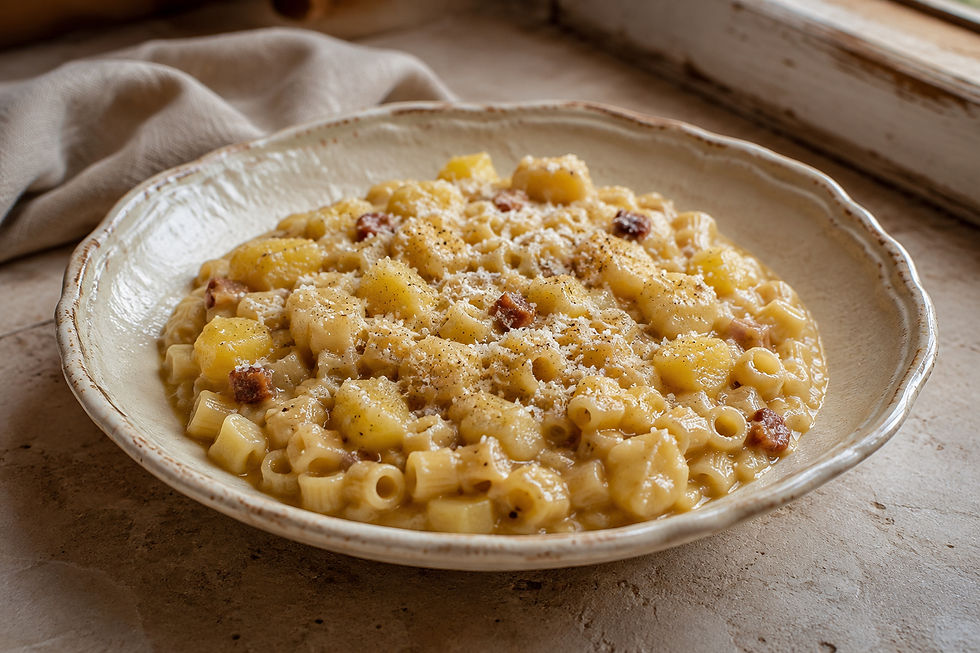
Every Neapolitan cook has an opinion about pasta e patate, but almost all of them agree on the pasta: it has to be mista, the mixed format that puts ten or twenty different shapes in one bag. This recipe treats that mixture as the technical problem it is, and solves it by adding the pasta in two waves rather than one.
Everything else follows the city rule. Potatoes and pasta cook in the same pot, in a measured quantity of hot water they absorb as they go, with no cream and no draining. Potato starch and pasta starch build the bind together, and the pot is finished off the flame with two grated cheeses and raw oil.
Yield: 4 servings. Prep: 20 minutes. Cook: 45 minutes. Total: about 1 hour 5 minutes. Difficulty: easy to intermediate. Course: primo. Region: Campania, Naples and the Piana del Sele.
The Story
Naples classifies this dish as a minestra asciutta, a dry soup, and the contradiction in the name is the point. It is eaten with a spoon but it does not pour, and the test applied in the city is whether a spoonful stands up for a second or two before it gives way. No luxury version exists: there is no truffle variant, no lobster variant, nothing that can be added to raise its status. It is one of the few plates in Italian cooking that has resisted being improved.
The potatoes rarely come from the city. Most of what a Neapolitan greengrocer sells arrives from the Piana del Sele around Eboli and Battipaglia, an hour south, or in the colder months from the Fucino plateau in Abruzzo. Cooks buy a yellow fleshed potato rather than a floury one, because a floury potato disappears completely and leaves the dish tasting of paste, while a yellow fleshed one gives up enough starch to thicken and still leaves recognisable pieces.
The dish also travelled. Neapolitan families who left for New York, Buenos Aires and Melbourne took it with them because it needed nothing that could not be found anywhere, and it survives there in versions fossilised around whatever pasta was available in 1910. Back in Naples it went the other way: since the 1990s it has reappeared on serious menus, cooked exactly as it always was.
Ingredients
For the soffritto and the base
Extra virgin olive oil, 3 tbsp (45 ml)
Yellow onion, finely chopped, 1 medium, 5 oz (140 g)
Carrot, finely diced, 1 small, 2 oz (55 g)
Celery stalk, finely diced, 1, 2 oz (55 g)
Pancetta, cut into small dice, 2 oz (55 g), optional
Canned peeled tomatoes, crushed by hand, 3 tbsp (45 g)
Parmigiano Reggiano rind, scraped clean, 1 piece about 3 in (8 cm)
Bay leaf, 1
For the potatoes and pasta
Yellow fleshed potatoes, peeled, 1 lb 5 oz (600 g)
Pasta mista, 10 oz (280 g)
Hot water, 5 cups (1.2 l), plus more as needed
Fine sea salt, 1 1/4 tsp (7 g), plus more to taste
Freshly ground black pepper, to taste
For finishing
Parmigiano Reggiano, finely grated, 1/3 cup (35 g)
Pecorino Romano, finely grated, 2 tbsp (12 g)
Extra virgin olive oil, 1 tbsp (15 ml)
Flat leaf parsley, chopped, 1 tbsp (3 g)
Preparation
Sort the pasta mista by thickness
Tip the bag onto a tray and divide it by eye into two piles: the heavy shapes with thick walls, short rigatoni, penne ends, broken ziti, in one, and the light ones, small tubetti, broken spaghetti, flat scraps, in the other. Five minutes of sorting separates a good bowl from one where half the pasta is chalky and the other half has gone to pulp.
Peel the potatoes and cut them small
Peel the potatoes and cut them into cubes of about 1/2 in (1.5 cm), as even as you can manage. Rinse them once, briefly, and no more. That surface starch is the thickener the dish depends on, and washed potatoes give a thin pot that never binds. Leave the cubes in a dry bowl until you need them.
Sweat the odori without browning them
Warm the oil in a heavy pot over low heat and add the pancetta if you are using it, letting it render for 3 minutes. Add the onion, carrot and celery and cook gently for 10 to 12 minutes, stirring, until everything is soft and completely pale. A browned base turns the pot bitter behind the potato, and potato is too mild to cover it.
Add the tomato, the rind and the bay
Stir in the crushed tomatoes and cook for 2 minutes until they darken and lose their raw edge. This is a spoonful for depth and a trace of acidity, not enough to make the dish red. Drop in the scraped cheese rind and the bay leaf. The rind will spend the next half hour releasing salt and savour into the liquid, work no grated cheese can do at the end.
Cook the potatoes until the edges blur
Add the potato cubes and stir for 2 minutes so they take on the fat, then pour in about 3 cups (700 ml) of hot water, enough to cover them by a finger. Add half the salt and simmer uncovered for 12 to 15 minutes, until the corners of the cubes go soft and indistinct while the centres still hold. Crush four or five against the side of the pot to start the bind.
Add the thick shapes first, the thin ones after
Pour in the remaining hot water, bring the pot back to a lively simmer and add the heavy pile of pasta. Give it 4 minutes on its own, stirring so nothing settles, then add the light pile. That staggered start is what makes a mixed pasta work: both piles finish within the same minute or two instead of one being raw while the other dissolves.
Work the pot with the spoon as it tightens
From here stir every thirty seconds, scraping the bottom, and top up with small ladles of hot water whenever the surface looks dry and the pasta is still firm. The movement rubs starch off the pasta and the potato and is what turns the liquid opaque. Season with the rest of the salt now, remembering the rind has already contributed and the grated cheeses are still to come.
Take it off the heat and finish with the cheeses
When the pasta is just short of done and a spoon dragged through the pot leaves a track that closes slowly, pull it off the flame. Remove the rind and the bay leaf and let it stand 2 minutes. Add the Parmigiano, the Pecorino, the parsley, the last spoon of oil and a heavy grinding of pepper, and beat it hard for twenty seconds until the surface turns glossy.
Plating
Serve it in warm bowls, at around 140°F (60°C), and serve it immediately. A potato and pasta pot loses heat quickly and forms a skin within a minute in a cold bowl. Use a shallow bowl with a wide base, so the dish spreads into a low layer and stays hot to the last spoonful.
Take it out with a large spoon and drop it rather than smoothing it, so the surface stays uneven and the different shapes stay visible. That irregularity is the visual signature of a mista. Finish each bowl at the table with raw olive oil and more black pepper, and put the grater on the table rather than dusting the bowls in the kitchen.
Professional Technique
The defining technique here is the staggered addition of a mixed pasta, and it exists because pasta mista is not one ingredient but a dozen. A thick walled rigatoni end needs eleven or twelve minutes in a simmering pot, while a small tubetto or a flake of broken spaghetti is finished in six or seven. Tipped in together they cannot both be right. Sorting by wall thickness and giving the heavy pile a four minute head start brings the whole mixture into one narrow window.
The second technique is deliberate starch retention. The potato cubes are rinsed once and never soaked, because the surface starch washed off in a colander is what thickens the pot. The same logic governs the pasta, cooked in the liquid it will be served in rather than drained. The two release amylose across a wide temperature range, which is why the bind builds slowly.
The third is the beating at the end, a movement Neapolitan cooks make without thinking. Twenty seconds of hard stirring off the heat, with the cheeses and the oil in, drives air and fat into the starch and turns the surface from dull to glossy. Done on the flame it would seize the cheese instead. The two minute pause before it is what brings the pot into the range where that beating works.
Texture and Moisture Control
The target consistency sits between a soup and a baked pasta, and it is judged with a spoon rather than a clock. Drag the spoon across the bottom: the track should stay open two or three seconds and then close. Instant closing means too much water is still in the pot. No closing at all means it has gone too far and needs a ladle of hot water before it sets harder.
The potatoes have to be managed in both directions at once. Cut too large they stay firm in the centre while the outsides break down; cut too small they vanish and leave a purée with pasta in it. Half inch cubes cooked 12 to 15 minutes before the pasta goes in give the middle ground. Crushing four or five against the pot wall starts the thickening early, so less reduction is needed later and the pasta is less likely to overcook.
Heat is the last variable. The pot must simmer, never boil: a hard boil tears the softer shapes apart and leaves the water cloudy rather than creamy. It also keeps tightening off the stove, so take it off while it looks a shade looser than you want.
Professional Mise en Place
Almost all the work happens before the pot goes on, and the last ten minutes need both hands. Set up in this order.
Equipment and tools
Heavy bottomed pot of about 5 quarts (4.7 l), wider than it is tall
Kettle or saucepan of hot water held just under a simmer
Flat edged wooden spoon, sturdy enough to beat the pot at the end
Two trays or bowls for the sorted pasta piles
Fine grater for the Parmigiano and the Pecorino
Prepared ahead
Pasta mista sorted into a heavy pile and a light pile, up to a day ahead
Odori chopped fine and kept covered in the refrigerator
Cheese rind scraped and cut, stored with the bay leaf
Parmigiano and Pecorino grated and mixed in one bowl
Potatoes peeled and cubed no more than 30 minutes before cooking
Service setup
Bowls warming to about 140°F (60°C), shallow and wide
Hot water beside the pot with a small ladle in it
Grated cheese, parsley, pepper mill and finishing oil within reach
Timer set for the four minute gap between the two pasta additions
Grater and oil bottle on the table, not in the kitchen
Chef Tips
If you cannot buy pasta mista, make your own from three or four boxes of different shapes rather than breaking up one. Snapping long pasta gives splinters of a single thickness, the opposite of what the dish wants. Small tubes, short ribbed shapes and a handful of broken lengths behave correctly and keep for months in a jar.
Choose the potato by flesh colour, not by name, since variety names change from market to market. A yellow fleshed potato with a waxy feel under the knife holds its cubes and still thickens. A white floury one, sold for baking, collapses completely and takes the dish with it.
Keep a kettle of hot water going rather than a measured jug. What this pot needs varies with the potato, the pasta and how hard your stove runs, and a cook who has to boil more halfway through ends up adding it cold. Cold water at that stage stops the starch and the pot never recovers.
Make it the day before if you want it at its best. The flavour improves overnight, once the potato and the cheese rind have settled into each other, and the texture comes back with a little hot water. Undercook the pasta by a minute if you are cooking ahead.
Common Mistakes
Adding all the pasta at once. With a mixed format this guarantees that some shapes are chalky in the middle while others have dissolved. Sort by wall thickness and give the heavy pile a four minute head start.
Rinsing or soaking the cut potatoes. The surface starch that washes away in the colander is the thickener the dish runs on, and without it the pot stays watery however long it reduces. One quick rinse, no soaking.
Using a floury baking potato. It breaks down entirely within ten minutes and leaves a heavy uniform paste with no pieces in it. A yellow fleshed waxy potato holds its cubes while still giving up enough starch.
Boiling instead of simmering. A hard boil shreds the thinner pasta shapes and leaves the liquid cloudy rather than creamy. Keep the surface moving gently and let the spoon do the work instead of the heat.
Browning the odori. Potato is too mild to hide a bitter base, so any colour taken on the onion, carrot and celery comes through clearly in the finished bowl. Keep the heat low for the full 10 to 12 minutes.
Stirring the cheeses in over the flame. Parmigiano and Pecorino seize on direct heat and turn stringy, releasing their fat as an oily film. Rest the pot for two minutes first, then beat them in hard.
Wine Pairing
Matera Greco DOC: The same Greco grape that Campania grows, made on the limestone of the Basilicata border a short drive inland. It gives a dry white with firm acidity and a chalky, almost salty finish that lifts a heavy starch bound bowl instead of sinking into it. The faint yellow fruit underneath meets the potato without adding sweetness, which is exactly what this dish cannot take.
Biferno DOC Bianco: A plain, honest Molise white built on Trebbiano with Bombino and Malvasia, and the kind of bottle this dish was always drunk with in the countryside. It is light, brisk and low in alcohol, so it refreshes between mouthfuls and never competes with the cheese rind. Serve it well chilled and pour it generously rather than thinking about it too hard.
Tintilia del Molise DOC Rosato: Tintilia makes a rosato with real depth of colour and a savoury, peppery edge that most pink wines lack. That peppery character runs straight alongside the heavy grinding of black pepper the pot is finished with, and there is enough acidity to handle the pancetta if you include it. No tannin to speak of, which keeps it clean against the potato.
Pentro di Isernia DOC Rosso: A light red from the mountains above Campania, mostly Montepulciano with Sangiovese, and a good choice when the weather is cold and the pot is thick. Its red cherry fruit and modest tannin give grip without drying the mouth, and a light chill at around 57°F (14°C) keeps it from feeling heavy beside a dish that is already substantial.
Aglianico del Vulture Superiore DOCG: The serious bottle on the list, grown on volcanic soil on the slopes of Monte Vulture just over the Campanian border. Its firm tannin and dark plum and ash character need fat and salt to soften them, and a pot finished with Pecorino and raw oil supplies both. Open it for the version made with pancetta and decant it for half an hour.
Storage & Reheating
Cool leftovers quickly, spread in a wide dish rather than left in the hot pot, then refrigerate in an airtight container for up to 3 days. It sets firm enough to cut once cold, which is normal. In Naples the cold leftover is sometimes sliced and fried until the outside crisps, and that is a legitimate second dish.
To reheat it, put it in a wide pan over low heat with 3 or 4 tablespoons of hot water added at the start, and work it with a spoon as it loosens. Stop the moment it is hot and glossy, around 5 minutes. Never microwave it, and never let it boil, since the pasta is already fully cooked.
Freezing works better here than with most pasta dishes, because potato starch survives it well. Freeze in portions for up to 2 months in sealed containers, thaw overnight in the refrigerator and reheat as above with extra hot water. If you plan to freeze, take the pot off the heat two minutes early.
Nutrition
Per serving, based on 4 servings made with the optional pancetta:
Calories: 590 kcal
Total Fat: 20 g
Saturated Fat: 6 g
Trans Fat: 0 g
Unsaturated Fat: 13 g
Cholesterol: 22 mg
Sodium: 830 mg
Total Carbohydrates: 84 g
Fiber: 7 g
Total Sugars: 6 g
Added Sugars: 0 g
Protein: 20 g
Lactose: 0.4 g
Principal micronutrients: potassium, vitamin C, vitamin B6, niacin, calcium, phosphorus, iron
These figures are estimates. Leaving the pancetta out removes about 55 calories and 5 g of fat per serving, and the sodium depends mostly on the Pecorino.




Comments