Italian Barolo Chicken Breast | Petto di Pollo al Barolo con Cipolle Rosse
Updated: Oct 24

This is the dish that happens in the Langhe when there is a bottle of Barolo open and no beef in the house. The red onions go into the pan first, the wine over them, and the two cook down together until the onions have become the body of the sauce. The chicken sits in that reduction only long enough to finish.
What makes it work is restraint with the wine. Barolo is a tannic, high acid Nebbiolo, and a careless reduction tastes of bitterness and burnt alcohol. Taken down slowly, with onion sugar dissolving into it and cold butter swirled in off the heat, the same wine turns glossy and deep, the tannin reading as grip rather than astringency.
Yield: 4 servings. Prep: 20 minutes. Cook: 45 minutes. Rest: 8 minutes. Total: about 1 hour 15 minutes. Difficulty: intermediate. Course: secondo. Region: Piedmont, the Langhe and the Alba hills.
The Story
Barolo is made from Nebbiolo grown on the marl and sandstone hills south of Alba, in a handful of communes that together cover less land than a mid sized city. It became the wine of the House of Savoy in the nineteenth century, when Cavour and the Marchesa Giulia Falletti pushed local growers toward a fully dry style. Cooking with it was never a contradiction of that, because in the Langhe the pot and the glass were filled from the same bottle.
The famous Piedmontese use of the wine is brasato al Barolo, a whole cut of Piemontese beef marinated overnight and braised for hours. Chicken al Barolo is its quicker cousin, from the same kitchens on days when there was no large joint and the wine was already open. It was never a grand dish, only how a farmhouse got the flavour of the region onto a plate in under an hour.
The red onion is not decoration. Piedmont grows serious onions, above all the flat red bulb of Cureggio and Fontaneto in the Novara plain, sweet enough for agrodolce and firm enough to hold through long cooking. The region also serves its boiled meats, the bollito misto, with sharp and sweet condiments, so onion cooked down with wine and acidity is native ground.
Ingredients
For the chicken
Boneless skinless chicken breasts, 4, about 7 oz (200 g) each
Fine sea salt, 1 1/4 tsp (7 g), for the dry brine
Freshly ground black pepper, 1/2 tsp (1 g)
Extra virgin olive oil, 2 tbsp (30 ml)
For the Barolo and red onion sauce
Red onions, 1 1/4 lb (570 g), about 3 medium, sliced 1/8 in (3 mm) thick
Unsalted butter, 4 tbsp (57 g), kept cold and cut into cubes
Barolo DOCG, 2 cups (480 ml)
Chicken stock, low sodium, 1 cup (240 ml)
Fresh thyme sprigs, 3
Bay leaf, 1
Granulated sugar, 1 tsp (4 g), only if the onions are sharp
Red wine vinegar, 2 tsp (10 ml)
Fine sea salt, to taste
For finishing
Flat leaf parsley, chopped, 1 tbsp
Extra virgin olive oil, a few drops per plate
Flaky sea salt, a small pinch per portion
Preparation
The technique for the breast never changes: salt it ahead, sear it on a dry surface, pull it at 160°F (71°C) and rest it. Everything else here is about the wine and the onions.
Step 1

Salt the breasts on both sides and leave them uncovered on a rack in the refrigerator for at least 40 minutes. This dry brine seasons the meat through and dries the outside for the sear. Meanwhile peel the red onions, halve them through the root and slice them thinly along the grain, so the pieces stay in long strands instead of collapsing into pulp. Measure the Barolo and set the stock, thyme and bay leaf beside the stove.
Step 2

Pat every surface of the chicken dry and grind the black pepper over it. Heat the olive oil in a wide heavy skillet over medium high heat until it shimmers. Lay the breasts in smoother side down, leave them alone 4 minutes, turn once and give the second side 3 minutes. You are building colour and fond, not cooking the chicken, so it should still be visibly underdone when you lift it out.
Step 3

Turn the heat to medium low and drop 1 tablespoon of the butter into the same unwashed pan. Add the onions with a pinch of salt and stir them through the fat and the browned residue. Cook for 15 to 18 minutes, stirring often, until they have shrunk by well over half, gone limp and translucent and taken a pale gold edge. Keep the heat low enough that nothing scorches: burnt onion in a wine sauce is bitterness you cannot remove later.
Step 4

Pour in the Barolo, scraping the base so every piece of fond dissolves, and add the thyme and bay leaf. Raise the heat only to a steady simmer, never a hard boil, and reduce the wine with the onions still in it for 12 to 15 minutes, until the volume has halved and the liquid has gone from purple to a dark thickened garnet. Taste. If it reads harsh rather than deep, the teaspoon of sugar goes in now.
Step 5

Stir in the chicken stock, then return the breasts with any juices from the plate. Nestle them into the onions rather than on top, spoon liquid over each one and cover the pan loosely. Hold a bare simmer and poach the chicken for 8 to 10 minutes, turning once halfway. Start checking with an instant read thermometer at 8 minutes: you want 160°F (71°C) at the thickest part of the largest breast and not a degree more.
Step 6

Lift the breasts onto a warm plate, tent them loosely with foil and rest them 8 minutes while carryover heat takes the centre to a safe 165°F (74°C). Discard the thyme and bay leaf. Raise the heat and reduce the sauce another 3 or 4 minutes, until it coats the back of a spoon. Stir in the red wine vinegar off the boil and taste for salt.
Step 7

Pull the pan right off the heat and wait 30 seconds so the sauce drops below a simmer. Add the remaining cold butter a cube at a time, swirling the pan rather than stirring, letting each piece disappear before the next. The sauce tightens and turns glossy and opaque. Pour in the juice pooled under the resting chicken and swirl once more. Do not let it boil again, or the emulsion breaks and the butter separates as a slick.
Plating
Warm the plates. This sauce is an emulsion of wine and butter and it dulls the moment it meets a cold surface, so give them two minutes in a low oven. Slice each breast across the grain on a slight angle into four or five thick pieces, cutting on a board so the juice stays where you can collect it.
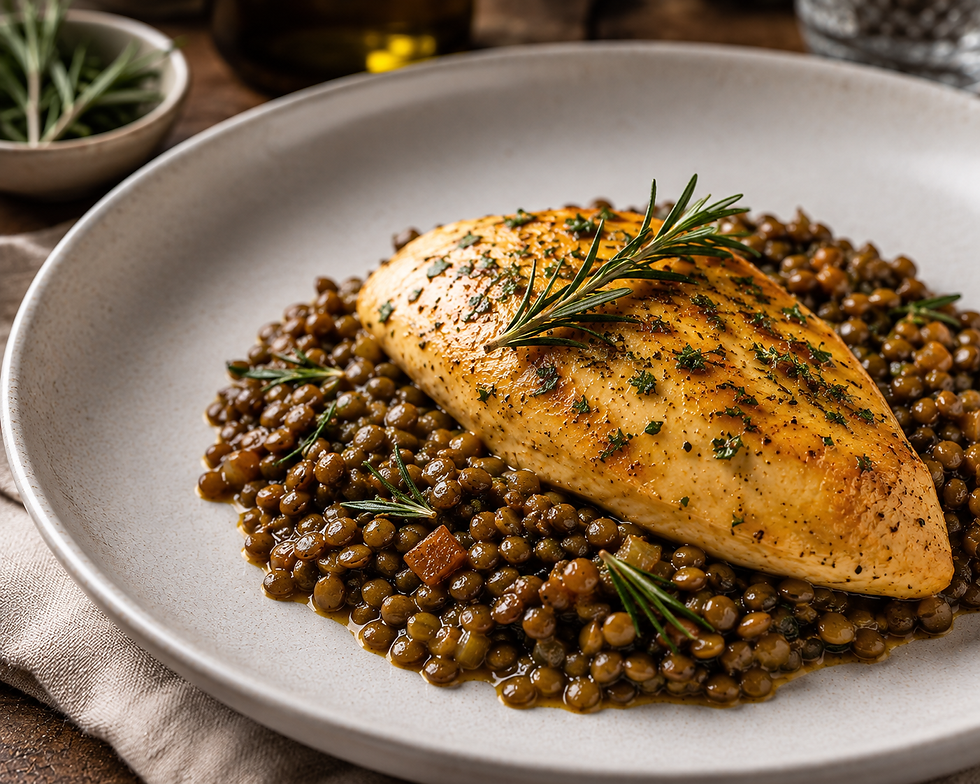
Spoon a generous bed of the Barolo onions slightly off centre, strands loose rather than pressed flat, and fan the sliced chicken over the near edge so the cut faces show. Ladle the glossy sauce around the base of the onions and over the meat, not in a pool that swamps the plate. Scatter the parsley, add a few drops of olive oil and a pinch of flaky salt, and send it out. The classic accompaniment in Piedmont is soft polenta. Avoid anything acidic alongside: the wine and vinegar have already put all the sharpness the plate can carry.
Professional Technique
The dish rests entirely on how the Barolo is reduced. Alcohol boils off at 173°F (78°C) and water at 212°F (100°C), so a simmering pan loses alcohol faster than volume, which is why the liquid stops smelling raw long before it looks concentrated. Everything else grows stronger in proportion: the acidity, the colour and above all the tannin. Nebbiolo carries more tannin than almost any Italian grape, and tannin concentrated four fold with nothing to bind it turns a sauce dry and metallic.
The red onions are the working answer, which is why they reduce inside the wine rather than being cooked separately and added later. Onions cooked slowly release sugars and soluble pectin, and tannin binds readily to both, exactly as it binds to protein and fat when you drink a tannic red with meat. The sauce builds its own counterweight as it cooks. Reduce the wine alone and stir softened onions in afterward and you get a harsher sauce from identical ingredients.
The last move is the butter, and it is an emulsion rather than a thickening. Cold butter added off the heat, below roughly 190°F (88°C), disperses as tiny fat droplets held in suspension by the milk proteins already in it. That suspension scatters light and gives the sauce its opaque shine, and it carries the wine flavour onto the tongue instead of letting it run off. Heat the pan again and the droplets coalesce and the emulsion splits.
Texture and Moisture Control
Chicken breast is lean and almost entirely fast twitch muscle, and its proteins contract sharply between 150°F (65°C) and 175°F (80°C), squeezing water out of the fibres. That is why the target is 160°F (71°C) with an 8 minute rest. The dry brine helps directly: salt dissolves some surface myosin and changes how the remaining protein holds water, so a salted breast loses noticeably less juice. The gentle poach matters as much, since liquid at a bare simmer transfers heat far more evenly than a dry pan and leaves no grey overcooked band under the crust.
The sauce has its own target and it is thicker than most wine reductions. You want nappe, where it coats the back of a spoon and a finger drawn through leaves a channel that does not close. That comes from three things: water lost to evaporation, the pectin and sugar the onions contribute, and the butter emulsion. There is no starch here and there should not be, since a slurry gives viscosity, no gloss, and mutes the wine.
Onion texture is the third variable. Sliced along the grain and held at low heat the strands stay intact; sliced across it, they break down into a purée and the plate loses its contrast with the meat.
Professional Mise en Place
The sauce takes about 35 minutes of largely unattended stove time and the chicken takes 10, so the order of work matters more than the speed. The one rule is that the butter never goes in until everything else is finished.
Equipment and tools
Wide heavy skillet or sauté pan, 12 in (30 cm), with a lid
Instant read thermometer, the only reliable way to hit 160°F (71°C)
Wooden spoon for deglazing and a rack set over a tray for the dry brine
Sharp carving knife and a board with a juice channel
Prepared ahead
Chicken salted and left uncovered on a rack, up to 8 hours ahead, refrigerated
Onions sliced along the grain, up to 4 hours ahead, covered at room temperature
Barolo measured and stock warmed, so neither drops the pan temperature
Sauce cooked to the end of the wine reduction, up to 1 day ahead, refrigerated
Service setup
Butter cubed and kept in the refrigerator until the last moment
Plates warming, thyme and bay leaf ready to be pulled out and discarded
Thermometer beside the pan, parsley chopped, vinegar measured
Polenta or potato held soft and warm, finished before the chicken returns
Chef Tips
Use a Barolo you would drink, but not a great one. Tannin and acidity survive reduction and the aromatic detail of an old bottle does not, so a young straightforward bottle gives the sauce everything it needs. Avoid anything sold as cooking wine, which is salted, oxidised and will wreck the reduction.
Buy breasts of similar weight, and if one is much thicker, open it out with a horizontal cut and press it gently flat. Uneven thickness is the commonest reason one portion comes out dry while another is underdone.
Taste the onions on their own before the wine goes in. Red onions vary enormously through the year: a sharp winter onion needs the teaspoon of sugar and a sweet autumn one is ruined by it. Judge it now, because once the wine is reducing you are tasting tannin.
If the finished sauce tastes flat rather than harsh, it needs the vinegar and not more salt. Two teaspoons off the heat lift a reduction that has gone heavy, without the raw edge a splash of fresh wine would add.
Common Mistakes
Boiling the wine hard to save time. A rolling boil concentrates the Nebbiolo tannin faster than the onions can soften it and drives the acidity sharp and volatile. The sauce goes bitter and dusty and no amount of butter rescues it. Hold a steady simmer for the full 12 to 15 minutes.
Adding the butter over heat. Butter stirred into a simmering pan melts rather than emulsifies, and within seconds the fat separates and floats. Pull the pan off, wait half a minute, swirl the cold cubes in one at a time and never return it to the flame.
Cooking the chicken to the temperature on the packet. Pulled at 165°F (74°C) in the pan, a breast carries over to nearly 175°F (80°C) while it rests and arrives dry. Pull it at 160°F (71°C) and let the rest do the work.
Slicing the onions across the grain. Rings cut against the fibre collapse into pulp over 30 minutes of cooking and the sauce turns to sludge. Halve the onion through the root and slice from root to tip so the strands hold.
Deglazing before the fond has formed. If the wine goes in while the pan is still pale there is nothing on the base to dissolve, and the sauce loses its savoury backbone. Sear the chicken properly and leave the browned residue in the pan when the onions go in.
Wine Pairing
Barolo DOCG: The bottle that went into the pan is the bottle that belongs beside it, and the logic is not sentimental. The sauce already holds concentrated Nebbiolo tannin and acidity, so the same wine in the glass tastes integrated rather than competitive, and the butter emulsion softens that tannin exactly as it does in the pan. Choose a bottle of eight to ten years, where the tar and rose have opened out.
Barbaresco DOCG: The neighbouring Nebbiolo, from younger sandier soils that give a lighter frame and finer tannin, and in many ways the better match for chicken than Barolo itself. Same sour cherry and dried rose, considerably less mass, so it sits alongside lean white meat without flattening it while its firm acidity handles the sweetness the reduced onions bring.
Nebbiolo d Alba DOC: The everyday Nebbiolo of the same hills and the honest choice for a weeknight version of this dish. It carries the varietal signature of sour cherry and tar with markedly less tannic grip, so it refreshes between mouthfuls instead of accumulating on the palate. It is also the wine most people should actually be reducing in the pan.
Gattinara DOCG: From the volcanic porphyry soils of northern Piedmont, where Nebbiolo takes on an iron and woodsmoke edge unlike anything in the Langhe. That mineral savour picks up the fond and the seared surface of the chicken rather than the fruit of the sauce, and the higher acidity of the north cuts cleanly through the butter.
Ghemme DOCG: The smallest of the northern Nebbiolo appellations, usually blended with a little Vespolina and Uva Rara, which lends a peppery lift the pure Nebbiolos lack. That pepper runs directly alongside the black pepper on the chicken, and the wine stays light enough that red onion sweetness, not tannin, stays the dominant flavour.
Storage & Reheating
Store the chicken and the sauce separately and the dish holds up well. Slice nothing. Keep the whole breasts airtight in the refrigerator for up to 3 days and the Barolo onions in a second container for the same period. The sauce improves overnight as the tannin keeps softening against the onion sugars. Do not store the two together: the meat sits in the acid and goes grey.
To reheat, bring the onions and sauce to a bare simmer in a covered pan, lay the cold whole breasts in and give them 5 to 6 minutes over low heat, turning once. Never microwave the meat and never let the sauce boil, since the emulsion from the first day will split. If it has split in the refrigerator, reheat gently and swirl in a fresh teaspoon of cold butter off the heat. The onions alone freeze well for 2 months, but cooked breast freezes badly and turns fibrous.
Nutrition
Per serving, based on 4 portions:
Calories: 520 kcal
Total Fat: 25 g
Saturated Fat: 10 g
Trans Fat: 0.5 g
Unsaturated Fat: 13 g
Cholesterol: 150 mg
Sodium: 690 mg
Total Carbohydrates: 16 g
Fiber: 2 g
Total Sugars: 8 g
Added Sugars: 1 g
Protein: 46 g
Lactose: 0.3 g
Principal micronutrients: niacin, vitamin B6, selenium, phosphorus, potassium, quercetin from the red onion
These figures are estimates. Nearly all the alcohol evaporates during the reduction, and the final sodium depends on whether the stock is low sodium as specified.



Comments